
Summarize the article with:


When shopping for a diamond, carat weight is one of the first specifications you are likely to encounter. However, carat weight does not tell you exactly how large a diamond will look. Two diamonds with the same carat weight can have different dimensions and very different visual appearances depending on their shape and proportions.
For Canadian buyers, understanding this distinction can make it easier to compare diamonds, evaluate pricing, and choose a stone that fits both your style and budget. Carat weight is only one part of the 4Cs—alongside cut, colour, and clarity—and each factor contributes to the overall appearance and value of a diamond.
Whether you are shopping for an engagement ring, wedding jewelry, or a diamond for everyday wear, this Diamond Carat Size Guide will help you understand what carat actually means, why shape affects perceived size, and how to compare popular carat weights more effectively.
At Ryan Jewellers, we make it easier to explore diamond jewelry with a focus on design, quality, and informed decision-making. Browse our collection when you are ready to compare different diamond sizes and styles.
What Does Diamond Carat Mean?
Diamond carat refers to weight, not physical size. One metric carat equals exactly 200 milligrams, or 0.20 grams. A carat is divided into 100 points, so a 0.50-carat diamond weighs 50 points, while a 1.25-carat diamond weighs 125 points.
This distinction is important because the word “size” is often used casually when discussing diamonds. In technical terms, however, carat weight tells you how much the diamond weighs.
Carat Weight vs Karat
It is also important not to confuse carat with karat.
- Carat (ct): Used to measure the weight of diamonds and other gemstones.
- Karat (K or kt): Used to describe the purity of gold, such as 14K or 18K gold.
These terms describe completely different characteristics.
Why Carat Weight Matters
Carat weight is one of the four Cs used to describe diamond quality:
- Cut
- Colour
- Clarity
- Carat weight
When other characteristics are comparable, a higher-carat diamond will generally be more expensive because larger diamonds are less common. However, carat weight alone does not determine a diamond’s overall quality or value.
For example, a 1.00-carat diamond is not automatically a better choice than a 0.90-carat diamond. The smaller stone could have stronger cut quality or other characteristics that make its appearance more appealing.
If you want to understand how carat weight affects a diamond’s size, appearance, and overall value, explore our complete Diamond Carat Weight Guide before choosing your next diamond.
Diamond Carat vs Diamond Size: What’s the Difference?
This is one of the most important concepts to understand when comparing diamonds.
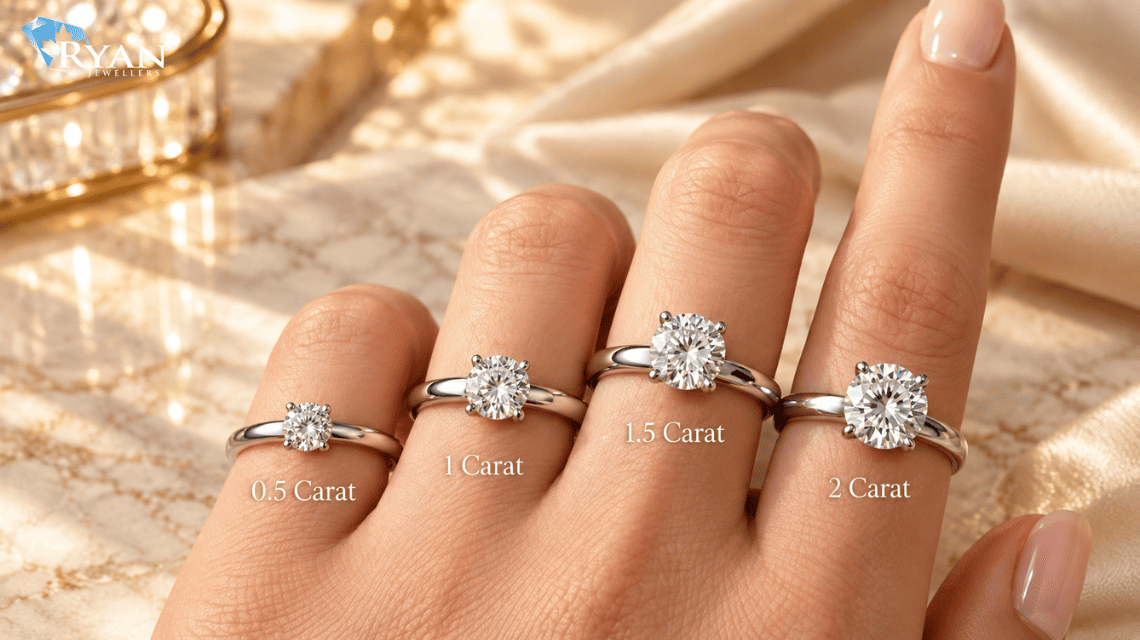
Carat weight is the weight of the diamond. Physical size refers to its dimensions, while perceived size describes how large the diamond appears when viewed from above.
These three concepts are related, but they are not interchangeable.
Why Two Diamonds With the Same Carat Can Look Different
Two diamonds weighing 1.00 carat can have different:
- Length
- Width
- Depth
- Table proportions
- Overall shape
- Cut proportions
As a result, one may appear larger when viewed face-up.
GIA specifically notes that poorly proportioned diamonds can carry additional weight below the girdle or in the pavilion without adding visible size. In other words, you can sometimes pay for weight that contributes little to the diamond’s face-up appearance.
The Importance of Diamond Dimensions
When comparing diamonds, look beyond the carat number and check the stone’s measurements.
For example, two 1.00-carat diamonds could have slightly different length and width measurements. The diamond with greater face-up dimensions may appear larger even though both weigh exactly the same.
This is why a Diamond Carat Size Guide should not be treated as a simple chart where more carats automatically means more visible size.
Cut Quality Also Matters
Cut determines how a diamond’s proportions, symmetry, and polish interact with light. For round brilliant diamonds, GIA’s cut assessment considers factors including brightness, fire, scintillation, weight ratio, girdle thickness, symmetry, and polish.
A diamond that carries excessive depth may weigh more without looking proportionally larger. Conversely, a well-proportioned stone can make efficient use of its weight and produce strong visual presence.
How Diamond Shape Changes Visual Size
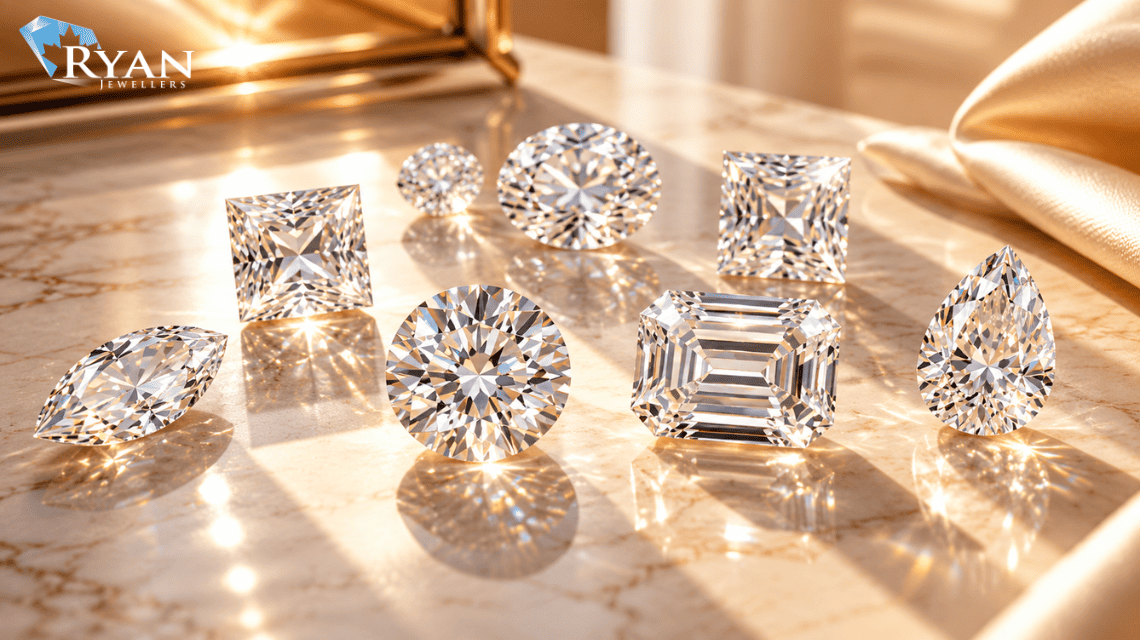
Diamond shape can significantly influence perceived size. Some shapes have elongated outlines or greater face-up surface area, which can make them appear larger for their carat weight.
Round Brilliant Diamonds
Round brilliant diamonds are known for their strong light performance and classic appearance.
Because of their proportions, however, they do not necessarily provide the largest face-up surface area for a given carat weight.
Their appeal is often associated with the combination of:
- Brilliance
- Fire
- Scintillation
- Symmetry
Oval Diamonds
Oval diamonds have an elongated outline that can create a larger visual impression.
They can be useful for buyers who want:
- An elongated appearance
- A noticeable center stone
- A classic shape with a contemporary feel
However, shape alone does not guarantee a larger-looking diamond. Cut quality and proportions still matter.
Marquise Diamonds
The long, narrow profile of a marquise diamond can create considerable finger coverage relative to its carat weight.
Its pointed ends also contribute to an elongated appearance.
Pear-Shaped Diamonds
Pear-shaped diamonds combine a rounded end with a pointed tip.
Their elongated outline can make them appear larger from the top compared with some other shapes of similar weight.
Emerald-Cut Diamonds
Emerald cuts use step-cut facets rather than the brilliant-style facet arrangement found in round brilliant diamonds.
Their broad, open table can create a substantial face-up appearance. However, their large facets can also make inclusions and body colour easier to observe, so clarity and colour deserve particular attention.
Cushion and Princess Cuts
Cushion cuts typically have softer, rounded corners, while princess cuts are generally square or rectangular with sharp corners.
Their perceived size depends heavily on the specific proportions and cutting style of the individual diamond.
Want to understand how cut, color, clarity, and carat affect the quality and appearance of a lab-grown diamond? Explore our Lab-Grown Diamond Quality Guide to learn how the 4Cs can help you compare diamonds with greater confidence.
Popular Diamond Carat Sizes Explained
There is no single carat weight that every buyer should choose. Instead, different weights create different combinations of visual presence, proportions, and price.
The following sizes are useful reference points when comparing diamonds.
0.25 Carat
A 0.25-carat diamond is relatively small and can work well for:
- Delicate jewelry
- Accent stones
- Minimalist designs
- Smaller engagement rings
It can also be used as part of a multi-stone design.
0.50 Carat
A 0.50-carat diamond provides more visible presence while remaining relatively understated.
It is often considered for:
- Smaller engagement rings
- Solitaire designs
- Everyday diamond jewelry
Remember that a 0.50-carat diamond’s appearance will still depend on its shape and proportions.
0.75 Carat
A 0.75-carat diamond sits between the half-carat and one-carat milestones.
It can provide a noticeable center-stone appearance without reaching the 1.00-carat weight category.
1.00 Carat
A 1.00-carat diamond is a well-known benchmark in diamond shopping. GIA identifies 1.00, 1.50, and 2.00 carats as examples of popular “magic sizes,” where pricing can increase significantly around these weight thresholds.
Importantly, a diamond just below one of these thresholds can have very similar visible dimensions.
For example, GIA notes that a well-cut 0.98-carat diamond can appear similar in size to a 1.00-carat diamond, while potentially having different pricing.
1.50 Carats
A 1.50-carat diamond provides substantially more weight than a 1.00-carat stone and generally creates greater visual presence.
At this level, proportions become particularly important because increasing carat weight does not automatically produce a proportionate increase in face-up size.
2.00 Carats and Above
Diamonds at 2.00 carats and above create a more substantial presence and can require greater attention to:
- Cut quality
- Clarity
- Colour
- Setting security
- Overall ring proportions
Larger diamonds are also less common than smaller stones of comparable quality, which contributes to their pricing.
If you’re comparing lab-grown diamonds by size and budget in Canada, explore our Lab Diamond Cost in Canada Guide to understand pricing and the factors that can influence the cost of your diamond.
Choosing the Right Carat Size for Your Budget
Choosing a carat weight involves balancing several factors rather than focusing exclusively on the largest possible number.
Start With Your Total Jewelry Budget
Your budget should include more than the center diamond.
Depending on the purchase, you may also need to consider:
- Ring metal
- Setting
- Accent diamonds
- Custom design
- Taxes
- Additional jewelry services
For Canadian shoppers, the final retail price can also vary between retailers and provinces because applicable sales taxes differ.
Consider Cut Before Increasing Carat Weight
If visual performance is important to you, consider how cut quality affects the diamond before automatically moving to a higher carat weight.
A poorly proportioned diamond may carry additional weight without providing a corresponding increase in visible size.
Compare Diamonds Just Below Popular Weight Thresholds
Popular weight thresholds can affect pricing.
Instead of automatically searching for exactly:
- 0.50 ct
- 1.00 ct
- 1.50 ct
- 2.00 ct
you can compare stones slightly below those points.
The important step is to compare actual measurements and overall appearance, not just the number printed next to “carat.”
Consider Shape as Part of the Budget
If your priority is face-up size, elongated shapes may provide a larger-looking outline for their weight.
Oval, marquise, and pear shapes can offer this effect, although individual proportions still need to be evaluated.
Look at the Complete Diamond, Not Just One C
A diamond’s appearance results from the interaction of its characteristics.
GIA describes the 4Cs as a universal framework for comparing diamonds, with cut, colour, clarity, and carat weight all contributing to the evaluation.
When comparing two diamonds, consider:
| Factor | What to Examine |
|---|---|
| Carat | Weight of the diamond |
| Dimensions | Length, width, and depth |
| Cut | Proportions, symmetry, polish, and light performance |
| Shape | Face-up outline and visual coverage |
| Colour | Degree of colour within the grading range |
| Clarity | Inclusions and blemishes |
| Setting | How the diamond is presented in the finished jewelry |
This approach gives you a more complete picture than comparing carat weight alone.
Consider Lab-Grown Diamonds
For Canadian buyers considering lab-grown diamonds, carat weight can also be evaluated within a different pricing context from natural diamonds. The two types share the same crystal structure and chemical composition, but their origins and market dynamics differ.
If your goal is to explore a larger carat size within a particular budget, comparing both natural and lab-grown options can expand the range of designs available to you.
At Ryan Jewellers, you can explore different diamond jewelry styles and consider how carat, design, and setting work together to create the final appearance.
FAQ About Diamond Carat Size
Is diamond carat the same as diamond size?
No. Carat measures the diamond’s weight, while physical size refers to its dimensions. The way a diamond is cut and shaped also affects how large it appears face-up.
How much does one carat weigh?
One metric carat equals 200 milligrams, or 0.20 grams. A carat is divided into 100 points. gia
Does a higher carat always mean a bigger-looking diamond?
No. A diamond can carry more weight in its depth or pavilion without becoming proportionally larger when viewed from above. Cut proportions and shape can therefore influence perceived size significantly.
Which diamond shapes look the largest for their carat weight?
Elongated shapes such as oval, marquise, and pear can create the impression of greater size because of their face-up outline. However, the proportions and cut quality of the individual diamond still matter.
Is a 1-carat diamond actually twice the size of a 0.50-carat diamond?
No. Carat is a measure of weight, not a linear measurement of size. Increasing weight does not translate directly into doubling the diamond’s visible dimensions.
Is 0.99 carat noticeably smaller than 1.00 carat?
The difference in visible size can be difficult to distinguish when the diamonds have comparable proportions. GIA notes that a 0.99-carat diamond can be difficult to visually distinguish from a 1.00-carat diamond, although pricing may differ.
What carat size is common for engagement rings?
There is no universal standard that determines the appropriate carat weight for an engagement ring. Canadian buyers choose different sizes based on budget, design preferences, lifestyle, and the desired visual appearance.
Should I prioritize carat weight or cut?
Both matter, but they describe different characteristics. Carat tells you the diamond’s weight, while cut affects how the stone interacts with light. A larger carat weight does not automatically produce better visual performance.
Can a smaller diamond look larger than a heavier diamond?
Yes. A well-proportioned diamond with greater face-up dimensions can appear larger than a heavier diamond that carries more weight in areas that are less visible from above.
Final Thoughts
Understanding diamond carat weight is essential when comparing diamonds, but carat should never be viewed in isolation. Carat measures weight; shape, dimensions, and cut help determine how large and visually impressive a diamond appears.
When shopping in Canada, compare the complete specifications of each stone rather than focusing on a single carat number. Look at dimensions, cut quality, shape, colour, clarity, and the setting together.
If you are searching for a diamond that offers the right balance of size and appearance, Ryan Jewellers can help you explore fine jewelry and diamond designs suited to different preferences and budgets. Take the time to compare your options, understand the specifications, and choose a piece that feels right for your style.
This guide makes it much easier to understand what diamond carat actually represents. I especially liked the reminder that carat weight is different from visual size, and that cut can have a significant impact on how large a diamond appears.
I found the carat size breakdown very useful when comparing different diamonds. It is easy to focus only on the carat number, so understanding how weight, proportions, cut, and shape work together provides a more complete picture.
This is a helpful reference for anyone trying to balance diamond size with their budget. I appreciate the practical explanation that choosing a carat weight should also take the diamond’s overall appearance and quality characteristics into account.