
Summarize the article with:


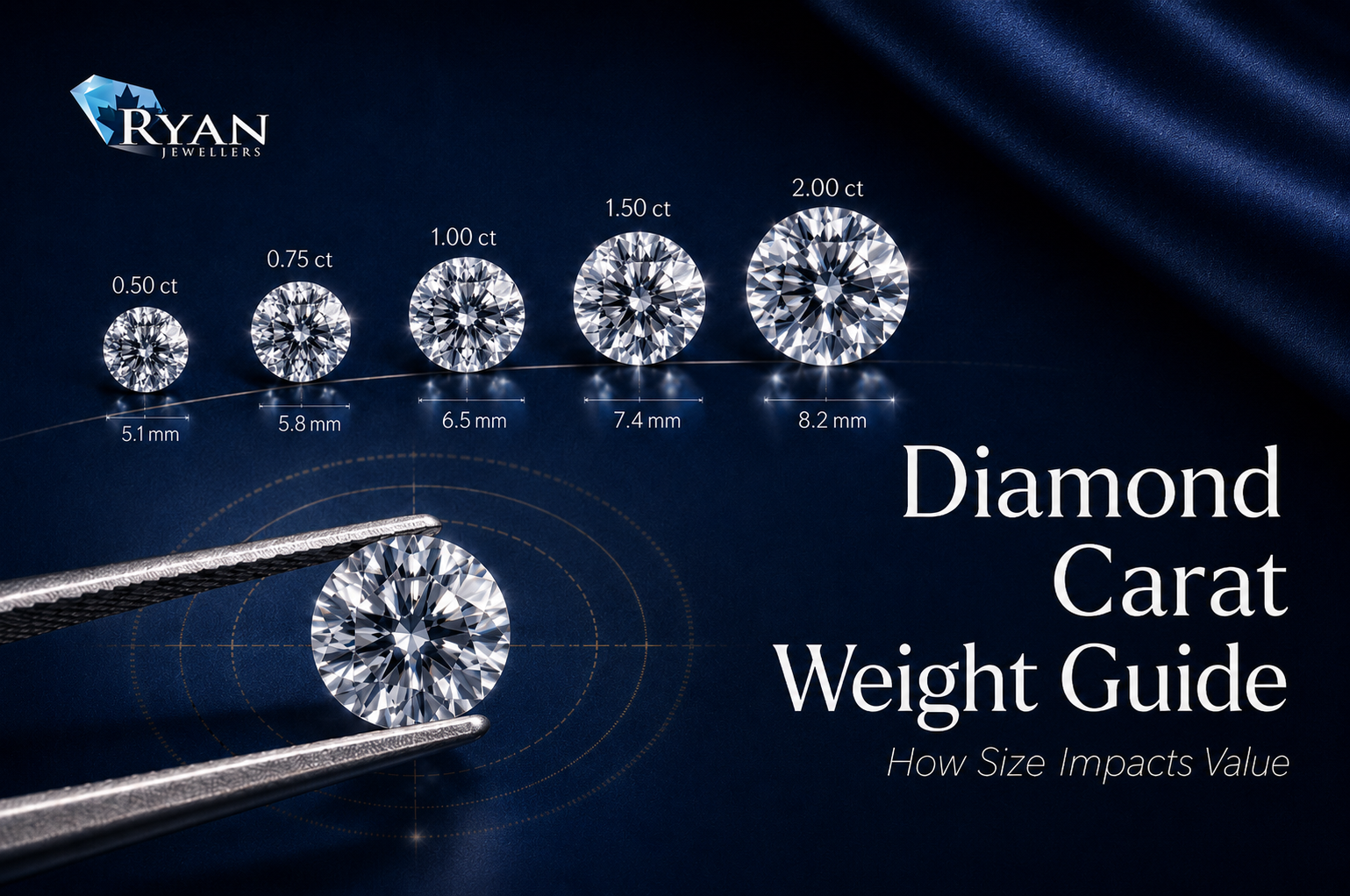
When choosing a diamond, carat weight is one of the most commonly discussed factors. Many buyers associate carat with size, but understanding how carat weight actually works can help you make a more informed decision when purchasing diamond jewelry.
For Canadian buyers, learning the difference between carat weight, visual size, and overall value is essential when comparing diamonds. A larger diamond is not always the best choice—factors such as cut, color, clarity, and personal style all influence the final appearance.
At Ryan Jewellers, we help customers understand diamond characteristics and choose pieces that match their preferences, lifestyle, and budget.
What Is Carat Weight?
Carat weight refers to the weight of a diamond, not its visual size. One carat equals 0.2 grams, and diamonds are measured with highly precise scales to determine their exact weight.
A diamond’s carat weight is divided into points:
- 1 carat = 100 points
- 0.50 carat = 50 points
- 0.25 carat = 25 points
Because larger diamonds are naturally rarer, carat weight can significantly influence a diamond’s price. However, carat is only one part of diamond evaluation. A smaller diamond with excellent cut quality may appear more brilliant than a larger diamond with weaker proportions.
This is why professional diamond buyers consider carat together with the other 4Cs: cut, color, and clarity.
👉 Discover our curated selection of lab-created diamond rings here: Lab-Created Diamond Rings
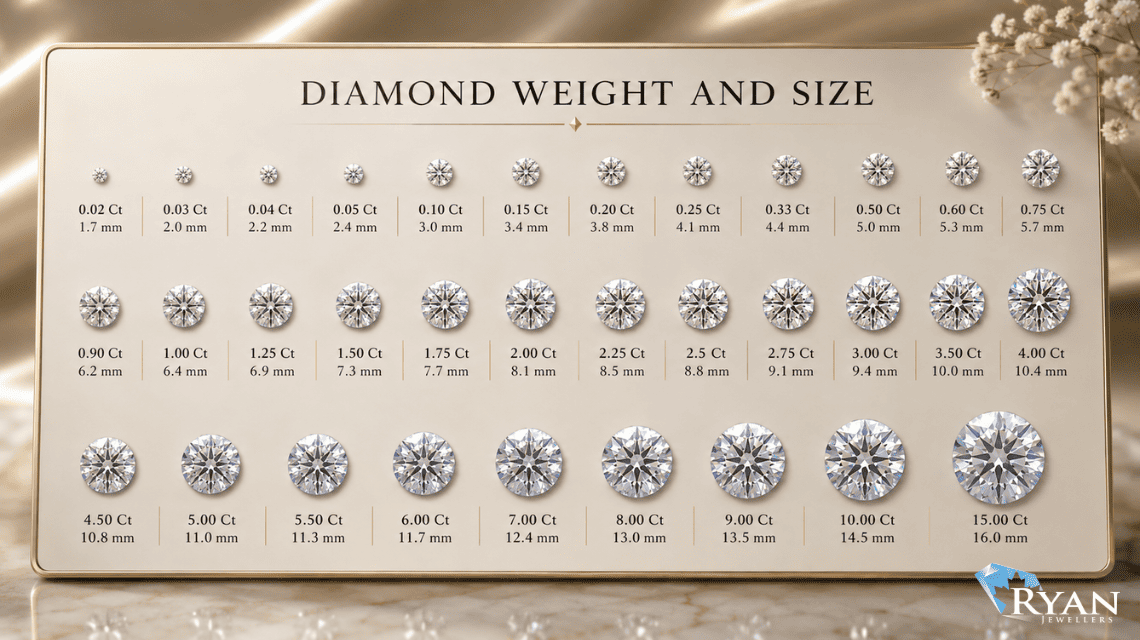
Carat vs Size: What Buyers Should Know
One of the most common misconceptions is that carat weight directly equals visible size. While heavier diamonds are often larger, the actual appearance depends on several factors, including diamond shape and cut proportions.
For example:
- A well-cut round diamond may appear larger because it reflects more light.
- Elongated shapes like oval, pear, and marquise diamonds can create a larger visual appearance compared with round diamonds of similar carat weight.
- A diamond with excessive depth may weigh more but appear smaller from the top.
When selecting a diamond, buyers should consider face-up appearance—how large and impressive the diamond looks when viewed from above—not just the carat number.
How Carat Affects Price
Carat weight has a major impact on diamond pricing because larger diamonds are less common. However, diamond prices do not increase in a simple linear way.
A few factors influence the relationship between carat and value:
- Rarity: Larger diamonds require more natural resources and are more difficult to find.
- Quality: A larger diamond with excellent cut, color, and clarity can command a higher price.
- Market Demand: Certain sizes and carat weights are more popular among buyers.
Diamonds that reach popular milestones, such as 1.00 carat, may experience noticeable price differences compared with slightly smaller stones, even when the visual difference is minimal.
Many buyers choose sizes just below major carat points to achieve better value while maintaining a similar appearance.
Choosing the Right Carat for Your Jewelry
The ideal carat weight depends on the type of jewelry, personal style, and budget.
Diamond Rings
For engagement rings and statement rings, carat weight often depends on the desired balance between size and sparkle. Many buyers prefer a diamond that looks proportionate to the setting and finger size.
Diamond Earrings
For earrings, smaller diamonds can create an elegant appearance while allowing for balanced designs. Since earrings are viewed from a greater distance, buyers often prioritize sparkle and overall symmetry.
Diamond Necklaces
Pendant necklaces can showcase a range of carat sizes depending on whether you prefer subtle elegance or a more noticeable centerpiece.
The best carat choice is one that complements your lifestyle and provides the appearance you desire without sacrificing other important quality factors.
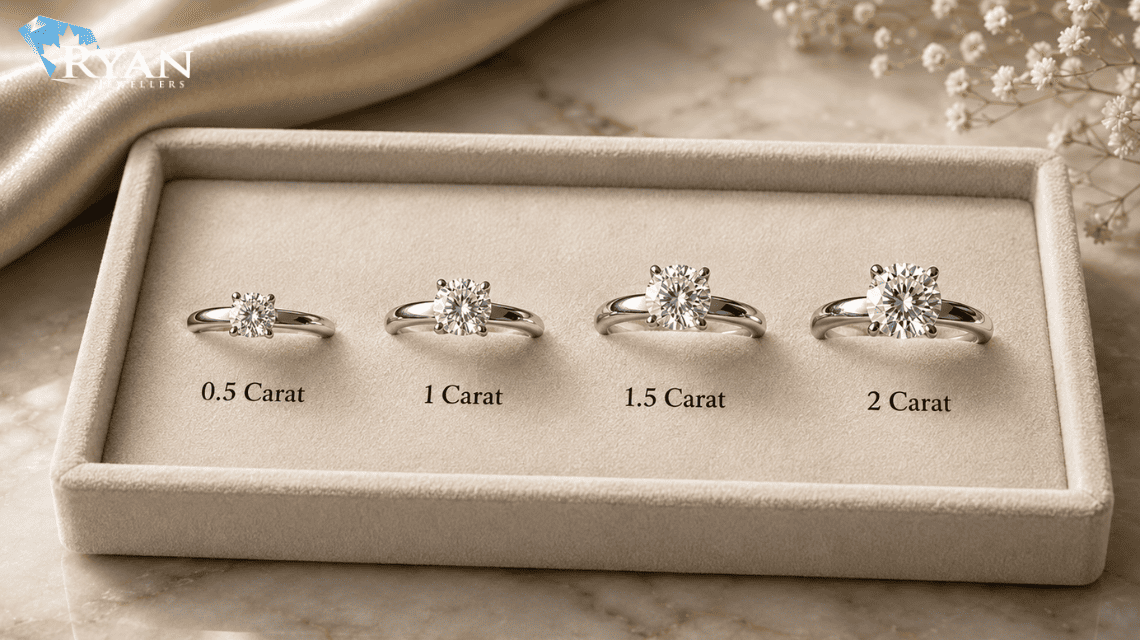
Carat Tips for Engagement Rings
| Tip | Explanation |
|---|---|
| Prioritize Cut Quality | A well-cut diamond can appear more brilliant and attractive, even if it has a slightly lower carat weight. Cut quality has a major impact on how much light the diamond reflects and how much sparkle it creates. |
| Consider Diamond Shape | Different diamond shapes create different visual effects. Oval, pear, and marquise diamonds often appear larger from the top compared with round diamonds of similar carat weight. |
| Balance the 4Cs | Avoid focusing only on diamond size. A balanced combination of cut, color, clarity, and carat can provide the best overall value and appearance. |
| Choose Based on Lifestyle | A very large diamond may not always be practical for everyday wear. Consider comfort, durability, and personal preferences when selecting the right carat size. |
| Explore Lab-Grown Diamonds | Lab-grown diamonds offer another option for buyers who want a larger diamond appearance at a more accessible price point while maintaining the same physical and chemical properties as natural diamonds. |
👉 Explore our stunning collection of diamond earrings here: Diamond Earrings
👉 Learn more about diamond quality, grading, and buying tips in our complete guide: Diamond Education: The Ultimate Guide to Understanding Diamonds
FAQ – Diamond Carat Weight
What does diamond carat weight mean?
Carat weight measures how much a diamond weighs. One carat equals 0.2 grams.
Does a higher carat diamond always look better?
Not necessarily. Cut quality, shape, and proportions strongly influence how attractive a diamond appears.
Is carat the same as diamond size?
No. Carat measures weight, while size refers to the visible dimensions of the diamond.
What is a popular carat size for engagement rings?
Popular choices vary, but many buyers select diamonds that balance appearance, quality, and budget rather than focusing only on maximum size.
Are larger lab-grown diamonds available?
Yes. Lab-grown diamonds are available in a wide range of carat weights, allowing buyers to explore different sizes and styles.
Final Thoughts
Diamond carat weight plays an important role in determining size, rarity, and value, but it should always be considered alongside cut, color, and clarity. Understanding how carat works allows buyers to choose diamonds that offer the right balance of beauty, quality, and budget.
At Ryan Jewellers, we provide diamond education and carefully selected jewelry collections to help Canadian buyers make confident decisions.
Really enjoyed this article because it clearly explains that diamond carat measures weight, not visual size. I especially liked the point that a well-cut diamond can often appear larger and more brilliant than a heavier stone with a poorer cut. It’s an excellent guide for anyone trying to make a smart buying decision.
Fantastic guide with practical buying advice. The explanation that price increases significantly at popular milestone weights like 1.00 or 2.00 carats really stood out to me because many shoppers don’t realize how pricing works. Do you think more Canadian buyers are now choosing slightly under the “magic” carat weights to get better overall value while maintaining a similar appearance?
This was a very informative read. I completely agree that carat weight should never be considered on its own because cut, color, and clarity all play an important role in a diamond’s overall beauty. I’d love to see a future article comparing how different diamond shapes look at the same carat weight, with side-by-side photos to help buyers understand which shapes offer the greatest visual presence.