
Summarize the article with:


Choosing the right diamond size is one of the most important decisions when purchasing an engagement ring. Many buyers naturally focus on carat weight, but the size of a diamond is not determined by carat alone. Factors such as diamond shape, cut quality, proportions, and ring design all influence how large a diamond appears when worn.
For Canadian shoppers, finding the ideal diamond size often means balancing personal style, budget, and the overall look you want to achieve. A larger diamond may create a bold statement, while a smaller diamond with excellent cut quality can offer exceptional sparkle and elegance.
This guide explains how diamond size works, how carat weight affects appearance, and how to choose a diamond size that matches your preferences and lifestyle.
At Ryan Jewellers, we help customers explore diamond engagement rings and fine jewelry options designed around different styles and budgets. Explore our collections and discover how the right diamond size can create the perfect balance between beauty, quality, and value.
Understanding Diamond Size vs Carat Weight
One of the most common misunderstandings when buying diamonds is assuming that carat weight equals visible size.
While carat weight is an important factor, it does not directly describe how large a diamond looks from the top.
What Does Carat Weight Mean?
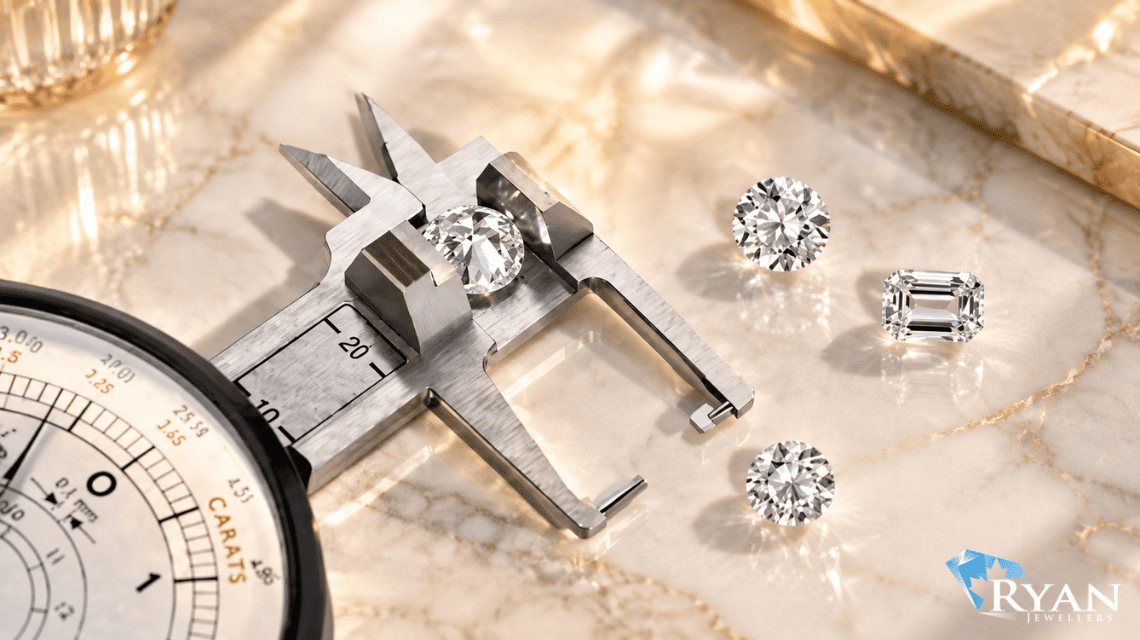
Carat is the standard measurement used to describe a diamond’s weight.
One carat equals 200 milligrams.
A diamond’s carat weight can influence:
- Overall price
- Rarity
- Market value
- Visual presence
However, two diamonds with the same carat weight can appear different in size depending on their shape and cut.
Diamond Size Refers to Visual Appearance
When people ask, “What diamond size should I buy?”, they are often referring to how large the diamond appears on the finger.
Visual size depends on:
- Carat weight
- Diamond shape
- Cut proportions
- Table size
- Depth percentage
- Setting design
For example, a well-cut diamond may appear larger and brighter than a poorly proportioned diamond with the same carat weight.
Why Cut Quality Matters
Cut quality affects how efficiently a diamond reflects light.
A well-cut diamond can appear:
- Brighter
- More sparkling
- More visually attractive
A larger diamond with poor cut quality may not create the same impact as a slightly smaller diamond with excellent proportions.
If you are comparing diamond sizes for an engagement ring, explore our guide on What Size Diamond Should I Buy? A Practical Guide for Engagement Rings for additional buying tips.
How Diamond Shape Affects Perceived Size
Diamond shape plays a major role in how large a diamond appears.
Different shapes distribute weight differently, meaning some diamonds can look larger from the top even with the same carat weight.
Round Diamonds
Round diamonds are the most traditional choice for engagement rings.
They are known for:
- Excellent sparkle
- Classic appearance
- Strong light performance
However, some of the carat weight is distributed below the surface, which can make them appear slightly smaller compared with certain elongated shapes.
Oval Diamonds
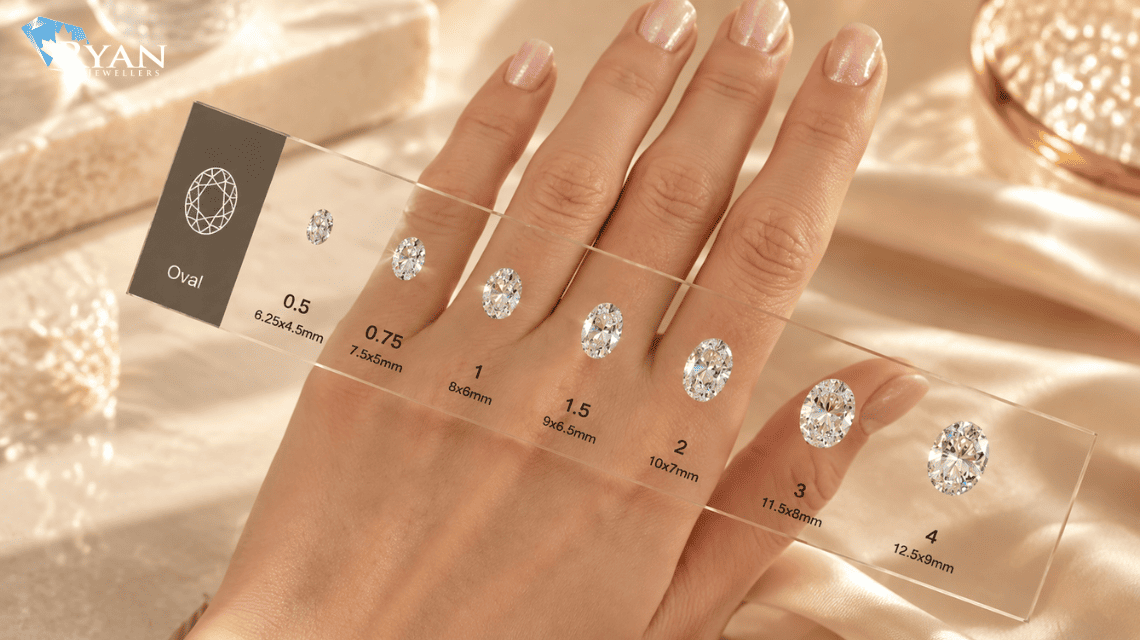
Oval diamonds often appear larger than round diamonds of similar carat weight because of their elongated shape.
Benefits include:
- Larger surface appearance
- Elegant silhouette
- Modern yet timeless style
Emerald Cut Diamonds
Emerald cuts have a long rectangular shape and a large surface area.
They create:
- A sophisticated appearance
- A larger-looking outline
- A clean, elegant style
Because of their step-cut design, they emphasize clarity and transparency rather than intense sparkle.
Pear and Marquise Diamonds
These elongated shapes can create a larger visual impression.
Their pointed designs help extend the appearance of the diamond on the finger.
Cushion and Princess Cut Diamonds
These shapes offer different visual characteristics.
Cushion cuts provide:
- A romantic appearance
- Soft edges
- Vintage-inspired style
Princess cuts provide:
- Modern geometry
- Strong brilliance
- A square silhouette
The best diamond shape depends on your preferred style and how large you want the stone to appear.
Popular Diamond Sizes for Engagement Rings
There is no universal “correct” diamond size. The ideal carat depends on personal preference, budget, and lifestyle.
However, certain diamond sizes are commonly chosen for engagement rings.
0.50 Carat Diamonds
A half-carat diamond is a popular choice for buyers looking for a balance between size and affordability.
Advantages include:
- Elegant appearance
- Practical everyday wear
- Accessible pricing
0.75 Carat Diamonds
A 0.75-carat diamond provides additional presence while maintaining a refined look.
This size can be a good option for buyers who want something larger than a traditional half-carat stone without moving into higher price ranges.
1 Carat Diamonds
A 1-carat diamond is one of the most recognized engagement ring sizes.
Many buyers choose this size because it offers:
- Noticeable presence
- Classic appeal
- Strong visual impact
However, price can vary significantly depending on the diamond’s cut, colour, clarity, and certification.
1.5 Carat and Larger Diamonds
Larger diamonds create a more dramatic appearance.
They may appeal to buyers looking for:
- A statement engagement ring
- Greater visual impact
- A luxury appearance
However, larger carat weights require careful consideration because diamond quality characteristics can significantly affect pricing.
Choosing Diamond Size Based on Budget and Style
The “right” diamond size is different for every buyer.
Instead of focusing only on carat weight, consider the complete balance between size, quality, and design.
Consider Your Budget
Diamond prices increase as carat weight increases, but larger diamonds also become significantly rarer.
A practical approach is to decide:
- Your overall budget
- Your preferred diamond shape
- Which quality factors matter most
Some buyers prefer a larger diamond with slightly lower clarity, while others prioritize maximum sparkle and quality.
Consider Your Lifestyle
An engagement ring is often worn every day.
Think about:
- Comfort
- Practicality
- Work environment
- Daily activities
A very large diamond may require a more secure setting and additional care.
Consider Your Personal Style
Diamond size should match your preferred aesthetic.
Minimalist Style
Some buyers prefer:
- Smaller diamonds
- Delicate settings
- Clean designs
These styles create a subtle and elegant appearance.
Explore more inspiration with our guide on Diamond Minimalist Jewelry for timeless designs focused on simplicity and elegance.
Statement Style
Other buyers prefer:
- Larger center stones
- Halo settings
- Bold designs
These styles create a stronger visual presence.
How to Make a Diamond Look Larger
You do not always need the largest carat weight to create a larger visual appearance.
Several design choices can enhance the size of a diamond.
Choose an Elongated Diamond Shape
Shapes such as:
- Oval
- Pear
- Marquise
- Emerald
often appear larger because they cover more surface area.
Choose a Halo Setting
A halo setting places smaller diamonds around the center stone.
Benefits include:
- Increased sparkle
- Larger overall appearance
- More detailed design
Select a Slimmer Band
A thinner band can make the center diamond appear larger by creating contrast.
A delicate setting often emphasizes the size of the main stone.
Prioritize Cut Quality
A well-cut diamond can appear more impressive because of its brilliance.
A diamond that reflects light effectively often creates a stronger visual impact.
Consider Lab-Grown Diamonds
Lab-grown diamonds can provide another option for buyers who want a larger diamond appearance within a specific budget.
Because lab-grown diamonds are generally priced differently from comparable natural diamonds, some buyers choose them to explore larger carat sizes.
Learn more about larger diamond options in our guide on Lab-Grown Diamond Rings: Bigger Sparkle, Better Value.
Diamond Size and Ring Setting Considerations
The setting can significantly influence how large a diamond appears.
Solitaire Settings
Solitaire settings highlight the center diamond.
They create:
- A classic appearance
- Maximum focus on the stone
- Timeless elegance
Halo Settings
Halo designs surround the center diamond with smaller stones.
They create:
- Additional sparkle
- A larger visual appearance
- A more detailed style
Three-Stone Settings
Three-stone rings create balance and symbolism.
They can make the overall ring appear larger because multiple diamonds contribute to the design.
Pavé Settings
Pavé bands add smaller diamonds along the ring surface.
They enhance sparkle and create a luxurious appearance.
Common Mistakes When Choosing Diamond Size
Choosing a diamond based only on size can lead to disappointment.
Prioritizing Carat Over Cut
A larger diamond does not always look better.
Cut quality strongly influences brilliance and beauty.
Ignoring Diamond Shape
A 1-carat oval diamond and a 1-carat round diamond may appear different in size.
Always consider the shape when comparing diamonds.
Forgetting Ring Proportion
The diamond should complement:
- Finger size
- Band design
- Setting style
A very large diamond may not always create the most balanced look.
Choosing Size Without Considering Budget
A larger diamond often requires compromises in other areas.
The best choice is usually the diamond that provides the right balance between:
- Size
- Quality
- Appearance
- Price
FAQ About Diamond Size
What diamond size is best for an engagement ring?
There is no single best diamond size. The ideal choice depends on your budget, personal style, and preferences. Popular choices include diamonds around 0.50 to 1 carat, but many buyers select different sizes based on their priorities.
Is a 1-carat diamond considered big?
A 1-carat diamond is considered a classic engagement ring size and provides noticeable presence. However, its visual appearance depends on shape, cut, and setting.
Does a higher carat always mean a bigger-looking diamond?
Not always. Carat measures weight, while visible size depends on proportions, shape, and cut.
Which diamond shape looks the biggest?
Elongated shapes such as oval, pear, and marquise often appear larger because they have more surface area visible from the top.
Should I choose a bigger diamond or better quality?
The choice depends on your priorities. Some buyers prefer maximum size, while others prioritize sparkle, colour, or clarity.
Are lab-grown diamonds a good option for larger sizes?
Lab-grown diamonds can be an option for buyers who want larger diamond sizes with different pricing considerations.
How much should I spend on a diamond?
There is no universal amount. Buyers should choose a budget that fits their financial situation while focusing on the diamond characteristics that matter most to them.
Final Thoughts
Choosing the right diamond size is about more than selecting the largest carat weight. The ideal diamond balances size, sparkle, quality, design, and personal preference.
A beautiful engagement ring is not defined only by its size. The best diamond is one that matches your style, budget, and the meaning behind the piece.
At Ryan Jewellers, we help Canadian customers explore diamond engagement rings and fine jewelry with expert guidance and carefully selected designs. Discover our collections and find a diamond size that creates the perfect balance of elegance, beauty, and value.
This is a helpful guide for anyone unsure about what diamond size to choose. I like the reminder that carat size is only one factor, and that the cut, setting, personal style, and overall budget should also be considered.
I found the discussion about choosing diamond size particularly practical. It makes sense to consider how the stone looks on the hand rather than simply choosing the largest carat within a given budget.
The article offers a useful perspective on balancing diamond size with other quality factors. I especially liked the idea of choosing a stone based on personal preferences and the ring design rather than following a fixed carat standard.