
Summarize the article with:


Jewelry can gradually lose its brilliance as oils, cosmetics, soap residue, dust, and everyday debris collect around gemstones and settings. While careful cleaning at home can handle routine maintenance, some pieces require deeper cleaning, inspection, or specialized treatment that is better handled by a professional.
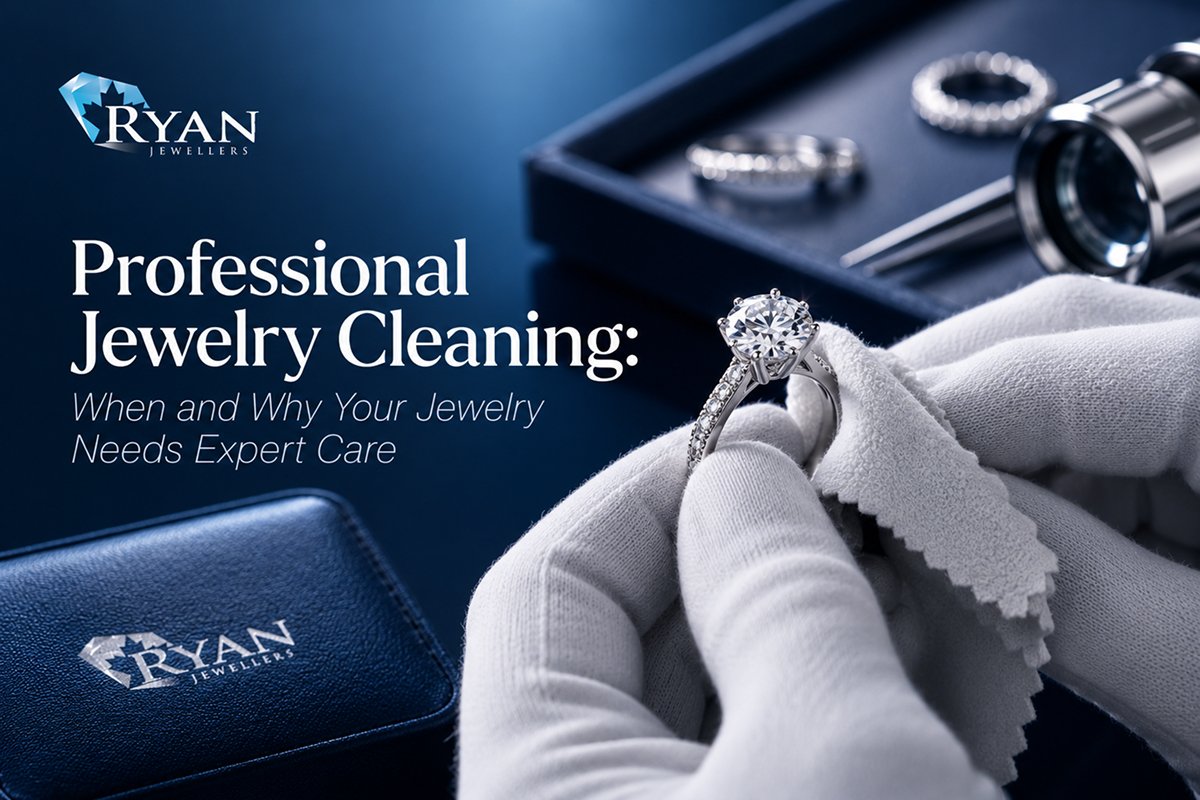
Professional jewelry cleaning combines specialized cleaning techniques with an opportunity to examine the condition of your jewelry. For frequently worn engagement rings, diamond earrings, necklaces, bracelets, and other fine pieces, professional care can help remove difficult buildup while identifying loose stones, worn prongs, or damaged components before they become larger problems.
For Canadian jewelry owners, combining gentle at-home maintenance with periodic professional inspection can help protect valuable and sentimental pieces over the long term.
At Ryan Jewellers, you can explore timeless diamond and fine jewelry designed for everyday elegance and life’s most meaningful occasions.
What Is Professional Jewelry Cleaning?
Professional jewelry cleaning is a service performed by a jeweller or trained jewelry professional using cleaning techniques and equipment selected according to the materials, gemstones, setting, and condition of each piece.
The process may involve more than simply restoring shine. Depending on the jewelry and service provided, professional care can include:
- Removing oils, dirt, and residue
- Cleaning difficult-to-reach areas around settings
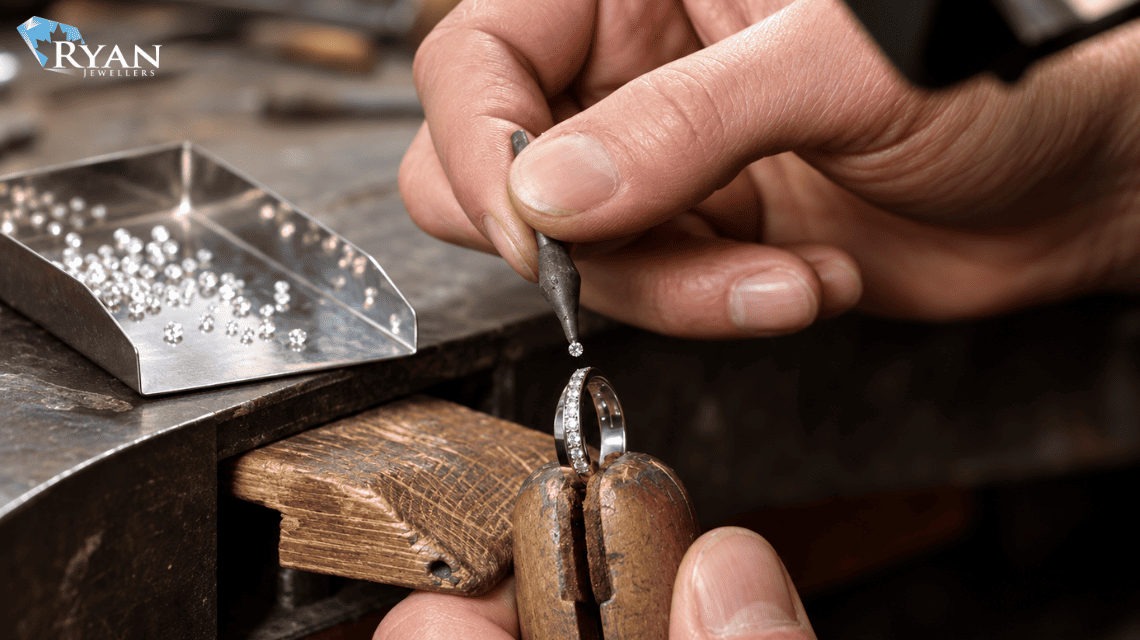
- Inspecting prongs and stone security
- Checking clasps, links, and other components
- Assessing surface wear
- Identifying potential repairs
Professional cleaning can be especially useful for jewelry that is worn frequently or contains intricate settings that are difficult to clean thoroughly at home.
Why Inspection Matters
A diamond may still look beautiful even when one of its prongs has started to wear. Similarly, a clasp can weaken gradually without being immediately noticeable.
A professional inspection can help identify these issues before a stone is lost or a piece becomes more seriously damaged.
Discover the latest styles and timeless designs in our New Arrivals collection at Ryan Jewellers.
Professional Cleaning vs. At-Home Jewelry Cleaning
Both professional and at-home jewelry cleaning have an important role in long-term jewelry care, but they serve different purposes.
| At-Home Cleaning | Professional Jewelry Cleaning |
|---|---|
| Suitable for routine surface cleaning | Provides more thorough cleaning |
| Helps remove everyday oils and residue | Can reach complex settings and details |
| Usually uses mild soap and a soft brush | May use specialized equipment and solutions |
| Does not replace a structural inspection | Can include inspection of prongs, stones, and clasps |
| Convenient for regular maintenance | Better suited to deeper cleaning and maintenance |
When At-Home Cleaning Is Enough
Routine at-home cleaning may be suitable when:
- The jewelry is in good condition
- Gemstones are secure
- Only light buildup is present
- The materials tolerate gentle soap-and-water cleaning
For many diamond and solid gold pieces, mild dish soap, warm water, and a soft-bristled brush can help with routine maintenance.
When Professional Cleaning Is Better
Professional care may be preferable when:
- Dirt is trapped inside an intricate setting
- A stone appears loose
- The jewelry contains delicate materials
- The piece is valuable or sentimental
- The metal requires polishing or refinishing
- White gold may need rhodium replating
- You are uncertain which cleaning technique is safe
Home cleaning should complement professional maintenance rather than completely replace it.
What Happens During a Professional Jewelry Cleaning Service?
The exact process varies depending on the jeweller, piece, and materials involved. Professional cleaning should always begin with an assessment of the jewelry rather than automatically applying one method to every piece.
Initial Inspection
Before cleaning, the jeweller may examine:
- Gemstone settings
- Prongs
- Clasps
- Chains and links
- Metal surfaces
- Existing damage
If a diamond is loose, repairs may be recommended before deeper cleaning.
Selecting the Appropriate Cleaning Method
Different pieces require different techniques.
Depending on the materials, professional services may use:
- Specialized jewelry-cleaning solutions
- Steam cleaning
- Ultrasonic equipment
- Gentle manual cleaning
- Polishing
Not every technique is appropriate for every gemstone or setting.
Ultrasonic Cleaning
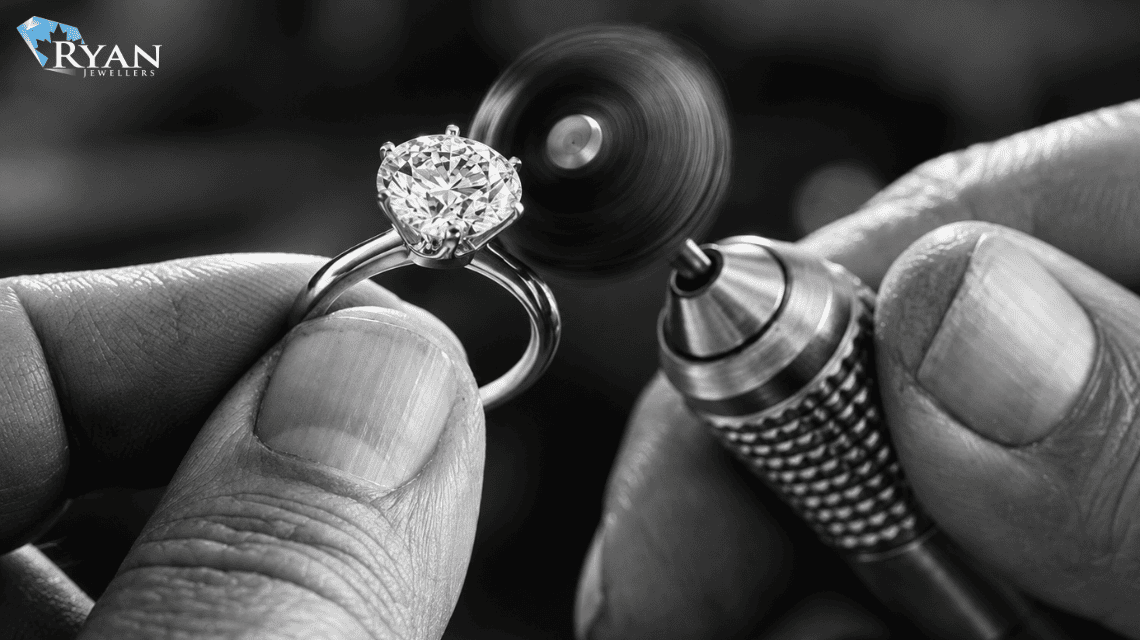
Ultrasonic machines use high-frequency vibrations in a cleaning solution to loosen dirt from difficult-to-reach areas.
They can be effective for suitable jewelry but should not automatically be used on all pieces. Certain delicate gemstones, treated stones, older settings, or damaged jewelry may require another method.
Steam Cleaning
Professional steam cleaning can remove remaining residue from suitable jewelry and restore a clean appearance without abrasive scrubbing.
Again, suitability depends on the gemstone and construction.
Final Inspection
After cleaning, the jeweller can recheck the piece and identify concerns such as:
- Loose stones
- Worn prongs
- Weak clasps
- Surface damage
This inspection is one of the most valuable differences between professional and routine home cleaning.
Discover elegant and modern designs with our Lab-Created Diamond Rings Collection — timeless pieces crafted for meaningful moments.
Which Jewelry Pieces Need Professional Cleaning?
Almost any fine jewelry can benefit from professional inspection at some point, but certain pieces deserve particular attention.
Engagement Rings
Engagement rings are often worn daily, making them especially vulnerable to:
- Lotion buildup
- Soap residue
- Dirt underneath the centre stone
- Prong wear
- Accidental impact
Professional cleaning also creates an opportunity to check the security of the centre diamond and surrounding stones.
If you own a diamond engagement ring, regular maintenance is particularly important because a clean appearance does not necessarily mean the setting is structurally secure.
Diamond Earrings
Diamond earrings can collect skin oils and cosmetic residue around the backs and settings.
Professional cleaning may be useful when buildup is difficult to reach or when the setting needs inspection.
White Gold Jewelry
Many white gold pieces are rhodium plated. Over time, the rhodium layer can wear away and reveal the slightly warmer colour of the underlying alloy.
Cleaning cannot replace missing rhodium. A jeweller can determine whether the piece needs professional polishing or replating.
Heirloom and Vintage Jewelry
Older pieces may have:
- Worn prongs
- Delicate settings
- Previous repairs
- Gemstones requiring specialized care
Professional assessment is safer than experimenting with aggressive home-cleaning techniques.
Jewelry With Delicate Gemstones
Diamonds are exceptionally hard, but not every gemstone has the same durability or tolerance for heat, chemicals, and ultrasonic cleaning.
Jewelry containing pearls, opals, emeralds, treated stones, or other sensitive materials may require specialized care.
How Often Should You Have Jewelry Professionally Cleaned?
There is no universal schedule for professional jewelry cleaning. The appropriate frequency depends on how often a piece is worn, its design, condition, and the type of gemstones and settings it contains.
Everyday Jewelry
Frequently worn jewelry, particularly engagement rings and wedding bands, should be inspected periodically because they experience more:
- Friction
- Impact
- Exposure to cosmetics
- Contact with household products
Many people combine regular gentle cleaning at home with periodic professional inspection.
Occasionally Worn Jewelry
Jewelry worn only for special events generally requires less frequent professional cleaning, but it should still be inspected if:
- It has been stored for a long period
- A stone appears loose
- The clasp is not working correctly
- Heavy buildup is visible
Clean When the Jewelry Needs It
Instead of following an overly rigid schedule, watch for signs such as:
- Persistent dullness
- Buildup underneath stones
- Reduced diamond brilliance
- Discolouration
- Loose gemstones
- Visible setting wear
If a piece looks damaged, professional inspection should come before cleaning.
Signs Your Jewelry Needs Expert Care
Some problems cannot be solved by cleaning alone.
Consider professional care when you notice:
| Sign | Possible Issue |
|---|---|
| Diamond moves in its setting | Loose prong or setting |
| White gold looks warmer or yellowish | Rhodium plating may be worn |
| Clasp opens unexpectedly | Worn or damaged clasp |
| Deep scratches remain after cleaning | Professional polishing may be required |
| Stone remains dull after cleaning | Residue may be trapped underneath the setting |
| Prongs look thin or uneven | Setting may require repair |
Do not continue wearing jewelry with a visibly loose stone. Preventive repairs can be significantly easier than replacing a lost gemstone.
How to Care for Jewelry Between Professional Cleanings
Professional services work best when combined with good everyday habits.
Remove Jewelry During High-Risk Activities
Consider removing fine jewelry before:
- Exercising
- Swimming
- Cleaning with chemicals
- Gardening
- Heavy manual work
This reduces both residue buildup and physical damage.
Apply Products Before Jewelry
Allow products such as perfume, lotion, sunscreen, and cosmetics to dry before putting on jewelry.
Store Pieces Separately
Separate compartments or soft pouches help prevent scratching and tangling.
Use Gentle Home Cleaning
For suitable jewelry, gentle cleaning can remove everyday residue between professional visits.
Avoid using abrasive DIY methods without checking whether they are appropriate for the specific metal and gemstone.
Keep your jewelry sparkling with our guides on:
- How to Clean Diamonds at Home and Keep Them Sparkling
- How to Clean Jewelry: The Complete Guide to Keeping Your Jewelry Sparkling
- How to Clean Gold Jewelry: Safe Methods to Restore Its Shine
- How to Clean Silver Jewelry: Remove Tarnish and Restore Its Shine
- How to Clean White Gold Jewelry: Expert Tips to Protect Its Finish
- How to Clean Engagement Rings at Home: A Step-by-Step Guide
FAQ About Professional Jewelry Cleaning
Is professional jewelry cleaning better than cleaning at home?
They serve different purposes. Home cleaning is useful for routine maintenance, while professional cleaning can provide deeper cleaning and allow a jeweller to inspect the setting and overall condition.
Can professional cleaning damage jewelry?
A qualified professional should select a cleaning method appropriate for the jewelry. Not every gemstone or setting is suitable for ultrasonic or steam cleaning, which is why inspection is important.
How often should an engagement ring be professionally cleaned?
There is no universal schedule. Frequently worn engagement rings benefit from periodic professional inspection, especially if the ring has intricate settings or multiple stones.
Does professional jewelry cleaning remove scratches?
Cleaning removes dirt and residue, but it does not necessarily remove scratches. Some surface marks may require professional polishing or refinishing.
Can professional cleaning make white gold white again?
Cleaning can remove buildup, but it cannot replace worn rhodium plating. If white gold has developed a warmer tone because the plating has worn away, professional replating may be needed.
Should vintage jewelry be professionally cleaned?
Professional assessment is generally recommended for valuable or delicate vintage jewelry because older settings and gemstones may require specialized care.
Final Thoughts
Professional jewelry cleaning provides more than a brighter finish. It gives jewelry owners an opportunity to have gemstones, settings, clasps, and precious metals examined while difficult buildup is removed using methods suited to the piece.
Regular at-home maintenance remains useful, but professional care becomes especially important for frequently worn engagement rings, valuable diamond jewelry, white gold pieces, heirlooms, and jewelry showing signs of damage.
At Ryan Jewellers, we help Canadian customers discover timeless diamond and fine jewelry designed for everyday elegance and life’s most meaningful celebrations.
I like how this article explains the value of professional jewellery cleaning beyond simply making a piece look shiny again. Having a jeweller properly inspect and clean a favourite piece seems like a worthwhile part of long-term jewellery care.
The distinction between at-home maintenance and professional jewellery cleaning is a useful one. Some pieces have delicate settings or gemstones that require more careful handling, so knowing when to have them professionally cleaned can help protect their condition over time.
A professional cleaning can make a noticeable difference, especially for jewellery that is worn regularly. I appreciate the focus on proper care and inspection, since maintaining the condition of a piece is just as important as keeping it looking beautiful.