
Summarize the article with:


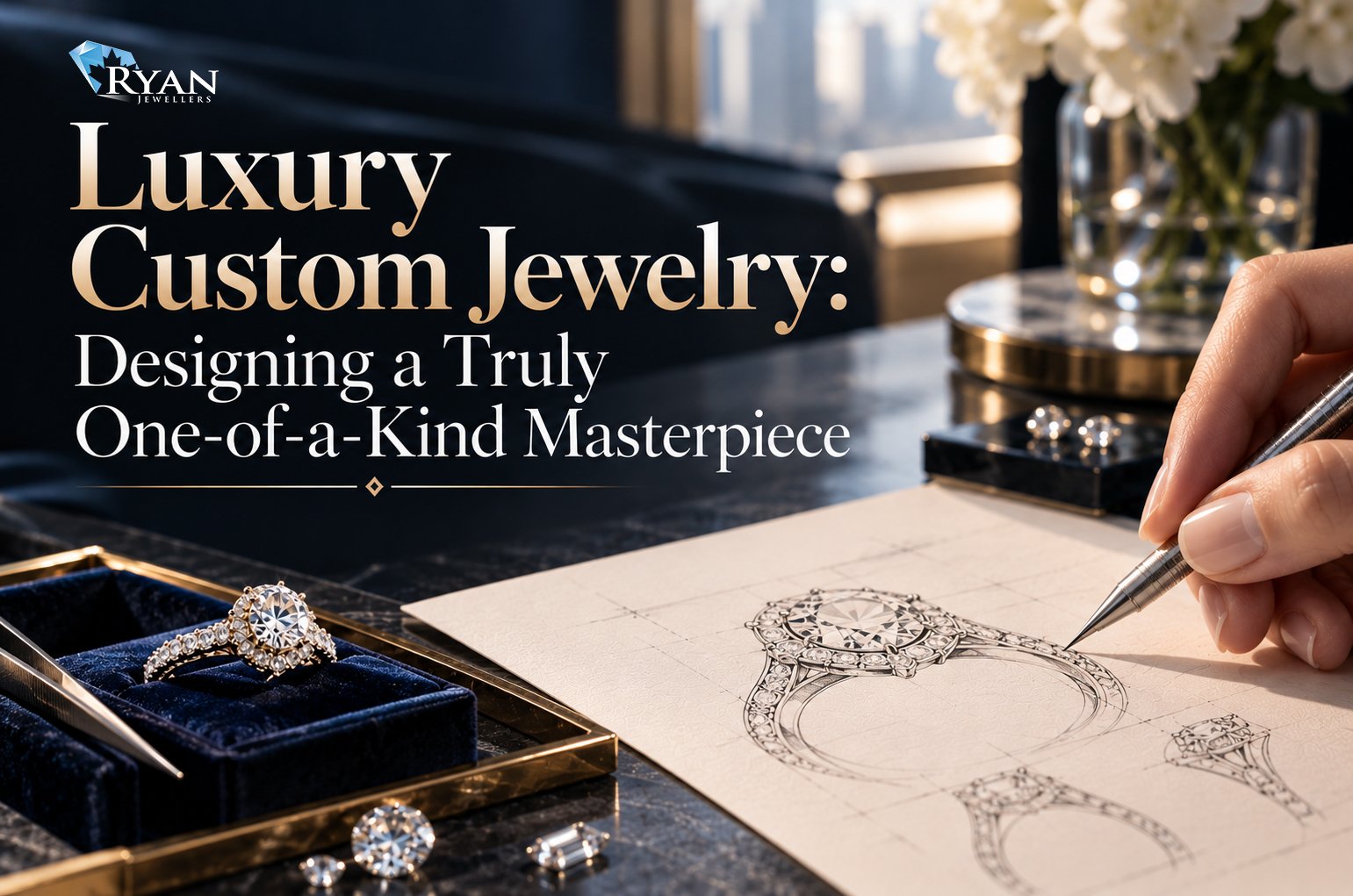
Luxury custom jewelry offers an experience beyond choosing a finished piece from a standard collection. It allows you to participate in the design process, select premium materials, and create jewelry around your personal taste, story, and expectations.
For Canadian buyers, a luxury custom piece may involve a carefully selected diamond, a rare gemstone, platinum or high-karat gold, specialized craftsmanship, and personalized details. However, luxury is not defined by price alone. The quality of the materials, precision of the craftsmanship, design originality, and level of service all contribute to the finished piece.
Whether you are designing an engagement ring, anniversary gift, wedding jewelry, or a statement piece, understanding the process can help you make more informed decisions. If you are considering a one-of-a-kind design, explore Ryan Jeweller for inspiration before beginning your custom jewelry journey.
What Defines Luxury Custom Jewelry?
Luxury custom jewelry combines personalized design, high-quality materials, skilled craftsmanship, and attention to detail.
Unlike mass-produced jewelry, a custom piece is developed around a specific customer’s preferences. The level of customization can range from modifying an existing design to creating an entirely original piece.
Personalized Design
A luxury custom piece should reflect the person who will wear it.
Customization may include:
- Diamond shape and proportions
- Gemstone selection
- Metal type and colour
- Setting style
- Band dimensions
- Engraving
- Surface finish
- Hidden design elements
- Personalized motifs
The objective is not simply to create something different. Instead, the design should feel intentional, cohesive, and visually consistent, with every element serving a clear purpose.
High-Quality Materials
Luxury jewelry often uses precious metals and carefully selected gemstones.
Common choices include:
- Platinum
- 18K gold
- High-quality diamonds
- Sapphires
- Rubies
- Emeralds
- Other fine gemstones
Material quality should always be discussed in specific terms rather than relying solely on words such as “luxury” or “premium.”
Attention to Detail
Small details can have a significant effect on the final appearance.
These may include:
- Precise stone alignment
- Even prong placement
- Smooth metal finishing
- Consistent proportions
- Secure gemstone settings
- Clean engraving
- Carefully finished edges
In custom jewelry, these details are particularly important because the piece is created specifically around an individual design.
Exclusivity
A custom piece can provide a level of individuality that is difficult to achieve with mass-produced jewelry.
It can be designed around a personal story, incorporate meaningful gemstones, or combine design elements that are not normally offered together.
However, exclusivity should not be confused with quality. A unique design still needs appropriate materials and sound construction.
The Craftsmanship Behind Bespoke Jewelry
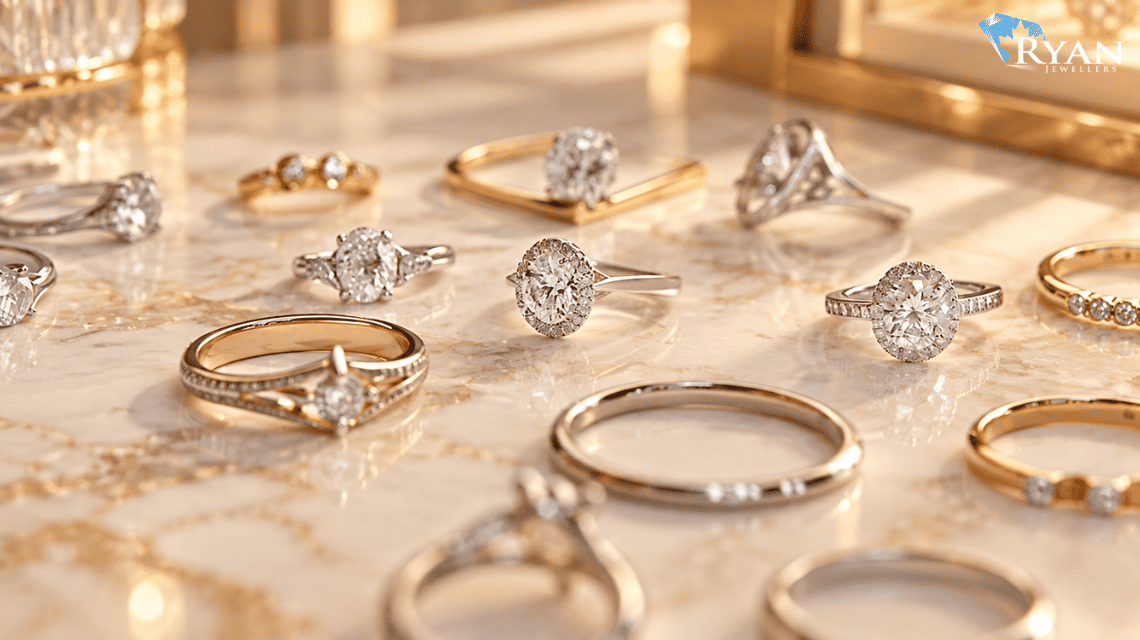
The craftsmanship behind a custom piece is one of the key factors that separates a well-designed piece from a merely expensive one. Ultimately, attention to detail, material selection, and precision in execution determine whether the finished piece feels truly exceptional.
Design Development
A custom project may begin with a sketch, reference images, or a consultation.
The jeweller translates these ideas into a technical design that can eventually be manufactured.
For complex pieces, computer-aided design (CAD) can provide a three-dimensional representation of the proposed jewelry.
This allows you to review:
- Overall proportions
- Stone placement
- Band thickness
- Setting height
- Side profile
- Decorative details
Precision in Stone Setting
Gemstones need to be positioned securely and consistently.
Different settings provide different visual and structural characteristics.
Common options include:
| Setting | General Characteristics |
|---|---|
| Prong | Allows significant exposure of the gemstone |
| Bezel | Surrounds the stone with metal |
| Pavé | Uses closely set small stones |
| Channel | Holds stones between metal walls |
| Halo | Surrounds a centre stone with smaller stones |
The appropriate setting depends on the gemstone, design, intended wear, and desired appearance.
Metalwork and Finishing
After the main structure is created, the piece may require substantial finishing.
Depending on the design, this can include:
- Filing
- Polishing
- Texturing
- Engraving
- Stone setting
- Surface finishing
- Rhodium plating for applicable white gold pieces
A luxury finish should be consistent across the entire piece.
Quality Control
Before accepting a custom piece, it is reasonable to examine:
- Stone placement
- Prong security
- Symmetry
- Metal finish
- Engraving
- Clasp function
- Ring size
- Overall proportions
For a significant diamond purchase, make sure any grading documentation corresponds to the actual stone.
Handcrafted Does Not Automatically Mean Better
A common misconception is that handmade or handcrafted automatically means higher quality.
In reality, quality depends on the combination of:
Materials + Design + Construction + Craftsmanship + Quality Control
A technically well-designed piece can use a combination of traditional craftsmanship and modern manufacturing technology.
Selecting Rare Diamonds and Precious Gemstones
Gemstone selection is one of the most important stages in luxury custom jewelry.
The right stone should complement the design rather than simply be the largest or most expensive option available.
Selecting a Diamond
For diamonds, the traditional 4Cs remain an important starting point:
- Cut
- Colour
- Clarity
- Carat weight
However, these characteristics should be considered together.
A diamond with a higher carat weight is not necessarily more visually impressive if its proportions and cut quality are less suitable.
Diamond Shape
The shape has a major influence on the personality of the finished jewelry.
Popular options include:
- Round
- Oval
- Emerald
- Pear
- Marquise
- Cushion
- Radiant
- Princess
The shape should work with the proportions of the setting and the overall design.
Natural vs. Lab-Grown Diamonds
Luxury custom jewelry can incorporate either natural or lab-grown diamonds.
Natural diamonds form through geological processes, while lab-grown diamonds are produced using technological processes in controlled environments.
Lab-grown diamonds have essentially the same chemical composition and crystal structure as natural diamonds. Their key distinction is their origin.
For either type, consider the actual stone’s characteristics, grading documentation, measurements, and appearance rather than relying solely on the category.
Selecting Rare Gemstones
A custom design can also centre around coloured gemstones.
Sapphire
Sapphire is valued for its durability and is available in a wide range of colours. Blue sapphire is particularly associated with fine jewelry, but other colours are also available.
Ruby
Ruby is prized for its red colour and durability. High-quality rubies with strong colour and desirable characteristics can be particularly valuable.
Emerald
Emerald offers a distinctive green colour but generally requires more careful handling than some other gemstones because inclusions are common and the material can be more vulnerable to damage.
Other Gemstones
Depending on the design, a jeweller may also work with:
- Tourmaline
- Aquamarine
- Tanzanite
- Spinel
- Amethyst
The intended use should always be considered before selecting a gemstone. A stone suitable for an occasional necklace may have different practical requirements from one intended for an everyday ring.
Why Rarity Matters
Gemstone value can be influenced by several factors, including:
- Colour
- Clarity
- Size
- Origin
- Treatment
- Rarity
- Quality
- Market demand
“Rare” does not automatically mean “better.” A gemstone should be evaluated according to its specific characteristics and suitability for the design.
Choosing Premium Metals and Signature Details
The metal provides the structural foundation of custom jewelry and significantly influences its appearance.
Platinum
Platinum is naturally white and has a high density.
It is often selected for fine jewelry because of its durability and suitability for gemstone settings.
Platinum can still develop scratches and a natural patina through everyday wear, so it should not be considered completely scratch-proof.
18K Gold
18K gold contains approximately 75% pure gold.
It provides a high gold content while retaining the additional metals needed to create a workable jewelry alloy.
It is available in different colours, including:
- Yellow gold
- White gold
- Rose gold
White Gold
White gold provides a cool, contemporary appearance.
Many white gold pieces are finished with rhodium plating. This creates a bright white surface but can wear over time, meaning professional replating may eventually be required.
Yellow Gold
Yellow gold offers a warm, traditional appearance and works well with both classic and contemporary designs.
It can also provide attractive contrast when paired with white diamonds.
Rose Gold
Rose gold has a warm pink tone created by its alloy composition. As a result, it can add a softer, more distinctive appearance to a custom design while complementing a variety of gemstones and other precious metals.
Signature Details
Luxury customization is often found in the smaller design elements.
Consider:
- Hand engraving
- Hidden diamonds
- Personal symbols
- Custom-cut gemstones
- Mixed metals
- Textured surfaces
- Sculptural details
- Unique gallery designs
- Personalized inscriptions
A signature detail does not need to be obvious. A small element hidden inside a ring can carry just as much meaning as a prominent design feature.
From Private Consultation to the Finished Piece
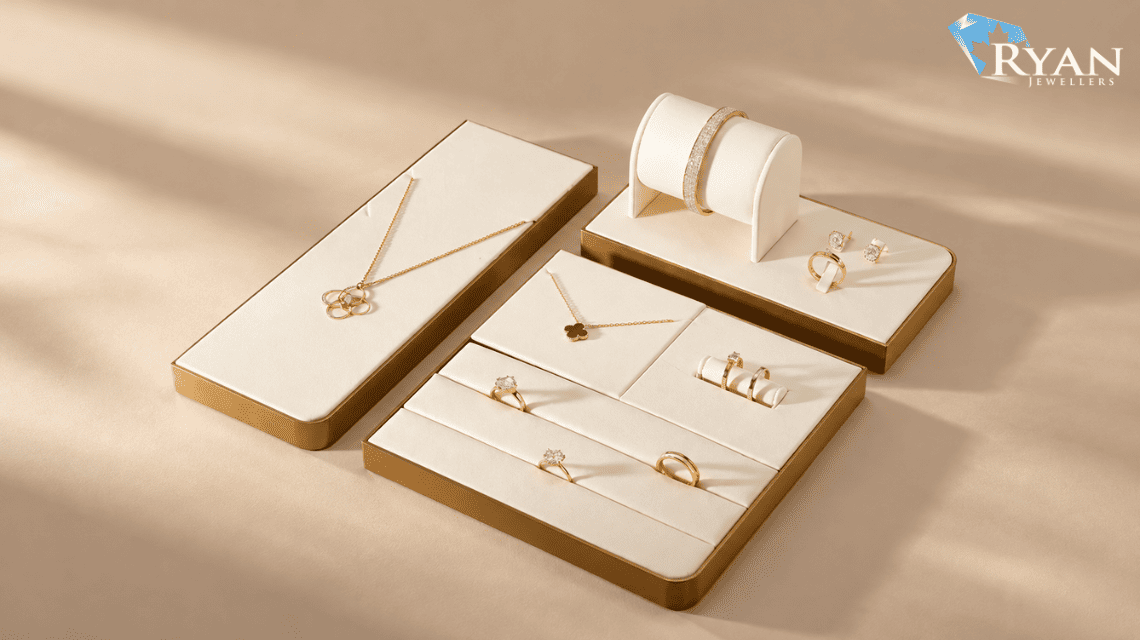
The custom jewelry journey usually begins long before the first piece of metal is shaped.
1. Private Consultation
The first conversation establishes the foundation for the project.
You may discuss:
- Occasion
- Personal style
- Budget
- Preferred materials
- Gemstones
- Design references
- Intended use
- Desired completion date
Bring inspiration images if you have them. They can help communicate your preferences.
2. Concept Development
The jeweller transforms your ideas into a more defined concept.
At this stage, you may decide:
- Overall silhouette
- Centre gemstone
- Metal
- Setting
- Band profile
- Decorative elements
A good design should balance visual appeal with structural practicality.
3. Gemstone Selection
Once the concept is established, the appropriate gemstone can be selected. At this stage, review the available grading information for diamonds and compare stones based on the characteristics that matter most to you.
However, the most expensive stone does not automatically create the best final result. Instead, the gemstone should complement the jewelry’s proportions, overall design, and intended purpose.
4. CAD or Design Approval
Depending on the project, the jeweller may provide a CAD rendering or other design representation.
Review it carefully from multiple angles.
Pay particular attention to:
- Band width
- Setting height
- Stone proportions
- Side profile
- Symmetry
- Engraving
- Overall scale
This is the stage when design changes are generally easier to make.
5. Production
After approval, the design moves into production.
Depending on the piece, this may involve:
- Casting
- Fabrication
- Metalwork
- Setting
- Engraving
- Polishing
The exact process varies according to the design and jeweller.
6. Final Inspection
Before delivery, the finished piece should be checked carefully.
The jeweller may inspect:
- Stone security
- Prongs
- Surface finish
- Symmetry
- Dimensions
- Clasp or fastening
- Overall construction
For a ring, final fitting is also important.
7. Delivery and Long-Term Care
Luxury jewelry should be viewed as a long-term purchase.
Depending on the piece, future maintenance may include:
- Professional cleaning
- Stone inspection
- Prong inspection
- Polishing
- Resizing
- Rhodium replating
- Repairs
Ask about available after-sales services before ordering.
How to Make a Luxury Custom Piece Truly Personal
The most memorable custom jewelry does not necessarily use the most expensive materials. Instead, it tells a story through thoughtful design, meaningful details, and carefully chosen elements that reflect the wearer’s personality.
Incorporate Meaningful Dates
A wedding date, anniversary, or other milestone can be engraved discreetly.
Use Family Gemstones
Existing family jewelry may potentially be incorporated into a new design.
However, gemstones and metal should be professionally assessed before they are removed or reused.
Combine Different Design Influences
You might combine:
Classic diamond + modern setting
or
Vintage-inspired details + contemporary proportions
This can create something personal without making the design overly complicated.
Create a Hidden Element
A hidden diamond, engraving, symbol, or gemstone can add meaning while keeping the exterior clean.
Design for the Wearer
The person wearing the jewelry should remain the centre of the design.
Consider:
- Hand size
- Finger shape
- Lifestyle
- Wardrobe
- Comfort
- Existing jewelry
- Frequency of wear
The best luxury jewelry should feel natural to wear, not simply impressive to look at.
If you’re looking for more inspiration and practical guidance before starting your own design, read our Custom Jewelry Guide to explore custom design options, styles, and what to consider when creating a one-of-a-kind piece.
FAQ About Luxury Custom Jewelry
What is luxury custom jewelry?
Luxury custom jewelry is jewelry designed or significantly personalized for an individual using high-quality materials, detailed craftsmanship, and individualized design elements.
Is luxury custom jewelry always expensive?
Not necessarily. The cost depends on the gemstones, metals, design complexity, craftsmanship, and production requirements. Ultimately, luxury should be defined by the quality, attention to detail, and uniqueness of the finished piece rather than by a specific price category.
Can I use a lab-grown diamond in luxury custom jewelry?
Yes. Lab-grown diamonds can be incorporated into custom engagement rings, wedding bands, necklaces, earrings, and other fine jewelry. In addition, they offer design flexibility while allowing customers to choose the stone size, setting, and overall style that best suits their preferences and budget.
Are natural diamonds better than lab-grown diamonds?
Neither category is automatically better for every buyer. Natural and lab-grown diamonds have essentially the same chemical composition and crystal structure, but they differ in origin. The appropriate choice depends on your priorities.
What is the best metal for luxury jewelry?
There is no universally superior metal, as platinum and gold each offer distinct advantages in colour, durability, purity, maintenance, and price. Ultimately, the right choice depends on the jewelry design, personal preferences, and how the piece will be worn.
How long does luxury custom jewelry take?
The timeline varies according to the complexity of the design, gemstone availability, design development, revisions, manufacturing, stone setting, and finishing. A specific completion date should be confirmed with the jeweller before production begins.
Can I design my own engagement ring?
Yes. You can work with a jeweller to select the diamond, gemstone, metal, setting, band design, and personalized details.
Can I use an existing gemstone?
Potentially. A professional should assess the gemstone before it is removed or incorporated into a new design to determine whether it is suitable for reuse.
Can custom jewelry include rare gemstones?
Yes. Custom jewelry can incorporate gemstones such as sapphire, ruby, emerald, tourmaline, and other coloured stones. Their suitability depends on their physical characteristics and the intended design.
Is CAD necessary for custom jewelry?
Not every custom piece requires CAD. However, CAD can be particularly useful for complex designs because it allows proportions and details to be reviewed before production.
Can luxury custom jewelry be resized?
Many rings can be resized, but the feasibility depends on the design and construction. Some intricate or fully stone-set designs have limited resizing options.
What should I ask a custom jeweller before ordering?
Ask about the complete price, materials, gemstone specifications, grading documentation, design revisions, production timeline, deposit, cancellation policy, warranty, resizing, repairs, and long-term maintenance.
Final Thoughts
Luxury custom jewelry is ultimately about creating something that cannot be reduced to a standard product description. The value of a one-of-a-kind piece comes from the relationship between its materials, design, craftsmanship, personalization, and the experience of creating it.
The most important decisions happen before production begins. Establish your budget, identify your priorities, select gemstones carefully, compare precious metals, review the design from multiple angles, and confirm all specifications before giving final approval.
For Canadian buyers, it is equally important to understand exactly what is included in the purchase and what services will be available after completion. A custom piece may be designed to last for generations, but it still requires appropriate care and maintenance.
If you are ready to turn a personal idea into a truly distinctive piece, explore Ryan Jeweller and discover inspiration for your next luxury custom jewelry design.
This is a wonderful guide for anyone considering a piece of luxury custom jewelry. I especially liked the reminder that quality comes from more than just an expensive gemstone, since craftsmanship and thoughtful design matter just as much. When choosing a custom engagement ring, would you prioritize the diamond itself or the overall design and setting?
I really enjoyed the section about personal details like hidden gemstones and custom engravings. Those small touches can make a luxury piece feel much more meaningful without making the design too elaborate. Have you found that customers tend to prefer subtle personal details or more noticeable statement features in their custom jewelry?
This article offers a great perspective on balancing beautiful design with practical considerations like durability and long-term care. I also appreciate the explanation of natural and lab-grown diamonds, since buyers have different priorities when it comes to budget and personal preference. For a luxury piece intended to be worn regularly, which gemstone or metal combination would you recommend exploring first?