
Summarize the article with:


Buying fine jewelry is often about more than appearance. A well-made ring, necklace, bracelet, or pair of earrings can become part of your everyday style or mark an important occasion such as an engagement, wedding, anniversary, or milestone.
However, the higher price of fine jewelry naturally raises an important question: Is buying fine jewelry worth it?
The answer depends on what you expect from the purchase. Fine jewelry can offer precious metals, diamonds or gemstones, detailed craftsmanship, and designs intended for long-term wear. At the same time, a higher retail price does not automatically mean higher resale value.
For Canadian shoppers, understanding the materials, construction, pricing, maintenance, and intended use can make it easier to decide whether a particular piece is worth the cost.
At Ryan Jewellers, you can explore diamond jewelry, gold pieces, wedding designs, and other fine jewelry created for meaningful occasions and everyday wear.
Why People Choose Fine Jewelry Over Fashion Jewelry
Fine jewelry and fashion jewelry serve different purposes. The distinction is primarily related to materials, construction, design, and intended use rather than simply how expensive a piece looks.
Precious Materials
Fine jewelry commonly uses precious metals such as:
- Gold
- Platinum
- Silver
- Palladium
It may also feature diamonds and gemstones.
In Canada, precious-metal quality claims are regulated. The Competition Bureau states that quality marks for precious-metal articles must be truthful and comply with applicable requirements.
For example, Canadian regulations recognize gold quality designations such as 10K, 14K, and 18K.
Construction and Craftsmanship
Fine jewelry is generally designed with longer-term wear in mind. Depending on the piece, craftsmanship may include:
- Precise stone setting
- Polishing
- Soldering
- Secure clasps
- Detailed finishing
- Reinforced structural elements
These details can affect both appearance and durability.
Fashion Jewelry
Fashion jewelry is typically created around accessibility, styling, and current trends. It may use:
- Base metals
- Plated materials
- Decorative stones
- Synthetic materials
This does not mean fashion jewelry is necessarily poorly made. Rather, it generally serves a different purpose and price segment.
Why Buyers May Prefer Fine Jewelry
Fine jewelry can be attractive to buyers who want:
- Precious materials
- Long-term wear
- Timeless designs
- Diamond or gemstone pieces
- Repair and maintenance options
- Meaningful milestone jewelry
For an elegant celebration, explore our guide to Luxury Wedding Jewelry: Timeless Designs for Your Special Day and discover refined pieces for a memorable bridal look.
Factors That Determine Fine Jewelry Value
The value of fine jewelry is influenced by several factors rather than one characteristic.
Metal Type and Purity
Gold purity is commonly expressed in karats.
| Gold Type | Approximate Gold Content |
|---|---|
| 10K | 41.7% |
| 14K | 58.3% |
| 18K | 75.0% |
| 22K | 91.6% |
| 24K | Approximately 99.9% |
In Canada, gold articles can carry quality marks ranging from 9K to 24K when they meet the applicable requirements.
Higher-karat gold contains more gold, but that does not automatically make it the most suitable option for every piece. Jewelry design, hardness, intended use, and personal preference also matter.
Diamond Quality
For diamond jewelry, the 4Cs provide an important framework:
- Cut
- Colour
- Clarity
- Carat weight
Each characteristic describes a different aspect of the diamond.
For example, cut influences how effectively a diamond interacts with light, while clarity describes internal characteristics and surface features.
Gemstone Characteristics
When jewelry contains coloured gemstones, value can depend on factors such as:
- Type of gemstone
- Colour
- Clarity
- Cut
- Carat weight
- Origin where relevant
- Treatments
Not every gemstone is evaluated in exactly the same way, so buyers should consider the characteristics relevant to that particular stone.
Craftsmanship
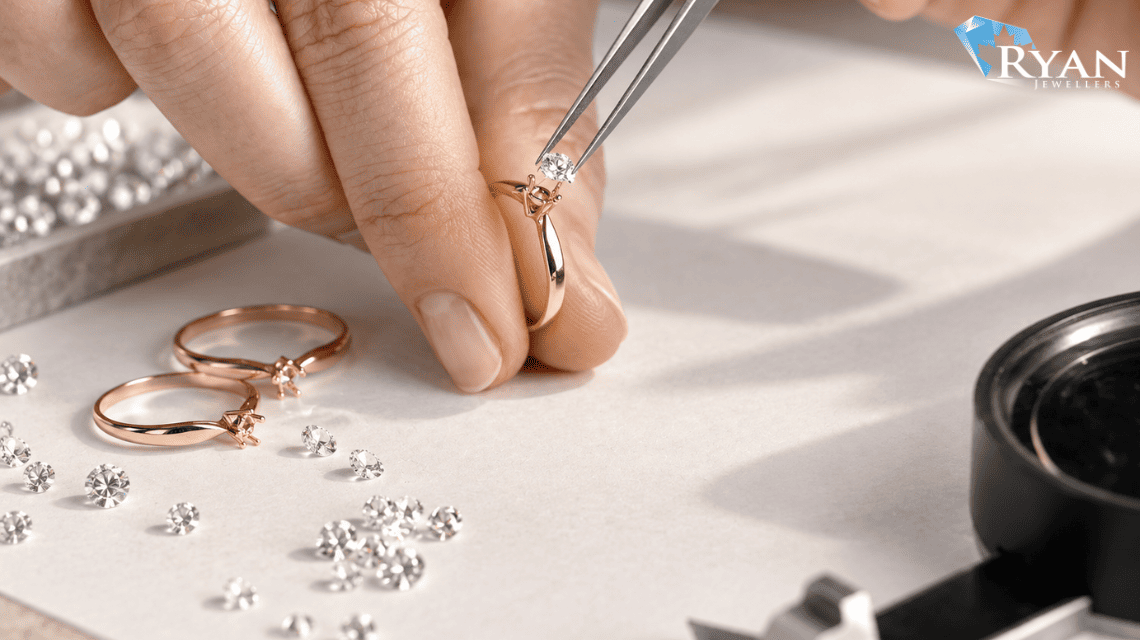
Craftsmanship can significantly influence the price of a jewelry piece.
A simple gold band and an intricate custom ring may contain similar amounts of metal but require very different amounts of labour and production work.
Design
Design can also influence pricing.
Complex jewelry may require:
- More materials
- More detailed setting work
- Specialized production
- Additional finishing
- Greater design time
Therefore, comparing jewelry solely by weight or material content does not provide a complete picture of its price.
Fine Jewelry as a Personal and Emotional Investment
The word “investment” can mean different things when discussing jewelry.
If you mean a financial investment, fine jewelry should be approached carefully. If you mean a purchase that provides lasting personal and sentimental value, the picture is different.
Jewelry Can Mark Important Milestones
Fine jewelry is frequently associated with:
- Engagements
- Weddings
- Anniversaries
- Birthdays
- Graduations
- Family milestones
A piece purchased for one of these occasions may continue to carry meaning long after the original purchase.
Personal Value Can Increase Over Time
Consider a wedding ring.
Its retail price does not change simply because you have owned it for ten years. However, its personal significance may become considerably greater as it becomes associated with shared experiences and memories.
This distinction is important when considering whether fine jewelry is “worth it.”
Custom Jewelry Can Add Personal Meaning
Custom jewelry provides another way to create emotional value.
A custom piece can incorporate:
- Engraving
- Specific diamond shapes
- Meaningful gemstones
- Unique settings
- Personal design elements
The result may be more closely connected to the person or occasion for which it was created.
Does Fine Jewelry Hold Its Value Over Time?
Fine jewelry can retain material value, but that does not mean every piece will maintain or increase its original retail price.
This distinction is particularly important when considering jewelry as a financial asset.
Material Value vs Retail Value
The original retail price can include:
- Precious metals
- Diamonds or gemstones
- Labour
- Design
- Manufacturing
- Retail expenses
- Brand positioning
If the piece is later sold, the resale market may value these components differently.
As a result, the resale price may be lower than the original purchase price.
Gold Can Have Recognizable Material Value
Gold has an established commodity market, so the metal content of a gold jewelry piece can contribute to its underlying material value.
However, the amount you could receive for a piece depends on factors beyond its gold content, including:
- Purity
- Weight
- Current gold prices
- Buyer or dealer
- Condition
- Whether the design or brand adds market value
Diamonds and Resale Value
Diamond resale value is also not determined simply by the original retail price.
Factors can include:
- Diamond characteristics
- Natural or lab-grown origin
- Certification
- Brand
- Condition
- Current market demand
Therefore, buying fine jewelry solely because you expect it to appreciate can involve considerable uncertainty.
Condition Matters
Proper care can help preserve the condition of fine jewelry.
Depending on the piece, maintenance may include:
- Regular cleaning
- Professional inspection
- Polishing
- Checking stone settings
- Repairing damaged components
For frequently worn jewelry, periodic professional inspection can help identify loose stones or structural issues before they become more serious.
If you’re considering a larger, modern diamond look, explore our guide to Lab-Grown Diamond Rings: Bigger Sparkle, Better Value for helpful insights on styles, sizing, value, and choosing the right ring.
How to Buy Fine Jewelry Wisely
If you decide that fine jewelry fits your needs, the next step is evaluating individual pieces carefully.
Start With Your Purpose
Before looking at specific designs, determine what the jewelry is for.
Are you buying:
- An engagement ring?
- A wedding band?
- An anniversary gift?
- Everyday jewelry?
- A special-occasion piece?
The intended use can influence your choice of metal, setting, gemstone, and design.
Set a Realistic Budget
A budget provides a useful starting point.
Instead of focusing only on the total price, consider how the budget is distributed between:
- Metal
- Diamond or gemstones
- Craftsmanship
- Design
- Additional services
This can help you identify which characteristics matter most to you.
Understand the Materials
Ask the jeweler about the exact materials used.
For precious-metal jewelry, look for information about:
- Metal type
- Gold karat
- Platinum purity
- Whether the piece is solid or plated
- Relevant quality marks
Canadian law requires precious-metal quality claims to be accurate when they are made.
Examine Diamond Documentation
When purchasing diamond jewelry, ask whether the stone has grading documentation and review the information provided.
A grading report can help you understand characteristics such as:
- Carat weight
- Colour
- Clarity
- Cut
- Diamond origin where identified
Think About Everyday Wear
A delicate design may be beautiful but unsuitable for someone who works with their hands or frequently participates in physical activities.
Consider:
- Comfort
- Setting security
- Band thickness
- Metal durability
- Maintenance requirements
A jewelry piece should suit the way you actually intend to wear it.
Compare Like With Like
When comparing two jewelry pieces, make sure you are considering similar characteristics.
For example, compare:
- Similar gold purity
- Similar diamond carat weight
- Similar diamond quality
- Similar setting complexity
- Similar craftsmanship
A lower-priced piece may use different materials or construction, so the sticker price alone does not provide a complete comparison.
Ask About Aftercare
Before purchasing, find out whether the jeweler offers services such as:
- Cleaning
- Inspection
- Resizing
- Repairs
- Polishing
Knowing how a piece can be maintained can help you evaluate its long-term practicality.
For a clearer comparison of jewelry pricing, explore our guide on Cheap vs Expensive Jewelry: Understanding Quality, Materials, and Value to learn what really influences the price of a jewelry piece.
Fine Jewelry vs Fashion Jewelry: Quick Comparison
| Factor | Fine Jewelry | Fashion Jewelry |
|---|---|---|
| Materials | Precious metals and gemstones are common | Base or plated materials are common |
| Price | Generally higher | Generally lower |
| Durability | Often designed for long-term wear | Varies by material and construction |
| Personalization | Often available | Usually more limited |
| Maintenance | Professional maintenance may be available | Often more limited |
| Design | Classic and contemporary options | Often trend-focused |
| Typical purpose | Long-term ownership and milestones | Styling and occasional wear |
The distinction does not mean that one category is appropriate for every shopper. Your budget, lifestyle, intended use, and personal preferences should guide the decision.
FAQ About Buying Fine Jewelry
Is buying fine jewelry worth it?
Fine jewelry can be worthwhile for buyers who value precious materials, craftsmanship, durability, personalization, and long-term ownership. Whether a specific piece is worth its price depends on its materials, construction, design, and how well it meets your needs.
Is fine jewelry a good financial investment?
Fine jewelry should not automatically be treated as a financial investment. Resale prices can differ significantly from original retail prices, and future value depends on materials, condition, brand, design, and market demand.
Does fine jewelry last longer than fashion jewelry?
Fine jewelry can be designed for long-term wear and may be repairable or maintainable. However, longevity ultimately depends on the specific materials, construction, frequency of use, and care.
Is 14K gold considered fine jewelry?
14K gold is a recognized gold quality used in jewelry. In Canada, gold articles carrying a quality mark must meet the applicable legal standards.
Is 18K gold better than 14K gold?
Neither is universally better. 18K gold contains more gold, while 14K gold contains a higher proportion of alloy metals. The appropriate choice depends on factors such as appearance, intended use, durability, and personal preference.
Does expensive jewelry always have better quality?
No. Price alone does not establish quality. Buyers should examine the materials, craftsmanship, diamond or gemstone characteristics, construction, and design.
Can lab-grown diamonds be used in fine jewelry?
Yes. Lab-grown diamonds are diamonds and can be incorporated into fine jewelry, including engagement rings, earrings, necklaces, and other designs. Buyers should still evaluate the individual diamond’s cut, colour, clarity, carat weight, and documentation.
How should fine jewelry be maintained?
Maintenance depends on the materials and design. Regular cleaning, careful storage, and professional inspection can help preserve jewelry. Pieces with diamonds or intricate settings may benefit from periodic checks of their stone settings.
Should I buy custom or ready-made fine jewelry?
Custom jewelry can provide greater personalization, while ready-made jewelry offers convenience and established designs. Your timeline, budget, and desired level of customization can help determine which approach suits you.
Final Thoughts
So, is buying fine jewelry worth it?
For many buyers, the value of fine jewelry extends beyond its initial price. Precious metals, diamonds, craftsmanship, durability, design, and sentimental significance can all contribute to the experience of owning a quality piece.
However, fine jewelry should not automatically be considered a financial investment. Retail prices and resale values are different, and future market value can vary considerably.
The most practical approach is to buy based on what you genuinely value. Consider the materials, craftsmanship, design, intended use, maintenance requirements, and budget before making your decision.
At Ryan Jewellers, you can explore fine jewelry and diamond designs for engagements, weddings, gifts, and everyday elegance. Browse our collection to find a piece that combines the materials, style, and craftsmanship you are looking for.
This is a useful guide for anyone considering whether fine jewellery is worth the investment. I especially appreciate the focus on craftsmanship and material quality, since these factors can make a noticeable difference in how a piece looks and holds up over time.
I found the discussion of long-term value particularly interesting. When buying fine jewellery, considering durability, design, maintenance, and how often the piece will actually be worn can be just as important as the initial price.
I like the practical approach to evaluating fine jewellery beyond appearance and trends. Looking at the quality of the materials, craftsmanship, and personal significance can help buyers understand what they are actually paying for.