
Summarize the article with:


Choosing the right earring size is about more than picking a number of millimetres. The size of an earring affects how much attention it draws to the face, how comfortable it feels throughout the day, and how well it works with your hairstyle, outfit, and other jewelry.
In Canada, earrings are commonly measured in millimetres (mm), with the measurement depending on the style. Studs are generally described by the diameter of the front, hoops by their diameter, and drop earrings by their overall length.
Whether you prefer subtle diamond studs, everyday hoops, or statement drop earrings, understanding these measurements makes it easier to compare designs before buying.
At Ryan Jeweller, we offer fine jewelry designed for everything from everyday wear to meaningful occasions. Explore our collection while using this guide to find an earring size that suits your style and proportions.
Understanding Different Earring Sizes
Earring size is usually expressed in millimetres, but the way that measurement is taken depends on the earring style.
Stud Earring Sizes
Studs are typically measured by the diameter of the visible front portion.
Small studs around 3–4 mm can create a subtle, understated look. Michael Hill Canada describes gemstone studs around this range as suitable for a delicate look, while larger studs create greater visual impact.
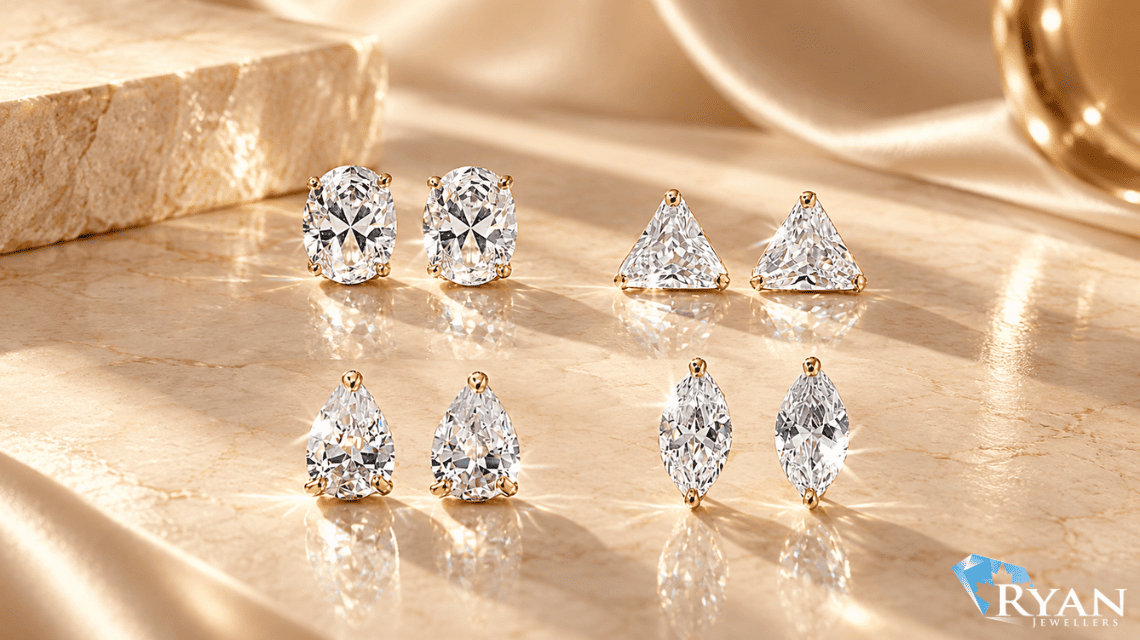
For diamond studs, carat weight can also provide a useful reference. However, remember that carat measures weight, not the physical diameter of the diamond.
For example, two diamonds with the same carat weight can have different dimensions depending on their shape and proportions.
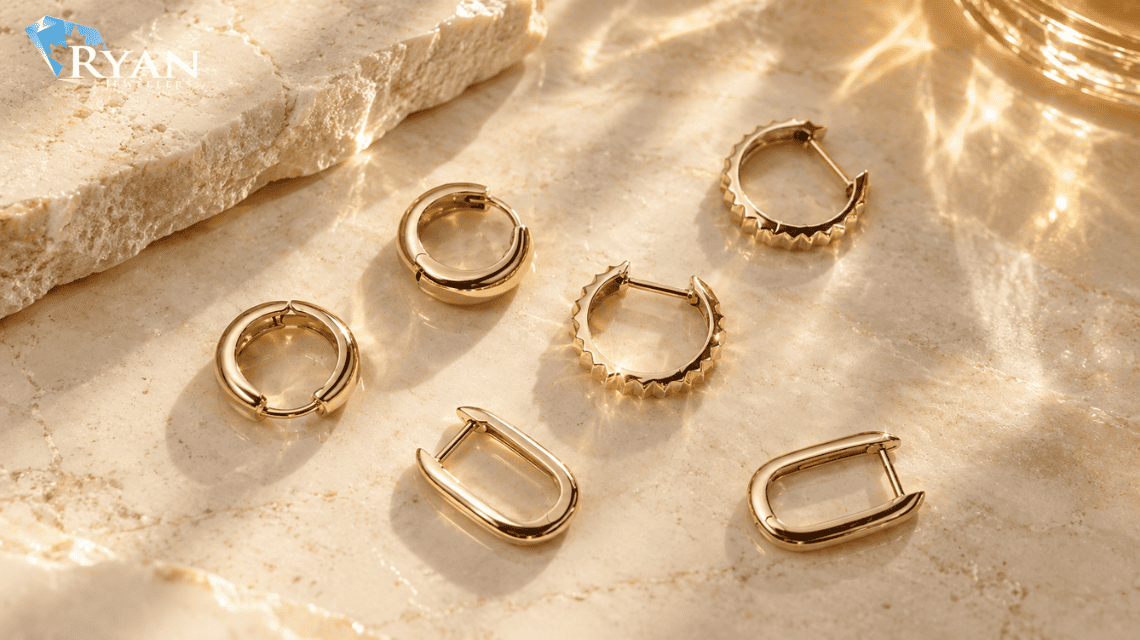
Hoop Earring Sizes
Hoops are generally measured by their diameter.
Common ranges include:
| Hoop Diameter | General Appearance |
|---|---|
| 10–15 mm | Small and subtle |
| 15–20 mm | Refined and noticeable |
| 20–30 mm | Versatile and classic |
| 30–40 mm | Bold and more noticeable |
| 40 mm+ | Large and statement-focused |
These are styling ranges rather than universal industry standards. Individual retailers may categorize sizes differently.
Drop and Dangle Earring Sizes
Drop earrings are generally considered by their overall length, measured from the point where the earring hangs from the ear to its lowest point.
A short drop can add movement without dominating the face, while longer designs create a more dramatic vertical effect.
Why Millimetres Matter
Small differences can be surprisingly noticeable with earrings because they sit close to the face.
For example, a 4 mm stud and an 8 mm stud may both be relatively small pieces, but the 8 mm design has substantially more visual presence.
If you’re looking for more guidance on choosing the right diamond earrings, explore our How to Choose Diamond Earrings Guide for practical tips on diamond size, style, quality, and overall design.
How Earring Size Affects Your Overall Look
The size of your earrings influences where attention is drawn and how the jewelry interacts with your facial proportions.
Small Earrings
Small studs and compact hoops tend to create a subtle appearance.
They work particularly well for:
- Everyday outfits
- Professional settings
- Minimalist jewelry collections
- Multiple-piercing combinations
Small earrings can also be useful when you want another piece of jewelry, such as a necklace, to remain the main focal point.
Medium-Sized Earrings
Medium earrings provide a balance between visibility and versatility.
They can work well for:
- Work
- Dinner
- Casual events
- Weddings
- Everyday wear
Medium hoops or diamond studs can add noticeable sparkle without becoming the dominant element of an outfit.
Large Earrings
Larger earrings naturally attract more attention.
They can include:
- Large hoops
- Long drops
- Oversized gemstone designs
- Statement earrings
These styles can be particularly effective when the rest of the jewelry is relatively simple.
Earring Size and Hairstyle
Your hairstyle can significantly change how earrings appear.
Earrings are generally more visible when hair is:
- Pulled back
- Put into a bun
- Cut short
- Tucked behind the ears
With loose hair, smaller earrings may be partially hidden, while larger hoops and drops can remain more visible.
If you prefer understated, everyday elegance, explore our Minimalist Earrings Collection for delicate designs that are easy to wear on their own or pair with other jewelry.
Choosing Earrings Based on Face Shape and Style
Face shape can provide useful styling guidance, but it should not be treated as a strict rule. The best choice ultimately depends on your preferences and the proportions you want to create.
Round Face Shapes
Longer or more vertical earrings can create additional visual length.
Options include:
- Drop earrings
- Teardrop designs
- Slim elongated styles
- Angular earrings
The vertical shape creates contrast with softer facial contours.
Oval Face Shapes
Oval face shapes generally work well with a wide variety of earring styles.
Options can include:
- Small studs
- Medium hoops
- Drop earrings
- Statement designs
Because oval proportions are relatively balanced, you have more flexibility when choosing size and shape.
Square Face Shapes
Rounded or curved earrings can create contrast with stronger facial angles.
Consider:
- Round hoops
- Oval drops
- Teardrop earrings
- Curved designs
The softer shapes can provide visual contrast without requiring a particular size.
Heart-Shaped Face Shapes
Earrings that become slightly wider toward the bottom can complement the proportions of a heart-shaped face.
Possible options include:
- Teardrop earrings
- Clustered drops
- Fuller-bottom designs
These styles can add visual weight toward the lower part of the face.
Long or Rectangular Face Shapes
Earrings that add horizontal width can provide visual balance.
Consider:
- Wider hoops
- Round studs
- Cluster earrings
- Shorter statement designs
The goal is not to follow a fixed rule but to consider how the earring’s shape interacts with your natural proportions.
Best Earring Sizes for Everyday Wear
For everyday jewelry, comfort is just as important as appearance.
Small Studs for Everyday Minimalism
Small studs around 3–4 mm can provide subtle detail without becoming visually overwhelming.
They can work well with:
- Office outfits
- Casual clothing
- Minimalist wardrobes
- Multiple earrings
Medium Studs for More Presence
A slightly larger stud creates more visible sparkle while remaining relatively versatile.
For diamond studs, the total carat weight should be interpreted carefully because a stated total weight is divided between the pair.
For example, a pair advertised as 1.00 carat total weight generally contains approximately 0.50 carat per earring when the stones are matched equally.
Small to Medium Hoops
Hoops around 15–30 mm can provide a versatile balance between subtlety and visibility.
They can work with:
- Casual outfits
- Professional clothing
- Evening looks
- Everyday jewelry
Comfort Considerations
Size is not the only factor affecting comfort.
Also consider:
- Earring weight
- Metal type
- Closure design
- Post thickness
- How long you plan to wear them
A large but lightweight earring may feel more comfortable than a smaller, heavier design.
If you’re choosing jewelry for your wedding day, explore our Bridal Earrings Collection for elegant designs that can complement your dress, hairstyle, and overall bridal look.
Choosing Statement vs Minimalist Earring Sizes
The choice between minimalist and statement earrings largely depends on how you want your jewelry to function within an outfit.
Minimalist Earring Sizes
Minimalist jewelry typically emphasizes simplicity and versatility.
Consider:
- 3–4 mm studs
- Small hoops
- Simple gemstone earrings
- Delicate geometric designs
These pieces can be worn frequently and combined easily with other jewelry.
They are particularly useful when you want your overall look to feel refined rather than heavily accessorized.
Statement Earring Sizes
Statement earrings are designed to attract more attention.
They may feature:
- Larger hoops
- Long drops
- Larger gemstones
- Sculptural shapes
- Multiple stones
Larger earrings can work particularly well when paired with a simpler necklace or no necklace at all.
Balancing Earrings With Other Jewelry
When wearing a statement earring, consider the rest of your jewelry.
For example:
Large earrings + simple necklace
Creates a clear focal point.
Small studs + statement necklace
Keeps attention around the neckline.
Medium earrings + delicate necklace
Creates a balanced everyday combination.
This does not mean jewelry must always match perfectly. Instead, consider the overall visual weight of each piece.
Choosing Earring Size for Formal Events
Formal occasions provide more flexibility.
Diamond drops, larger studs, and elegant hoops can add sparkle without requiring an overly elaborate jewelry set.
For bridal styling, the dress neckline, hairstyle, face shape, and overall wedding aesthetic should also be considered. Ryan Jewellers’ bridal earring guide similarly emphasizes coordinating earrings with the dress, hairstyle, and personal style.
FAQ About Earring Sizes
What is a good everyday earring size?
There is no single ideal size. Small studs around 3–4 mm and small-to-medium hoops can be versatile choices for everyday wear.
What size are diamond stud earrings?
Diamond studs come in many sizes. Their size can be described by millimetres, individual carat weight, or total carat weight for the pair. Always check whether a listed carat weight refers to one earring or the total pair.
What does 1 carat total weight mean for earrings?
For a matched pair, 1.00 carat total weight generally means approximately 0.50 carat per earring. The exact appearance depends on the diamond’s shape, proportions, and setting.
What size hoop earrings should I buy?
For versatile everyday styling, hoops around 15–30 mm can provide a balance between visibility and wearability. Larger hoops create a more noticeable statement. These ranges are general styling guidelines rather than fixed standards.
Are larger earrings better for a round face?
Not necessarily. Face shape can help guide styling, but there is no universally correct size. Longer or more vertical designs may create additional visual length, while personal preference remains important.
What earring size works best for an oval face?
Oval face shapes can generally accommodate many earring styles, including studs, hoops, and drops. Proportion and personal style can be more important than following a specific size recommendation.
What size earrings are best for work?
Small to medium studs and compact hoops are generally versatile for professional settings because they provide detail without becoming overly dominant.
Should I choose earrings based on face shape?
Face shape can be a useful styling reference, but it should not determine your choice completely. Consider your hairstyle, outfit, personal style, and the visual effect you want to create.
How are earrings measured?
Studs are commonly measured by the diameter of the front, hoops by their diameter, and drop earrings by their overall length. Millimetres are commonly used for these measurements.
Final Thoughts
Choosing the right earring size comes down to balancing proportion, comfort, personal style, and occasion. Small studs can provide effortless everyday elegance, medium earrings offer versatility, while larger hoops and drops can create a stronger statement.
When comparing earrings, look beyond the number of millimetres. Consider the earring’s weight, shape, setting, your hairstyle, face proportions, and how the piece will work with the rest of your jewelry.
At Ryan Jeweller, we help Canadian customers explore fine jewelry for everyday wear, special occasions, and meaningful moments. Discover our earring collection and find a size and style that feels naturally suited to you.
This is a helpful guide for anyone trying to choose the right earring size. I liked the explanation of how different sizes can create completely different looks, especially when comparing everyday styles with more noticeable statement pieces.
I found the sizing information easy to understand and practical. Considering factors such as face shape, personal style, and how often the earrings will be worn is a useful approach when choosing between different sizes.
The guide is a useful reference before buying earrings online. I especially appreciate the focus on understanding measurements, since a pair can look quite different depending on its actual dimensions and how it sits on the ear.