
Summarize the article with:


When choosing a diamond, many buyers focus on size and sparkle, but diamond color is another important factor that influences a stone’s appearance, rarity, and value. Understanding diamond color grades helps Canadian buyers select a diamond that matches their preferred style while making the most of their budget.
Diamond color does not refer to the presence of vibrant colors like gemstones. Instead, it measures how much natural color a diamond displays, with the most valuable diamonds typically appearing completely colorless.
At Ryan Jewellers, we help customers explore high-quality diamond jewelry and understand the characteristics that make each diamond unique.
Understanding Diamond Color Grades
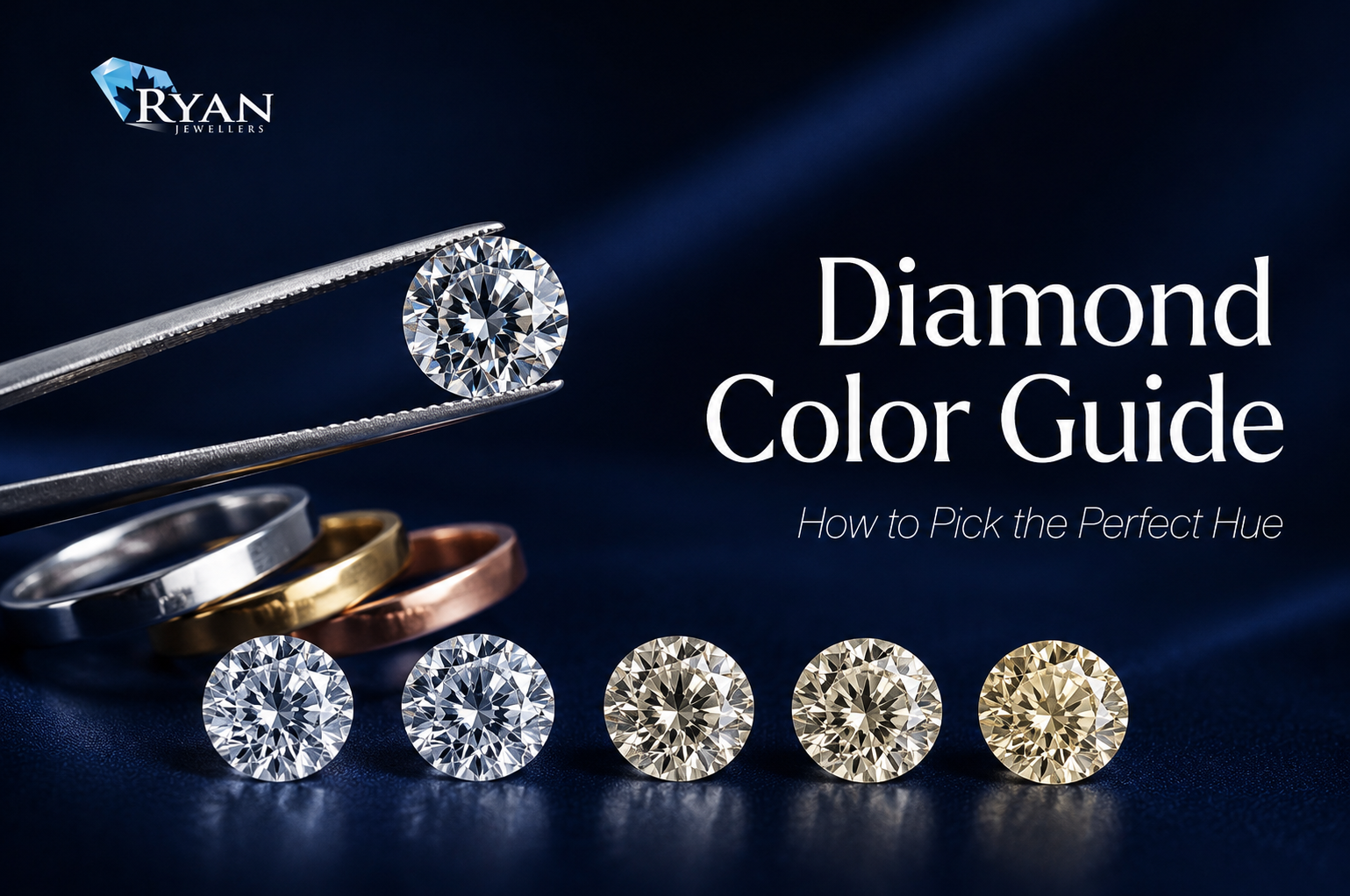
Diamond color is evaluated based on the absence of color within a diamond. The less visible color a diamond has, the higher its color grade is typically considered.
The most widely used grading system is the GIA Diamond Color Scale, which ranges from D to Z.
- D-grade diamonds: Completely colorless and among the rarest
- Near-colorless diamonds: Slight hints of color that are often difficult to detect without comparison
- Lower color grades: More noticeable warm tones, usually appearing yellow or brown
Color is usually assessed by professionals under controlled lighting conditions because subtle differences can be difficult to see with the naked eye.
👉 Discover our curated selection of lab-created diamond rings here: Lab-Created Diamond Rings
D to Z Scale Explained
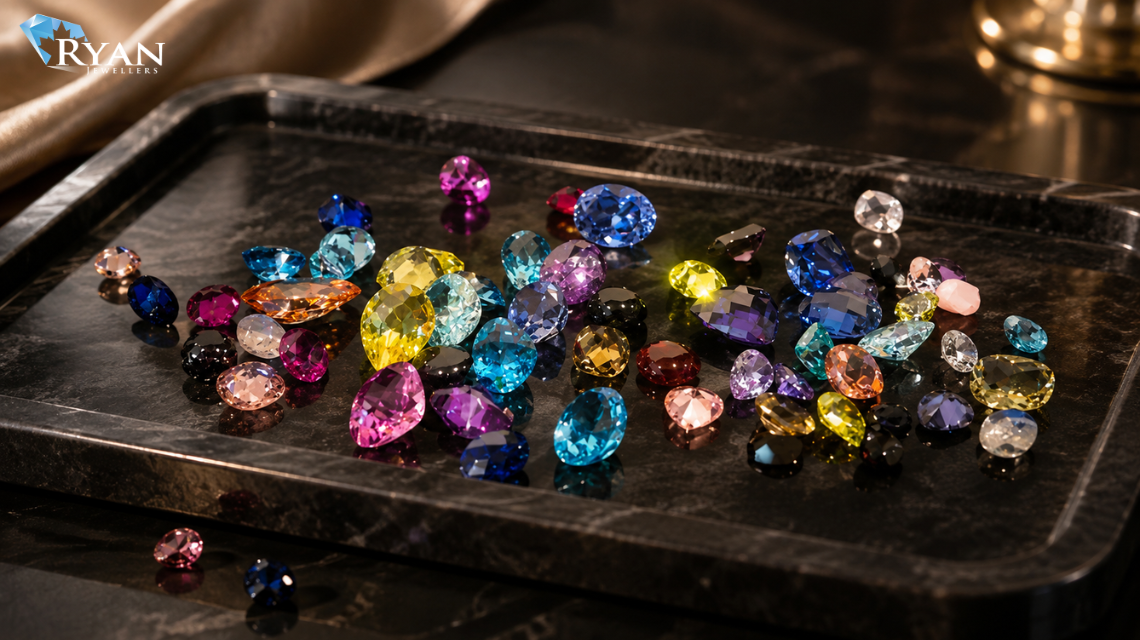
The D to Z scale organizes diamonds according to their color appearance:
D–F: Colorless Diamonds
These diamonds show little to no visible color and are considered highly desirable. They often create a bright, crisp appearance, especially when paired with white gold or platinum settings.
G–J: Near-Colorless Diamonds
Near-colorless diamonds offer an excellent balance between appearance and value. In many jewelry settings, especially when viewed without direct comparison, they can appear very similar to higher color grades.
K–M: Faint Color Diamonds
These diamonds display warmer tones that may become more noticeable. They can create a unique appearance, especially when set in yellow or rose gold.
N–Z: Noticeable Color Diamonds
Diamonds in this range show more visible yellow or brown tones and are typically chosen based on personal preference rather than traditional colorless appearance.
For many Canadian buyers, near-colorless grades provide an attractive combination of beauty and affordability.
How Color Affects Appearance
Diamond color influences how bright and clean a diamond appears. A colorless diamond allows more light to pass through, creating a crisp and brilliant appearance.
However, the impact of color depends on several factors:
- Diamond Shape: Some shapes show color more easily than others. For example, elongated shapes like oval, pear, and emerald cuts may display more visible color compared with round brilliant diamonds.
- Setting Metal: White gold and platinum settings often highlight color differences, while yellow or rose gold can complement warmer diamond tones.
- Diamond Size: Larger diamonds may show color more noticeably because there is more surface area to observe.
Choosing the right color grade is about finding the balance between appearance, style, and budget.
👉 Discover our curated selection of lab-created diamond rings here: Lab-Created Diamond Rings
Choosing Color for Engagement Rings
Diamond color is especially important when selecting an engagement ring because the diamond is often the main focus of the design.
Popular choices include:
Round Brilliant Engagement Rings
Round diamonds are excellent at reflecting light, which can make slightly lower color grades appear bright and beautiful. Many buyers choose G–J grades for strong value.
White Gold and Platinum Settings
These settings often pair well with higher color grades such as D–G because the cool metal tones enhance the diamond’s brightness.
Yellow or Rose Gold Settings
Warmer metals can complement diamonds with slight color, allowing buyers to choose a lower color grade while maintaining an elegant appearance.
Tips for Color Comparisons
When comparing diamond colors, consider these tips:
Compare Diamonds Under Similar Lighting
Lighting can significantly affect how diamond color appears. Compare stones under consistent conditions whenever possible.
Consider Cut Quality First
A well-cut diamond can appear brighter and more attractive, even if it has a slightly lower color grade.
Balance Color with Other 4Cs
Diamond color should be considered together with cut, clarity, and carat weight. A balanced diamond often provides better overall value.
Choose Based on Your Personal Preference
Some buyers prefer a completely colorless appearance, while others appreciate warmer tones that create a unique character.
Consider Lab-Grown Diamonds
Lab-grown diamonds are available across various color grades and are evaluated using the same grading standards as natural diamonds.
👉 Explore our stunning collection of diamond earrings here: Diamond Earrings
👉 Learn more about diamond quality, grading, and buying tips in our complete guide: Diamond Education: The Ultimate Guide to Understanding Diamonds
FAQ – Diamond Color
What is diamond color?
Diamond color measures how much visible color a diamond has, with higher grades representing diamonds that are more colorless.
Is a colorless diamond always the best choice?
Not necessarily. The best choice depends on your budget, jewelry setting, and personal preference.
What diamond color is best for an engagement ring?
Many buyers choose near-colorless grades such as G–J because they provide excellent appearance and value.
Does diamond color affect sparkle?
Color can influence appearance, but cut quality has the greatest impact on a diamond’s sparkle and brilliance.
Are lab-grown diamonds available in different color grades?
Yes. Lab-grown diamonds are available in various color grades and are evaluated using the same diamond grading standards.
Final Thoughts
Understanding diamond color helps buyers make confident decisions when selecting fine jewelry. While colorless diamonds are highly valued, many near-colorless options provide exceptional beauty and value, especially when combined with excellent cut quality and the right setting.
At Ryan Jewellers, we provide carefully selected diamond jewelry and guidance to help Canadian buyers find pieces that match their style, preferences, and budget.
Really enjoyed this article because it explains diamond color in a way that’s easy to understand for first-time buyers. I especially liked how it clarifies that even subtle differences in color can influence both a diamond’s appearance and value. It’s a great reminder that color should always be considered alongside the other 4Cs when making a decision.
Fantastic guide with practical information for anyone shopping for a diamond. The explanation of the GIA D-to-Z color scale really stood out to me because many people assume a higher carat automatically means a better diamond. Do you think most Canadian buyers today are choosing near-colorless grades like G or H to achieve the best balance between beauty and value?
This was a very informative read. I completely agree that understanding diamond color helps buyers make more confident decisions instead of focusing only on size or price. I’d love to see a future article comparing D, F, G, and I color diamonds with side-by-side photos under different lighting conditions so readers can better understand the real-world differences before making a purchase.