
Summarize the article with:


Jewelry can gradually lose its original shine when exposed to air, moisture, sweat, cosmetics, and household chemicals. This change is especially noticeable with silver and some jewelry alloys, although different metals react differently to their surroundings.
The good news is that How to Prevent Jewelry Tarnishing does not require complicated maintenance. With proper storage, careful daily habits, and appropriate cleaning methods, you can reduce unnecessary tarnishing and keep your jewelry looking polished for longer.
Whether you own gold, silver, platinum, or mixed-metal jewelry, understanding why tarnishing happens is the first step toward preventing it. If you’re looking for fine jewelry designed for everyday wear and special occasions, explore the collection at Ryan Jeweller and use the following tips to care for your pieces.
Why Does Jewelry Tarnish?
Tarnishing is a surface reaction that causes jewelry to become darker, duller, or discoloured. It is different from rust, which specifically refers to the corrosion of iron and steel.
How Tarnishing Happens
Tarnishing occurs when certain metals react with substances in their environment.
Common contributing factors include:
- Oxygen in the air
- Moisture
- Humidity
- Sulfur-containing compounds
- Sweat
- Cosmetics
- Perfume
- Household chemicals
Silver is particularly well known for tarnishing because it can react with sulfur compounds in the environment, forming a darker surface layer.
Does Pure Gold Tarnish?
Pure gold is highly resistant to tarnishing. However, jewelry is rarely made from 100% pure gold because pure gold is relatively soft.
Instead, gold jewelry is commonly alloyed with other metals.
For example, 14K and 18K gold contain gold combined with other metals. Those additional metals can influence how the jewelry reacts to its environment.
Therefore, a piece described as gold jewelry can still experience surface changes depending on its composition and finish.
Does Tarnishing Mean Jewelry Is Damaged?
Not necessarily.
Tarnishing is usually a surface change rather than structural damage. In many cases, appropriate cleaning can restore much of the original appearance.
However, aggressive polishing or inappropriate cleaning products can create additional problems. Therefore, the cleaning method should always match the metal and gemstones involved.
If you want more practical tips for keeping your jewelry clean and looking its best, explore our How to Clean Jewelry Guide for simple and effective cleaning methods.
Which Types of Jewelry Are Most Likely to Tarnish?
Not all jewelry tarnishes at the same rate.
Silver Jewelry
Silver is one of the metals most commonly associated with tarnishing.
Sterling silver contains mostly silver along with other metals, commonly copper. Exposure to air, moisture, and sulfur-containing substances can gradually cause a darker surface appearance.
Regular cleaning and proper storage can help slow this process.
Gold Alloys
Gold itself is resistant to tarnishing, but gold alloys can behave differently because they contain other metals.
The higher the gold content, the less likely the piece is to experience certain forms of surface discoloration. However, this does not mean high-karat gold is completely immune to changes in appearance.
Gold jewelry can also accumulate oils, lotions, and dirt, making it look dull even when actual tarnishing is limited.
White Gold
White gold typically contains gold alloyed with other metals and is often finished with rhodium plating.
The rhodium layer gives white gold its bright, white appearance. Over time, normal wear can cause this surface finish to become thinner.
When that happens, the jewelry may appear warmer or less bright.
This is not necessarily tarnishing. Instead, it can indicate that the rhodium finish needs professional maintenance.
Platinum
Platinum is highly resistant to corrosion and does not tarnish in the same way as silver.
However, platinum jewelry can develop scratches and a soft patina through normal wear.
This change in surface appearance is different from conventional tarnishing.
Costume and Mixed-Metal Jewelry
Jewelry containing base metals may be more susceptible to discoloration or corrosion, particularly when plating wears away.
The underlying material, plating thickness, and exposure to moisture and chemicals can all affect how quickly the appearance changes.
How to Store Jewelry to Prevent Tarnishing
Storage plays an important role in limiting exposure to the conditions that contribute to tarnishing.
Keep Jewelry Dry
Moisture can accelerate unwanted surface reactions on susceptible metals.
Before storing jewelry, make sure it is completely dry.
Avoid leaving jewelry in damp areas such as:
- Bathrooms
- Near sinks
- Humid storage spaces
A dry environment is generally better for long-term jewelry storage.
Use an Airtight or Protective Container
For jewelry that tarnishes easily, reducing exposure to air can help slow the process.
Consider storing susceptible pieces in:
- Individual jewelry pouches
- Small airtight containers
- Soft-lined jewelry boxes
- Separate compartments
For silver pieces, anti-tarnish storage materials can provide additional protection.
Store Pieces Separately
Jewelry should not simply be placed together in one container.
Different metals and gemstones can scratch one another.
Separate storage also reduces tangling and friction.
Add Anti-Tarnish Materials
Anti-tarnish strips or tabs can help absorb or reduce exposure to substances that contribute to tarnishing.
If you use these products, replace them according to the manufacturer’s instructions.
Avoid Excessive Humidity
Canadian homes can experience different humidity conditions throughout the year, particularly as indoor heating changes the environment during colder months.
Keeping jewelry in a stable, dry storage area can help reduce unnecessary exposure to moisture.
If you want to keep your engagement ring clean and sparkling at home, explore our How to Clean Engagement Rings at Home Guide for simple, safe cleaning methods and practical care tips.
Daily Habits That Protect Jewelry From Tarnish
Your everyday routine can have a significant impact on how quickly jewelry changes appearance.
Put Jewelry on Last
Apply:
- Perfume
- Lotion
- Sunscreen
- Makeup
- Hairspray
before putting on your jewelry.
This reduces direct contact between these products and the metal.
Remove Jewelry Before Showering
Soap, shampoo, and other personal-care products can leave residue on jewelry.
Regular exposure can make pieces look dull and may contribute to surface changes.
Remove jewelry before showering whenever practical.
Take Jewelry Off Before Swimming
Swimming pools contain chemicals that can interact with certain jewelry materials.
Chlorinated water can be particularly problematic for some metals and finishes.
Therefore, remove jewelry before entering a pool.
Remove Jewelry During Exercise
Sweat contains salts and other compounds that can contribute to residue buildup.
Furthermore, exercise creates additional friction and impact.
Taking jewelry off before exercising can help protect both its appearance and physical condition.
Avoid Household Chemicals
Remove jewelry before using cleaning products, bleach, or other strong chemicals.
Even metals that are relatively resistant to tarnishing can have their finishes affected by harsh substances.
Wipe Jewelry After Wearing
A soft, clean cloth can help remove surface oils and residue after wearing jewelry.
This is a simple habit that can reduce buildup before the piece goes into storage.
Keep Jewelry Away From Direct Contact With Other Metals
Separate jewelry pieces when storing them.
This is particularly helpful for silver and delicate finishes that can become scratched or discoloured through contact.
How to Remove and Prevent Future Tarnishing
When tarnishing has already appeared, the correct cleaning method depends on the jewelry material.
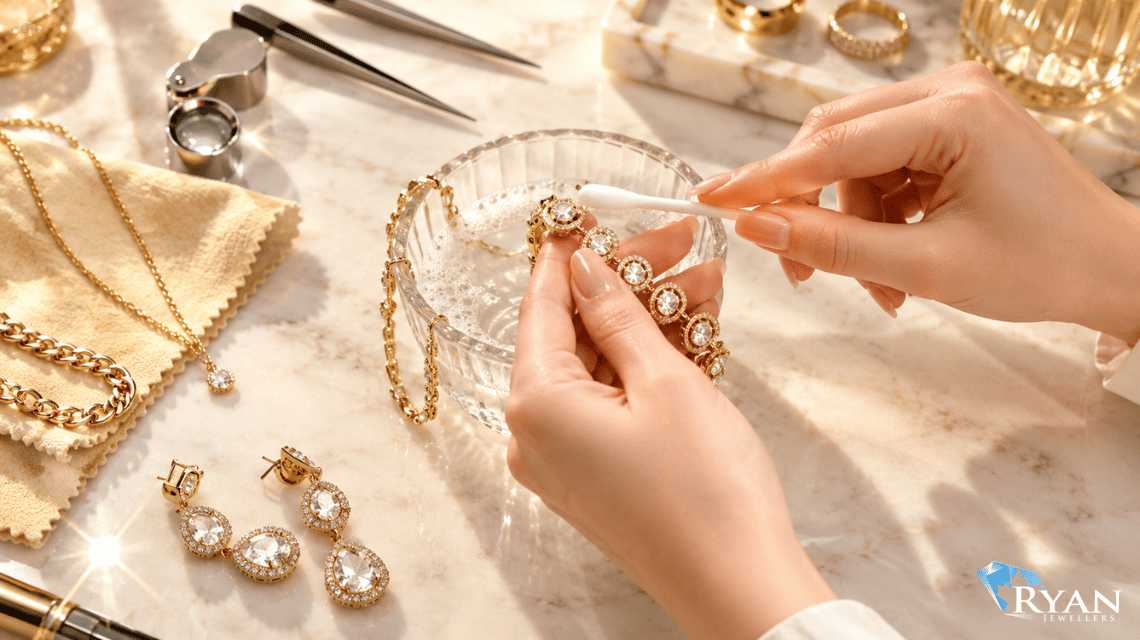
Start With Gentle Cleaning
For many suitable jewelry pieces, mild soap and lukewarm water can help remove surface residue.
A basic method is:
- Add a small amount of mild soap to lukewarm water.
- Place appropriate jewelry in the solution briefly.
- Gently clean with a soft cloth or soft-bristled brush.
- Rinse thoroughly.
- Dry completely with a soft cloth.
However, this method should not automatically be used for every gemstone or jewelry finish.
Use a Silver Polishing Cloth for Silver
A silver polishing cloth can help remove tarnish from suitable silver jewelry.
Follow the instructions provided with the cloth and avoid excessive rubbing.
For heavily tarnished or delicate pieces, professional cleaning may be safer.
Be Careful With Plated Jewelry
Plated jewelry requires extra care because aggressive polishing can remove part of the surface layer.
Avoid abrasive cleaning products unless they are specifically recommended for the jewelry.
Avoid DIY Chemical Solutions
Home remedies involving strong acids, abrasives, bleach, or other chemicals can damage jewelry.
A method that works on one metal may be inappropriate for another.
When in doubt, use a gentle cleaning method or consult a professional jeweller.
Dry Jewelry Completely
After cleaning, make sure the piece is completely dry before storing it.
Residual moisture can contribute to future surface changes.
Maintain a Regular Care Routine
Prevention is easier when jewelry is maintained consistently.
A simple routine can include:
After wearing:
Wipe the jewelry gently.
Before storage:
Make sure it is dry.
Regularly:
Inspect for discoloration, loose stones, or damaged components.
When needed:
Clean according to the material.
Periodically:
Consider professional inspection and cleaning for frequently worn or valuable pieces.
Jewelry Tarnishing vs Other Types of Discoloration
It is useful to distinguish tarnishing from other changes in jewelry appearance.
| Appearance Change | Possible Cause | Typical Approach |
|---|---|---|
| Dark surface on silver | Tarnishing | Appropriate silver cleaning |
| Dull appearance | Oils, dirt, residue | Gentle cleaning |
| Yellowish appearance on white gold | Rhodium wear | Professional refinishing may help |
| Scratches on platinum | Normal surface wear | Professional polishing if desired |
| Green residue on some alloys | Metal reaction | Professional assessment if persistent |
| Faded plating | Surface coating wear | Professional replating may be required |
Not every colour change is tarnishing. If you are unsure what is happening to a valuable piece, professional assessment is preferable to experimenting with household cleaning methods.
If your jewelry needs a deeper clean or careful maintenance, explore our Professional Jewelry Cleaning Guide to learn when professional cleaning may be the right choice and how it can help maintain your jewelry.
FAQ About Preventing Jewelry Tarnish
How can I prevent jewelry from tarnishing?
Keep jewelry clean and dry, limit exposure to moisture and chemicals, remove it before swimming and showering, and store susceptible metals in a dry, protected environment.
What jewelry tarnishes the most?
Silver and jewelry containing susceptible base-metal alloys are generally more prone to visible tarnishing than platinum or high-purity gold.
Does 14K gold tarnish?
14K gold contains a significant proportion of gold but also includes other metals. While gold itself is resistant to tarnishing, the alloy can experience changes in appearance depending on exposure and composition.
Can gold jewelry turn black?
Gold itself does not typically turn black through ordinary tarnishing. However, residues, alloy reactions, surface wear, or exposure to certain chemicals can cause discoloration.
Why does silver jewelry turn black?
Silver can react with sulfur-containing compounds in the environment, producing a dark surface layer commonly recognized as tarnish.
Can I prevent silver from tarnishing completely?
It is difficult to prevent tarnishing permanently. However, limiting exposure to air, moisture, chemicals, and sulfur-containing substances can slow the process considerably.
Should I store jewelry in a plastic bag?
A clean, suitable airtight bag can help reduce exposure to air and moisture for some pieces. However, jewelry should be completely dry before storage, and soft materials should be used to prevent scratching.
Can I wear jewelry in the shower?
It is generally better to remove jewelry before showering. Soap, shampoo, moisture, and other products can accumulate on jewelry and contribute to dullness or surface changes.
Can perfume cause jewelry to tarnish?
Perfume and other cosmetic products can leave residues and contain substances that may affect certain metals or finishes. Applying perfume before putting on jewelry can help reduce direct exposure.
Can toothpaste remove tarnish?
Toothpaste can contain abrasive ingredients, so it is not recommended as a universal jewelry-cleaning solution. Abrasives can scratch metals or damage certain finishes.
How often should I clean tarnished jewelry?
The frequency depends on the metal, how often the piece is worn, and the environment. Clean jewelry when visible buildup or tarnishing appears, while avoiding unnecessary aggressive polishing.
When should I take tarnished jewelry to a jeweller?
Consider professional care when the piece contains delicate gemstones, intricate settings, plating, significant tarnishing, or signs of physical damage. Professional assessment is also appropriate when you are unsure which cleaning method is safe.
Final Thoughts
Learning How to Prevent Jewelry Tarnishing is mainly about controlling exposure. Moisture, air, cosmetics, sweat, chemicals, and improper storage can all contribute to changes in the appearance of susceptible jewelry.
Simple habits make a difference. Remove jewelry before showering, swimming, exercising, or using household chemicals. Keep pieces dry, wipe them after wearing, and store them separately in a protected environment.
Most importantly, remember that different metals require different care. Silver, gold alloys, white gold, platinum, and plated jewelry should not automatically be cleaned using the same products or techniques.
With the right routine, you can reduce tarnishing, protect delicate finishes, and keep your jewelry looking its best for longer.
For more fine jewelry and practical jewelry-care guidance, visit Ryan Jeweller and explore pieces designed for everyday wear, engagements, weddings, and special occasions.
This was a really helpful read, especially the point about moisture and humidity affecting jewelry over time. I live in Canada, so I hadn’t really considered how indoor humidity could affect pieces during different seasons. Do you recommend using anti-tarnish strips for everyday jewelry, or is proper storage usually enough?
I liked how this guide explains that not every change in colour is actually tarnishing. The section on white gold and rhodium wear was especially interesting because I always assumed a yellowish appearance meant the metal was tarnishing. Is professional refinishing the best option when the rhodium layer starts to wear?
I’ve definitely been guilty of wearing jewelry in the shower and while exercising, so this guide gave me a few habits I need to change. I also found the advice about wiping jewelry after wearing it really practical and easy to follow. For silver pieces that already have noticeable tarnish, would you recommend cleaning them at home first or taking them to a jeweller?