
Summarize the article with:


White gold jewelry is a popular choice for engagement rings, wedding bands, earrings, and other fine jewelry because of its bright, contemporary appearance. However, maintaining that finish requires a little more care than simply cleaning the metal itself. Learning how to clean white gold jewelry properly can help remove everyday buildup while protecting its surface and any gemstones.
White gold is an alloy of gold and other metals, and many white gold pieces are finished with a thin layer of rhodium. This rhodium coating gives white gold its bright, reflective appearance but can gradually wear with regular use.
For Canadian jewelry owners, gentle at-home cleaning is useful for routine maintenance, while professional care may be appropriate when the rhodium finish or jewelry setting requires attention. If you are looking for elegant pieces for your collection, explore Ryan Jewellers for timeless diamond and fine jewelry.
Why White Gold Jewelry Requires Special Care
White gold may look similar to platinum or silver, but its composition and finish are different. Understanding these differences helps you choose the right cleaning method.
White Gold Is an Alloy
Pure gold is naturally yellow, so white gold is created by combining gold with other metals to produce a lighter appearance.
The exact alloy can vary between jewelry pieces, which means care recommendations may differ depending on the manufacturer and design.
Rhodium Plating Adds Its Bright Finish
Many white gold jewelry pieces are coated with rhodium, a highly reflective metal from the platinum group.
Rhodium plating can provide:
- A bright white appearance
- Additional surface protection
- A reflective finish that enhances diamond jewelry
However, the coating is not permanent. Friction from everyday wear can gradually reveal the warmer tone of the underlying white gold.
Everyday Products Can Affect Appearance
White gold jewelry can accumulate:
- Skin oils
- Lotion
- Soap
- Cosmetics
- Dirt
- Household residue
Regular gentle cleaning helps remove this buildup before it becomes more difficult to clean.
Discover the latest styles and timeless designs in our New Arrivals collection at Ryan Jewellers.
How to Clean White Gold Jewelry Safely at Home
For many white gold pieces, a gentle soap-and-water method is sufficient for routine cleaning.
Step 1: Inspect the Jewelry
Before cleaning, examine the piece carefully.
Look for:
- Loose diamonds or gemstones
- Bent prongs
- Damaged clasps
- Broken links
- Areas where the finish appears worn
If a stone feels loose or the setting appears damaged, avoid cleaning it at home and have it inspected by a professional jeweller.
Step 2: Prepare a Mild Cleaning Solution
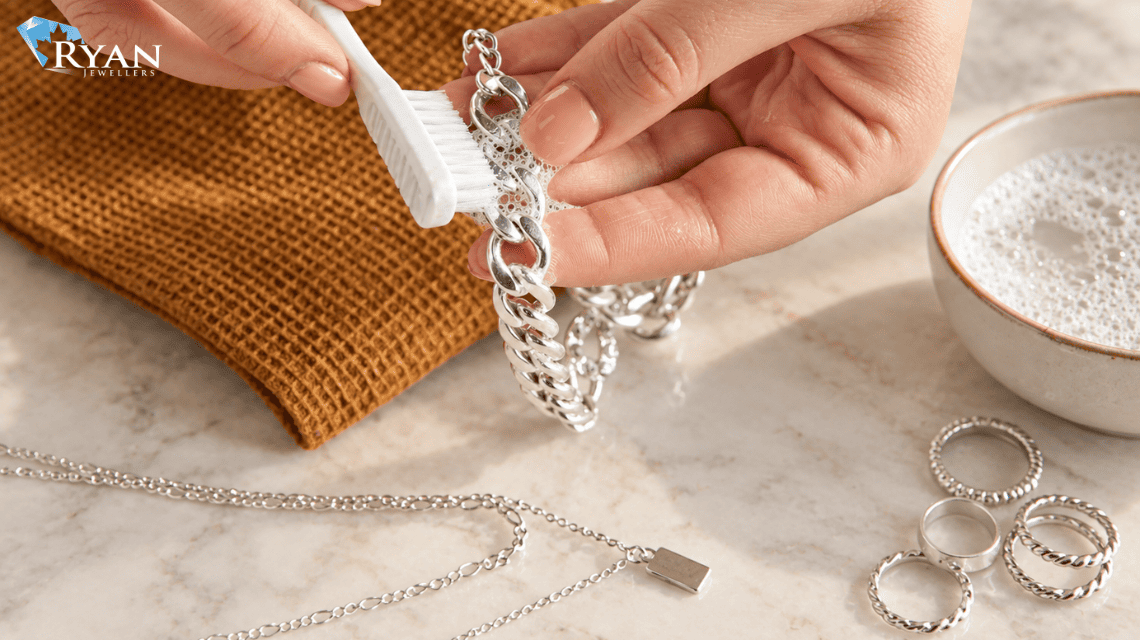
Fill a small bowl with warm water and add a small amount of mild dish soap.
Avoid extremely hot water and strong cleaning chemicals.
Step 3: Soak the Jewelry Briefly
For suitable white gold pieces, allow the jewelry to sit in the solution for several minutes.
This helps loosen oils and surface residue.
Step 4: Gently Brush the Jewelry
Use a clean, soft-bristled toothbrush to gently clean the surface.
Pay particular attention to:
- Behind gemstones
- Around prongs
- Underneath rings
- Between links
Do not scrub aggressively because unnecessary friction can contribute to surface wear.
Step 5: Rinse Thoroughly
Rinse the jewelry with clean water to remove soap residue.
When cleaning small pieces, use a bowl rather than rinsing directly over an open sink.
Step 6: Dry With a Soft Cloth
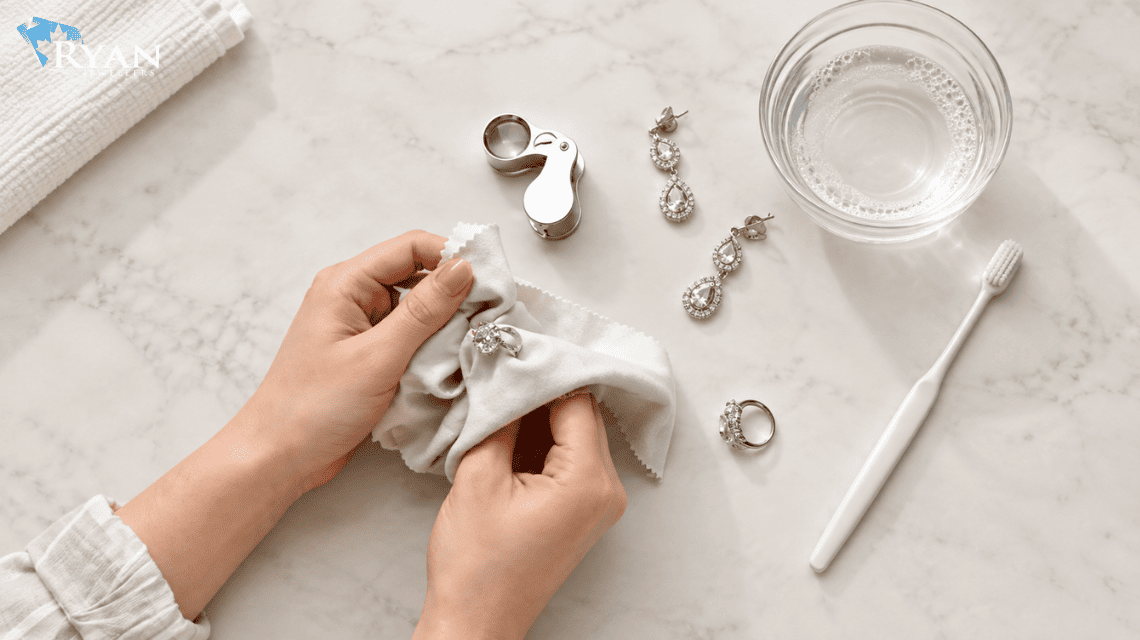
Pat the jewelry dry with a clean, lint-free cloth.
Allow it to dry completely before storing it.
Understanding Rhodium Plating and White Gold Maintenance
One of the most important things to understand when learning how to clean white gold jewelry is the role of rhodium plating.
What Is Rhodium Plating?
Rhodium is a bright, reflective metal commonly applied as a thin surface coating to white gold jewelry.
The coating creates the bright white appearance many people associate with white gold.
Why Does Rhodium Wear Off?
Rhodium plating can gradually wear because of:
- Daily friction
- Contact with other jewelry
- Frequent handling
- Repeated exposure to surfaces
Rings often show wear sooner because they experience more contact than earrings or necklaces.
How Do You Know When Replating May Be Needed?
Signs may include:
- Yellowish or warmer areas appearing
- Uneven colour
- Dullness that does not improve with cleaning
- Visible differences between frequently worn and less-worn areas
Cleaning cannot restore rhodium that has worn away.
In these cases, a professional jeweller may recommend cleaning, polishing, and rhodium replating.
Does Cleaning Remove Rhodium?
Gentle cleaning with mild soap and a soft brush should not intentionally remove rhodium plating. However, abrasive materials and aggressive polishing can contribute to unnecessary surface wear.
Cleaning White Gold Jewelry With Diamonds and Gemstones
White gold is frequently used for diamond engagement rings, wedding bands, earrings, and other gemstone jewelry. When gemstones are present, the entire piece—not just the metal—needs to be considered.
White Gold and Diamonds
Diamonds are highly durable, making them suitable for many everyday jewelry designs. However, the setting holding the diamond can still be delicate.
When cleaning diamond-and-white-gold jewelry:
- Use a soft brush
- Avoid excessive pressure
- Clean behind the stone carefully
- Check the prongs before and after cleaning
If the diamond appears loose, stop wearing the jewelry until it has been inspected.
White Gold With Other Gemstones
Other gemstones may have different sensitivities to heat, chemicals, moisture, and mechanical cleaning.
Do not assume that a cleaning method suitable for diamonds is suitable for every gemstone.
For jewelry containing pearls, opals, emeralds, or treated gemstones, check the specific care recommendations before using a cleaning solution or ultrasonic cleaner.
Add a refined touch to your jewelry collection with elegant designs from our White Gold Chains Collection.
When White Gold Jewelry Needs Professional Care
At-home cleaning is useful for routine maintenance, but some situations are better handled by a professional jeweller.
When the Rhodium Finish Is Worn
If cleaning does not restore the bright white appearance and warmer areas are becoming visible, the jewelry may need professional rhodium replating.
When Stones Are Loose
Loose gemstones should not be cleaned aggressively. Professional inspection can determine whether the setting needs repair.
When the Jewelry Is Heavily Scratched
Cleaning will not remove deep scratches or significant surface damage. Professional polishing may be appropriate depending on the jewelry’s construction and finish.
For Valuable or Heirloom Jewelry
Older, valuable, or intricate pieces may require specialized care. A professional jeweller can assess the materials and recommend an appropriate cleaning method.
Professional Inspection
Regular inspection can help identify:
- Worn prongs
- Loose stones
- Damaged clasps
- Weak links
- Surface wear
Early maintenance can help prevent a small issue from becoming a more expensive repair.
Keep your jewelry sparkling with our guides on:
- How to Clean Diamonds at Home and Keep Them Sparkling
- How to Clean Jewelry: The Complete Guide to Keeping Your Jewelry Sparkling
- How to Clean Gold Jewelry: Safe Methods to Restore Its Shine
- How to Clean Silver Jewelry: Remove Tarnish and Restore Its Shine
- How to Clean Engagement Rings at Home: A Step-by-Step Guide
- Professional Jewelry Cleaning: When and Why Your Jewelry Needs Expert Care
FAQ About Cleaning White Gold Jewelry
What is the safest way to clean white gold jewelry?
For many white gold pieces, warm water, mild dish soap, and a soft-bristled brush provide a gentle cleaning method. Jewelry with delicate gemstones may require specialized care.
Can I use toothpaste to clean white gold?
It is best to avoid toothpaste because its abrasive ingredients may scratch the surface or contribute to wear on the rhodium finish.
Can I use baking soda on white gold?
Avoid abrasive DIY cleaning methods unless a professional has confirmed that they are appropriate for your specific jewelry.
Can I clean white gold with soap and water?
Yes. Mild soap and warm water are commonly suitable for routine cleaning of many white gold pieces.
How often should I clean white gold jewelry?
Frequently worn jewelry can be gently cleaned every few weeks or whenever buildup becomes noticeable. Professional inspection and maintenance can be performed as needed.
Why is my white gold turning yellow?
The rhodium plating on white gold can gradually wear away, revealing the naturally warmer colour of the underlying alloy. Cleaning will not restore worn rhodium; professional replating may be required.
Can I use an ultrasonic cleaner on white gold?
Ultrasonic cleaning is not automatically suitable for every white gold piece. The gemstones, setting, construction, and condition should be considered first. When unsure, consult a professional jeweller.
Final Thoughts
Learning how to clean white gold jewelry properly can help maintain its appearance while reducing unnecessary wear. For many pieces, gentle soap, warm water, and a soft brush are enough for regular at-home maintenance.
However, remember that white gold often relies on rhodium plating for its bright finish. If the surface begins to look warmer or uneven, the issue may be worn plating rather than dirt.
With gentle cleaning, careful storage, and professional inspections when needed, your white gold jewelry can remain beautiful and wearable for years to come.
At Ryan Jewellers, we offer timeless diamond and fine jewelry for Canadian customers looking for quality, elegance, and lasting style. Explore our collections to find your next meaningful piece.
I found these tips for cleaning white gold jewellery really helpful, especially the reminder that it needs a gentler approach than some people might expect. Understanding how to care for the finish properly can make a big difference in keeping favourite pieces looking bright and polished.
This is a practical guide for anyone who wears white gold jewellery regularly. I especially appreciate the focus on simple cleaning habits and avoiding overly harsh products, since proper care can help maintain the appearance of these pieces over time.
I appreciate how the article makes silver jewellery care feel simple and manageable. Regular cleaning and proper storage seem like small habits, but they can make a noticeable difference in preserving the shine and overall appearance of silver pieces.