
Summarize the article with:


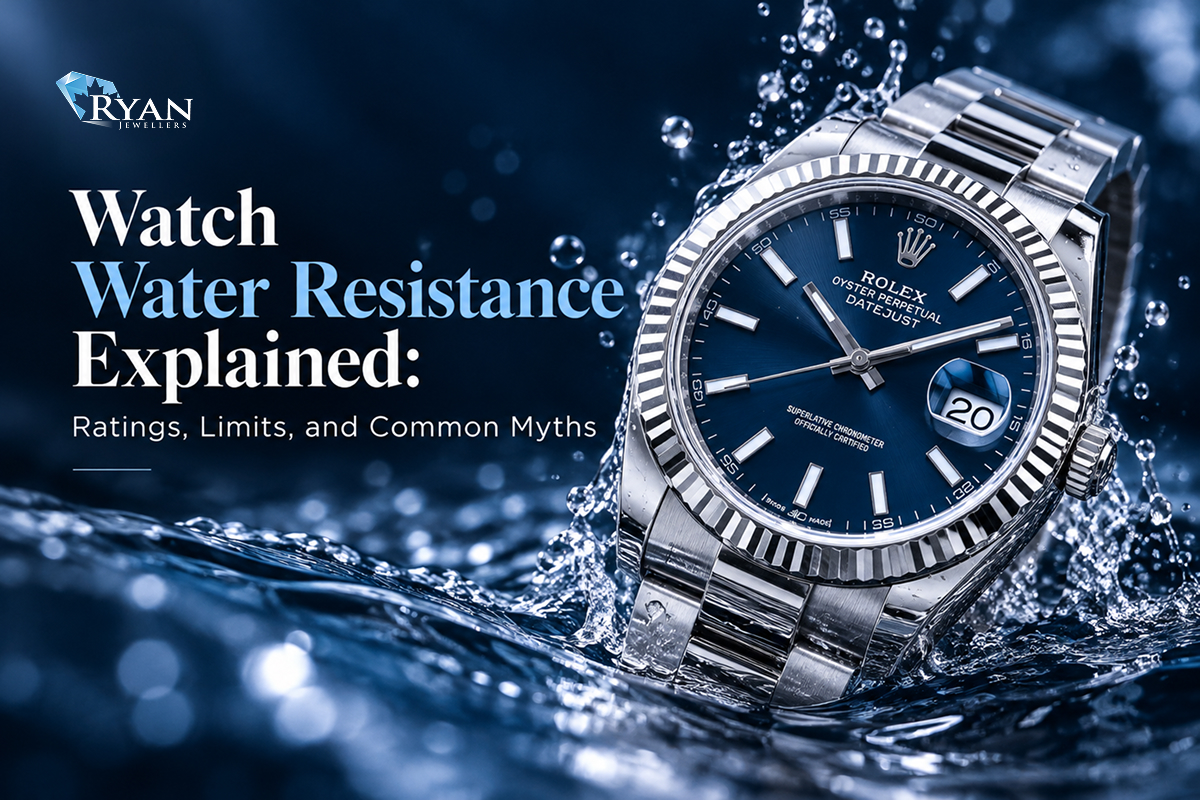
Water resistance is one of the most misunderstood specifications in watchmaking. A marking such as 30M, 50M, 100M, or 200M does not simply mean that a watch can be taken to that exact depth in everyday conditions. These ratings are based on controlled pressure testing, while real-world movement, temperature changes, aging seals, and impact can affect performance.
For Canadian watch buyers, understanding water resistance is especially useful when choosing a watch for everyday wear, swimming, travel, or outdoor activities. The right rating can help you avoid unnecessary damage while also preventing the common mistake of assuming that every “water-resistant” watch is suitable for swimming or diving.
If you’re comparing watches for different lifestyles and occasions, explore Ryan Jeweller to find a timepiece that fits your needs and preferences.
What Does Water Resistance Mean on a Watch?
Water resistance describes a watch’s ability to resist water entering its case under specified testing conditions.
Unlike the term “waterproof,” water-resistant is the more appropriate description because a watch’s resistance can deteriorate over time. Seals can age, components can deform after an impact, and improper handling of the crown can compromise the case.
How Is Water Resistance Tested?
Manufacturers test watches under controlled pressure conditions.
Ratings are commonly expressed as:
- 3 bar / 30M
- 5 bar / 50M
- 10 bar / 100M
- 20 bar / 200M
The pressure rating is more meaningful than treating the number of metres as a literal maximum swimming depth.
For example, a watch marked 30M is not necessarily designed for diving to 30 metres. Citizen specifically notes that its 30M-rated watches are intended for light splashes and are not suitable for swimming or submersion.
Why the Metre Rating Can Be Misleading
The pressure used in laboratory testing does not perfectly reproduce real-world water activities.
Swimming involves arm movement, and activities such as jumping into water can create additional pressure on the watch. Tissot explains that water-resistance testing is performed under controlled conditions comparable to a stationary swimmer or diver, while real-world movement can place different stresses on the watch.
This is why a 100M rating should not automatically be interpreted as “safe to dive to 100 metres.”
Water Resistance Is Not Permanent
Even a well-made watch can lose some of its water resistance over time.
Potential causes include:
- Aging gaskets
- Accidental impacts
- Crown damage
- Deformed case components
- Deteriorated seals
- Improper servicing
Seiko and Tissot both recommend periodic water-resistance checks to help maintain protection.
What Is the Difference Between 30M, 50M, 100M, and 200M Ratings?
The rating indicates the pressure the watch is designed to withstand during testing, but the practical uses depend on the manufacturer’s specifications.
| Rating | Pressure | Typical Use* |
|---|---|---|
| 30M / 3 bar | 3 bar | Splashes, rain, hand washing |
| 50M / 5 bar | 5 bar | Light water activities; some manufacturers permit swimming |
| 100M / 10 bar | 10 bar | Swimming and more active water use |
| 200M / 20 bar | 20 bar | Higher water resistance; suitability for diving depends on the watch |
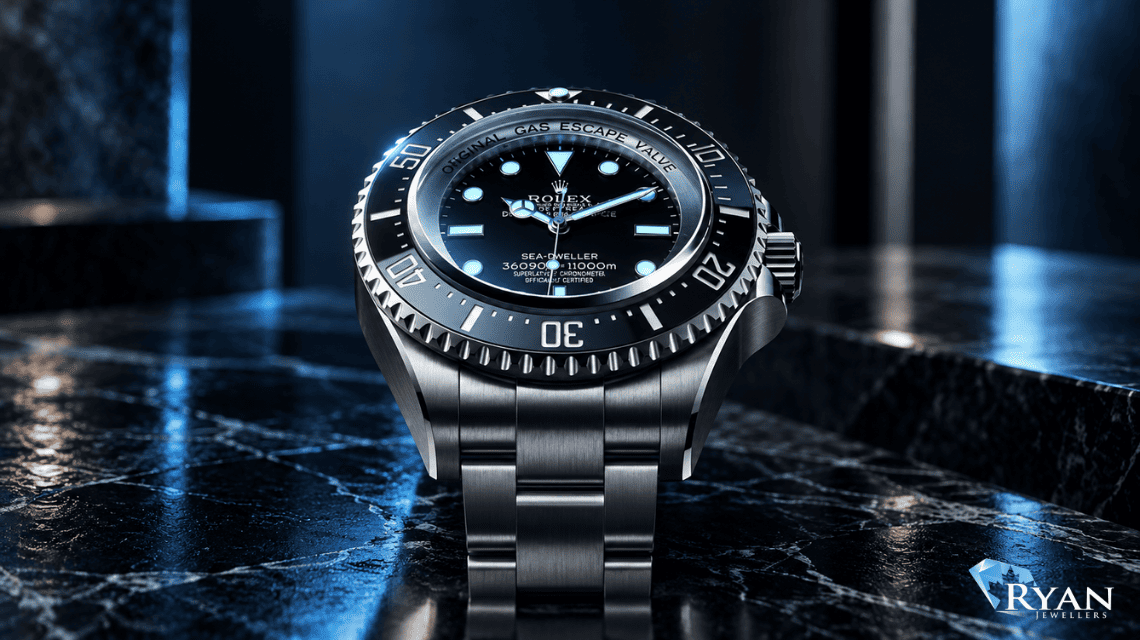
| Diver’s 200M+ | Varies | Designed and tested specifically for diving |
Always follow the manufacturer’s instructions for the specific model.
30M Water Resistance
A 30M or 3-bar rating generally provides basic protection.
Depending on the manufacturer, this may include:
- Rain
- Accidental splashes
- Hand washing
It should not automatically be treated as suitable for swimming.
Citizen explicitly states that a 30M-rated watch is not suitable for swimming or submersion.
50M Water Resistance
A 50M or 5-bar rating provides greater protection.
Manufacturers may permit activities such as swimming or bathing at this level. Tissot, for example, describes 5-bar watches as suitable for hand washing and bathing, while Seiko’s specifications can allow swimming and similar activities for certain 5-bar models.
Because recommendations can differ between models, check the manufacturer’s instructions rather than relying on the rating alone.
100M Water Resistance
A 100M or 10-bar rating offers substantially greater pressure resistance.
Tissot lists 10-bar watches as suitable for showering and swimming, while Seiko’s guidance similarly permits swimming and shallow diving for certain 10-bar models.
However, a 100M rating does not automatically make a watch a professional dive watch.
200M Water Resistance
A 200M or 20-bar rating provides a higher level of water resistance.
Some manufacturers distinguish between a general 200M water-resistant watch and a dedicated diver’s watch.
For example, Seiko identifies its dedicated Diver’s 200M watches separately from standard water-resistant models.
If you intend to scuba dive, choose a watch specifically designed and tested for diving rather than relying solely on a numerical water-resistance rating.
Can You Swim or Shower While Wearing a Water-Resistant Watch?
The answer depends on the watch’s rating and the manufacturer’s instructions.
Can You Swim With a 30M Watch?
Generally, no.
A 30M rating is intended for basic exposure such as splashes and rain rather than swimming.
Can You Swim With a 50M Watch?
Potentially, depending on the specific manufacturer and model.
Some manufacturers consider 5-bar watches suitable for swimming, while others provide more conservative guidance.
Always check the watch’s manual.
Can You Swim With a 100M Watch?
Many manufacturers consider 100M or 10-bar watches suitable for swimming.
However, this does not automatically mean the watch is designed for scuba diving.
For activities involving significant pressure, use a purpose-built diver’s watch when the manufacturer specifies one.
What About Showering?
Showering can involve more than simple water exposure.
Hot water, steam, soap, and rapid temperature changes can contribute to deterioration of seals and water-resistance performance. Seiko specifically advises against wearing a watch in a bath or sauna because steam, soap, and hot water can accelerate deterioration.
Therefore, even if a watch has a reasonable water-resistance rating, avoiding showers and baths can be the more conservative approach.
What About Hot Tubs and Saunas?
These environments can be particularly demanding.
Heat, steam, chemicals, and temperature changes can affect gaskets and other components.
Seiko advises against wearing water-resistant watches in baths and saunas.
What About Salt Water?
If you use a water-resistant watch in the ocean, rinse it with fresh water afterward and dry it thoroughly.
Seiko recommends this practice to remove salt and residue from the case and bracelet.
How Do Seals, Crowns, and Pressure Affect Water Resistance?
Water resistance depends on the complete construction of the watch rather than one individual component.
Gaskets and Seals
Gaskets create barriers around openings and joints in the case.
They may be found around:
- Caseback
- Crown
- Crystal
- Pushers
Over time, gaskets can age and lose their ability to maintain an effective seal.
This is one reason water resistance should be checked periodically, particularly on watches that are regularly exposed to water.
The Crown
The crown is one of the most important potential entry points for water.
A watch with a screw-down crown can provide improved water resistance when the crown is properly secured. Tissot notes that a screw-down crown improves water resistance.
Never assume that a screw-down crown makes a watch waterproof.
It is one component of the overall case construction.
Crown Position Matters
Do not pull out or operate the crown while the watch is wet or underwater.
Seiko specifically warns that turning or pulling out the crown when the watch is wet can allow water to enter the movement.
After setting the watch, make sure the crown is correctly positioned and screwed down where the design requires it.
Chronograph Pushers
If a watch has chronograph pushers, these can also create potential entry points.
Never operate pushers underwater unless the manufacturer specifically states that the model is designed for such operation.
Pressure Changes
Water pressure increases with depth.
This means that a watch used for diving experiences substantially different conditions from one exposed to occasional splashes.
Movement in the water can also create dynamic pressure that differs from static laboratory testing.
Temperature Changes
Rapid temperature changes can also affect a watch.
For example, moving directly from a hot environment into cold water can create thermal stress.
Tissot specifically advises avoiding thermal shocks that could affect the watch.
How Can You Maintain a Watch’s Water Resistance Over Time?
Water resistance is not a “set it and forget it” feature.
Regular care can help preserve the watch’s protective properties.
Keep the Crown Properly Secured
Before exposing a watch to water, confirm that the crown is fully pushed in or screwed down according to the manufacturer’s instructions.
Never adjust the crown while the watch is wet or submerged.
Avoid Unnecessary Water Exposure
Even a highly water-resistant watch does not need to be exposed to water every day.
If you do not need to wear it while showering or bathing, keeping it dry reduces unnecessary exposure to heat, soap, and moisture.
Rinse After Salt Water
After swimming in the ocean, rinse the watch with fresh water and dry it with a soft cloth.
This is particularly useful for removing salt residue from the case and bracelet.
Keep the Watch Clean
Sweat, dirt, and moisture can accumulate around the case and bracelet.
Seiko recommends wiping moisture, sweat, and dirt from the watch with a soft, dry cloth to help preserve the case, gaskets, and band.
Check Water Resistance After a Significant Impact
A strong impact can deform components or affect the crown and seals.
If your watch experiences a significant shock, have its water resistance checked before exposing it to water again.
Have the Seals Checked Periodically
Manufacturers differ in their recommended service schedules.
Tissot recommends annual water-resistance checks through an authorized service centre, while specific service intervals can vary by watch and manufacturer.
The safest approach is to follow the service recommendations for your specific model.
Do Not Open the Watch Yourself
Opening the case can compromise its water resistance if it is not correctly resealed.
For valuable or water-resistant watches, use an authorized or appropriately qualified service provider. Tissot specifically advises against opening the watch yourself.
Common Watch Water Resistance Myths
Myth 1: “30M Means I Can Dive 30 Metres”
False.
The 30M figure represents a pressure rating under controlled testing conditions, not a recommendation to take the watch 30 metres underwater. A 30M-rated Citizen watch, for example, is intended for light splashes rather than swimming.
Myth 2: “100M Means I Can Dive 100 Metres”
Not necessarily.
A 100M rating indicates pressure resistance, but a dedicated dive watch has additional design and testing requirements.
Myth 3: “Water Resistance Never Expires”
False.
Gaskets age, components can deform, and accidental impacts can compromise water resistance.
Myth 4: “A Screw-Down Crown Makes Any Watch Waterproof”
False.
A screw-down crown can improve water resistance, but it is only one component of the complete case system.
Myth 5: “If a Watch Is Water Resistant, I Can Press the Buttons Underwater”
Not necessarily.
Manufacturers commonly warn against operating crowns or pushers underwater unless the watch is specifically designed for it.
How Should Canadian Buyers Choose a Water-Resistant Watch?
Think about the activities you actually perform rather than simply choosing the highest number.
For Everyday Wear
A watch with basic water resistance may be sufficient if you primarily encounter:
- Rain
- Hand washing
- Accidental splashes
For Swimming
Look for a watch whose manufacturer specifically approves swimming at the stated rating.
A 100M-rated watch is commonly suitable for swimming according to major manufacturers, but always check the individual model’s instructions.
For Snorkelling
A higher water-resistance rating may be appropriate, but check whether the watch is specifically approved for the intended activity.
For Scuba Diving
Choose a purpose-built diver’s watch rather than relying solely on a high numerical rating.
Professional dive watches are designed and tested specifically for underwater use.
For Winter and Outdoor Activities
Canadian buyers should also consider temperature changes and environmental exposure.
Cold temperatures, sudden transitions between indoor heating and outdoor conditions, snow, moisture, and impacts can all affect a watch’s performance.
A suitable water-resistance rating is helpful, but the complete construction and manufacturer’s operating guidance matter just as much.
If you want a more detailed overview before making a purchase, read our Watch Buying Guide for practical advice on movements, sizing, materials, features, and budget.
FAQ About Watch Water Resistance
What does 30M water resistance mean on a watch?
A 30M or 3-bar rating indicates resistance to pressure equivalent to 3 bar under controlled testing. It should generally be treated as basic water protection rather than permission for swimming or diving.
Is a 50M water-resistant watch safe for swimming?
It depends on the manufacturer and model. Some manufacturers consider 50M or 5-bar watches suitable for swimming, while others provide more conservative recommendations. Always follow the specific watch’s instructions.
Is a 100M watch suitable for swimming?
Many manufacturers consider 100M or 10-bar watches suitable for swimming. However, 100M does not automatically mean the watch is suitable for scuba diving.
Can I shower while wearing a water-resistant watch?
It depends on the watch, but avoiding showers is the more conservative approach, particularly with lower-rated watches. Heat, steam, soap, and temperature changes can accelerate deterioration of water-resistance components.
How often should watch water resistance be checked?
The recommended interval varies by manufacturer and model. Tissot recommends annual checks, while Seiko advises regular checking because gaskets and components can deteriorate over time. Follow the manufacturer’s service recommendations.
What should I do if my water-resistant watch gets wet inside?
If condensation or water appears inside the crystal, stop exposing the watch to water and have it inspected by an appropriate service centre as soon as possible. Internal moisture can indicate compromised water resistance.
Final Thoughts
Understanding watch water resistance is less about memorizing a single number and more about knowing what that number actually represents. A 30M, 50M, 100M, or 200M rating describes pressure resistance under controlled conditions, not necessarily the maximum real-world depth at which a watch can safely be used.
For everyday wear, choose a rating that matches your typical exposure to water. If you swim regularly, look for a model whose manufacturer specifically approves swimming. For scuba diving, choose a purpose-built diver’s watch rather than relying on a high numerical rating alone.
Just as importantly, remember that water resistance can decline over time. Gaskets age, crowns and case components can be damaged, and significant impacts can compromise the seals. Regular checks, proper crown handling, careful cleaning, and following the manufacturer’s instructions can help preserve the watch’s water resistance.
For Canadian watch buyers, these details are particularly valuable when selecting a timepiece for everyday wear, travel, swimming, or outdoor activities. The best water-resistant watch is not necessarily the one with the largest number—it is the one whose construction and rating genuinely match how you plan to use it.
Ready to explore watches suited to different lifestyles and occasions? Visit Ryan Jeweller to discover the latest selection of watches and fine jewelry.