
Summarize the article with:


Choosing a watch involves more than selecting a movement or dial design. The materials used for the case, bracelet, bezel, and crystal affect how a watch looks, feels, wears, and ages over time. Stainless steel may offer a practical balance of durability and versatility, while titanium can provide a lighter wearing experience. Gold and platinum bring a different combination of appearance, weight, and luxury.
For Canadian buyers, understanding these differences can make it easier to compare watches based on actual specifications rather than marketing language. Precious-metal descriptions also deserve particular attention because Canadian rules require precious-metal quality claims and applicable marks to be truthful and accurate.
If you’re exploring different watch styles and materials, visit Ryan Jeweller to discover timepieces and fine jewelry suited to different preferences and occasions.
What Materials Are Commonly Used to Make Watches?
A watch can contain several different materials, and each component has a specific purpose. The case protects the movement, the crystal protects the dial, and the bracelet or strap secures the watch to your wrist.
Common watch materials include:
- Stainless steel
- Titanium
- Gold
- Platinum
- Ceramic
- Sapphire crystal
- Mineral crystal
- Acrylic crystal
- Leather
- Rubber
- Textile and synthetic materials
The best material depends on what you prioritize. Someone looking for a durable everyday watch may have different requirements from someone searching for a precious-metal dress watch.
Stainless Steel
Stainless steel is one of the most widely used watch materials.
Its popularity comes from a combination of:
- Durability
- Corrosion resistance
- Versatility
- Relatively easy maintenance
- Compatibility with different finishes
Steel cases can have polished, brushed, or mixed finishes.
A polished surface can create a more reflective appearance, while brushing produces a more understated texture.
Stainless steel is particularly versatile because it can work with casual, business, sports, and formal styles.
Titanium
Titanium is valued primarily for its low density compared with steel.
This means a relatively large titanium watch can feel lighter on the wrist than a comparable steel model.
Titanium can be a useful option if you:
- Prefer larger watches
- Dislike heavy watches
- Wear a watch for extended periods
- Participate in active or outdoor activities
Titanium can also have a distinctive grey appearance.
However, not all titanium watches have identical surface characteristics. Some manufacturers apply coatings or treatments to improve scratch resistance or alter the finish.
Gold
Gold is a traditional material for luxury watches.
Common gold colours include:
- Yellow gold
- White gold
- Rose gold
The appearance depends on the alloy composition and finishing.
Gold is relatively soft compared with many watchmaking materials, so scratches and surface marks can develop through normal wear.
However, those signs of wear can also become part of the character of a frequently worn watch.
Platinum
Platinum is a dense precious metal that is used in some high-end watches.
It offers:
- High density
- A naturally white appearance
- A distinctive weight
- Precious-metal status
Because platinum is dense, a platinum watch can feel noticeably heavier than a similar watch made from titanium or stainless steel.
Ceramic
Ceramic is used in some watch cases and bezels.
Its hardness can provide strong resistance to surface scratching.
Ceramic also allows manufacturers to produce highly consistent colours and finishes.
However, hardness does not mean complete resistance to damage. Ceramic can behave differently from metals when subjected to a significant impact.
For that reason, consider both the material and the watch’s construction when evaluating durability.
Sapphire Crystal
Sapphire crystal is commonly used in watches where scratch resistance is a priority.
Synthetic sapphire used for watch crystals is extremely hard and is generally much more resistant to everyday scratching than mineral or acrylic crystal.
However, sapphire is not completely immune to damage.
A strong impact can still cause a crystal to chip or fracture.
Mineral Crystal
Mineral crystal is commonly found in watches at more accessible price points.
It generally provides a practical balance between cost and durability.
Compared with sapphire, it is more susceptible to scratching, but it can still be suitable for everyday use.
Acrylic Crystal
Acrylic is a lightweight material often associated with vintage watches and vintage-inspired designs.
It scratches more easily than sapphire but has an important practical advantage: minor scratches can sometimes be polished out.
Its appearance and ability to develop a distinctive patina can also appeal to buyers who enjoy vintage aesthetics.
Leather
Leather is commonly used for watch straps, particularly on dress and classic watches.
It can provide:
- A traditional appearance
- Comfortable flexibility
- A wide range of colours and textures
Leather is more sensitive to moisture and perspiration than materials such as stainless steel or rubber.
Regular exposure to water can accelerate deterioration.
Rubber and Synthetic Straps
Rubber and synthetic materials are frequently used for sports watches.
They can provide:
- Water resistance
- Flexibility
- Easy cleaning
- Durability
- Casual styling
The specific characteristics vary according to the material and manufacturer.

Stainless Steel vs Titanium: Which Material Is Right for You?
Stainless steel and titanium are two of the most practical choices for everyday watches, but they create noticeably different wearing experiences.
Weight
Titanium has a lower density than stainless steel, so watches made from titanium can feel significantly lighter.
This can be especially useful for larger cases.
Stainless steel, by comparison, provides a more substantial feel on the wrist.
Appearance
Stainless steel usually has a brighter, more familiar metallic appearance.
Titanium often has a darker or more muted grey appearance, although finishing and surface treatments can significantly change how it looks.
Durability
Both materials can be highly suitable for everyday watches.
However, durability should not be judged solely by the material name.
Consider:
- Case construction
- Surface treatment
- Thickness
- Bracelet construction
- Crystal
- Bezel
- Intended use
A well-designed steel watch and a well-designed titanium watch can both provide excellent long-term performance.
Scratches
Titanium can develop visible surface marks relatively easily depending on the grade and finishing.
Some titanium watches use surface treatments designed to improve scratch resistance.
Stainless steel can also scratch, but its surface can often be refinished or polished depending on the specific case and finishing.
Comfort
Titanium has an advantage if low weight is important to you.
Stainless steel can feel more substantial and balanced, which some buyers prefer.
Neither experience is objectively better.
When Should You Choose Stainless Steel?
Stainless steel may be the better choice if you want:
- A traditional appearance
- Versatile styling
- A substantial wrist feel
- Easy access to refinishing
- A broad selection of watch designs
When Should You Choose Titanium?
Titanium may be more appealing if you prioritize:
- Low weight
- Large watch cases
- Active use
- A modern appearance
- Comfortable extended wear
The decision ultimately comes down to your lifestyle and preferences.
What Should You Know About Gold and Gold-Tone Watches?
Gold watches require a little more attention because “gold” can describe several different constructions.
Solid Gold
A solid-gold watch case is made from a gold alloy rather than simply covered with a thin layer of gold.
Gold purity is generally expressed in karats.
For example:
| Gold Type | Approximate Gold Content |
|---|---|
| 10K | 41.6% |
| 14K | 58.3% |
| 18K | 75% |
| 22K | 91.6% |
| 24K | 99.9% |
In Canada, gold articles that carry a quality mark must meet prescribed quality requirements. The Competition Bureau states that gold quality can be represented through karat designations or decimal markings such as .583 for 14K and .750 for 18K.
Gold-Plated Watches
Gold-plated watches use a base material covered with a layer of gold.
The underlying metal is therefore different from a solid-gold case.
Canadian requirements specifically address gold-plated watch cases, including minimum gold quality and plating thickness requirements for products represented as gold plated.
Gold-Filled and Rolled-Gold Cases
These are also different from solid gold.
Canadian regulations distinguish gold-filled, rolled-gold plate, and gold-plated watch cases according to construction, gold quality, and—in the case of watch cases—specified plating thickness requirements.
Understanding the terminology matters because two watches described broadly as “gold” can contain very different amounts and forms of gold.
Gold-Tone Watches
A gold-tone watch does not necessarily contain a significant amount of gold.
“Gold tone” may simply describe the colour or finish.
Therefore, if the material matters to your purchase, look for the specific case construction rather than assuming that a gold-coloured watch is made from solid gold.
Yellow Gold
Yellow gold provides a traditional and warm appearance.
It can work particularly well with:
- Classic dress watches
- Formal clothing
- Yellow-gold jewelry
- Vintage-inspired designs
White Gold
White gold has a cooler appearance and can complement white-metal jewelry.
Some white-gold watches or components may use rhodium plating, depending on their construction and manufacturer.
Rose Gold
Rose gold has a warmer pinkish tone created by its alloy composition.
It can give a watch a more contemporary or distinctive appearance.
How Do Watch Case and Bracelet Materials Affect Durability?
Material is only one part of durability.
The overall construction determines how well a watch handles daily use.
Case Material
The case protects the movement from external conditions.
Stainless steel, titanium, ceramic, gold, and platinum each have different physical properties.
However, a durable case material cannot compensate for poor construction.
Crystal
The crystal is one of the most exposed components of a watch.
Sapphire generally offers strong scratch resistance, while mineral and acrylic crystals provide different combinations of cost, impact behaviour, and maintenance.
For an everyday watch, crystal selection can therefore be just as important as case material.
Bezel
The bezel can receive considerable contact during daily use.
Steel bezels can generally be refinished depending on their design.
Ceramic bezels offer strong resistance to surface scratching but can be more susceptible to certain types of impact.
Bracelet
A bracelet needs to withstand repeated movement and contact.
Look at:
- Link construction
- Pin or screw system
- Clasp
- Adjustment mechanism
- Finishing
- Flexibility
A well-made bracelet can significantly improve the long-term wearing experience.
Strap
Leather, rubber, fabric, and synthetic straps have different maintenance requirements.
Leather generally requires more protection from water.
Rubber and synthetic straps are often easier to clean after exposure to sweat or moisture.
Coatings
Some watches use surface coatings to modify appearance or improve resistance to scratching.
However, coatings can eventually show wear, particularly on edges and high-contact areas.
Ask about the specific coating before assuming that a treated surface is permanently scratch-proof.
Water Resistance
Water resistance depends on the entire construction rather than simply the case material.
Important components include:
- Seals
- Crystal
- Crown
- Case back
- Pushers
- Gaskets
A stainless-steel case does not automatically make a watch suitable for swimming.
Always follow the manufacturer’s water-resistance guidance.
Daily Wear
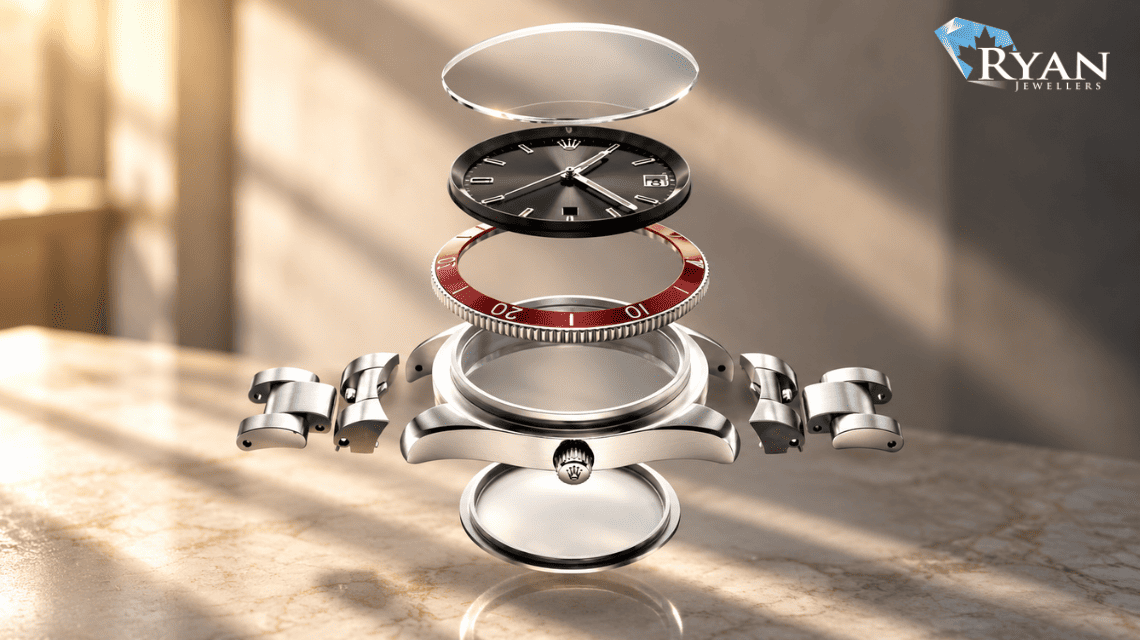
For everyday use, durability usually comes from a combination of:
Case + crystal + seals + bracelet or strap + movement protection
This is why comparing one material in isolation can produce a misleading picture of overall durability.
How Should Different Watch Materials Be Maintained?
Different materials require different approaches to maintenance.
Stainless Steel
For routine cleaning:
- Remove the watch if the manufacturer does not recommend water exposure.
- Use a soft, clean cloth.
- Wipe away fingerprints, dust, and surface oils.
- For water-resistant watches, follow the manufacturer’s cleaning instructions.
- Dry the watch thoroughly.
Avoid abrasive materials because they can alter polished or brushed surfaces.
Titanium
Titanium should also be cleaned with a soft cloth and appropriate manufacturer-approved methods.
If the watch has a protective coating, avoid abrasive polishing unless the manufacturer or an authorized service provider recommends it.
Aggressive polishing can affect the coating or finish.
Gold
Gold should be handled carefully because it can scratch more readily than harder materials.
Use a soft cloth and avoid abrasive cleaners.
If a gold watch develops significant scratches or requires refinishing, professional service may be preferable.
Platinum
Platinum can also develop surface marks through normal wear.
Its dense construction makes it substantial, but it is not scratch-proof.
Professional refinishing can restore the desired surface appearance when necessary.
Ceramic
Ceramic usually requires relatively simple cleaning.
Use a soft cloth and avoid unnecessary impact.
Do not assume that a scratch-resistant ceramic component is immune to cracking from a hard impact.
Sapphire Crystal
Sapphire generally requires minimal maintenance.
A soft microfiber cloth can remove fingerprints and dust.
Avoid placing the watch against abrasive surfaces even though sapphire is highly scratch-resistant.
Leather
Leather straps require more care.
Avoid:
- Prolonged water exposure
- Excessive sweat
- Harsh chemicals
- High humidity
Allow a damp strap to dry naturally rather than using direct heat.
Leather straps also have a finite lifespan and may eventually need replacement.
Rubber and Synthetic Straps
These are generally easier to clean.
Follow the manufacturer’s recommendations and rinse or wipe the strap appropriately after exposure to sweat, salt, or other contaminants.
Gold-Plated Surfaces
Gold plating requires particular care because the gold layer can eventually wear.
Avoid abrasive polishing.
Do not treat a plated watch in the same way as a solid-gold watch.
If the plating has worn significantly, professional refinishing may be required.
Regular Inspection
Regardless of material, periodically inspect:
- Crystal
- Crown
- Case
- Bracelet
- Clasp
- Strap
- Visible seals or gaskets
For mechanical and automatic watches, follow the manufacturer’s recommendations for servicing.
Which Watch Material Is Best for Everyday Wear?
There is no universal winner.
Instead, consider the characteristics that matter most to you.
| Material | Main Advantage | Consideration |
|---|---|---|
| Stainless steel | Versatile and durable | Heavier than titanium |
| Titanium | Lightweight | Can show surface marks |
| Gold | Precious-metal appearance | Softer and heavier |
| Platinum | Dense, premium material | Substantial weight |
| Ceramic | Strong scratch resistance | Can be vulnerable to impact |
| Sapphire | Excellent scratch resistance | Can fracture under severe impact |
| Leather | Classic appearance | Sensitive to moisture |
| Rubber | Practical and easy to clean | More casual aesthetic |
For a general-purpose everyday watch, stainless steel is often a practical choice.
If weight is your main concern, titanium may be preferable.
If luxury materials are the priority, gold or platinum may be more appropriate.
How Should You Choose Watch Materials for Your Lifestyle?
Your daily routine should guide the decision.
Office and Business Wear
Consider:
- Stainless steel
- Gold
- Platinum
- Leather straps
- Slimmer cases
A restrained material combination can work well with business clothing.
Active Lifestyle
Consider:
- Stainless steel
- Titanium
- Ceramic
- Rubber straps
- Sapphire crystal
Durability, weight, and water resistance may matter more than precious-metal construction.
Formal Occasions
Gold, platinum, and polished stainless steel can all work well.
The right choice depends on your clothing, jewelry, and preferred aesthetic.
Travel
For frequent travel, consider:
- Durability
- Weight
- Water resistance
- Easy maintenance
- Strap versatility
A lightweight titanium watch can be attractive for long periods of wear, while stainless steel offers a familiar balance of durability and versatility.
If you want a more detailed overview before making a purchase, read our Watch Buying Guide for practical advice on movements, sizing, materials, features, and budget.
FAQ About Watch Materials
What is the best material for a watch?
There is no single best material. Stainless steel is versatile, titanium is lightweight, gold offers a precious-metal appearance, platinum provides density and luxury, and ceramic offers strong scratch resistance.
Is titanium better than stainless steel?
Not universally. Titanium is lighter, while stainless steel can provide a more traditional appearance and substantial feel. Both can be excellent choices for everyday watches.
Is titanium more durable than steel?
Durability depends on the specific alloy, construction, surface treatment, and type of impact. Material name alone does not determine how durable an entire watch will be.
Does titanium scratch easily?
Titanium can develop visible surface marks, particularly when untreated or finished in a way that makes scratches prominent. Some watches use surface treatments to improve scratch resistance.
Is stainless steel good for everyday watches?
Yes. Stainless steel is widely used for everyday watches because it offers a practical combination of durability, versatility, corrosion resistance, and relatively straightforward maintenance.
Are gold watches durable?
Gold is relatively soft compared with many watchmaking materials, so scratches and marks can develop through normal wear. The specific alloy and construction also matter.
Is a gold-tone watch made of real gold?
Not necessarily. Gold tone may describe the colour or finish rather than solid gold construction. Check the manufacturer’s material specifications to determine what the watch actually contains.
What is the difference between gold-plated and solid-gold watches?
A solid-gold watch case is made from a gold alloy, while a gold-plated case has a layer of gold applied over another material. These constructions have different material properties and maintenance requirements.
Is platinum better than gold for watches?
Neither is universally better. Platinum is denser and naturally white, while gold is available in several colours and purities. The choice depends on appearance, weight, design, and personal preference.
Is ceramic better than stainless steel?
Ceramic can provide excellent scratch resistance, while stainless steel offers a different combination of toughness, refinishing options, and traditional appearance. Ceramic can also behave differently under impact.
Is sapphire crystal better than mineral crystal?
Sapphire is generally much more resistant to scratches, while mineral crystal can provide a lower-cost alternative with different impact and replacement considerations.
Is sapphire crystal unbreakable?
No. Sapphire is highly scratch-resistant but can still chip or fracture under a sufficiently strong impact.
How do I clean a stainless-steel watch?
Use a soft cloth and follow the manufacturer’s cleaning instructions. If the watch is water-resistant and approved for water exposure, appropriate gentle cleaning may be possible. Avoid abrasive products.
How do I clean a gold watch?
Use a soft cloth and avoid abrasive cleaners. For valuable gold watches or significant surface wear, professional maintenance is preferable.
How should I care for a leather watch strap?
Keep leather away from prolonged moisture, excessive sweat, and harsh chemicals. Allow it to dry naturally and replace the strap when it becomes significantly worn.
Can I polish a titanium watch?
It depends on the finish and whether the watch has a protective coating. Uncontrolled polishing can change the original surface finish, so professional advice is recommended.
What material is best for a sports watch?
Stainless steel, titanium, ceramic, and synthetic straps can all be suitable. The best choice depends on weight, impact exposure, water resistance, scratch resistance, and personal preference.
What material is best for a luxury watch?
Gold, platinum, stainless steel, titanium, and ceramic can all be used in luxury watches. Luxury is not determined by material alone; movement, craftsmanship, finishing, design, and brand also contribute.
Final Thoughts
A watch materials guide is useful because material choice affects much more than appearance. Stainless steel, titanium, gold, platinum, ceramic, sapphire, leather, and synthetic materials each offer different combinations of weight, durability, maintenance, and style.
For everyday wear, stainless steel remains a highly practical option because of its versatility and durability. Titanium can be a better fit if low weight is important. Gold and platinum provide a more distinctive luxury experience, while ceramic and sapphire can offer strong resistance to everyday surface wear in the appropriate applications.
Canadian buyers should pay particular attention when a watch is described using precious-metal terminology. The Competition Bureau states that precious-metal quality marks must be truthful and meet applicable requirements. Canadian rules also distinguish between solid precious metals and plated constructions, including specific requirements for gold-plated watch cases.
Most importantly, do not judge a watch by its case material alone. Crystal, bezel, seals, bracelet, strap, coatings, movement protection, and overall construction all contribute to the watch’s performance and longevity.
Before buying, check the exact material specifications, understand how the watch should be maintained, and consider the conditions in which you will actually wear it.
If you’re ready to compare different watch styles and materials, visit Ryan Jeweller to explore watches and fine jewelry suited to your personal style.