
Summarize the article with:


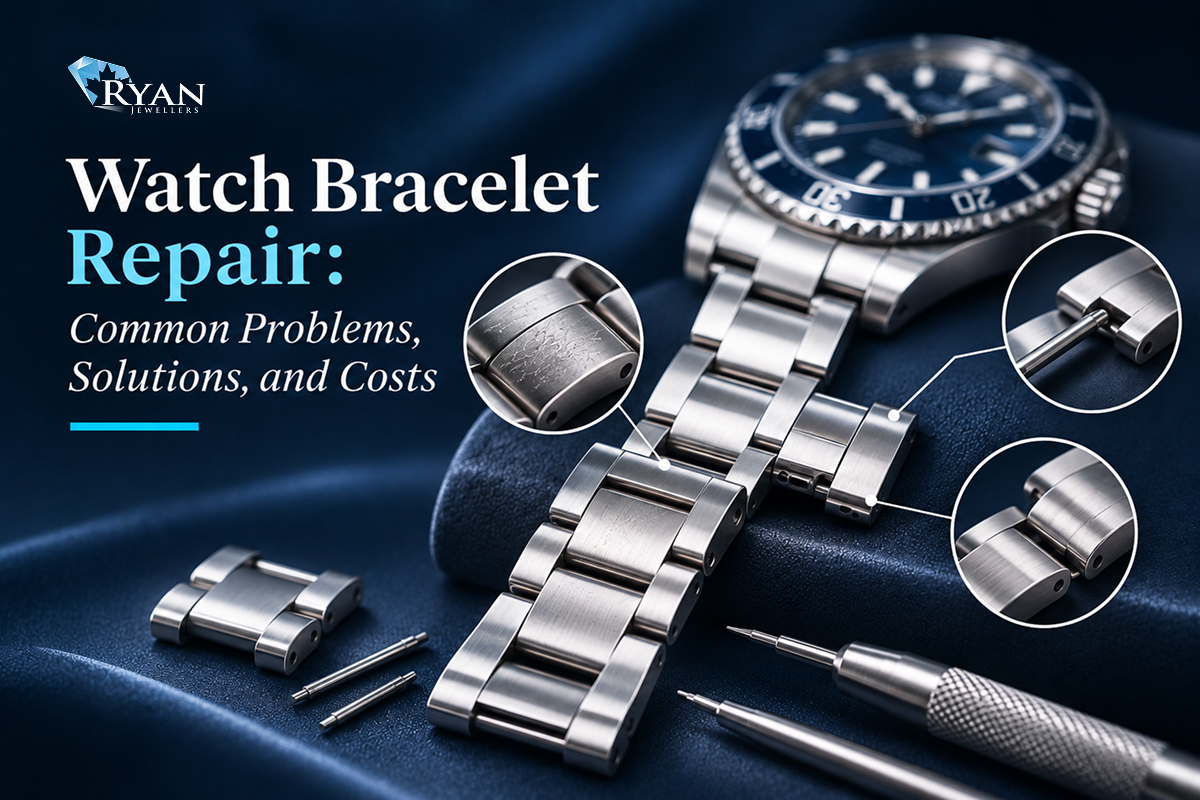
A damaged or loose bracelet can affect more than the appearance of a watch. Worn links, loose pins, damaged screws, and faulty clasps can make a timepiece uncomfortable to wear or increase the risk of it falling from the wrist. Watch bracelet repair can often address these issues without replacing the entire bracelet.
The right solution depends on the bracelet’s material, construction, brand, and the extent of the damage. Canadian watch repair providers offer services ranging from link replacement and bracelet sizing to clasp repair, polishing, and complete bracelet refurbishment.
If you’re considering a new luxury timepiece or replacing a damaged bracelet, explore the watch collection at Ryan Jeweller for options suited to your style and everyday wear.
What Are the Most Common Watch Bracelet Problems?
Watch bracelets are exposed to regular movement, sweat, moisture, impacts, and friction. Over time, these factors can cause individual components to loosen or wear.
Loose Bracelet Links
Loose links are among the most common bracelet problems.
A link may develop excessive movement because of wear to its connecting pin, screw, or other fastening component. A bracelet can still appear intact while feeling noticeably looser than when it was new.
Professional inspection can determine whether the link needs tightening, a new pin or screw, or replacement.
Damaged Pins and Screws
Metal bracelets commonly use pins, screws, or other fasteners to connect individual links.
A damaged or missing component can cause the bracelet to separate unexpectedly. This is particularly important to address before continuing to wear the watch.
Worn or Damaged Clasps
The clasp keeps the bracelet secured around the wrist. Common problems include:
- A clasp that does not close properly
- A clasp that opens unexpectedly
- Bent clasp components
- Excessive clasp looseness
- Damaged locking mechanisms
- Worn adjustment positions
Some clasps can be repaired, while others may require replacement.
Canadian watch repair specialists commonly offer clasp repair alongside bracelet sizing and link replacement.
Scratched or Worn Finishes
Stainless steel bracelets can accumulate scratches through everyday use.
Light surface marks are generally cosmetic, while deep scratches or heavily worn finishes may require professional refinishing.
A professional should preserve the original combination of polished and brushed surfaces rather than simply polishing the entire bracelet to a uniform shine.
Stretched Bracelets
Older metal bracelets can develop excessive flexibility between links.
This is sometimes described as bracelet stretch.
The condition may result from long-term wear between connecting components. Depending on the construction, individual links or fastening components may be replaceable, but severely worn bracelets may require more extensive restoration or replacement.
Corrosion or Surface Damage
Salt, sweat, moisture, and chemicals can contribute to surface deterioration.
Stainless steel is corrosion-resistant but not completely immune to corrosion. Titanium and other materials can also require specific care depending on their finish or surface treatment.
How Do You Identify Damaged or Loose Bracelet Links?
Identifying a bracelet problem early can prevent a minor issue from becoming a lost watch.
Check for Excessive Side-to-Side Movement
Hold the bracelet gently and check whether individual links move significantly more than neighbouring links.
Some articulation is normal because links must move naturally around the wrist. Excessive looseness, however, can indicate wear.
Inspect Pins and Screws
Look closely at the connection points between links.
Signs of concern include:
- A protruding pin
- A missing screw
- A visibly damaged screw head
- Uneven gaps between links
- A pin that repeatedly moves out of position
Do not attempt to force a loose component back into place with household tools.
Test the Clasp
Open and close the clasp several times while holding the watch securely.
The clasp should close completely and remain securely locked.
If it opens with very little resistance or feels unstable, have it inspected before wearing the watch outside the home.
Check the End Links
The links connecting the bracelet to the watch case are particularly important because they experience movement and stress whenever the watch is worn.
If an end link appears loose or the spring bar does not seem properly seated, professional inspection is recommended.
Look for Uneven Bracelet Movement
Place the watch on a flat surface and observe how the bracelet articulates.
A single section that bends or moves differently from the rest may indicate worn or damaged components.
Pay Attention While Wearing It
Sometimes the first sign is not visible.
You may notice:
- A new rattling sound
- Increased bracelet movement
- The clasp sitting differently
- The watch rotating more frequently
- A link catching on clothing
These changes can indicate that the bracelet should be inspected.
Can Broken Watch Bracelet Links and Clasps Be Repaired?
In many cases, yes. The appropriate solution depends on what has failed and whether replacement components are available.
Link Replacement
A damaged link may be replaced if the manufacturer or a suitable supplier can provide the correct component.
This is generally preferable to improvising a repair that changes the bracelet’s original construction.
Pin or Screw Replacement
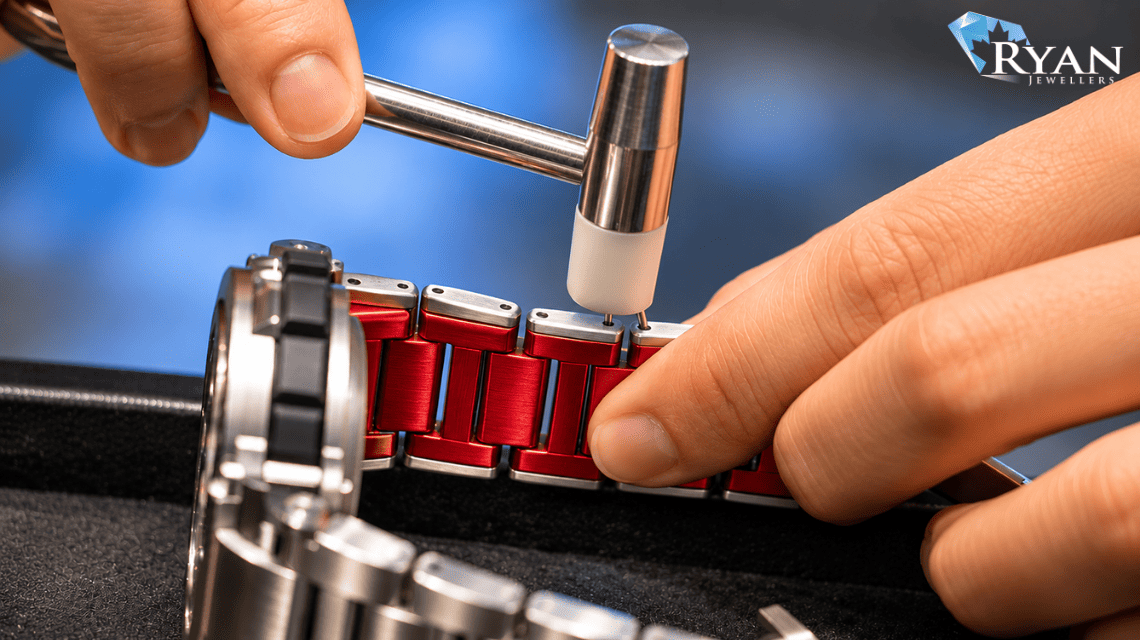
A worn, bent, or missing pin or screw can often be replaced individually.
The replacement must be compatible with the bracelet’s dimensions and fastening system.
Using an incorrect component can leave the bracelet insecure.
Clasp Repair
A clasp may sometimes be repaired when the problem involves a bent or worn component.
Other situations require a complete clasp replacement.
The choice depends on:
- Brand
- Bracelet design
- Availability of replacement parts
- Extent of damage
- Value of the watch
Canadian watch specialists list clasp repair, bracelet link replacement, and bracelet adjustment among their repair services.
Spring Bar Replacement
Spring bars connect many watch bracelets to the case.
A worn or damaged spring bar can create a serious security problem because the bracelet may detach from the watch.
Replacement is usually preferable to continuing to use a questionable spring bar.
Bracelet Refinishing
If the bracelet is structurally sound but heavily scratched, professional refinishing may improve its appearance.
However, polishing should be approached carefully.
Removing too much material can soften edges and alter the original finishing pattern.
Complete Bracelet Replacement
Replacement may be the better option when:
- Multiple links are severely worn
- The clasp is extensively damaged
- Replacement components are unavailable
- The bracelet has significant structural corrosion
- Repair costs approach the price of a replacement bracelet
For valuable watches, the availability of an original manufacturer bracelet or component should also be considered.
How Much Does Watch Bracelet Repair Cost?
There is no single Canadian price for watch bracelet repair because the cost depends on the specific problem, bracelet construction, brand, parts, and labour.
Current Canadian pricing provides useful reference points.
For example, Bijouterie Jamil currently lists steel bracelet resizing at approximately CAD $15–$30, spring-bar replacement at CAD $10–$20 per pair, strap fitting at CAD $15, and full bracelet refurbishment at approximately CAD $80–$200.
It’s About Time & Jewelry in British Columbia lists bracelet sizing starting at CAD $20 and offers strap and bracelet service as part of its watch repair work.
These are examples rather than standardized Canadian prices.
Basic Link Adjustment
If the bracelet only needs links removed or added, the cost may be relatively low.
The exact price depends on the bracelet and whether the required work involves pins, screws, or a more complicated adjustment system.
Pin or Screw Replacement
Replacing a small bracelet component is generally less expensive than replacing an entire bracelet.
However, the cost can increase when the original component is proprietary or difficult to source.
Clasp Repair
Clasp repairs vary significantly.
A simple adjustment may require limited labour, while a damaged luxury clasp may need specialized parts or complete replacement.
Bracelet Refurbishment
A more comprehensive service can include:
- Deep cleaning
- Link inspection
- Pin or screw replacement
- Clasp adjustment
- Polishing
- Brushed-finish restoration
- General tightening
Canadian pricing examples for a full bracelet refurbishment currently range around CAD $80–$200, depending on the work required.
Luxury Watch Bracelets
Luxury bracelets can cost considerably more to repair because original components may be expensive or available only through authorized channels.
For example, Rolex’s Canadian service information distinguishes bracelet and case repairs from standard servicing and states that additional bracelet parts are charged separately. Bracelet sizing itself is complimentary within its service program.
For higher-end watches, a Canadian certified watchsmith may also require an initial assessment before quoting additional work. P.D. Murphy Jewellers, for example, states that work on brands including Rolex, OMEGA, Breitling, and Grand Seiko starts at CAD $150+ for diagnostics, minor conditioning, and inspection.
When Should You Repair or Replace a Watch Bracelet?
Repair is not always the best solution.
The decision should consider the bracelet’s condition, the value of the watch, replacement-part availability, and the expected cost of the work.
Repair When the Damage Is Localized
Repair is usually worth considering when only one or two components are affected.
Examples include:
- One damaged link
- A missing screw
- A worn spring bar
- A loose clasp
- Minor surface scratches
Replacing a single component can be more practical than replacing the entire bracelet.
Consider Refurbishment When the Bracelet Is Worn
A bracelet that remains structurally sound but looks tired may benefit from professional refurbishment.
Cleaning, tightening, and refinishing can improve its appearance and functionality without requiring a completely new bracelet.
Replace When Structural Damage Is Extensive
Replacement may make more sense when multiple components are severely worn or damaged.
It can also be preferable when repair would require extensive labour and the bracelet is readily available as a replacement.
Consider Originality on Luxury and Vintage Watches
For collectible or vintage watches, originality can be important.
Replacing an original bracelet with an aftermarket alternative may change the watch’s character and potentially affect its collectibility.
Before replacing a bracelet, determine whether an original manufacturer component can be sourced.
Compare Repair Cost With Replacement Cost
Ask for a written estimate when the repair is significant.
A simple comparison should include:
Repair cost + future maintenance
versus
Replacement bracelet cost + fitting
The cheapest option is not always the best option if the replacement bracelet is of lower quality or changes the watch’s original specifications.
Do Not Ignore a Security Problem
A bracelet that may detach should not be treated as a cosmetic issue.
If a clasp, spring bar, pin, or link is unreliable, stop wearing the watch until it has been inspected.
A relatively inexpensive repair can prevent the watch from falling onto a hard surface or being lost.
How Can You Prevent Watch Bracelet Damage?
Regular care can reduce unnecessary bracelet wear and help identify problems earlier.
Clean the Bracelet Regularly
Dirt and sweat can accumulate between links and around the clasp.
For suitable water-resistant watches, gentle cleaning with mild soapy water and a soft brush may be appropriate, but the manufacturer’s care instructions should take priority. Ryan Jewellers’ own watch care guidance also recommends gentle cleaning and avoiding harsh chemicals.
Avoid Harsh Chemicals
Perfume, solvents, strong cleaners, and some cosmetics can affect finishes and straps.
Apply cosmetics and fragrance before putting on your watch and allow them to dry.
Avoid Heavy Impact
Remove the watch during activities where the bracelet may experience strong impacts or crushing forces.
Mechanical watches and their bracelets are designed for normal wear, but significant impacts can still cause damage.
Check the Clasp Periodically
Before putting the watch on, make sure the clasp closes securely.
This simple habit can help identify a problem before the watch is exposed to unnecessary risk.
Store the Watch Separately
When the watch is not being worn, store it where the bracelet will not repeatedly contact other metal objects.
A dedicated watch case or soft-lined storage compartment can reduce unnecessary scratches.
Have Valuable Bracelets Professionally Inspected
For expensive or frequently worn watches, periodic professional inspection can identify worn pins, screws, links, and clasps before they fail.
For more information on common watch problems, repairs, and maintenance, read our complete Watch Repair Guide.
FAQ About Watch Bracelet Repair
How much does watch bracelet repair cost in Canada?
Basic bracelet sizing can start around CAD $15–$20, while more extensive refurbishment can cost approximately CAD $80–$200 or more. Luxury watches and repairs requiring original parts can cost substantially more.
Can a broken watch bracelet link be repaired?
Often, yes. Depending on the damage, a technician may replace the link, pin, screw, or other component. If the bracelet has extensive wear or structural damage, replacement may be more appropriate.
Can a watch clasp be repaired?
Some clasp problems can be repaired or adjusted, while severely damaged clasps may need replacement. The correct solution depends on the clasp design, watch brand, and availability of parts.
Is it safe to repair a watch bracelet at home?
Simple adjustments may be possible with the correct tools, but professional repair is safer for expensive watches. Incorrect tools can scratch the bracelet, damage screws or pins, or leave the bracelet insecure.
When should I replace a watch bracelet instead of repairing it?
Replacement may be preferable when multiple components are severely worn, the bracelet has structural damage, replacement parts are unavailable, or repair costs approach the price of a suitable replacement bracelet.
Does repairing a luxury watch bracelet affect its value?
It depends on the repair. Using appropriate original components and preserving the bracelet’s original finish can help maintain the watch’s integrity. For vintage or collectible watches, aftermarket parts or excessive refinishing may affect originality and desirability.
Final Thoughts
Watch bracelet repair can often extend the useful life of a timepiece without requiring a complete bracelet replacement. Problems such as loose links, worn pins, damaged screws, faulty clasps, and worn finishes can frequently be addressed by a qualified jeweller or watchmaker.
The cost varies considerably in Canada. Basic sizing may start around CAD $15–$20, while comprehensive bracelet refurbishment can reach CAD $80–$200 or more. Luxury watches may require original manufacturer components and specialist handling, which can increase the final price.
Before authorizing significant work, ask what components need to be repaired, whether original parts are available, and whether repair or replacement provides the better long-term solution. For valuable vintage or luxury watches, preserving the original bracelet design and finish should also be part of the decision.
Most importantly, never ignore a bracelet that feels structurally unsafe. A loose clasp, damaged spring bar, or failing link can cause the entire watch to fall and potentially become damaged or lost.
If you’re considering upgrading your collection, explore the selection of watches at Ryan Jeweller and find a timepiece designed for comfortable, long-term wear.