
Summarize the article with:


A quartz watch can be highly reliable and convenient, but its battery will eventually need to be replaced. Knowing when to arrange watch battery replacement can help prevent unexpected stoppages and, in some cases, reduce the risk of battery leakage damaging the movement.
Battery life varies by watch, movement, complications, battery type, and usage. As a general guideline, many traditional quartz watches operate for around 2–5 years on a battery, although some models may require replacement sooner or last longer. Canadian watch-service providers commonly report similar ranges.
For Canadian owners, battery replacement should also be considered part of broader watch care. Opening a case can affect the watch’s sealing system, so water resistance may need to be checked afterward, particularly on watches designed for swimming or other water exposure.
If you’re looking for a quality timepiece that can become part of your long-term collection, explore the watch selection at Ryan Jeweller
How Do You Know When a Watch Battery Needs Replacing?
The most obvious sign is that the watch has stopped, but waiting until the battery is completely depleted is not always the best approach.
The Seconds Hand Starts Jumping
Some quartz watches include an end-of-life indicator.
Instead of moving once per second, the seconds hand may begin jumping in larger intervals, such as every four seconds. Tissot, for example, documents a four-second jumping indication on certain quartz movements and advises replacing the battery promptly.
Not every quartz watch uses this system, so the manufacturer’s instructions should always take priority.
The Watch Stops
A completely stopped quartz watch may simply have an exhausted battery.
However, a dead watch does not automatically prove that the battery is the only problem. If a new battery does not restore normal operation, the movement may require professional diagnosis.
The Watch Is Losing Time
A quartz watch is generally expected to provide consistent timekeeping, although accuracy varies by movement and environmental conditions.
If your watch begins losing or gaining noticeably more time than usual, the battery may be nearing the end of its life, but other issues are also possible.
Functions Become Unreliable
A weak battery can sometimes affect watches with additional functions, including:
- Chronographs
- Alarms
- Backlighting
- Digital displays
- Multiple time zones
A watch that behaves inconsistently should be inspected rather than assuming that a battery replacement alone will solve the problem.
The Battery Has Been Installed for Several Years
You do not necessarily need to wait for the watch to stop.
If the battery has been installed for several years and you do not know its condition, proactive replacement can be sensible. Tissot specifically recommends replacing a worn-out battery immediately to reduce the risk of leakage and consequent movement damage.
How Long Does a Watch Battery Usually Last?
There is no single battery lifespan that applies to every quartz watch.
A reasonable general range is about 2–5 years, but actual performance depends on the movement and how the watch is designed. A Canadian watch-service provider, for example, cites 2–5 years as a typical range, while specific battery references used by another Toronto service provider are commonly listed around 1–4 years depending on the model.
Factors That Affect Battery Life
Several factors can influence how quickly a battery is depleted.
Movement Design
Different quartz calibres consume different amounts of electrical energy.
A simple three-hand quartz movement generally has different power requirements from a chronograph or multifunction movement.
Additional Complications
Features such as:
- Chronographs
- Alarms
- Backlighting
- Digital displays
- Additional electronic functions
can increase energy consumption.
Battery Type
Watch batteries come in different sizes and chemistries.
The correct battery should always be selected according to the movement or manufacturer’s specification rather than simply choosing one that physically fits.
Temperature
Temperature can affect battery performance and quartz movement accuracy.
Tissot notes that ambient temperature can influence the precision of quartz movements.
This is relevant for Canadian owners who may expose a watch to significant seasonal temperature differences.
Do Not Assume Every Battery Lasts the Same Amount of Time
A battery that lasts four years in one watch may last considerably less in another.
Instead of treating a particular number of years as a guarantee, use the manufacturer’s recommendation and the watch’s actual performance as your guide.
How Much Does Watch Battery Replacement Cost in Canada?
The cost of watch battery replacement varies depending on the watch, battery, case construction, brand, and whether additional services are required.
For a standard quartz watch, current Canadian service listings provide a useful general reference:
- Standard battery replacement may start around CAD $15–$25.
- Some Canadian jewellers list basic replacements from approximately CAD $25.
- Specialty batteries, gaskets, pressure testing, or more complicated watches can increase the total cost.
For example, one Toronto watch-repair provider lists battery replacement at approximately CAD $20–$25, while a Windsor jeweller lists battery replacement starting at CAD $25.
These are market examples rather than a universal Canadian price. A luxury watch or complicated case may require additional assessment.
What Can Increase the Price?
Several factors can make a battery replacement more expensive:
- Difficult-to-open caseback
- Screw-down case construction
- Specialty battery
- Chronograph movement
- Replacement gasket
- Water-resistance testing
- Luxury or high-value watch
- Additional movement problems
A water-resistant watch may require more than simply replacing the battery.
Battery Replacement vs Battery Replacement With Testing
For an everyday quartz watch that is not exposed to water, a basic battery change may be sufficient.
A watch designed for regular swimming or water exposure should receive more attention after the case has been opened.
Ask whether the service includes:
- Gasket inspection
- Gasket replacement if necessary
- Case resealing
- Water-resistance testing
This additional step can be more important than saving a small amount on the battery service itself.
Can You Replace a Watch Battery Yourself?
Technically, some simple watches can be opened and fitted with a replacement battery at home. However, DIY replacement is not the safest option for valuable or water-resistant watches.
Why DIY Replacement Can Be Risky
Opening a watch requires the correct tools for the specific case.
Using an inappropriate tool can:
- Scratch the caseback
- Damage the case
- Bend retaining components
- Damage the movement
- Dislodge the gasket
- Compromise water resistance
A battery replacement is therefore not simply a matter of removing the old cell and installing a new one.
Battery Polarity Matters
Watch movements are designed for a specific battery orientation and specification.
Installing the wrong battery or placing it incorrectly can cause the movement to malfunction.
Always follow the movement manufacturer’s instructions.
The Gasket Matters Too
The case gasket helps prevent moisture from entering the watch.
Once the case is opened, the gasket should be inspected and replaced when necessary.
Simply closing the case again does not automatically guarantee that the original water resistance has been restored.
When DIY May Be Less Appropriate
Professional replacement is strongly preferable when the watch is:
- Water resistant
- Valuable
- Vintage
- A luxury brand
- Equipped with a complicated movement
- Difficult to open
- Still under manufacturer warranty
Tissot specifically recommends using an approved service centre or authorized retailer because they have the tools and equipment required for battery replacement and the necessary checks.
Why Should You Consider Professional Battery Replacement?
Professional watch battery replacement involves more than installing a new battery.
A qualified technician can inspect the watch while the case is open and identify issues that may otherwise go unnoticed.
Correct Battery Selection
A professional can identify the correct battery specification for the movement.
This is particularly useful when the watch’s battery reference is difficult to identify or the model uses a less common cell.
Inspection of the Movement
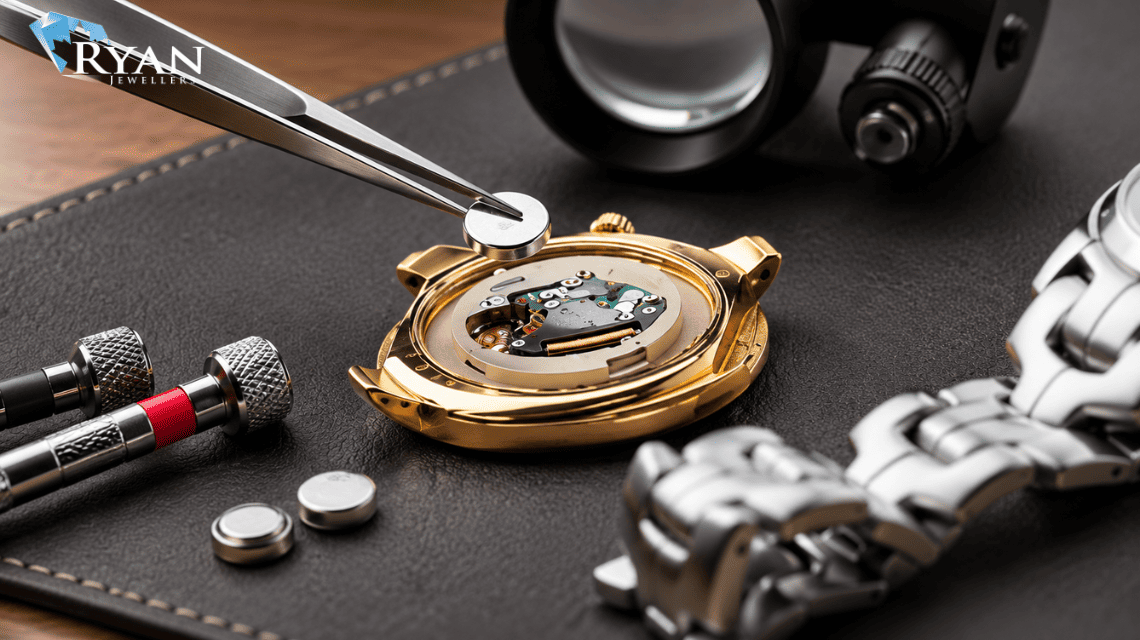
Once the case is open, the technician can check for:
- Corrosion
- Moisture
- Battery leakage
- Damaged contacts
- Unusual movement condition
A leaked battery can cause corrosion and potentially damage electronic components.
Tissot specifically warns that a worn-out battery should be replaced immediately to reduce the risk of leakage and damage to the movement.
Gasket Inspection
The gasket may have become:
- Compressed
- Hardened
- Dried out
- Misaligned
- Damaged
Replacing the battery provides a practical opportunity to inspect the seal.
Water-Resistance Testing
Water-resistance testing can be particularly important after battery replacement on watches designed for water exposure.
Some Canadian service providers specifically recommend pressure testing after opening a water-resistant watch.
This is especially relevant for dive watches and other watches that regularly encounter water.
Protecting Manufacturer Warranty
Manufacturer requirements vary, but some brands specifically require authorized service.
Tissot’s Canadian warranty states that watches handled by unauthorized persons for battery replacement, service, or repairs may fall outside its manufacturer’s warranty coverage.
For a watch still under warranty, checking the brand’s requirements before choosing a repair provider is a sensible step.
Canadian Service Options
Tissot currently lists authorized Canadian service locations, including its official service centre in Toronto and authorized service providers such as Time & Gold in Vancouver. These centres offer battery replacement and watch inspection services.
Luxury brands may also require their own authorized service network for certain models.
What Happens During a Professional Watch Battery Replacement?
Although the exact process varies, a typical service may include several steps.
1. Watch Assessment
The technician identifies the model, movement, case construction, and required battery.
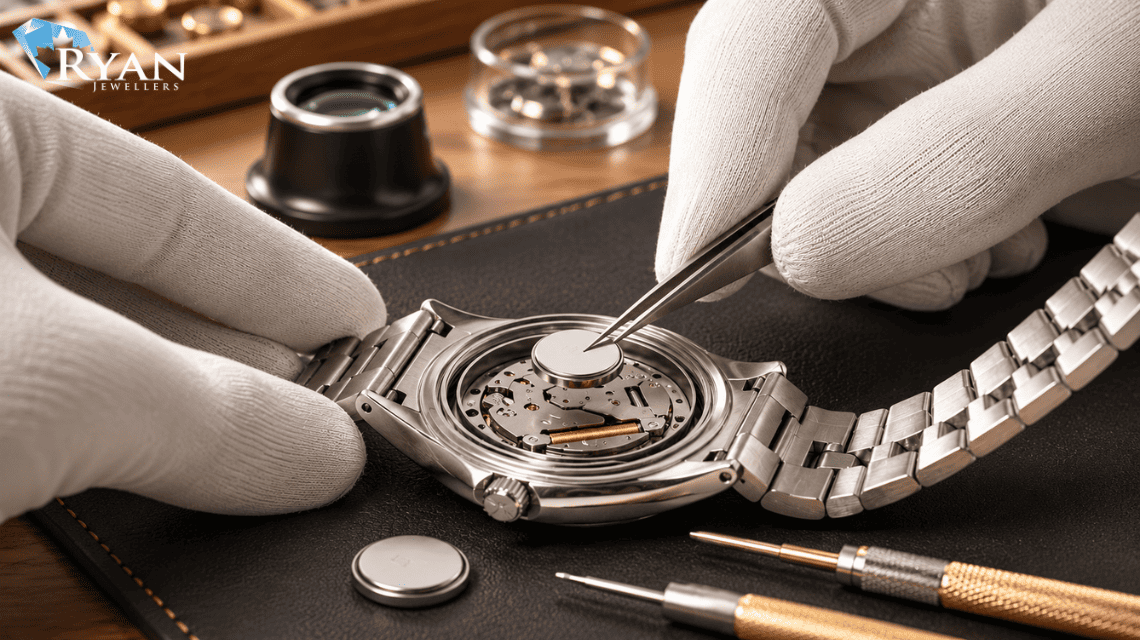
2. Case Opening
The correct tool is used to open the case without damaging the caseback or surrounding surfaces.
3. Battery Removal
The old battery is removed carefully and checked for signs of leakage or corrosion.
4. Movement Inspection
The technician checks the battery contacts and visible movement components for abnormalities.
5. New Battery Installation
The correct battery is installed with the appropriate polarity and fit.
6. Gasket Inspection
The case gasket is inspected and replaced if necessary.
7. Case Closure
The case is closed using the appropriate procedure for the model.
8. Functional Testing
The watch is checked to confirm that the movement is operating correctly.
9. Water-Resistance Testing When Appropriate
A water-resistant watch may require pressure testing after the case has been opened.
Not every battery replacement includes this automatically, so it is worth confirming before the work begins.
What If a Watch Battery Has Leaked?
A leaking battery should be treated as a potential movement problem, not simply a battery-replacement issue.
Battery leakage can corrode:
- Battery contacts
- Electrical connections
- Circuit components
- Other movement parts
If you discover that a battery has leaked, avoid attempting to clean the corrosion yourself.
A qualified watchmaker can assess whether the damage is limited to the battery compartment or has reached the movement.
The earlier the issue is addressed, the better the chance of limiting additional damage.
How Should You Care for a Quartz Watch After Battery Replacement?
A fresh battery does not eliminate the need for ongoing care.
Keep the Watch Away From Chemicals
Perfume, solvents, detergents, and cosmetics can affect certain watch materials and seals.
Protect the Watch From Extreme Temperatures
Avoid leaving the watch in a vehicle or other environment exposed to extreme temperatures for prolonged periods.
Monitor Water Resistance
If the watch is water resistant, pay attention to the condition of its seals and follow the manufacturer’s recommendations for testing.
Keep the Battery Date in Your Records
Recording the date of battery replacement can make future maintenance easier.
If the watch normally operates for several years on a battery, you can use the replacement date as a reference while still paying attention to actual signs of battery depletion.
Learn more about proper watch maintenance with our Watch Care Guide and discover practical tips to keep your timepiece in excellent condition.
FAQ About Watch Battery Replacement
How often should a watch battery be replaced?
Many quartz watches require a new battery approximately every 2–5 years, but the actual interval varies by movement, complications, battery type, and usage. Some watches may require replacement sooner or last longer.
What are the signs that a watch battery is dying?
Common signs include the watch stopping, noticeable changes in timekeeping, unreliable functions, or an end-of-life indicator such as a seconds hand jumping at larger intervals. The exact warning system depends on the movement.
How much does watch battery replacement cost in Canada?
Basic battery replacement commonly starts around CAD $15–$25 based on current Canadian service listings, although luxury watches, specialty batteries, gaskets, and water-resistance testing can increase the price.
Can I replace a watch battery myself?
Some simple watches can technically be opened at home, but professional replacement is safer for valuable, water-resistant, vintage, or warranty-covered watches. Incorrect tools or handling can damage the case, gasket, or movement.
Should a watch be pressure-tested after a battery replacement?
A pressure test is particularly advisable for a water-resistant watch if you rely on its water resistance. Opening the case can disturb the sealing system, so ask the service provider whether the gasket and water resistance will be checked.
Can a dead battery damage a watch?
Yes. Leaving a depleted battery inside a quartz watch for too long can increase the risk of leakage and movement damage. Tissot recommends replacing a worn-out battery immediately to reduce this risk.
Final Thoughts
Understanding watch battery replacement is an important part of owning a quartz timepiece. A battery may last several years, but waiting until the watch stops completely is not always the best maintenance strategy.
Watch for end-of-life indicators, changes in performance, and the age of the existing battery. When replacement becomes necessary, using the correct battery and protecting the case’s sealing system are just as important as restoring power to the movement.
For a standard quartz watch, battery replacement in Canada can often be relatively affordable. More valuable or water-resistant watches may require additional inspection, gasket replacement, or pressure testing, making professional service the better choice.
Most importantly, follow the manufacturer’s instructions. Service requirements differ between brands and models, and preserving water resistance or warranty coverage may depend on where the work is performed.
Ready to add a quality timepiece to your collection? Explore the watch selection at Ryan Jeweller and find a watch designed to be enjoyed for years to come.