
Summarize the article with:


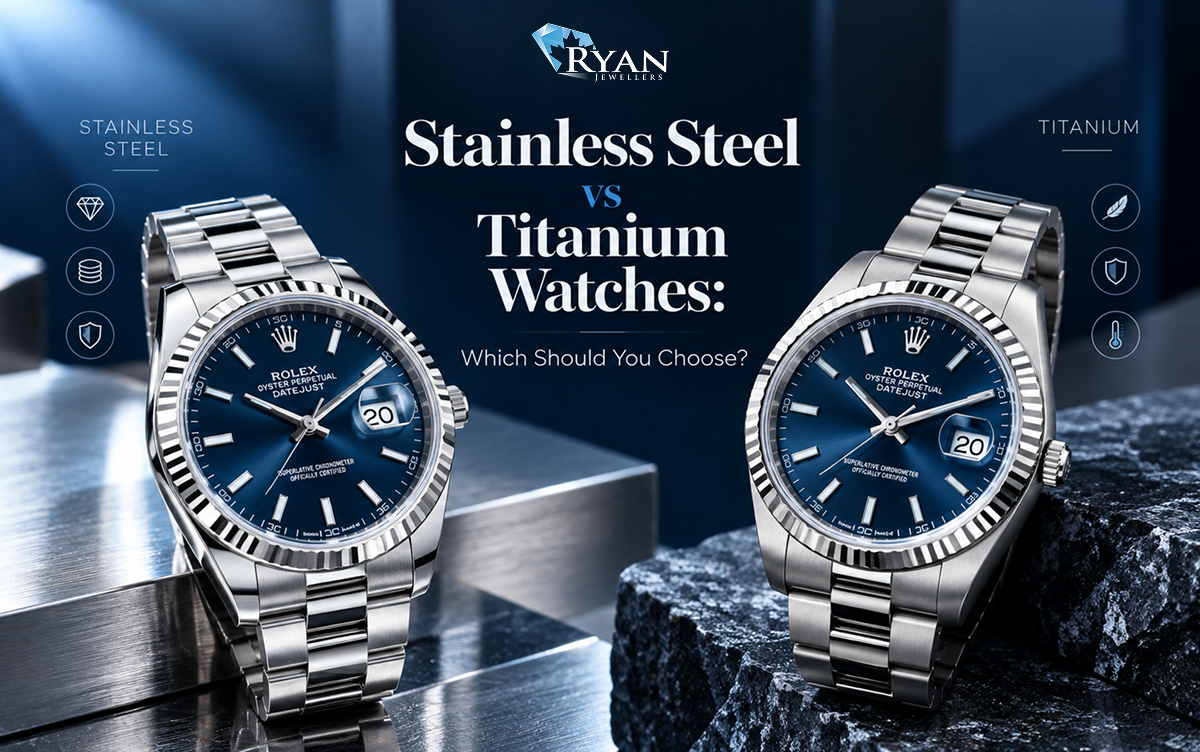
When comparing stainless steel vs titanium watches, the biggest differences come down to weight, comfort, durability, appearance, finishing, and price. Both materials are widely used in modern watchmaking, but they create noticeably different experiences on the wrist.
Stainless steel is known for its familiar metallic appearance, versatility, and substantial feel. Titanium, meanwhile, is significantly lighter and is often chosen for sports and technical watches where reducing wrist weight matters.
For Canadian buyers, the right choice depends less on which material is objectively “better” and more on how you plan to wear the watch. Your lifestyle, preferred case size, budget, and tolerance for visible scratches can all influence the decision.
If you’re comparing different watches before making a purchase, visit Ryan Jeweller to explore watches and fine jewelry suited to different styles and occasions.
What Is the Difference Between Stainless Steel and Titanium Watches?
Stainless steel and titanium are both widely used in watchmaking, yet their physical properties lead to different characteristics and applications.
Stainless Steel Watches
Known for its durability and versatility, stainless steel is an alloy primarily composed of iron and chromium, with additional elements varying by grade.
In watchmaking, stainless steel is popular because it offers a useful combination of:
- Strength
- Corrosion resistance
- Versatility
- Workability
- Familiar appearance
- Relatively straightforward maintenance
Different grades of stainless steel can be used in watches, and the exact properties depend on the alloy and manufacturing process.
Many watches also combine polished and brushed steel surfaces to create contrast.
Titanium Watches
Titanium is a lightweight metal with a high strength-to-weight ratio.
It is particularly attractive for watchmakers because it can provide a large, durable case without the same weight associated with a comparable steel case.
Titanium is often associated with:
- Sports watches
- Tool watches
- Outdoor watches
- Technical watches
- Modern luxury watches
However, not every titanium watch looks or feels the same. Different grades, surface treatments, and finishing techniques can significantly change the final result.
The Basic Difference
The simplest way to think about the materials is:
Stainless steel → heavier, familiar, versatile, substantial
Titanium → lighter, technical, comfortable, distinctive
Neither description makes one material universally superior.
Which Watch Material Is Lighter and More Comfortable?
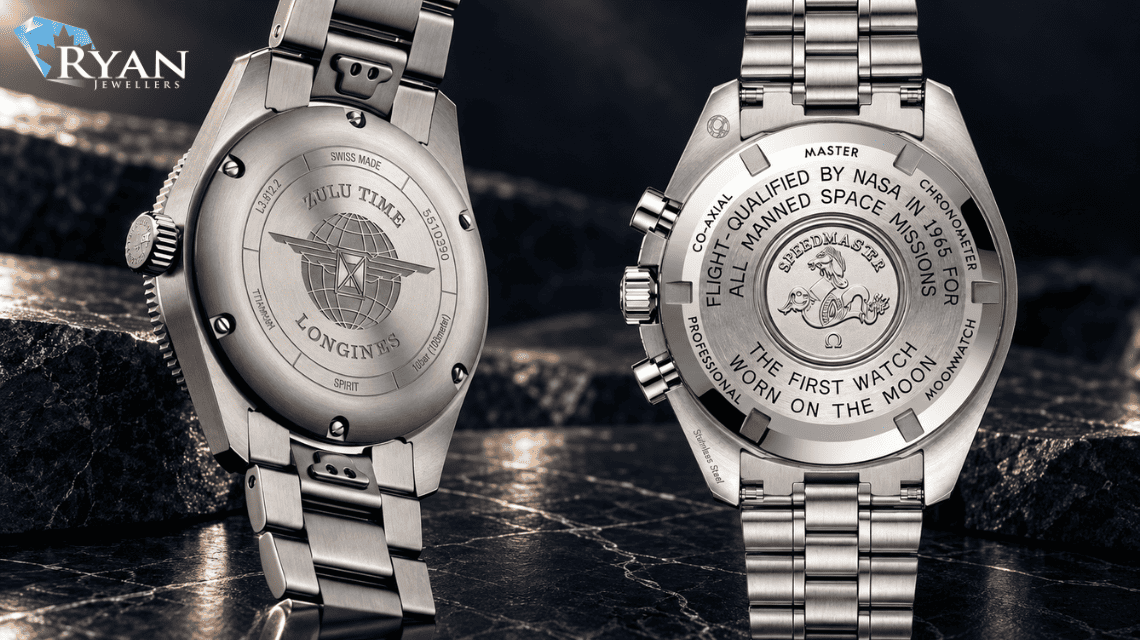
This is where titanium has one of its clearest advantages.
Titanium Is Significantly Lighter
Titanium has a lower density than stainless steel.
As a result, a titanium watch can feel considerably lighter than a similarly sized stainless-steel model.
This becomes especially noticeable with larger watches.
For example, if you prefer a substantial case diameter but dislike the weight of a large steel watch, titanium can provide an attractive alternative.
Why Weight Matters
Watch comfort is affected by more than case diameter.
Consider:
- Case weight
- Case thickness
- Lug-to-lug length
- Bracelet weight
- Strap material
- Wrist size
- Balance of the watch
A lighter watch can be more comfortable during long periods of wear.
Titanium for All-Day Wear
Titanium can be particularly appealing if you:
- Wear a watch throughout the day
- Prefer larger watches
- Travel frequently
- Participate in outdoor activities
- Dislike heavy bracelets
Its low density can make a substantial watch feel less noticeable on the wrist.
Stainless Steel Can Still Be Comfortable
Weight is not the only measure of comfort.
Some people actually prefer the solid, substantial feeling of stainless steel.
A well-designed steel watch can sit securely and comfortably on the wrist, especially when the bracelet and case are properly proportioned.
Bracelet Balance Matters
A titanium case does not necessarily mean the entire watch is lightweight.
A watch may combine a titanium case with a steel bracelet, ceramic components, or other materials.
Likewise, a steel watch on a lightweight strap can feel significantly lighter than a fully steel configuration.
Therefore, compare the complete watch, not just the case material.
How Do Stainless Steel and Titanium Compare in Durability?
Both materials can be excellent choices for everyday watches, but they behave differently.
Stainless Steel
Stainless steel offers a strong combination of strength and corrosion resistance.
It is widely used in:
- Everyday watches
- Dive watches
- Sports watches
- Dress watches
- Luxury watches
Its ability to withstand everyday use is one reason it has remained such a common watchmaking material.
Titanium
Titanium also provides excellent strength relative to its weight.
This makes it useful for watches designed around low weight and active use.
A titanium case can provide substantial structural strength without adding the same mass as steel.
Durability Depends on More Than the Metal
It is important not to reduce durability to a simple material comparison.
A watch’s overall durability also depends on:
- Case thickness
- Case construction
- Crystal
- Bezel
- Crown
- Caseback
- Bracelet
- Water resistance
- Surface treatment
A well-designed stainless-steel watch can be extremely durable.
A well-designed titanium watch can also provide excellent long-term performance.
What About Corrosion?
Both stainless steel and titanium offer strong corrosion resistance compared with many other metals.
However, no material should be considered completely immune to environmental damage.
Salt water, chemicals, sweat, and prolonged exposure to moisture can affect components and finishes over time.
For Canadian buyers, watches may also experience different environments throughout the year, from dry indoor heating during winter to humid summer conditions. Proper cleaning and manufacturer-recommended maintenance remain important regardless of case material.
Crystal Still Matters
The case material is only one part of durability.
A watch with a titanium case and mineral crystal can be more susceptible to crystal scratches than a steel watch with sapphire crystal.
When comparing watches, look at the entire specification rather than focusing only on titanium or stainless steel.
How Do Appearance, Finishes, and Scratch Resistance Differ?
Stainless steel and titanium create noticeably different visual impressions in watch design.
Stainless Steel Appearance
With its bright and familiar metallic finish, stainless steel offers a versatile look that works across classic, sports, and luxury watches.
Depending on the finishing, it can appear:
- Highly polished
- Brushed
- Satin-finished
- Combination-finished
Polished steel reflects more light, while brushed steel creates a more understated appearance.
This versatility allows stainless steel to work across both casual and formal watch designs.
Titanium Appearance
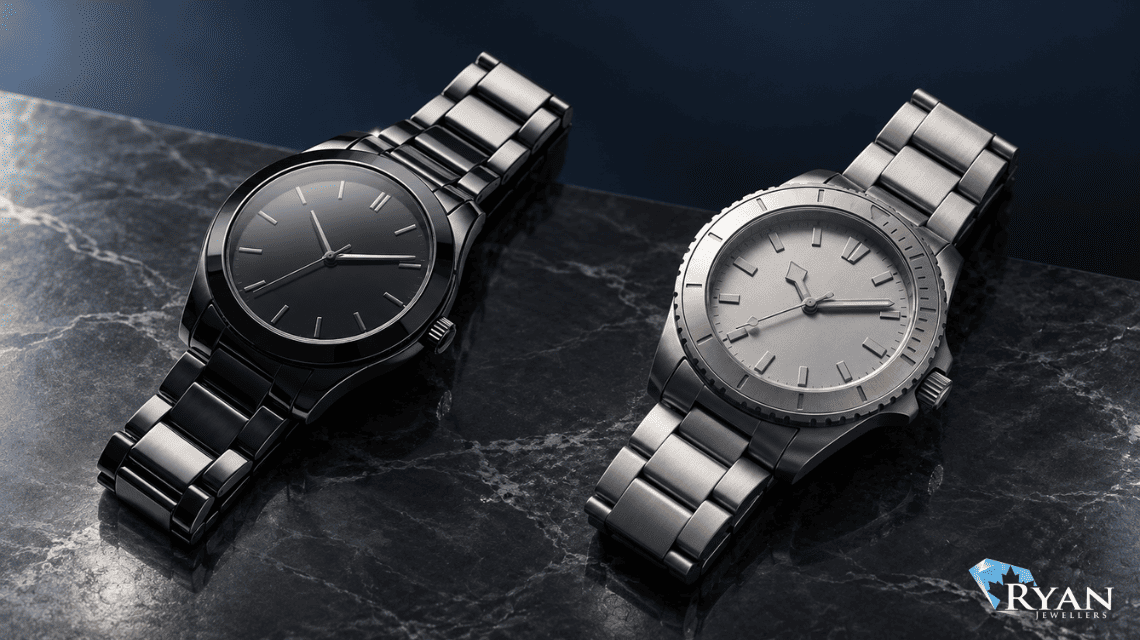
Titanium often has a darker or more muted grey appearance than polished stainless steel.
Its natural look can create a more technical and contemporary aesthetic.
However, the final appearance depends heavily on the grade and finishing process.
Some titanium watches are polished, while others use bead-blasted, brushed, coated, or treated surfaces.
Titanium and Surface Treatments
Some manufacturers apply surface treatments to titanium to improve hardness or scratch resistance.
These treatments can significantly change the way the watch wears over time.
However, a surface treatment is not necessarily permanent or completely scratch-proof.
If the surface treatment is damaged, refinishing may require specialized processes.
Which Scratches More Easily?
This is not a simple material-versus-material answer.
Untreated titanium can develop visible surface marks relatively easily, depending on the grade and finish.
Stainless steel can also scratch, particularly when highly polished.
Some titanium watches use hardened surface treatments that can substantially improve resistance to scratches.
Therefore, when comparing two watches, check the specific grade and treatment, not simply whether the case is titanium.
Polished vs Brushed Surfaces
The type of finishing also changes how noticeable scratches are.
A polished surface can make fine scratches more visible because they interrupt the reflective surface.
Brushed surfaces can sometimes disguise small marks more effectively because their texture is already directional.
This applies to both stainless steel and titanium.
Which Looks More Traditional?
Stainless steel generally has the more traditional watchmaking appearance.
It pairs naturally with:
- Classic bracelets
- Dress watches
- Sports watches
- Vintage-inspired designs
- Luxury watches
Titanium tends to create a more modern and technical appearance.
Which Material Offers Better Value for Your Budget?
Value depends on what you want from the watch.
Stainless Steel Value
Stainless steel can provide excellent value because it combines:
- Durability
- Versatility
- Familiar aesthetics
- Broad availability
- Numerous finishing options
There is also a very wide selection of stainless-steel watches across different price ranges.
Titanium Value
Titanium can command a premium in some watches because manufacturing and finishing the material can require specialized processes.
However, the additional cost can be worthwhile if you specifically value:
- Low weight
- Large case dimensions
- Technical styling
- Comfortable all-day wear
- Specialized construction
Compare the Complete Specification
When comparing a $2,000 stainless-steel watch with a $3,000 titanium watch, don’t assume that the $1,000 difference is simply the cost of the metal.
Other factors may include:
- Movement
- Crystal
- Bracelet
- Finishing
- Water resistance
- Complications
- Manufacturing
- Brand
- Surface treatments
- Design
The material is only one part of the total price.
Is Titanium More Expensive?
Not necessarily.
Titanium watches exist across many price ranges.
Some affordable watches use titanium for practical reasons, while high-end manufacturers may use titanium alongside sophisticated movements and advanced finishing.
Therefore, material alone cannot determine whether a watch represents good value.
Which Offers Better Long-Term Value?
If you prioritize versatility and traditional styling, stainless steel may offer better value for your preferences.
If you value lightweight construction and technical performance, titanium may provide more meaningful value.
The best value is therefore the watch that gives you the features you actually want.
Stainless Steel vs Titanium Watches for Different Lifestyles
Your lifestyle can make the decision much easier.
For Everyday Wear
Stainless steel is an excellent all-purpose choice.
It works with:
- Casual clothing
- Business clothing
- Formal outfits
- Sportswear
Titanium is also excellent for everyday wear if low weight is a priority.
For Sports and Outdoor Activities
Titanium can be particularly appealing.
Its low weight can make a larger sports watch more comfortable during long periods of activity.
However, stainless steel remains an excellent choice for sports watches because of its durability and versatility.
For Travel
Titanium can be useful for frequent travellers who want to minimize wrist weight.
Stainless steel can also be practical because it is familiar, versatile, and available in a wide variety of designs.
For Business Wear
Stainless steel often has the advantage because its appearance can transition easily between professional and casual settings.
A polished or mixed-finish steel watch can look refined without being overly formal.
For Formal Wear
Stainless steel, gold, platinum, and other materials may be more common in traditional dress watches.
Titanium can still work for formal occasions, particularly when the design is deliberately modern and understated.
For Large Watches
Titanium has a particularly strong advantage here.
A large titanium watch can provide substantial wrist presence without the same weight associated with a comparable steel model.
For Collectors
Collectors may appreciate both materials for different reasons.
Stainless steel has a long history in watchmaking and is used across iconic sports and luxury models.
Titanium can represent technical innovation and modern watch engineering.
How Should You Maintain Stainless Steel and Titanium Watches?
Both materials are relatively practical, but proper care remains important.
Stainless Steel Maintenance
For routine cleaning:
- Use a soft microfiber cloth.
- Remove fingerprints and surface oils.
- Follow the manufacturer’s guidance for water exposure.
- Clean the bracelet carefully if it is designed to be washed.
- Dry the watch thoroughly.
Avoid abrasive cleaning products because they can change the original finish.
Titanium Maintenance
Titanium can also be cleaned with a soft cloth.
If the watch has a special coating or surface treatment, avoid abrasive polishing unless specifically approved by the manufacturer.
Aggressive polishing can damage or alter the finish.
Bracelet Cleaning
Bracelets can accumulate:
- Sweat
- Skin oils
- Dust
- Dirt
Regular cleaning can improve both appearance and comfort.
However, make sure the watch’s water-resistance specifications allow the cleaning method you intend to use.
Professional Refinishing
If a watch develops significant scratches, professional refinishing may be appropriate.
This is especially important for watches with:
- Complex finishing
- Mixed polished and brushed surfaces
- Coated titanium
- Specialized case treatments
Improper polishing can remove material and change the original case geometry.
Stainless Steel vs Titanium Watches: A Quick Comparison
| Feature | Stainless Steel | Titanium |
|---|---|---|
| Weight | Heavier | Much lighter |
| Comfort | Substantial feel | Lightweight feel |
| Appearance | Bright, traditional | Muted, technical |
| Corrosion resistance | Very good | Excellent |
| Scratch resistance | Depends on grade and finish | Depends heavily on grade and treatment |
| Finishing | Highly versatile | More specialized |
| Large watches | Can feel heavy | Excellent for reducing weight |
| Everyday versatility | Excellent | Excellent |
| Sports use | Excellent | Excellent |
| Maintenance | Relatively simple | Relatively simple |
| Typical appeal | Classic and versatile | Lightweight and modern |
The exact characteristics depend on the watch, alloy, grade, surface treatment, and construction.
If you want a more detailed overview before making a purchase, read our Watch Buying Guide for practical advice on movements, sizing, materials, features, and budget.
FAQ About Stainless Steel vs Titanium Watches
Is titanium better than stainless steel for watches?
Not universally. Titanium is lighter and can be more comfortable for large watches, while stainless steel offers a familiar appearance, substantial feel, and excellent versatility.
Are titanium watches more durable than stainless steel watches?
Both can be highly durable. Durability depends on the specific material grade, case construction, finishing, surface treatments, crystal, and intended use.
Do titanium watches scratch easily?
Untreated titanium can show surface marks, depending on its grade and finish. Some watches use hardened treatments that improve scratch resistance, so the specific watch specification matters.
Are titanium watches lighter than stainless steel watches?
Yes. Titanium has a lower density than stainless steel, so a comparable titanium watch will generally weigh significantly less.
Which material is better for everyday wear?
Both can be excellent. Stainless steel is particularly versatile, while titanium can be preferable if you prioritize lightweight comfort, especially with larger watches.
Are titanium watches worth the extra cost?
They can be if you value low weight, comfort, technical construction, or a modern aesthetic. However, compare the complete watch specification rather than paying more simply because the case is titanium.
Final Thoughts
When comparing stainless steel vs titanium watches, the right choice ultimately depends on what you want from your timepiece.
Stainless steel remains one of the most versatile watch materials. It offers a familiar appearance, substantial wrist feel, strong corrosion resistance, and a wide range of polished and brushed finishes. It can work equally well for everyday, business, sports, and luxury watches.
Titanium takes a different approach. Its lower density makes it significantly lighter, which can be especially valuable when wearing a large watch or keeping a timepiece on your wrist throughout the day. Its muted appearance and technical character also make it particularly popular in modern sports and luxury designs.
Neither material is automatically more durable or better value. The specific alloy, surface treatment, case construction, crystal, bracelet, movement, and finishing all influence the overall quality of a watch.
For Canadian buyers, the best approach is to compare the complete watch rather than the case material alone. Think about how often you will wear it, where you will wear it, how much weight you prefer on your wrist, and which design best matches your personal style.
If you’re ready to compare stainless-steel and titanium timepieces, visit Ryan Jeweller to explore watches and fine jewelry designed for different lifestyles and occasions.