
Summarize the article with:


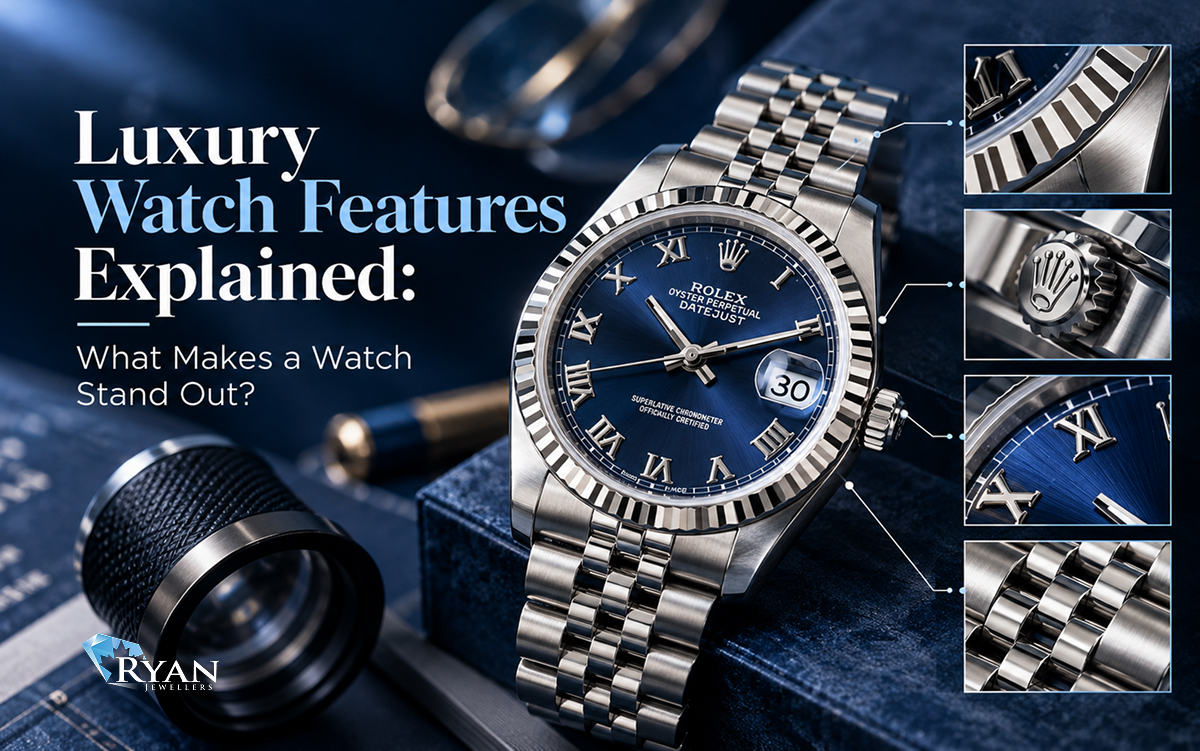
A luxury watch is more than a device that tells time. Its appeal can come from the movement inside the case, the quality of its materials, the precision of its construction, the finishing of individual components, and the complications that add useful or mechanically interesting functions.
For Canadian buyers, understanding these details can make it easier to distinguish genuine watchmaking features from marketing language. A precious-metal case, for example, should be evaluated according to its actual material and quality rather than simply its colour or appearance. Canada’s Competition Bureau provides specific requirements for precious-metal descriptions and quality marks used on watches and other articles.
Whether you are interested in an elegant dress watch, a sophisticated mechanical timepiece, or a collectible luxury model, learning about luxury watch features can help you make a more informed decision.
If you are exploring luxury watches alongside fine jewelry, visit Ryan Jeweller to discover different styles and timepieces available for Canadian buyers.
What Features Define a Luxury Watch?
There is no single feature that automatically makes a watch “luxury.” The category can encompass different combinations of craftsmanship, materials, mechanical complexity, finishing, design, heritage, and exclusivity.
High-Quality Movement
The movement is one of the most important components of a traditional luxury watch.
A mechanical movement can contain numerous precisely manufactured components, including:
- Mainspring
- Gears
- Escapement
- Balance wheel
- Bridges
- Jewels
- Winding mechanism
Luxury mechanical movements may receive extensive finishing and adjustment beyond what is necessary simply to make the watch function.
Refined Finishing
Finishing refers to the treatment and decoration applied to components.
Examples include:
- Polishing
- Brushing
- Beveling
- Perlage
- Geneva-style striping
- Engraving
- Satin finishing
Finishing can be applied to visible exterior components as well as movement parts.
On watches with exhibition casebacks, movement finishing can become an important part of the ownership experience because the mechanism can be viewed directly.
Premium Materials
Luxury watches may use materials such as:
- Stainless steel
- Titanium
- Ceramic
- Gold
- Platinum
- Sapphire crystal
The material influences weight, appearance, durability, and maintenance requirements.
Precious metals are particularly relevant in Canada because their quality claims are regulated. The Competition Bureau explains that precious-metal articles, including watches, can be subject to the Precious Metals Marking Act and its regulations.
Attention to Detail
Luxury watchmaking often involves small details that may not be immediately obvious.
These can include:
- Precisely aligned markers
- Clean dial printing
- Carefully finished hands
- Consistent case finishing
- Smooth crown operation
- Well-finished movement components
- Secure and precisely constructed bracelets
Individually, these details may seem minor. Together, they can significantly influence the overall impression of a watch.
Mechanical Complexity
Some luxury watches incorporate sophisticated mechanical functions beyond basic timekeeping.
Examples include:
- Chronographs
- Perpetual calendars
- Moon-phase displays
- GMT functions
- Minute repeaters
- Tourbillons
- Power-reserve indicators
Complexity can increase both technical interest and manufacturing requirements, although more complications do not automatically mean a watch is better for every buyer.
Design and Proportions
Luxury can also come from design.
A watch may stand out through:
- Case proportions
- Dial architecture
- Hand design
- Bezel shape
- Bracelet integration
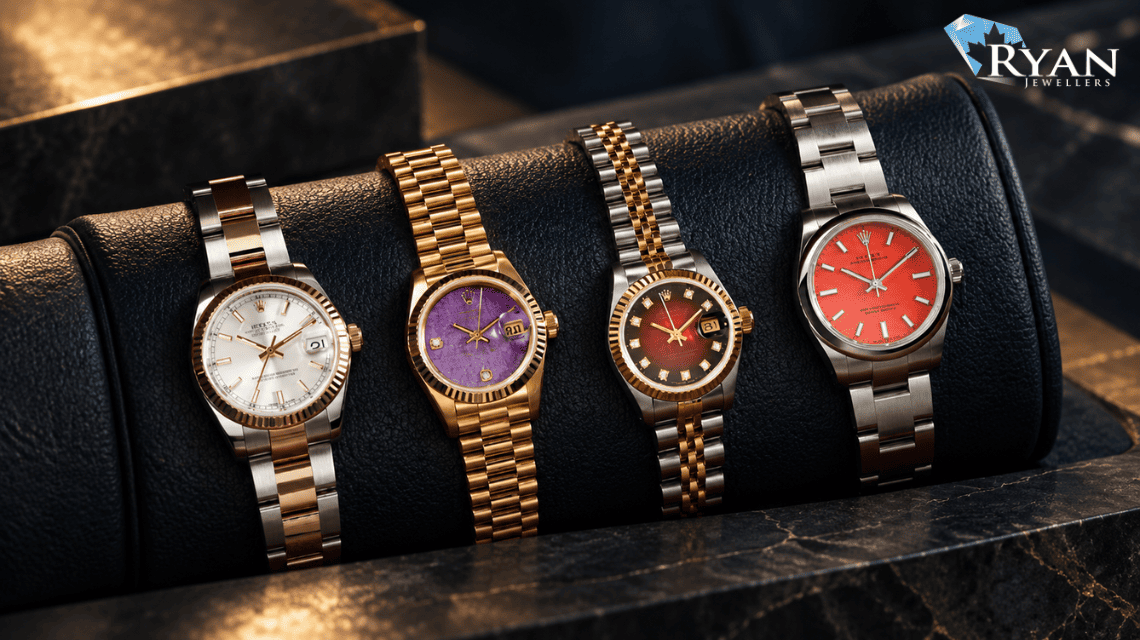
- Colour combinations
- Historical design elements
A restrained watch can therefore be just as sophisticated as a highly complicated model.
Brand Heritage
Brand history can also influence how consumers perceive a luxury watch.
Established manufacturers may have decades or centuries of watchmaking history, while newer brands can distinguish themselves through contemporary design or technical innovation.
However, heritage is only one factor. The actual specifications, construction, craftsmanship, and design should still be evaluated independently.
How Do Watch Movements Affect Performance and Ownership?
The movement determines how a traditional watch measures and displays time.
For luxury watches, movement choice can significantly influence the ownership experience.
Mechanical Movements
Mechanical watches use stored energy from a wound mainspring.
The energy is released through the movement’s gear train and escapement to regulate the hands.
Mechanical movements are often appreciated because they combine engineering with traditional watchmaking.
They can also require more attention and maintenance than quartz watches.
Automatic Movements
An automatic movement is a mechanical movement that can wind itself through the motion of the wearer.
A rotor moves as the watch moves, transferring energy to the mainspring.
This means an automatic watch does not normally require a battery.
However, an automatic watch can stop when its stored power is exhausted if it is not worn or manually wound.
Manual-Winding Movements
Manual-winding watches require the wearer to wind the mainspring periodically.
This can create a more direct connection between the owner and the mechanical mechanism.
For collectors, manually wound movements can also offer an opportunity to appreciate the architecture and finishing of the movement.
Quartz Movements
Quartz watches use an electronic system regulated by a quartz crystal.
They generally offer excellent accuracy and require less mechanical maintenance.
Quartz is therefore not inherently inferior simply because it is less mechanically complex.
For someone who prioritizes convenience and precision, quartz may actually be the more practical choice.
Power Reserve
Power reserve refers to how long a mechanical watch can continue running after being fully wound.
A longer power reserve can be convenient because the watch can remain unworn for longer without stopping.
However, power reserve should be considered alongside movement reliability, accuracy, finishing, and servicing requirements.
Movement Finishing
In luxury watchmaking, the movement itself can become part of the aesthetic experience.
Visible components may feature:
- Polished bevels
- Decorative engraving
- Brushed surfaces
- Circular graining
- Decorative striping
- Carefully finished screws
The quality of finishing can be especially relevant when a watch has a transparent caseback.
Accuracy and Luxury Are Not the Same Thing
A common misconception is that the most expensive mechanical watch must be the most accurate.
That is not necessarily true.
Quartz technology can provide extremely high everyday accuracy, while mechanical watches are often purchased partly for their craftsmanship and engineering.
A luxury mechanical watch should therefore be evaluated on its intended purpose rather than accuracy alone.
Which Materials and Finishes Should You Look For?
Materials influence how a watch looks and feels, but they also affect durability and maintenance.
Stainless Steel
Stainless steel is widely used in luxury watches because it offers a practical balance between durability, versatility, and appearance.
Different finishing techniques can produce:
- Mirror-polished surfaces
- Brushed surfaces
- Satin finishes
- Alternating polished and brushed areas
The quality of these transitions can be an important indicator of finishing quality.
Titanium
Titanium is lighter than steel and can be attractive for buyers who want a larger watch without substantial wrist weight.
It is commonly associated with contemporary sports and technical watches.
Its appearance can range from bright metallic to darker grey depending on the alloy and finishing.
Gold
Gold remains a traditional luxury-watch material.
Common colours include:
- Yellow gold
- White gold
- Rose gold
Gold is relatively soft compared with many watchmaking materials, so surface marks can develop with regular wear.
In Canada, gold quality marks are subject to specific requirements. The Competition Bureau states that gold articles must meet minimum quality requirements to qualify for a gold quality mark, and quality claims must accurately represent the material.
Platinum
Platinum is a dense precious metal used in some luxury watches.
It offers a naturally white appearance and substantial weight.
Its density can make a platinum watch feel noticeably heavier than a similar watch made from titanium or stainless steel.
Ceramic
Ceramic is used in certain cases and bezels.
Its hardness can provide strong resistance to surface scratches.
However, ceramic can respond differently to severe impact than metal, so scratch resistance should not be confused with complete impact resistance.
Sapphire Crystal
Sapphire crystal is widely used in higher-end watches.
It offers excellent scratch resistance and helps maintain dial clarity during everyday wear.
However, sapphire is not indestructible and can chip or fracture under sufficiently strong impact.
Leather
Leather straps are commonly associated with dress and classic watches.
They can provide:
- Traditional styling
- Comfortable flexibility
- A wide range of colours
- Different textures and finishes
Leather generally requires more protection from moisture than metal or synthetic straps.
Bracelet Finishing
A luxury bracelet should not be judged only by its material.
Pay attention to:
- Link construction
- Articulation
- Surface finishing
- Clasp design
- Adjustment system
- Edge finishing
A well-made bracelet can significantly improve comfort and the overall perception of quality.
Precious-Metal Marking in Canada
Canadian buyers should pay attention to the exact wording used to describe precious-metal watches.
The Competition Bureau notes that quality marks on precious-metal articles must accurately indicate quality, and businesses cannot sell, import, or advertise precious-metal articles in a false or misleading manner regarding their precious-metal content.
This distinction is particularly useful when comparing solid gold, gold-filled, gold-plated, and gold-tone watches.
What Do Complications Such as Chronographs and Date Displays Do?
A complication is a function of a mechanical watch beyond basic hours, minutes, and seconds.
Some complications are highly practical, while others primarily demonstrate mechanical complexity.
Date Display
A date display is one of the most common complications.
It can appear as:
- Window at 3 o’clock
- Window at 6 o’clock
- Pointer date
- Subdial
- Large date display
The date function is relatively simple compared with more complicated mechanical systems.
Day-Date
A day-date complication displays both the calendar date and day of the week.
This provides more information at a glance than a standard date display.
Chronograph
A chronograph is essentially a stopwatch function incorporated into a watch.
A typical chronograph can measure elapsed time using:
- Start
- Stop
- Reset
Depending on the design, elapsed time can be displayed through subdials or a central seconds hand.
Chronographs can be useful for timing events, although many owners appreciate them primarily for their mechanical and visual appeal.
GMT
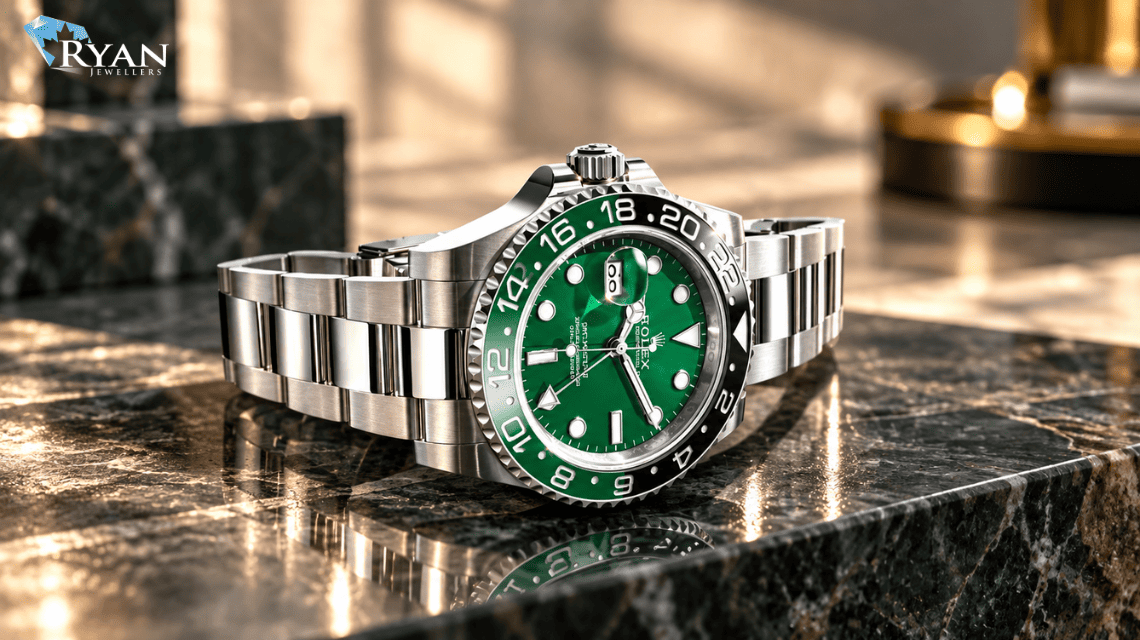
A GMT or dual-time watch allows the wearer to track another time zone.
This can be particularly useful for:
- Frequent travellers
- International business
- People with family overseas
- Collectors interested in travel watches
Some GMT watches use a fourth hand, while others use different mechanisms to display the second time zone.
Power-Reserve Indicator
A power-reserve display indicates how much energy remains in a mechanical movement.
It can be particularly useful for manually wound watches because it provides a visual indication of when winding is required.
Moon-Phase Display
A moon-phase complication represents the current phase of the moon.
It is not generally necessary for everyday timekeeping, but it demonstrates additional mechanical complexity and has strong traditional appeal in fine watchmaking.
Perpetual Calendar
A perpetual calendar is considerably more complex.
It is designed to account for variations in the lengths of months and leap years according to its programmed mechanical calendar system.
Because of its complexity, servicing and adjustment can require specialized expertise.
Tourbillon
A tourbillon is a sophisticated mechanical construction originally associated with efforts to reduce certain positional effects on timekeeping.
Modern tourbillons are often valued primarily for their technical complexity, craftsmanship, and visual appeal.
They are not automatically more accurate than every non-tourbillon mechanical movement.
Minute Repeater
A minute repeater uses mechanical components to sound the time.
It is one of the more complex traditional complications and requires substantial mechanical expertise.
Why Complications Increase Complexity
Additional functions require additional components.
More components can mean:
- More assembly work
- More adjustment
- More potential service requirements
- More complicated movement architecture
Therefore, complications should be selected because you appreciate their function or craftsmanship rather than assuming that more complications automatically equal greater value.
How Should You Evaluate Craftsmanship, Specifications, and Value?
Understanding specifications is only the first step. You also need to determine how those specifications translate into the actual ownership experience.
Examine the Movement
Ask:
- What type of movement does it use?
- Who manufactures it?
- What is the power reserve?
- What complications does it have?
- What are the servicing requirements?
- Is the movement visible?
A movement should be evaluated in context rather than by jewel count or complexity alone.
Inspect the Dial
Look closely at:
- Marker alignment
- Hand finishing
- Printing
- Applied indices
- Date alignment
- Lume application
- Subdial positioning
On a high-end watch, small inconsistencies can become particularly noticeable.
Examine the Case
Check:
- Polishing
- Brushing
- Bevels
- Case transitions
- Crown
- Bezel
- Caseback
The transition between polished and brushed surfaces can reveal considerable information about the quality of finishing.
Evaluate the Bracelet
A quality bracelet should feel secure but comfortable.
Check:
- Link movement
- Clasp operation
- Adjustment options
- Surface finishing
- Edge quality
A bracelet can be one of the first areas where differences in construction become obvious during everyday use.
Consider Water Resistance
Water resistance should match your intended use.
A watch designed for swimming or diving should have specifications appropriate for those activities.
However, a water-resistance rating should not be interpreted as a guarantee that the watch can safely be used at the stated depth under every circumstance.
Seals can deteriorate with age, and crowns or pushers must be operated according to manufacturer instructions.
Review the Warranty
Before purchasing, understand:
- Warranty duration
- Covered defects
- Exclusions
- Service requirements
- Authorized service options
Warranty terms can vary significantly between manufacturers and retailers.
Consider Serviceability
Luxury mechanical watches are long-term products, so servicing matters.
Before purchasing, consider:
- Where the watch can be serviced
- Availability of authorized service
- Expected service costs
- Availability of replacement components
- Whether the movement is proprietary or widely supported
A watch that is difficult to service may create more ownership challenges later.
Understand Precious-Metal Claims
When purchasing a precious-metal watch in Canada, check the exact material description.
Canadian regulations establish standards for quality marks and prohibit misleading representations regarding precious-metal content.
This is particularly relevant when comparing:
Solid gold
with
Gold-filled
or
Gold-plated
construction.
These are not interchangeable descriptions.
Consider Value Beyond Resale
Value does not necessarily mean future resale price.
A watch can provide strong personal value because of:
- Craftsmanship
- Design
- Comfort
- Heritage
- Mechanical interest
- Materials
- Practical functions
Resale value is influenced by many factors and should not be treated as guaranteed.
Do Not Assume Expensive Means Better
A higher price can reflect:
- Precious materials
- Complicated movements
- Hand finishing
- Limited production
- Brand positioning
- Design
- Heritage
But the most expensive watch is not necessarily the best match for your needs.
The better question is:
Which specifications and qualities matter most to you?
How Do Luxury Watch Features Affect Everyday Ownership?
The features that make a watch impressive can also affect how you live with it.
Mechanical Complexity
A complicated mechanical movement can be fascinating, but it may require more specialized maintenance.
Precious Metals
Gold and platinum can provide a luxurious wearing experience but may also show surface marks through normal use.
Complications
A chronograph or GMT function can provide genuine utility if you use it.
If you never use the complication, you may be paying for complexity that does not add much practical value.
Large Cases
Large cases can make complications easier to read, but they can also feel heavier and less versatile.
Leather Straps
Leather can look excellent with formal clothing but may not be ideal for regular exposure to water or heavy perspiration.
Metal Bracelets
Metal bracelets can be highly versatile and are often easier to clean, making them useful for everyday wear.
How to Choose Luxury Watch Features Based on Your Lifestyle
Instead of choosing a watch based solely on prestige, start with how you plan to use it.
For Business and Formal Wear
Consider:
- Slim case
- Simple dial
- Leather strap
- Gold or platinum
- Date display
- Minimal complications
These features can create an understated and refined appearance.
For Travel
Consider:
- GMT function
- Strong water resistance
- Durable case
- Comfortable bracelet
- Reliable movement
- Legible dial
A GMT complication can be particularly useful when regularly moving between time zones.
For Everyday Wear
Prioritize:
- Comfort
- Durability
- Legibility
- Appropriate water resistance
- Easy maintenance
- Versatile design
Stainless steel can be particularly practical for everyday use.
For Collectors
Collectors may place greater emphasis on:
- Movement architecture
- Complications
- Finishing
- Limited production
- Historical significance
- Technical innovation
Here, mechanical details that have little practical value can still have substantial collector appeal.
If you want a more detailed overview before making a purchase, read our Watch Buying Guide for practical advice on movements, sizing, materials, features, and budget.
FAQ About Luxury Watch Features
What features make a watch a luxury watch?
There is no single defining feature. Luxury watches may combine high-quality movements, refined finishing, premium materials, sophisticated complications, careful construction, distinctive design, and brand heritage.
Are mechanical watches better than quartz watches?
Not necessarily. Quartz watches generally provide excellent accuracy and convenience, while mechanical watches are often valued for craftsmanship, engineering, and traditional watchmaking.
What is the most useful luxury watch complication?
That depends on the owner. A date display can be useful every day, while GMT can be valuable for frequent travellers and a chronograph can be useful for timing events.
Are more complications better?
Not automatically. More complications generally increase mechanical complexity, but they can also increase servicing requirements and cost. Choose complications that you genuinely appreciate or use.
What materials are commonly used in luxury watches?
Common materials include stainless steel, titanium, ceramic, gold, platinum, sapphire crystal, leather, and various synthetic materials. Each has different characteristics relating to weight, durability, appearance, and maintenance.
How can I evaluate the quality of a luxury watch?
Look at the movement, dial, case finishing, bracelet or strap, crystal, water resistance, materials, warranty, service support, and documentation. In Canada, also pay attention to accurate precious-metal descriptions and quality marks where applicable.
Final Thoughts
Understanding luxury watch features allows you to look beyond the brand name and price tag.
The movement, finishing, case material, crystal, bracelet, complications, water resistance, and construction all contribute to the character of a luxury watch. Some features primarily provide practical benefits, while others exist because collectors appreciate the engineering, craftsmanship, and tradition behind them.
A mechanical chronograph, for example, can combine practical timing functionality with considerable mechanical complexity. A GMT can be genuinely useful for travellers. A simple date display can make an everyday watch more convenient. Meanwhile, hand-finished movement components may provide value primarily through craftsmanship and visual appreciation.
Material choice also matters. Stainless steel can provide versatility, titanium can reduce weight, while gold and platinum create a distinctive precious-metal experience. For Canadian buyers, it is important to understand exactly what a precious-metal description means because Canada’s Precious Metals Marking Act establishes requirements for quality representations and prohibits misleading claims about precious-metal content.
Ultimately, the best luxury watch is not necessarily the one with the most complications or the highest price. It is the one whose movement, materials, design, craftsmanship, functions, and proportions align with what you actually value.
If you’re ready to explore luxury timepieces and compare different designs, visit Ryan Jeweller to discover watches and fine jewelry selected for a range of styles and occasions.