
Summarize the article with:


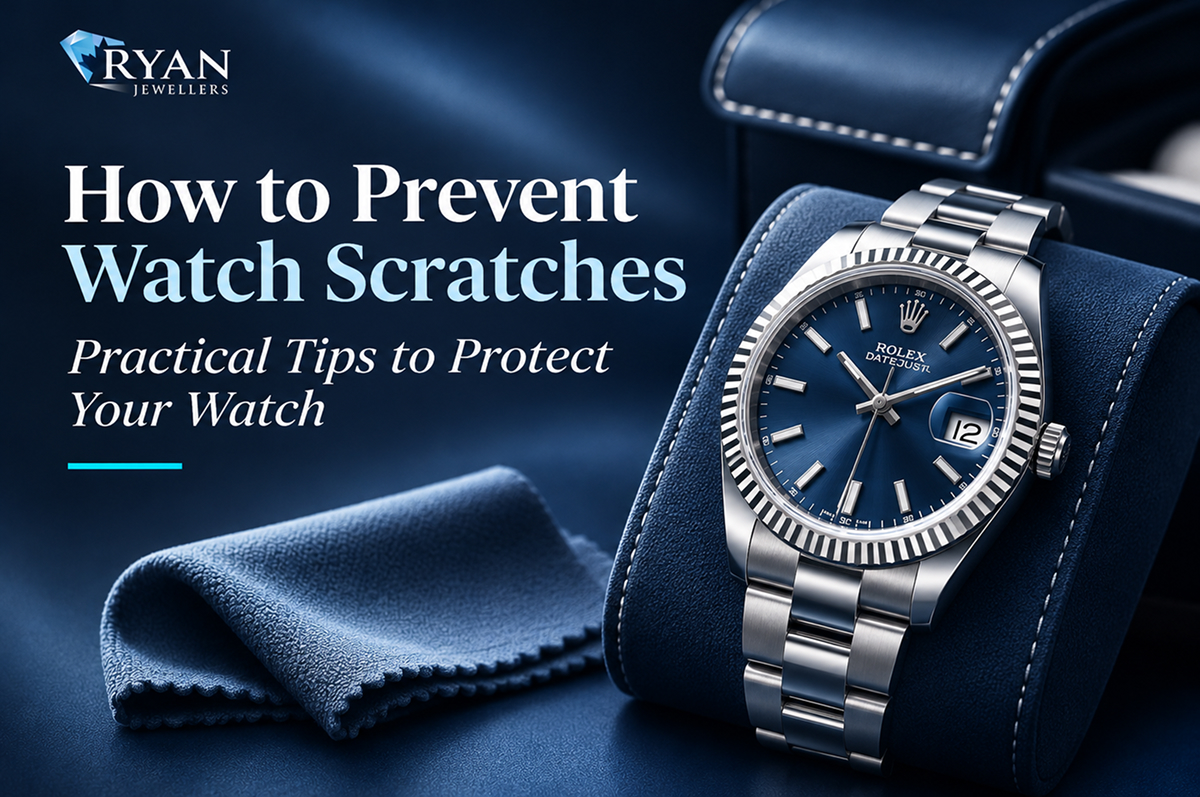
Scratches are one of the most common signs of wear on a watch. Even a carefully maintained luxury timepiece can develop marks from everyday contact with desks, door frames, jewelry, keys, or other watches. Learning how to prevent watch scratches can help preserve the original appearance of the case, bracelet, bezel, and crystal for longer.
The good news is that preventing scratches does not require complicated equipment. Simple habits such as removing your watch during high-risk activities, storing it separately, and avoiding contact with abrasive surfaces can significantly reduce unnecessary wear.
For Canadian watch owners, everyday environments can vary considerably between seasons. Winter clothing, outdoor activities, snow, and frequent transitions between indoor and outdoor settings can create additional opportunities for accidental contact or abrasion.
If you’re looking for a luxury timepiece to add to your collection, explore the selection at Ryan Jeweller and choose a watch that fits your style and everyday lifestyle.
What Causes Scratches on Watches?
Watch scratches usually occur when a surface comes into contact with another material that is harder or sufficiently abrasive to leave a visible mark.
Common causes include:
- Contact with keys or coins
- Jewelry rubbing against the watch
- Contact with desks and countertops
- Accidental impact against doors or furniture
- Storing multiple watches together
- Abrasive clothing or accessories
- Heavy manual work
- Sports and outdoor activities
- Improper cleaning tools
- Attempting to polish the watch at home
Everyday Contact
Many scratches happen during completely ordinary activities.
For example, resting your wrist against a desk repeatedly can create small marks on polished surfaces. Similarly, brushing the watch against a door frame or metal railing can produce a more noticeable scratch.
These marks are usually cosmetic rather than evidence of a mechanical problem.
Jewelry and Other Metal Objects
Bracelets, rings, necklaces, keys, and other metal objects can come into contact with a watch during everyday activities.
Even when the materials have similar hardness, repeated contact can leave visible marks, particularly on highly polished surfaces.
Improper Cleaning
Cleaning a watch incorrectly can also create scratches.
Rough towels, abrasive pads, hard brushes, and unsuitable polishing compounds may leave marks on the case or bracelet.
Rolex recommends using a microfiber cloth for routine cleaning and a soft brush with soapy water for suitable cases and metal bracelets.
Impact and Abrasion
A hard impact can produce more than a superficial scratch.
Depending on where the watch is struck, an impact can potentially affect the crystal, bezel, case, crown, bracelet, or movement.
OMEGA advises owners to avoid mechanical, thermal, and other forms of shock.
Which Parts of a Watch Are Most Vulnerable to Scratches?
Not every part of a watch reacts to scratches in the same way. Material, surface finish, and construction all influence how visible marks become.
Case
The case is exposed to contact throughout the day.
Polished surfaces tend to show fine scratches more clearly because their reflective finish highlights changes in the surface.
Brushed or satin-finished surfaces can hide some minor marks more effectively, although they can also be damaged if they encounter abrasive materials.
Bracelet and Clasp
Metal bracelets experience significant contact during daily wear.
The clasp is particularly vulnerable because it frequently touches desks, tables, and other surfaces when the wearer rests their wrist.
Bracelet links can also develop scratches where they come into contact with each other or with other objects.
Bezel
The bezel can be exposed to accidental impacts from different directions.
Its vulnerability depends on the material and design. Some watches use ceramic or other scratch-resistant materials, while others use stainless steel, precious metals, or other finishes.
Crystal
The crystal protects the dial and is one of the most important surfaces to consider.
Sapphire crystal is highly scratch resistant and is widely used in luxury watches. However, scratch resistance does not mean that sapphire is impossible to damage.
Mineral crystal is generally more susceptible to scratching than sapphire, while acrylic crystal can also develop scratches relatively easily but may sometimes be polished.
Lugs
The lugs extend from the case and can easily come into contact with clothing, furniture, or other objects.
Their position means that scratches can be particularly noticeable when the watch is viewed from the side.
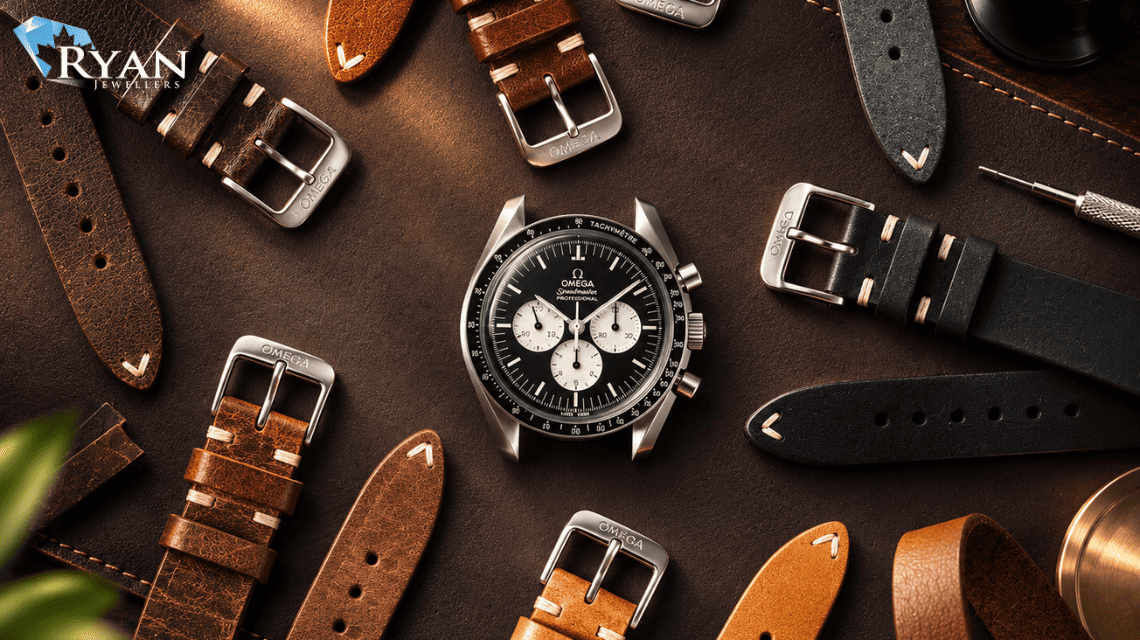
Leather and Fabric Straps
Leather and fabric straps generally do not develop scratches in the same way as metal cases.
Instead, they can develop:
- Scuffs
- Abrasion
- Creasing
- Discolouration
- Surface wear
TUDOR recommends protecting leather straps from water and moisture, while its care guidance recommends different cleaning approaches for metal, rubber, and fabric bracelets.
How Can You Prevent Scratches During Everyday Wear?
Understanding how to prevent watch scratches starts with changing a few everyday habits.
1. Be Aware of Your Wrist Position
Your watch is often the first thing to contact a desk or table when you move your arm.
When working at a desk, try to avoid repeatedly dragging the watch across hard surfaces.
A small change in wrist position can reduce a surprising amount of contact over time.
2. Remove Your Watch During High-Risk Activities
Consider removing a luxury watch before activities involving significant abrasion or impact.
Examples include:
- Heavy manual work
- Construction or renovation
- Gardening
- Moving furniture
- Working with machinery
- Contact sports
- Activities involving rough surfaces
A watch may be designed for active use, but unnecessary exposure to impacts still increases the chance of cosmetic or mechanical damage.
3. Keep Your Watch Away From Jewelry
If you wear bracelets or other jewelry on the same wrist, be aware of how they move around the watch.
Metal jewelry can repeatedly contact the case or bracelet and create marks over time.
Keeping the watch on a separate wrist can reduce this type of contact.
4. Avoid Placing the Watch Face-Down
Never place a watch directly on a hard surface with the crystal or case resting against it.
When removing the watch, place it on a soft watch cushion or another clean, non-abrasive surface.
5. Use a Soft Cloth
A microfiber cloth is a practical choice for removing fingerprints and surface oils.
Rolex specifically recommends microfiber cloths for routine care, while TUDOR also recommends microfiber cloths for maintaining the appearance of its watches.
6. Avoid Abrasive Cleaning Products
Do not use:
- Paper towels
- Rough fabric
- Steel wool
- Abrasive sponges
- Household metal polish
- Unapproved jewelry cleaners
These materials can create fine scratches that become increasingly visible over time.
7. Protect the Watch During Travel
When travelling, place the watch in a dedicated watch roll or protective case.
Do not place a loose watch inside a suitcase alongside:
- Keys
- Chargers
- Coins
- Jewelry
- Metal accessories
A watch can easily become scratched when these objects move against it during transportation.
8. Pay Attention to Canadian Winter Clothing
Winter conditions can create additional contact points.
Heavy jackets, metal zippers, buckles, gloves, and other accessories can rub against a watch while you are moving your arms.
When wearing a watch under winter clothing, check that metal hardware is not repeatedly contacting the case or bracelet.
9. Keep Multiple Watches Separate
If you own several watches, avoid stacking them directly on top of one another.
Individual compartments or watch cushions help prevent cases and bracelets from rubbing together.
This is especially important when your collection includes watches made from different metals or materials.
10. Choose the Right Watch for Your Lifestyle
The best way to protect a watch is sometimes to choose a model suited to how you actually wear it.
A polished precious-metal dress watch may require more care during rough activities than a robust sports watch with a brushed case and durable bracelet.
Understanding your lifestyle before purchasing can therefore reduce unnecessary wear from the beginning.
How Should You Store a Watch to Avoid Scratches?
Proper storage is one of the simplest ways to understand how to prevent watch scratches when the watch is not being worn.
Use Individual Compartments
A watch box with separate compartments is ideal for collections.
Each watch should have enough space that:
- Cases do not touch
- Bracelets do not rub against each other
- Clasps do not contact other watches
- Watches cannot move freely inside the compartment
Use a Soft Watch Cushion
A watch cushion provides a stable surface while keeping the case and bracelet away from harder materials.
Make sure the cushion itself is clean and free from grit or debris.
Tiny particles trapped between a watch and its cushion can create abrasion over time.
Avoid Loose Storage
A watch should not be left loose in:
- Drawers
- Bags
- Desk compartments
- Suitcases
- Jewelry boxes without separate sections
Even a short period of movement against another object can create scratches.
Keep the Storage Area Clean
Dust itself is not particularly hard, but particles trapped between surfaces can contribute to abrasion when the watch moves against them.
A clean storage environment therefore helps reduce unnecessary contact.
Consider a Travel Watch Roll
A watch roll can be particularly useful when travelling in Canada or internationally.
Choose one with:
- Soft internal surfaces
- Secure closures
- Separate compartments
- Adequate room for the case and bracelet
Avoid overcrowding the roll.
Can Watch Scratches Be Removed or Repaired?
Some scratches can be reduced or removed, but the appropriate solution depends on the material, depth, and location of the mark.
Light Surface Marks
Very fine marks may sometimes be reduced during professional refinishing.
However, attempting to remove them yourself with polishing compounds can create additional damage.
Deeper Scratches
A deeper scratch may require professional polishing, refinishing, component replacement, or another repair depending on the watch.
Professional refinishing removes a small amount of material from the affected surface.
That means repeated polishing can gradually alter the original shape of the case or bracelet.
Brushed Finishes
Brushed or satin finishes require particular care.
The finish is created through a specific pattern of fine surface lines. Random polishing can destroy that pattern and leave an uneven appearance.
A professional watchmaker or manufacturer service centre can restore the appropriate finish more accurately.
Polished Surfaces
Highly polished surfaces can show even small marks.
Professional polishing can restore the reflective appearance, but it should not be treated as something that should be performed frequently.
Can Sapphire Crystal Scratches Be Polished?
Sapphire crystal is extremely scratch resistant, but repairing a damaged sapphire crystal is different from polishing a metal case.
If sapphire becomes significantly damaged, replacement may be more appropriate than attempting to polish it.
Minor marks should first be assessed by a qualified professional to determine whether the crystal is actually scratched or whether the mark is on an external coating.
Should You Polish a Vintage Watch?
Extra caution is appropriate with vintage watches.
The original case shape, edges, brushing, and proportions can contribute to a watch’s historical character and collector appeal.
Removing too much material during polishing can permanently alter those characteristics.
For valuable vintage or collectible watches, professional assessment should come before refinishing.
What Do Manufacturers Recommend?
Rolex states that professional polishing of its cases and bracelets should be performed through an Official Rolex Service Centre.
Its servicing process includes refinishing the case and bracelet according to their original finishes when appropriate.
This highlights an important distinction: professional refinishing is a controlled restoration process, not simply removing scratches with polish.
What About Scratch-Resistant Watch Materials?
Material choice can influence how easily visible scratches develop.
Sapphire Crystal
Sapphire is highly resistant to scratching and is commonly used for luxury watch crystals.
Its main advantage is surface hardness, making it a popular choice for watches intended for frequent wear.
However, sapphire is not indestructible. A sufficiently severe impact can still damage or crack it.
Stainless Steel
Stainless steel is durable and widely used for cases and bracelets.
Its exact scratch resistance depends on the alloy, hardness, and surface finish.
Polished stainless steel can show fine scratches more clearly than a brushed finish.
Titanium
Titanium is lightweight and strong, but its surface behaviour depends on the specific alloy and any coating or treatment applied.
Some titanium watches use surface treatments designed to improve scratch resistance.
Ceramic
Ceramic components can offer excellent scratch resistance, particularly for bezels.
However, ceramic can be more brittle than metals and may chip or crack under a sufficiently strong impact.
Gold
Gold is a relatively soft precious metal compared with materials such as hardened steel or ceramic.
As a result, gold cases and bracelets can develop visible marks through normal wear.
This is not necessarily a defect. It is part of the material’s physical characteristics.
When Should You Seek Professional Watch Maintenance?
Not every scratch requires professional attention.
However, professional assessment is advisable when the damage is deeper, unusual, or potentially connected to a mechanical or water-resistance issue.
After a Significant Impact
If the watch hits a hard surface, check whether:
- The crystal is damaged
- The crown still operates normally
- The hands move correctly
- The watch maintains normal accuracy
- The bracelet or clasp remains secure
OMEGA recommends avoiding mechanical, thermal, and other shocks, while its care guidance also recommends checking water resistance because an accidental shock to the crown can affect sealing.
When the Crystal Is Cracked
A cracked crystal should be addressed promptly.
Even if the watch continues running normally, damage to the crystal can compromise protection against moisture and dust.
When the Case Is Deeply Scratched
Deep scratches can sometimes be professionally refinished.
Before authorizing polishing, ask how much material will be removed and whether the original case geometry and finish can be preserved.
When Water Resistance Is Uncertain
If a scratch occurred during an impact, the concern may extend beyond appearance.
A hard impact can potentially affect the crown, case, or seals.
OMEGA recommends annual water-resistance testing through an authorized service centre.
When the Watch Is Vintage or Highly Valuable
Professional assessment is particularly important for collectible watches.
A seemingly simple polishing job can affect the watch’s originality and long-term value.
Learn more about proper watch maintenance with our Watch Care Guide and discover practical tips to keep your timepiece in excellent condition.
FAQ About Preventing Watch Scratches
How can I prevent scratches on my watch?
Avoid contact with hard or abrasive surfaces, remove the watch during high-risk activities, store it separately, and clean it with a soft microfiber cloth. Keeping watches away from jewelry and other metal objects can also reduce unnecessary contact.
Is sapphire crystal completely scratch-proof?
No. Sapphire crystal is highly scratch resistant, but it is not completely immune to damage. A sufficiently strong impact can still scratch, chip, or crack it.
Can I polish scratches off my watch at home?
It is generally better to avoid DIY polishing, especially on luxury, vintage, or highly finished watches. Incorrect polishing can alter the case shape or destroy a brushed or satin finish. Rolex recommends professional polishing through an Official Rolex Service Centre.
Does stainless steel scratch easily?
Stainless steel is durable, but it can still develop scratches through normal wear. Polished surfaces usually make fine scratches more visible, while brushed finishes can hide some marks more effectively.
How should I store multiple watches without scratching them?
Use a watch box with individual padded compartments or a watch roll with separate sections. Avoid stacking watches or allowing cases and bracelets to touch one another.
Are scratches on a luxury watch normal?
Yes. Minor scratches and signs of wear are normal with regular use, particularly on polished metals. The key is to prevent unnecessary damage and use professional refinishing when restoration is appropriate.
Final Thoughts
Learning how to prevent watch scratches is largely about controlling unnecessary contact. Keeping a watch away from abrasive surfaces, jewelry, hard impacts, and unsuitable cleaning materials can significantly reduce cosmetic wear.
Storage matters just as much. Individual compartments, soft cushions, and protective travel cases help prevent watches from rubbing against one another when they are not being worn.
Material choice also plays a role. Sapphire crystal offers excellent scratch resistance, while stainless steel, titanium, ceramic, and precious metals each have different characteristics. Understanding these differences can help you choose a watch that suits both your style and your daily routine.
Most importantly, do not rush to polish every mark. Minor scratches are part of normal ownership, while deeper damage or scratches on valuable vintage watches should be assessed professionally. Proper refinishing can restore a watch’s appearance, but excessive polishing can permanently change its original geometry and finish.
A luxury watch is meant to be worn and enjoyed. With sensible daily habits, careful storage, and professional maintenance when needed, you can help preserve its appearance while still enjoying it as part of your everyday life.
Ready to find a timepiece that fits your lifestyle? Explore the luxury watch collection at Ryan Jeweller and choose a watch designed to be enjoyed for years to come.