
Summarize the article with:


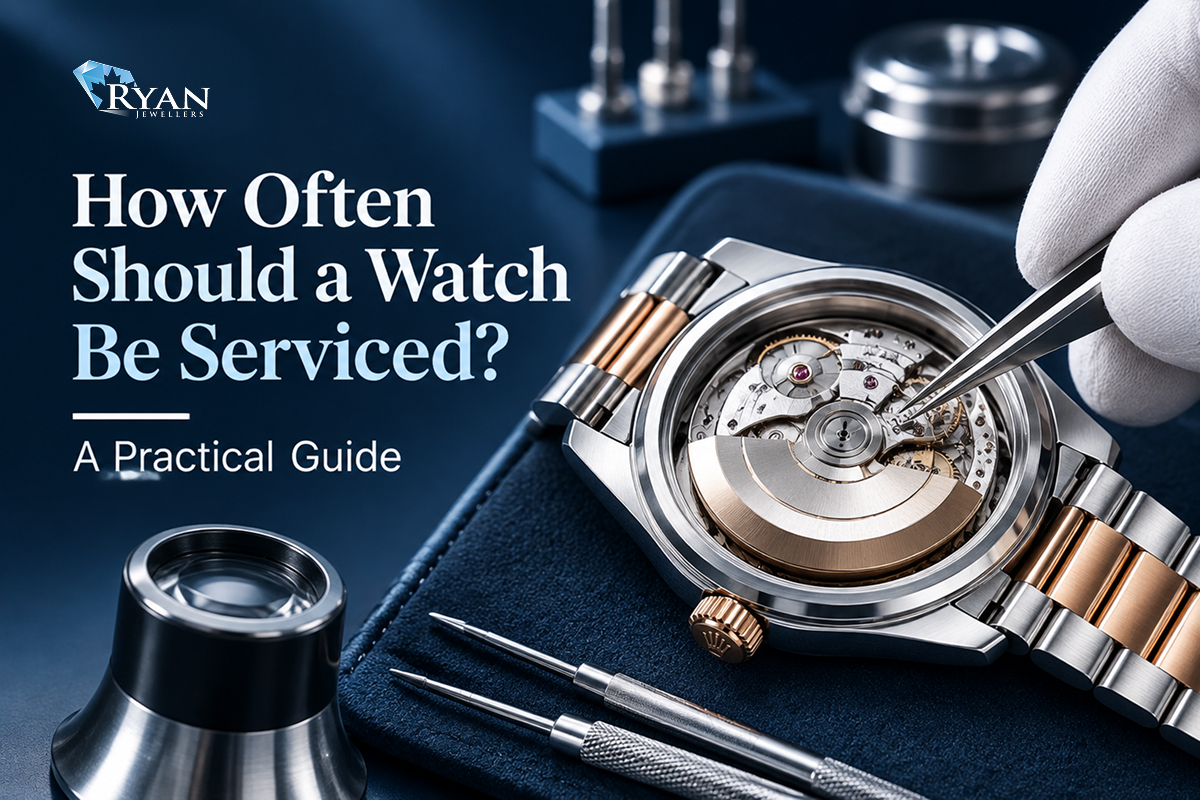
A luxury watch is a precision instrument, and regular servicing helps maintain its accuracy, reliability, and water resistance over time. But how often should a watch be serviced? The answer depends on the brand, movement, model, climate, frequency of use, and condition of the watch.
There is no single servicing interval that applies to every timepiece. For example, Rolex recommends servicing approximately every 10 years depending on the model and real-life usage, while OMEGA gives a general guideline of every 5–8 years depending on conditions. TUDOR also recommends approximately 10-year intervals depending on the model and daily use.
For Canadian owners, climate can also be relevant. Seasonal temperature changes, humidity, snow, and frequent transitions between indoor and outdoor environments make proper care and periodic inspection especially important.
If you’re considering a luxury watch for long-term ownership, explore the selection at Ryan Jeweller and choose a timepiece that fits your style and lifestyle.
How Often Does a Watch Need Professional Servicing?
The most accurate answer is: follow the manufacturer’s recommended schedule for your specific model.
Different brands use different servicing recommendations because their movements, materials, construction, and testing procedures vary.
Rolex
Rolex currently recommends servicing approximately every 10 years, depending on the model and real-life usage. The brand explains that periodic professional servicing helps maintain continued accuracy and waterproofness.
OMEGA
OMEGA states that it cannot recommend one universal interval because servicing depends on the model, climate, and care provided by the owner. As a general rule, it recommends servicing watches every 5–8 years, depending on conditions.
TUDOR
TUDOR recommends servicing approximately every 10 years, depending on the model and how the watch is used day to day.
These differences demonstrate why simply following a generic “every five years” or “every ten years” rule is not always appropriate.
What About a Watch That Is Running Normally?
A watch does not necessarily need a complete service simply because a particular number of years has passed.
If the watch is functioning normally, the manufacturer’s recommended interval should be considered alongside:
- The watch’s age
- Frequency of wear
- Environmental conditions
- Water exposure
- Previous service history
- Movement performance
- Any recent impact
For a high-value watch, periodic professional inspection can also identify developing issues before they become more expensive repairs.
Do Automatic, Manual-Winding, and Quartz Watches Have Different Service Needs?
Yes. The movement type affects what kind of maintenance a watch requires.
Automatic Watches
Automatic watches use a mechanical movement that winds itself through the movement of the wearer’s wrist.
They contain numerous moving components, including gears, springs, jewels, and a winding system. Over time, lubricants can degrade and components can wear.
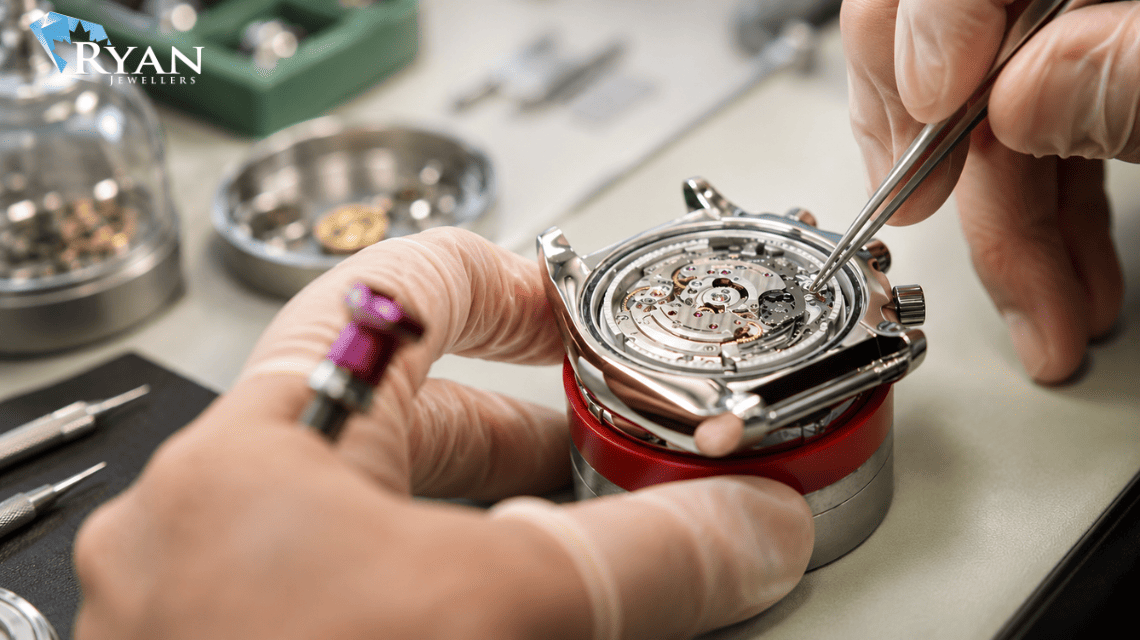
Professional servicing typically involves inspecting, cleaning, lubricating, and testing the movement.
An automatic watch that is worn frequently may therefore require different maintenance considerations from one that spends most of its time stored.
Manual-Winding Watches
Manual-winding watches also use mechanical movements, but the mainspring is wound by turning the crown.
Because the fundamental movement is mechanical, professional servicing remains important.
Daily winding itself does not mean the watch requires more frequent complete servicing. However, excessive force or incorrect crown operation can cause unnecessary wear.
If the crown suddenly feels different or unusually difficult to turn, it is better to have the watch inspected rather than forcing it.
Quartz Watches
Quartz watches generally have fewer mechanical components than traditional mechanical watches and use a battery or another electronic power source.
Their service requirements can therefore be different.
Maintenance may include:
- Battery replacement
- Gasket inspection
- Water-resistance testing
- Case and bracelet cleaning
- Replacement of worn components
- Electronic or movement inspection when required
A quartz watch does not necessarily need the same full mechanical overhaul as an automatic or manual-winding watch.
However, water resistance and seals still require attention, particularly after the watch has been opened for battery replacement.
Smart and Electronic Watches
Smartwatches have a completely different maintenance cycle from traditional mechanical watches.
Their batteries, software, displays, charging systems, and electronic components determine their practical lifespan rather than traditional mechanical servicing intervals.
For a traditional luxury watch, however, movement servicing remains an important part of long-term ownership.
What Factors Affect a Watch’s Service Interval?
Knowing how often should a watch be serviced requires looking beyond the calendar.
1. Frequency of Use
A watch worn every day experiences considerably more exposure to:
- Sweat
- Dust
- Temperature changes
- Movement
- Accidental impacts
- Water
- Cosmetics
A watch worn only occasionally may experience less physical wear, although its seals and lubricants still age with time.
2. Climate
Climate is particularly relevant for Canadian watch owners.
A watch worn outdoors in winter may experience significant temperature changes when moving between a cold environment and a heated indoor space.
OMEGA specifically states that servicing frequency depends partly on climate.
3. Water Exposure
Frequent swimming, diving, or exposure to seawater places greater demands on the watch’s seals and water-resistance system.
Water resistance is not permanent. Gaskets can deteriorate over time, and an impact can potentially affect the sealing system.
If water resistance is important to your lifestyle, periodic testing is worth considering.
4. Physical Impacts
A significant impact can affect the movement even if the case does not show obvious damage.
After a hard impact, watch owners should pay attention to:
- Sudden changes in accuracy
- Unusual sounds
- Difficulty winding
- Crown problems
- Chronograph irregularities
If the watch behaves differently after an impact, professional inspection is advisable.
5. Magnetization
Mechanical watches can be affected by strong magnetic fields, depending on their construction and magnetic resistance.
If a mechanical watch suddenly begins gaining or losing significant amounts of time, magnetization is one possible cause.
A qualified watchmaker can determine whether demagnetization or further servicing is required.
6. Previous Service History
A watch with a documented recent service may not require another complete overhaul simply because it has changed ownership.
Conversely, a pre-owned watch with no known service history may warrant inspection even if it appears to be functioning normally.
For a valuable pre-owned watch, service documentation can therefore be an important part of the purchasing decision.
7. The Specific Movement
Two watches from the same brand can have different servicing requirements because they use different movements or complications.
A simple three-hand movement generally has fewer components than a complicated chronograph, perpetual calendar, or GMT movement.
More complexity can mean more components that require inspection and adjustment.
What Are the Signs That a Watch Needs Servicing?
The calendar is not the only indicator.
A watch may require professional attention sooner if its performance changes noticeably.
Sudden Changes in Accuracy
Mechanical watches naturally have some variation in timekeeping.
However, if your watch suddenly begins gaining or losing significantly more time than usual, it should be checked.
Possible causes include:
- Magnetization
- Impact
- Lubrication issues
- Movement wear
- Internal contamination
Do not automatically assume that the entire movement needs to be replaced. A professional diagnosis should determine the cause.
Reduced Power Reserve
If an automatic or manual-winding watch previously maintained its expected power reserve but now stops considerably sooner, the movement may require inspection.
Possible causes include lubrication problems, wear, or issues with the winding system.
Unusual Sounds
Mechanical watches naturally produce subtle sounds.
However, a new grinding, rattling, or unusual clicking sound can indicate that something inside the movement needs attention.
Crown Problems
Pay attention if the crown becomes:
- Difficult to turn
- Loose
- Unusually stiff
- Difficult to screw down
- Unable to remain secured
Never force a crown.
A crown problem can affect both the operation and water resistance of the watch.
Condensation Under the Crystal
Condensation inside the crystal is a warning sign that moisture may have entered the case.
Stop wearing the watch and seek professional assistance.
Moisture can cause corrosion and damage delicate movement components.
Water Resistance Is Uncertain
If a watch has been dropped, opened for repair, or has not been checked for many years, its water resistance may need testing.
OMEGA recommends regular water-resistance testing because gaskets can age and accidental shocks can affect the watch.
The Watch Has Been Heavily Used
Even if a watch appears to be working correctly, heavy daily use can justify an earlier inspection.
Professional servicing can identify wear before it develops into a more serious problem.
What Happens During a Professional Watch Service?
A complete service is much more than cleaning the outside of the watch.
The exact process varies by brand and model, but a professional service may include several stages.
1. Initial Diagnosis
The watchmaker first evaluates the watch’s overall condition.
This can include checking:
- Timekeeping
- Power reserve
- Winding
- Functions
- Case
- Bracelet
- Crown
- Water resistance
Rolex states that a thorough diagnostic examination is performed before a complete service, with the condition of the watch assessed before the necessary procedures are determined.
2. Movement Inspection
The movement is examined for wear, damage, contamination, and other issues.
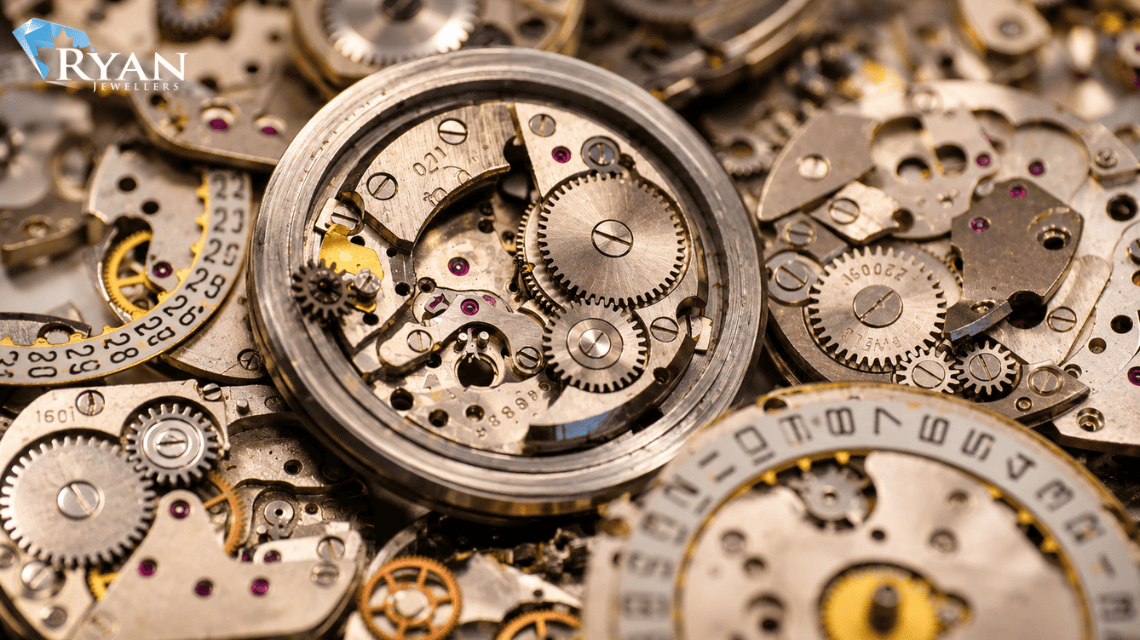
For a complete overhaul, the movement may be disassembled so individual components can be inspected and cleaned.
3. Cleaning and Lubrication
Mechanical components are carefully cleaned and lubricated where necessary.
Correct lubrication is important because excessive or insufficient lubrication can affect the movement’s performance.
4. Replacement of Worn Components
Components that no longer meet the manufacturer’s specifications may need replacement.
The exact parts required depend on the watch’s condition.
5. Gasket Replacement
Seals and gaskets may be replaced during service to help restore water resistance.
TUDOR states that its servicing procedure includes replacing the seals before the case undergoes waterproofness testing.
6. Water-Resistance Testing
Water resistance should be tested after relevant work has been completed.
TUDOR describes vacuum and pressure testing followed by condensation detection as part of its servicing process.
7. Accuracy and Power-Reserve Testing
The serviced watch is tested to ensure that its timekeeping and power reserve meet the applicable standards.
TUDOR states that final quality control includes verification of power reserve, timing precision, and aesthetic appearance.
8. Case and Bracelet Refinishing
Depending on the brand, service level, and owner’s preference, the case and bracelet may also be cleaned or refinished.
However, polishing should not automatically be requested simply because a watch has minor scratches.
Excessive polishing can alter the original geometry of the case.
9. Service Documentation
Professional service should ideally be documented.
For example, Rolex provides a Service Card after a full service performed by an authorized service centre, and that card carries a two-year international guarantee.
TUDOR similarly provides a Service Card after a complete service, with a two-year Service Guarantee.
How Much Does Watch Servicing Cost in Canada?
Service costs vary significantly depending on the brand, model, movement, age, and condition.
As a current Canadian reference point, Rolex lists complete-service starting prices of:
- CAD $840 for many modern six-digit references
- CAD $980 for selected professional models
- CAD $1,190 for models including the Cosmograph Daytona and Sky-Dweller
These prices apply to the listed categories and do not necessarily include every repair or replacement component.
Classic and vintage Rolex watches can have considerably higher service pricing.
For example, Rolex currently lists starting prices of CAD $1,250 for many five-digit classic references and CAD $2,090 for certain four-digit vintage references.
This illustrates why owners should not assume that servicing a luxury watch has a universal fixed price.
Before approving major work, ask for a service assessment and estimate.
How Can Canadian Watch Owners Plan a Service Schedule?
A practical approach is to combine the manufacturer’s recommendation with your actual usage.
| Watch situation | Recommended approach |
|---|---|
| Regular daily wear | Follow the manufacturer’s service interval and monitor performance |
| Occasional wear | Follow the manufacturer’s interval; inspect condition periodically |
| Frequent water exposure | Pay particular attention to water-resistance testing |
| Heavy sports/outdoor use | Consider earlier inspection if the watch experiences impacts or harsh conditions |
| Sudden accuracy change | Have the watch professionally assessed |
| Major impact | Arrange an inspection even if there is no visible damage |
| Unknown service history | Consider an inspection before relying on the watch for long-term use |
| Condensation inside crystal | Seek professional service promptly |
| Crown or winding problems | Stop forcing the mechanism and arrange an inspection |
The key is to treat the manufacturer’s recommended interval as a guideline rather than waiting for a watch to fail.
Learn more about proper watch maintenance with our Watch Care Guide and discover practical tips to keep your timepiece in excellent condition.
FAQ About Watch Servicing
How often should a watch be serviced?
There is no universal interval. Rolex and TUDOR currently recommend approximately every 10 years depending on the model and usage, while OMEGA gives a general guideline of 5–8 years depending on conditions. Always check the recommendation for your specific model.
Do automatic watches need servicing more often than quartz watches?
Generally, mechanical automatic watches have more moving components and require periodic movement servicing. Quartz watches have different maintenance needs, often centred on battery replacement, seals, and electronic components. The exact schedule depends on the specific model.
Should I service my watch even if it is working normally?
Not necessarily immediately, but following the manufacturer’s recommended interval is important for long-term reliability. A watch can continue to run while internal lubricants or components are gradually aging.
How do I know if my watch needs servicing?
Common warning signs include a sudden change in accuracy, reduced power reserve, unusual sounds, crown problems, condensation under the crystal, or problems with a watch function.
How much does a luxury watch service cost in Canada?
There is no standard price. As an example, Rolex’s current Canadian complete-service pricing starts at CAD $840 for many modern references and can be considerably higher for professional, classic, and vintage models.
Where should I have a luxury watch serviced?
For a valuable luxury watch, an authorized manufacturer service centre or appropriately qualified watchmaker is generally the safest choice. TUDOR, for example, recommends that servicing be performed through its official Rolex or TUDOR service network.
Final Thoughts
Understanding how often should a watch be serviced is less about following one universal number and more about understanding your particular watch.
Rolex currently recommends approximately 10-year servicing intervals depending on the model and use, while OMEGA recommends a general 5–8-year guideline and TUDOR recommends approximately 10 years.
For Canadian owners, actual use matters. A watch exposed regularly to water, temperature changes, sports, impacts, or demanding outdoor conditions may deserve closer attention than one worn occasionally in controlled environments.
Watch for changes in accuracy, power reserve, winding, water resistance, and overall behaviour. When something feels different, professional inspection is usually better than waiting for a minor issue to become an expensive repair.
With the right service schedule and proper daily care, a quality luxury watch can remain accurate, reliable, and enjoyable for many years.
Ready to invest in a luxury timepiece designed for long-term ownership? Explore the collection at Ryan Jeweller and find a watch that matches your style and collection.