
Summarize the article with:


There is no universal answer to how much should you spend on a watch. A suitable budget depends on your lifestyle, priorities, financial comfort, and the type of watch you want to own. A reliable quartz watch can provide excellent everyday performance at a relatively accessible price, while a luxury mechanical watch can cost substantially more because of its materials, movement, finishing, craftsmanship, and brand positioning.
For Canadian buyers, the advertised price is only one part of the decision. Sales taxes, servicing, insurance, replacement straps, and other ownership expenses can affect the overall cost of owning a watch.
If you are comparing watches for different budgets, Ryan Jeweller can help you explore different timepieces and styles before deciding where to invest.
How Much Does a Watch Typically Cost?
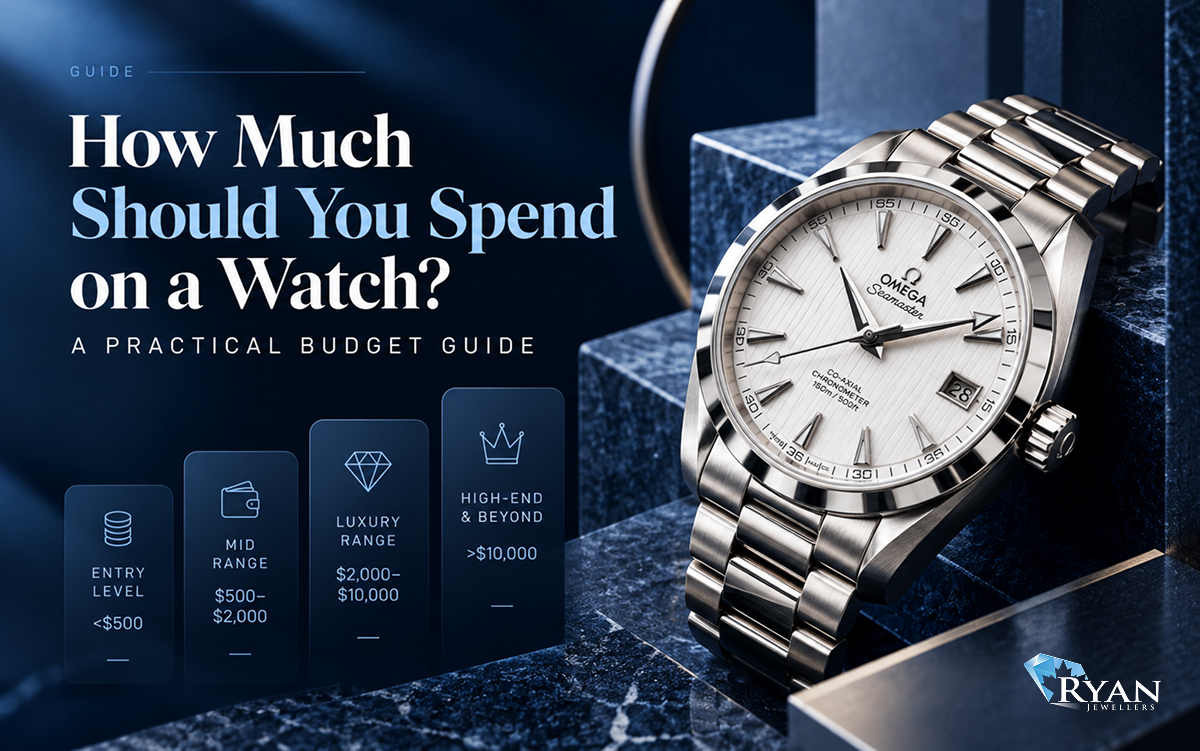
Watch prices vary considerably. There is no standardized pricing structure that separates watches into fixed categories, but thinking in broad segments can make the market easier to understand.
Entry-Level Watches
Entry-level watches can include simple quartz models as well as some mechanical watches.
At this level, buyers may prioritize:
- Reliable timekeeping
- Practical materials
- Simple movements
- Straightforward designs
- Low maintenance
Quartz watches are particularly common because quartz movements can provide excellent accuracy without the mechanical complexity of traditional watchmaking.
Mid-Range Watches
The mid-range market offers a much broader selection of mechanical and automatic watches.
Depending on the manufacturer and model, you may find:
- Sapphire crystals
- Higher-quality movements
- Improved case finishing
- Better bracelets
- More sophisticated dials
- Greater water resistance
- Additional complications
Price alone does not determine quality, so compare the specifications and construction of individual models.
Luxury Watches
Luxury watches can range from several thousand dollars to considerably higher prices.
The price may reflect:
- Precious metals
- Fine movement finishing
- Complex mechanical movements
- Hand craftsmanship
- Complications
- Limited production
- Brand heritage
- Design
- Research and development
Two watches with similar functions can therefore have very different prices.
Pre-Owned Watches
The pre-owned market provides another route into luxury watches.
Prices can vary according to:
- Condition
- Age
- Model
- Rarity
- Originality
- Service history
- Documentation
- Market demand
When purchasing a valuable pre-owned watch, authenticity and condition should be carefully verified.
Why There Is No “Correct” Watch Budget
A watch is a discretionary purchase for most consumers.
Spending more does not automatically produce a better experience.
A $500 watch may be the ideal choice for someone who wants a practical daily timepiece, while another buyer may value the mechanical craftsmanship of a $10,000 watch.
The right budget is the one that fits your financial situation and provides the characteristics you actually value.
What Watch Features Affect the Price?
Several factors can influence the price of a watch.
Movement
Movement type is one of the most important considerations.
Quartz movements are generally simpler to manufacture and maintain than mechanical movements.
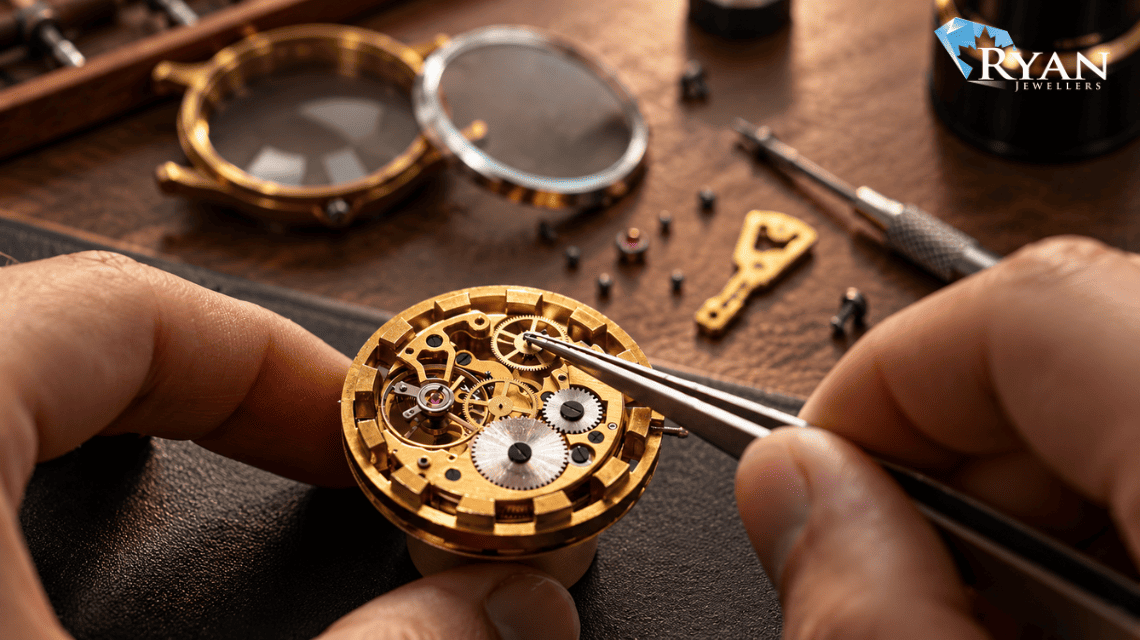
Mechanical and automatic movements can require significantly more components, assembly, adjustment, and servicing.
However, movement complexity should not be confused with accuracy.
A quartz watch can be more accurate than a mechanical watch while costing substantially less.
Mechanical Complications
Additional functions can increase movement complexity.
Examples include:
- Chronograph
- GMT
- Moon phase
- Annual calendar
- Perpetual calendar
- Power reserve
- Minute repeater
The more complicated the movement, the more engineering and assembly may be required.
Materials
Materials can have a major impact on pricing.
Common options include:
- Stainless steel
- Titanium
- Ceramic
- Gold
- Platinum
Precious metals generally contribute more to the material cost than common watchmaking metals.
For Canadian buyers, it is important to understand exactly what a precious-metal description means. Canada’s Competition Bureau establishes requirements concerning precious-metal quality marks and representations.
Crystal
Crystal material can also influence price.
Acrylic: Affordable and lightweight, but relatively easy to scratch.
Mineral: Generally more scratch-resistant than acrylic and commonly used in accessible watches.
Sapphire: Highly scratch-resistant and widely used in higher-end watches.
Finishing
Finishing includes the treatment of surfaces and components.
A luxury watch may feature:
- Hand-polished bevels
- Brushed surfaces
- Fine engraving
- Perlage
- Decorative striping
- Polished screws
More intricate finishing can require substantial manual labour.
Bracelet and Clasp
A high-quality bracelet can add considerable value to a watch.
Consider:
- Link construction
- Clasp design
- Adjustment system
- Finishing
- Comfort
- Materials
A watch with a well-designed bracelet can provide a very different ownership experience from one with a basic strap.
Water Resistance
Water resistance can influence construction and cost.
A watch designed for serious water exposure may require:
- Stronger case construction
- Seals and gaskets
- Screw-down crown
- Reinforced caseback
- Specialized testing
However, water resistance alone does not make a watch a luxury product.
Brand and Heritage
Brand reputation can significantly affect pricing.
A manufacturer with a long history of watchmaking may command a premium because of:
- Heritage
- Brand recognition
- Design history
- Manufacturing capabilities
- Collector demand
Brand reputation can matter, but it should not replace an evaluation of the actual watch.
How Do Entry-Level, Mid-Range, and Luxury Watches Compare?
Understanding the differences between price segments can help you determine where your money is best spent.
| Category | Typical Characteristics | Best For |
|---|---|---|
| Entry-level | Quartz or basic mechanical, practical materials | Everyday use |
| Mid-range | Improved movements, finishing, materials | Enthusiasts and daily wear |
| Luxury | Advanced movements, premium materials, refined finishing | Collectors and enthusiasts |
| High-end luxury | Complications, precious metals, extensive finishing, limited production | Collectors and connoisseurs |
These categories are broad rather than official industry classifications.
Entry-Level: Focus on Function
If your main objective is telling time accurately and reliably, you may not need to spend a large amount.
A well-made quartz watch can provide excellent practical value.
Mid-Range: Balance
Mid-range watches can offer a combination of:
- Better materials
- Mechanical movements
- Improved finishing
- Stronger bracelets
- More sophisticated designs
This can be an attractive segment for buyers who want more craftsmanship without entering the highest luxury price ranges.
Luxury: Craftsmanship and Experience
Luxury watches often place greater emphasis on:
- Movement architecture
- Finishing
- Precious materials
- Complications
- Design
- Brand heritage
The additional cost is not necessarily reflected in basic timekeeping performance.
Instead, buyers may be paying for craftsmanship, engineering, materials, exclusivity, and the experience of ownership.
High-End Luxury: Specialized Watchmaking
At the upper end of the market, watches can incorporate extremely complex complications and extensive hand finishing.
Examples include:
- Perpetual calendars
- Minute repeaters
- Tourbillons
- Split-seconds chronographs
- Astronomical complications
At this level, production volume can be very low and craftsmanship can be highly specialized.
Should You Consider Maintenance and Ownership Costs?
Yes. The purchase price is only part of the total cost of ownership.
Servicing
Mechanical and automatic watches require periodic maintenance.
A service can involve:
- Disassembly
- Cleaning
- Inspection
- Lubrication
- Replacement of worn components
- Reassembly
- Regulation
- Testing
The exact requirements and cost vary by movement, manufacturer, model, and service provider.
Quartz Maintenance
Quartz watches generally require less mechanical servicing.
Battery replacement may be needed periodically.
Some quartz watches use rechargeable or specialized power systems, so maintenance requirements vary.
Strap Replacement
Leather straps naturally wear with use.
Sweat, moisture, friction, and environmental exposure can accelerate deterioration.
A high-quality watch may therefore require replacement straps during long-term ownership.
Bracelet Maintenance
Metal bracelets can accumulate dirt and wear.
They may require:
- Cleaning
- Link adjustment
- Clasp maintenance
- Replacement of worn components
Water-Resistance Testing
If you regularly expose a watch to water, maintaining its seals and water resistance becomes particularly important.
Gaskets can deteriorate over time.
If the watch is intended for swimming or diving, follow the manufacturer’s recommended maintenance schedule.
Insurance
Expensive watches may warrant insurance coverage.
Consider whether your existing home or tenant insurance provides sufficient coverage for a high-value watch.
Specialized coverage may be appropriate depending on the value and circumstances.
Taxes in Canada
Canadian buyers should also remember that the final amount paid can be higher than the advertised price because applicable federal and provincial or territorial sales taxes may apply.
The exact tax depends on the province or territory and the transaction.
Import Costs
If purchasing from outside Canada, consider whether additional charges could apply, such as:
- Applicable taxes
- Customs-related charges
- Brokerage fees
- Shipping
- Currency conversion
The advertised international price should therefore not automatically be treated as the final Canadian cost.
How Can You Choose the Best Watch for Your Budget?
Instead of asking only how much should you spend on a watch, start by asking what you want the watch to accomplish.
Step 1: Set Your Maximum Budget
Choose a maximum amount that will not create financial pressure.
Do not increase your budget simply because a salesperson or marketing campaign suggests that a more expensive watch is necessary.
Step 2: Identify Your Priorities
Decide what matters most.
For example:
Accuracy → Consider quartz.
Mechanical craftsmanship → Consider automatic or manual-winding watches.
Durability → Focus on case construction, crystal, bracelet, and water resistance.
Luxury materials → Consider gold or platinum.
Travel → Consider a GMT or dual-time function.
Formal wear → Consider a slimmer case and restrained dial.
Step 3: Choose Your Movement
Your movement choice can significantly narrow the market.
If you do not want to think about winding or mechanical servicing, quartz may be ideal.
If you enjoy mechanical engineering, automatic or manually wound movements may provide a more rewarding ownership experience.
Step 4: Compare Specifications
When comparing watches at similar prices, examine:
- Movement
- Case material
- Crystal
- Water resistance
- Case dimensions
- Bracelet or strap
- Complications
- Finishing
- Warranty
This provides a more objective comparison than brand recognition alone.
Step 5: Consider Long-Term Costs
Ask:
- How often will it require service?
- How expensive is servicing?
- Are replacement parts available?
- Will I need additional straps?
- Is the watch insured?
- Does it have an adequate warranty?
These costs can become significant over many years.
Step 6: Buy for Your Lifestyle
A watch should fit your actual routine.
A complicated dress watch may not be ideal for someone who spends most of their time outdoors.
Likewise, an oversized dive watch may not be the best choice if you primarily attend formal events.
Step 7: Consider Pre-Owned Options Carefully
A pre-owned watch can provide access to models that would otherwise exceed your budget.
However, compare:
- Authenticity
- Condition
- Service history
- Documentation
- Original components
- Seller reputation
A lower purchase price is not necessarily better if the watch immediately requires expensive repairs.
How Much Should You Spend Based on Your Purpose?
Your intended use can help establish a reasonable budget.
Everyday Watch
Focus on:
- Reliability
- Comfort
- Accuracy
- Durability
- Easy maintenance
You do not necessarily need a luxury watch for everyday use.
Business Watch
A moderate-size watch with a clean design can work well with professional clothing.
You may want to prioritize:
- Slim profile
- Legibility
- Versatility
- Quality finishing
Formal Watch
For formal occasions, understated design can be more important than complicated functions.
Consider:
- Slim case
- Leather strap
- Precious-metal case
- Minimal dial
- Simple complications
Sports Watch
A sports watch may justify spending more on:
- Durable case
- Sapphire crystal
- Water resistance
- Secure bracelet
- Robust movement
Collector’s Watch
If collecting is your primary interest, budget considerations can change considerably.
Collectors may value:
- Limited production
- Historical significance
- Complications
- Movement finishing
- Rare materials
- Provenance
In this category, personal interest and collector demand can influence purchasing decisions as much as practical functionality.
How Can You Avoid Overspending on a Watch?
A practical budget strategy can help you make a more rational purchase.
Do Not Buy Based Only on Brand
Brand recognition can influence price, but it does not tell you everything about a watch.
Compare the actual:
- Movement
- Materials
- Finishing
- Construction
- Warranty
- Service support
Do Not Pay for Unused Features
If you never travel internationally, you may not need a GMT function.
If you never use a stopwatch, a chronograph may not add practical value.
Buy complications because you appreciate or need them—not simply because they sound impressive.
Consider Wearability
A watch that spends most of its life in a box may not represent good value, regardless of how impressive its specifications are.
Comfort and versatility matter.
Leave Room in the Budget
Do not spend every dollar of your available budget on the watch itself.
Leaving some room for:
- Servicing
- Insurance
- Straps
- Adjustments
- Unexpected repairs
can make ownership easier.
If you want a more detailed overview before making a purchase, read our Watch Buying Guide for practical advice on movements, sizing, materials, features, and budget.
FAQ About Watch Budgets
How much should you spend on a watch?
There is no universal amount. Choose a budget that fits comfortably within your finances and reflects how much you value the watch’s movement, materials, craftsmanship, design, and features.
Is an expensive watch worth the money?
It can be, depending on what you value. Higher prices can reflect materials, movement complexity, finishing, craftsmanship, brand heritage, and limited production, but a more expensive watch is not automatically better for every buyer.
Is a quartz watch good value?
Yes. Quartz watches can provide excellent accuracy, reliability, and convenience at relatively accessible prices. They can be especially suitable for buyers who prioritize practicality.
What makes a luxury watch expensive?
Factors can include precious metals, mechanical movement complexity, hand finishing, complications, craftsmanship, research and development, limited production, and brand positioning.
Should I consider maintenance when setting my watch budget?
Yes. Mechanical and automatic watches require periodic servicing, while straps, batteries, repairs, insurance, and other expenses can also contribute to long-term ownership costs.
Should I buy a new or pre-owned watch?
Both can be appropriate. New watches offer the benefits of current availability and manufacturer or retailer warranty coverage, while pre-owned watches can provide access to discontinued or higher-priced models. For pre-owned purchases, authenticity, condition, service history, and seller reputation are particularly important.
Final Thoughts
There is no single answer to how much should you spend on a watch. The right budget depends on your financial comfort, lifestyle, preferred movement, materials, design, and the features you genuinely value. A practical quartz watch can offer excellent everyday performance, while a luxury mechanical timepiece may provide greater appeal through craftsmanship, finishing, complications, and premium materials.
Before making a purchase, look beyond the initial price. Consider servicing, maintenance, insurance, straps, taxes, and other ownership costs that may affect the watch’s long-term value. Most importantly, choose a timepiece that fits both your wrist and your lifestyle rather than simply choosing the most expensive option within your budget.
If you’re ready to explore different watch styles and find a timepiece that matches your preferences, discover the collection at Ryan Jeweller and take the next step toward finding the right watch for you.