
Summarize the article with:


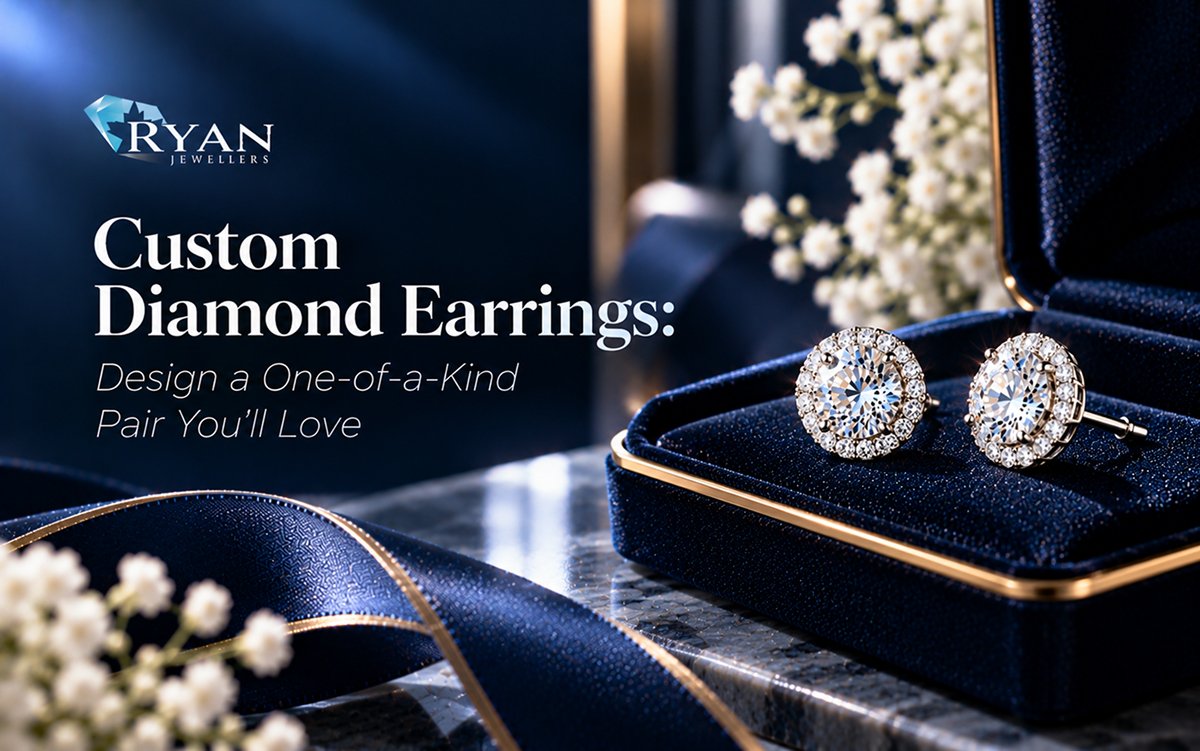
Custom diamond earrings offer a simple way to create fine jewelry that feels personal. Instead of selecting a finished pair, you can choose the diamond shape, quality, metal, setting, size, and overall style to suit your preferences.
For Canadian buyers, custom design also makes it easier to consider practical details such as everyday comfort, diamond documentation, metal purity, durability, and budget. Whether you want classic diamond studs, elegant drops, or a distinctive modern design, thoughtful planning can help you create a pair you will enjoy wearing for years.
A custom pair does not have to be complicated. In many cases, a subtle change in diamond shape, setting, or metal can create a noticeably different look.
If you’re exploring your options, visit Ryan Jeweller for inspiration before starting your custom earring design.
What Are Custom Diamond Earrings?
Custom diamond earrings are earrings designed or significantly modified according to the wearer’s preferences, with diamonds as the primary gemstones.
The level of customization depends on the jeweller. Some projects involve modifying an existing design, while others are created from an original concept.
Customization may include:
- Diamond shape
- Carat weight
- Colour
- Clarity
- Diamond origin
- Metal type
- Gold karat
- Setting style
- Earring size
- Earring length
- Backing style
- Engraving
- Surface finish
Fully Custom Earrings
A fully custom pair can be developed around a specific idea.
For example, you might want oval diamonds in yellow gold with a minimalist bezel setting. The jeweller can then create the design around those requirements.
You can also bring several reference images rather than a finished concept. These can help communicate your preferred proportions, shapes, and overall aesthetic.
Modified Earring Designs
Customizing an existing design can be a simpler alternative.
You may choose an existing pair and change:
- Diamond size
- Diamond shape
- Metal
- Setting
- Earring length
- Backing
This allows you to personalize the design without starting completely from scratch.
Why Choose Custom Diamond Earrings?
Custom design gives you greater control over the finished piece.
You can prioritize what matters most to you, whether that is:
- A specific diamond shape
- Larger stones
- Lightweight construction
- A particular metal
- A distinctive setting
- Everyday versatility
- Personal meaning
The goal is to create earrings that balance appearance, comfort, quality, and practicality.
If you’re ready to create a personalized diamond ring, explore our Custom Diamond Rings for design inspiration and one-of-a-kind options.
Popular Custom Diamond Earring Styles
Different earring styles create very different visual effects. Customization allows you to adjust each design according to your preferences.
Custom Diamond Stud Earrings
Diamond studs are among the most versatile earring styles.
A traditional stud can be customized through:
- Diamond shape
- Carat weight
- Metal
- Setting
- Backing
- Overall proportions
Round diamonds provide a classic appearance, while oval, princess, or other shapes can create a more distinctive look.
Bezel-Set Diamond Studs
A bezel setting surrounds the edge of the diamond with metal.
This creates a clean, modern appearance and gives the earrings a different visual character from traditional prong-set studs.
Bezel settings can work particularly well for minimalist jewelry.
Halo Diamond Earrings
A halo design surrounds a central diamond with smaller diamonds.
The surrounding stones add additional detail and can create a larger overall visual presence.
You can customize:
- Centre diamond shape
- Halo shape
- Number of accent diamonds
- Metal
- Overall size
Custom Diamond Drop Earrings
Drop earrings extend below the earlobe and can range from subtle to dramatic.
Customization can involve:
- Length
- Diamond arrangement
- Metal
- Number of stones
- Movement
- Overall silhouette
A shorter drop may work well for regular wear, while longer designs can create a more formal appearance.
Diamond Hoop Earrings
Diamond hoops combine the structure of a hoop with diamond accents.
You can customize:
- Hoop diameter
- Thickness
- Diamond coverage
- Metal
- Closure
- Diamond shape
A smaller hoop can create an everyday look, while a larger design can function as a statement piece.
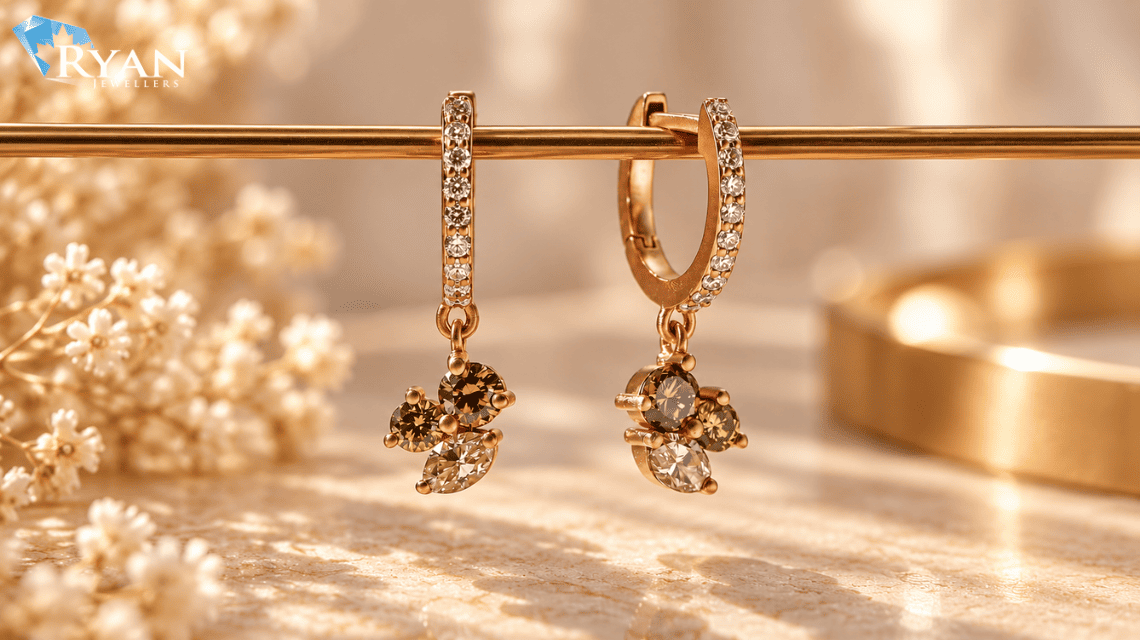
Cluster Diamond Earrings
Cluster designs group multiple diamonds closely together.
The stones can be arranged into:
- Floral shapes
- Geometric patterns
- Abstract designs
- Vintage-inspired motifs
The arrangement can be customized to create a distinctive silhouette.
Vintage-Inspired Diamond Earrings
Vintage-inspired earrings may include:
- Milgrain
- Filigree
- Decorative metalwork
- Intricate settings
These elements can be combined with contemporary diamonds for a design that feels distinctive without reproducing a historical piece exactly.
Modern Minimalist Earrings
Minimalist designs emphasize clean lines and fewer decorative elements.
Examples include:
- Small bezel-set diamonds
- Geometric studs
- Single-stone earrings
- Slim diamond drops
These styles can be especially versatile for everyday wear.
Choosing the Right Diamond Shape and Quality
Selecting the diamond is one of the most important parts of creating custom diamond earrings.
Understand the 4Cs
The traditional diamond evaluation framework is based on four characteristics:
- Cut
- Colour
- Clarity
- Carat weight
Each describes a different aspect of the diamond.
Cut relates to proportions and how the diamond interacts with light.
Colour describes the degree of body colour present.
Clarity evaluates internal and surface characteristics.
Carat weight measures the diamond’s weight.
These characteristics should be considered together rather than using one specification as the only indicator of quality.
Diamond Shape
Popular shapes include:
- Round
- Oval
- Princess
- Emerald
- Pear
- Marquise
- Cushion
- Radiant
The shape affects the overall appearance of the earrings.
Round diamonds offer a traditional look, while elongated shapes such as oval, pear, and marquise can create a more distinctive silhouette.
Consider Matching Carefully
For earrings, symmetry is particularly important.
If you are creating a pair with two centre diamonds, compare the stones carefully for:
- Shape
- Measurements
- Colour
- Clarity
- Cut characteristics
- Carat weight
The two diamonds do not necessarily have to be identical in every characteristic, but they should create a visually balanced pair.
Carat Weight and Appearance
Carat weight measures diamond weight, not directly its visible size.
Two diamonds with the same carat weight can have different measurements and proportions.
For earrings, consider both the carat weight and the face-up dimensions because the visual balance of the pair matters.
Natural vs. Lab-Grown Diamonds
Both natural and lab-grown diamonds can be used in custom earrings.
Natural diamonds form through geological processes, while lab-grown diamonds are produced using technological processes in controlled environments.
According to the Gemological Institute of America, lab-grown diamonds have essentially the same chemical composition and crystal structure as natural diamonds. Their key distinction is their origin.
Lab-grown diamonds should also be distinguished from diamond simulants such as cubic zirconia and moissanite. Simulants are different materials that resemble diamonds.
Review Diamond Documentation
When purchasing significant diamonds, grading documentation can provide information about individual characteristics.
Make sure the documentation corresponds to the actual stones being purchased.
For a pair of earrings, it is also useful to confirm that both diamonds are appropriately matched for the intended design.
Selecting the Metal, Setting, and Earring Style
The diamond is only one part of the final design. Metal, setting, and backing also affect appearance and practicality.
Yellow Gold
Yellow gold creates a warm, traditional appearance.
It works well with:
- Classic diamond studs
- Vintage-inspired earrings
- Coloured gemstones
- Contemporary designs
White Gold
White gold offers a cooler appearance and is widely used in modern jewelry.
Many white gold pieces use rhodium plating to create a bright white surface. The plating can wear over time and may require professional maintenance.
Rose Gold
Rose gold has a warm pink tone created by its alloy composition.
It can add a softer or more distinctive appearance to custom diamond earrings.
Platinum
Platinum is naturally white and has a high density.
It is often selected for fine jewelry and gemstone settings. However, platinum is not scratch-proof and can develop a natural patina through everyday wear.
Gold Karat
Common gold qualities include:
| Gold Type | Approximate Gold Content |
|---|---|
| 10K | 41.7% |
| 14K | 58.5% |
| 18K | 75% |
| 22K | 91.6% |
| 24K | 99.9% |
Canadian guidance recognizes gold quality designations from 9K through 24K when applicable quality marks are used. The Competition Bureau also states that precious-metal quality marks must accurately represent the material.
Prong Settings
Prongs hold the diamond in place while leaving much of the stone exposed.
This can allow more light to enter the diamond and keeps the design visually open.
However, prongs should be inspected periodically, particularly when earrings are worn frequently.
Bezel Settings
A bezel setting surrounds the diamond with metal.
It creates a smooth, contemporary appearance and can provide substantial coverage around the stone.
Halo Settings
Halo settings surround the centre diamond with smaller diamonds.
They can increase visual complexity and create a more decorative appearance.
Choosing the Earring Back
The backing affects both comfort and security.
Common options include:
- Push backs
- Screw backs
- Hinged closures
- Lever backs
The appropriate choice depends on the earring style, weight, and intended use.
For valuable earrings, discuss security and comfort with your jeweller before finalizing the design.
How to Design Custom Earrings for Everyday or Special Occasions
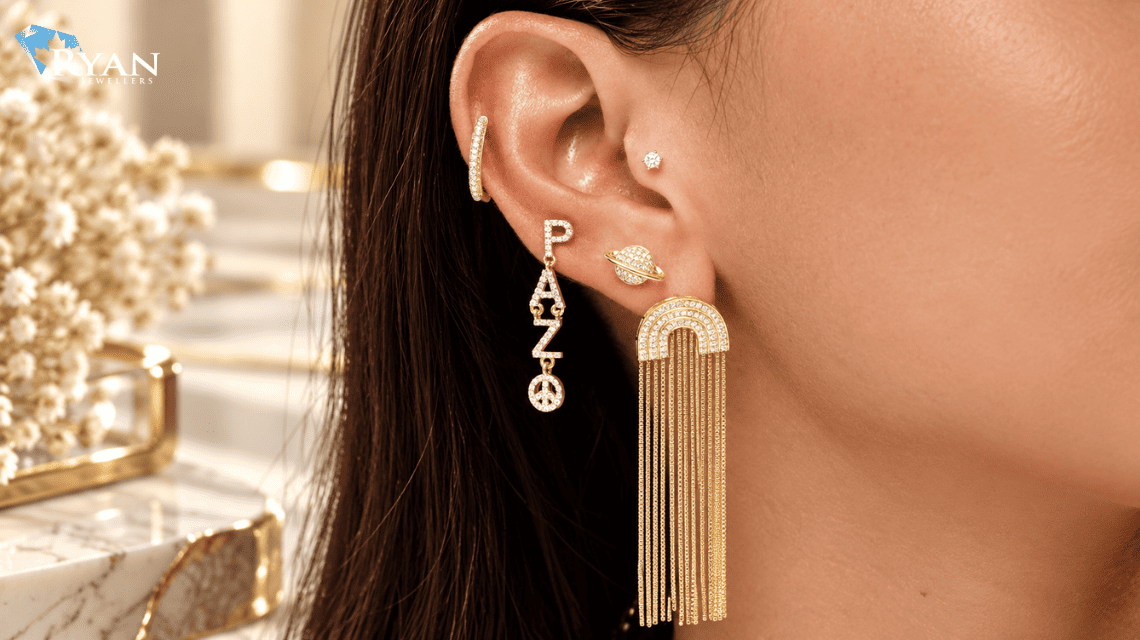
The best custom earrings depend on how you plan to wear them.
Everyday Diamond Earrings
For everyday wear, prioritize:
- Comfort
- Moderate weight
- Secure fastening
- Durable construction
- Easy maintenance
- Versatility
Small studs, minimalist hoops, and short drops can be practical options.
Special-Occasion Earrings
For weddings, anniversaries, formal events, or other celebrations, you may prefer a more distinctive design.
Options include:
- Larger diamonds
- Drop earrings
- Diamond clusters
- Intricate settings
- Mixed-metal designs
The design can be more elaborate because it may not need to accommodate everyday activities.
Consider Earring Weight
Weight matters more for earrings than many people realize.
Heavy earrings can become uncomfortable when worn for several hours.
When designing custom earrings, consider:
- Total metal weight
- Number of diamonds
- Pendant length
- Backing style
- Ear comfort
A visually impressive earring does not need to be physically heavy.
Consider Your Hairstyle
Hair can affect how visible earrings are.
For example:
Short hair or an updo: places greater emphasis on the earrings.
Loose hair: may partially cover larger earrings.
Half-up styles: can work with both studs and drop earrings.
If you are designing earrings specifically for a wedding, consider the hairstyle alongside the dress and other jewelry.
Match Earrings With Other Jewelry
Your custom earrings can coordinate with:
- Engagement ring
- Wedding band
- Necklace
- Bracelet
- Watch
The pieces do not have to be identical.
Instead, repeat one or two characteristics such as:
- Metal
- Diamond shape
- Setting style
- Finish
- Design motif
This creates a cohesive appearance without making the jewelry look overly matched.
Design for Multiple Occasions
If you want one pair to work for both everyday and formal wear, choose a versatile foundation.
For example:
Classic diamond studs + removable jackets
or
Small diamond drops + simple metal structure
This can provide flexibility without requiring multiple completely different pairs.
The Custom Diamond Earring Design Process
Although every Canadian jeweller has its own workflow, custom earring projects generally follow several stages.
1. Consultation
Discuss:
- Desired style
- Budget
- Diamond preferences
- Metal
- Intended use
- Earring size
- Target completion date
Reference images can help communicate your preferences.
2. Diamond Selection
Choose the diamonds based on:
- Shape
- Carat weight
- Colour
- Clarity
- Cut
- Measurements
- Origin
- Documentation
For earrings, compare the two stones as a pair rather than evaluating them independently.
3. Design Development
The jeweller develops the earring structure around the selected diamonds.
This may involve sketches, technical drawings, or CAD.
Review:
- Front view
- Side profile
- Stone position
- Earring length
- Metal proportions
- Backing
4. Final Approval
Before production, confirm:
- Diamond specifications
- Metal type
- Gold karat
- Dimensions
- Setting
- Backing
- Engraving
- Total price
- Production timeline
5. Manufacturing and Setting
The earrings are produced according to the approved design.
Depending on the project, this may involve:
- Metal fabrication
- Casting
- Stone setting
- Engraving
- Polishing
- Finishing
6. Final Inspection
Before accepting the earrings, check:
- Diamond security
- Symmetry
- Matching appearance
- Setting
- Backings
- Metal finish
- Overall weight
- Comfort
For significant diamond purchases, ensure that any grading documentation corresponds to the actual stones supplied.
How to Make Custom Diamond Earrings Feel Personal
Custom earrings can be personalized without becoming overly complicated.
Use a Meaningful Diamond Shape
A specific shape can become part of your personal style.
For example:
- Round for a classic look
- Oval for an elongated silhouette
- Emerald for a structured appearance
- Pear for a distinctive shape
Add Engraving
Depending on the design, you may be able to engrave:
- Initials
- Dates
- Short messages
- Personal symbols
Small details can add meaning without changing the overall appearance.
Incorporate a Birthstone
A birthstone can introduce colour and personal significance.
However, gemstone durability varies, so consider whether the stone is appropriate for the intended frequency of wear.
Use a Family Gemstone
An existing family gemstone may potentially be incorporated into a new pair of earrings.
Have the stone professionally inspected first to determine whether it is suitable for resetting.
Create a Matching Jewelry Collection
You can design earrings that share details with an engagement ring, necklace, or bracelet.
For example:
Oval diamond earrings + oval diamond engagement ring
or
Yellow-gold earrings + yellow-gold necklace
The pieces can coordinate without being identical.
If you’re looking for more inspiration and practical guidance before starting your own design, read our Custom Jewelry Guide to explore custom design options, styles, and what to consider when creating a one-of-a-kind piece.
FAQ About Custom Diamond Earrings
What are custom diamond earrings?
Custom diamond earrings are earrings designed or significantly modified according to a customer’s preferences, with diamonds as the primary gemstones.
Are custom diamond earrings more expensive?
Not necessarily. Cost depends on the diamonds, metal, design complexity, craftsmanship, labour, setting, and production requirements.
Can I use lab-grown diamonds for custom earrings?
Yes. Lab-grown diamonds can be incorporated into custom earrings. They have essentially the same chemical composition and crystal structure as natural diamonds, while differing in origin.
Are lab-grown diamonds real diamonds?
Yes. Lab-grown diamonds are diamonds rather than simulants. Their key distinction from natural diamonds is their origin.
Should the two diamonds in a pair be identical?
They do not necessarily need to be identical in every characteristic. However, they should be sufficiently matched in appearance, dimensions, and relevant characteristics to create a balanced pair.
What diamond shape is best for earrings?
There is no universally best shape. Round, oval, princess, emerald, pear, marquise, cushion, and radiant diamonds can all work well depending on the design and personal style.
What metal is best for diamond earrings?
There is no universal best metal. Yellow gold, white gold, rose gold, and platinum have different characteristics relating to appearance, purity, durability, maintenance, and price.
Are heavy diamond earrings comfortable?
Comfort depends on the total weight, construction, length, and backing. If earrings will be worn for several hours, discuss weight and support with your jeweller before finalizing the design.
What earring backing is most secure?
There is no single best backing for every design. Push backs, screw backs, lever backs, and hinged closures each have different characteristics. The appropriate option depends on the earring’s design and intended use.
Can I use an existing diamond for custom earrings?
Potentially. A jeweller should inspect the diamond before removing and resetting it to determine whether it is suitable for the new design.
Can custom earrings include coloured gemstones?
Yes. Diamonds can be combined with sapphires, rubies, emeralds, aquamarine, tourmaline, and other gemstones. Their durability and care requirements should be considered before selecting them.
How long does it take to make custom diamond earrings?
The timeline varies according to diamond availability, design complexity, revisions, manufacturing, stone setting, engraving, and finishing. Confirm the expected completion date before ordering.
Can custom diamond earrings be repaired?
Many earrings can be repaired, although the options depend on the design and materials. Ask about future repairs, stone inspections, polishing, and warranty coverage before purchasing.
How should I care for custom diamond earrings?
Store them separately to reduce scratching, keep them away from harsh chemicals, and periodically inspect the settings and backings. Professional cleaning and inspection can also be useful for frequently worn fine jewelry.
Final Thoughts
Custom diamond earrings give you the flexibility to create a pair around your preferred diamonds, metal, setting, proportions, and personal style. Whether you choose classic studs, elegant drops, modern hoops, or an entirely original design, customization allows you to make thoughtful decisions about every important element.
The most successful pair does not necessarily use the largest diamonds or the most elaborate setting. Instead, it balances diamond quality, symmetry, comfort, durability, craftsmanship, and personal meaning.
For Canadian buyers, it is also important to understand the materials and documentation involved. Precious-metal quality marks must accurately represent the material, while diamond origin and characteristics should be clearly communicated.
Before production begins, confirm the diamond specifications, grading documentation, metal and karat, earring dimensions, backing style, total price, timeline, and after-sales policies.
Most importantly, design for how the earrings will actually be worn. A pair that looks beautiful, feels comfortable, and works with your existing jewelry is more likely to become something you reach for again and again.
If you’re ready to explore personalized designs, visit Ryan Jeweller and discover possibilities for creating custom diamond earrings you’ll love for years.