
Summarize the article with:


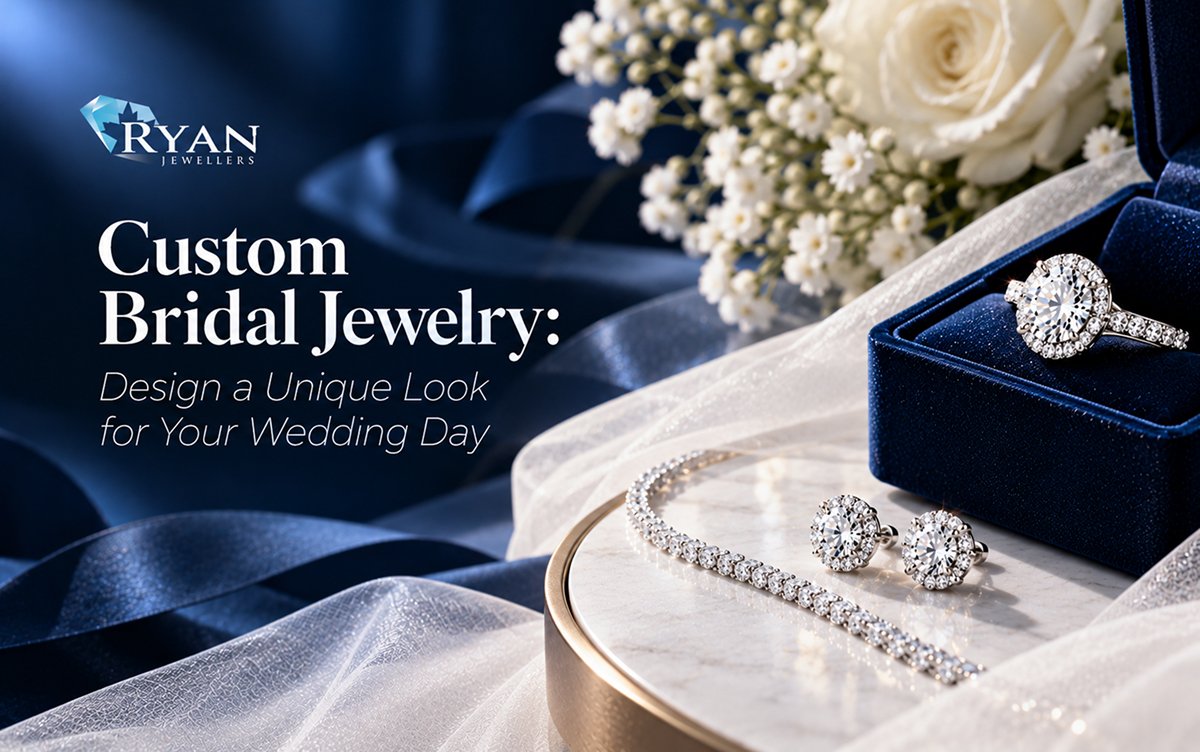
Your wedding jewelry should complement your dress, reflect your personal style, and remain meaningful long after the celebration. Custom bridal jewelry gives you the flexibility to create pieces around your preferred diamonds, gemstones, metals, proportions, and design details rather than selecting everything from a standard collection.
For Canadian brides, customization can also help coordinate different pieces into one cohesive look. Earrings, necklaces, bracelets, and rings can share similar metals, gemstone colours, finishes, or design details without looking overly matched.
Whether you prefer understated diamond studs, a personalized necklace, or a complete bridal jewelry collection, understanding the materials and design process can help you make confident choices.
If you are looking for inspiration, explore Ryan Jeweller to discover jewelry styles and possibilities before creating your own bridal look.
What Is Custom Bridal Jewelry?
Custom bridal jewelry is jewelry designed or significantly modified around an individual’s preferences for a wedding or bridal occasion.
The level of customization depends on the jeweller. Some projects involve modifying an existing design, while others begin with an original concept.
Customization may include:
- Metal type and colour
- Gold karat
- Diamond selection
- Gemstone type
- Stone shape and size
- Setting style
- Chain length
- Earring proportions
- Bracelet design
- Engraving
- Surface finish
Custom Does Not Always Mean Completely Original
A custom piece does not necessarily have to be designed from scratch.
For example, you may find a necklace you like and customize the:
- Metal
- Gemstone
- Chain length
- Pendant
- Engraving
This can provide a personalized result while maintaining a familiar design.
Why Choose Custom Bridal Jewelry?
A wedding involves many visual elements, including the dress, shoes, veil, hairstyle, and rings.
Custom jewelry can be designed to work with these elements.
You can consider:
- Dress neckline
- Sleeve style
- Hairstyle
- Wedding theme
- Existing engagement ring
- Wedding band
- Personal style
The objective is not to make every piece identical. Instead, the collection should feel visually connected.
Custom Bridal Earrings, Necklaces, and Bracelets
Different jewelry pieces have different design considerations. Customization allows you to adjust each piece according to how it will be worn.
Custom Bridal Earrings
Earrings frame the face, making their size and shape particularly important.
Popular options include:
- Diamond studs
- Drop earrings
- Hoop-inspired designs
- Pearl and diamond combinations
- Gemstone earrings
When choosing earrings, consider your hairstyle and dress neckline.
For example, an updo can provide more visibility for drop or statement earrings, while simple studs can offer a clean and timeless appearance.
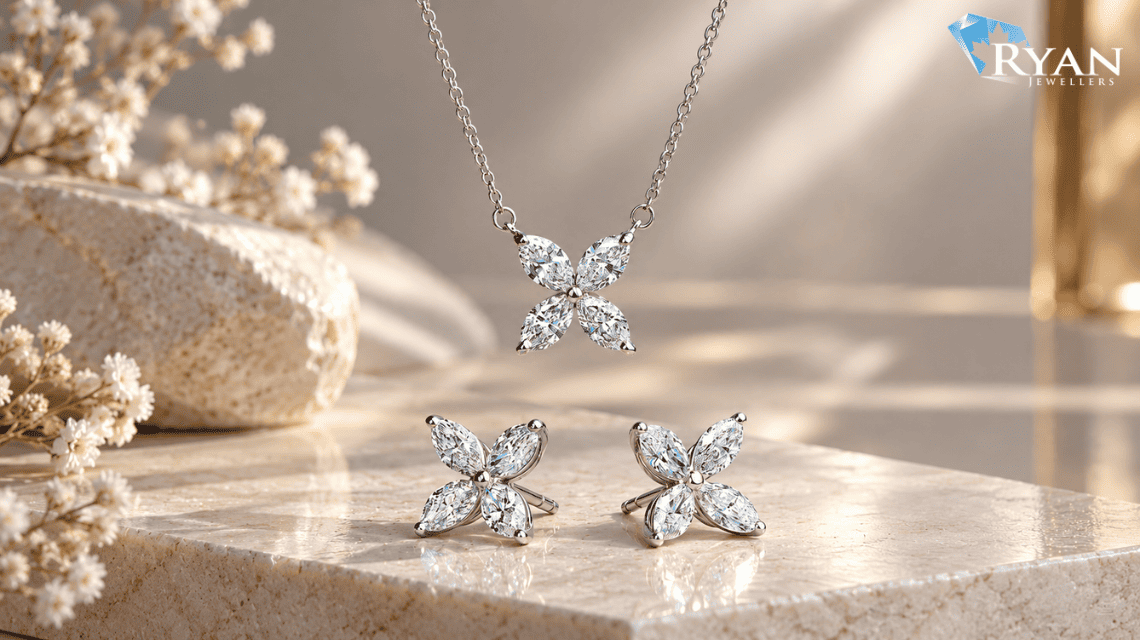
Custom Diamond Earrings
Diamond earrings can be designed around the size, shape, and setting of the stones.
For a coordinated bridal look, the diamonds can complement those used in the engagement ring without necessarily being identical.
You can customize:
- Diamond shape
- Carat weight
- Metal
- Setting
- Earring length
- Backing style
Comfort should also be considered, particularly if the earrings will be worn throughout a long wedding day.
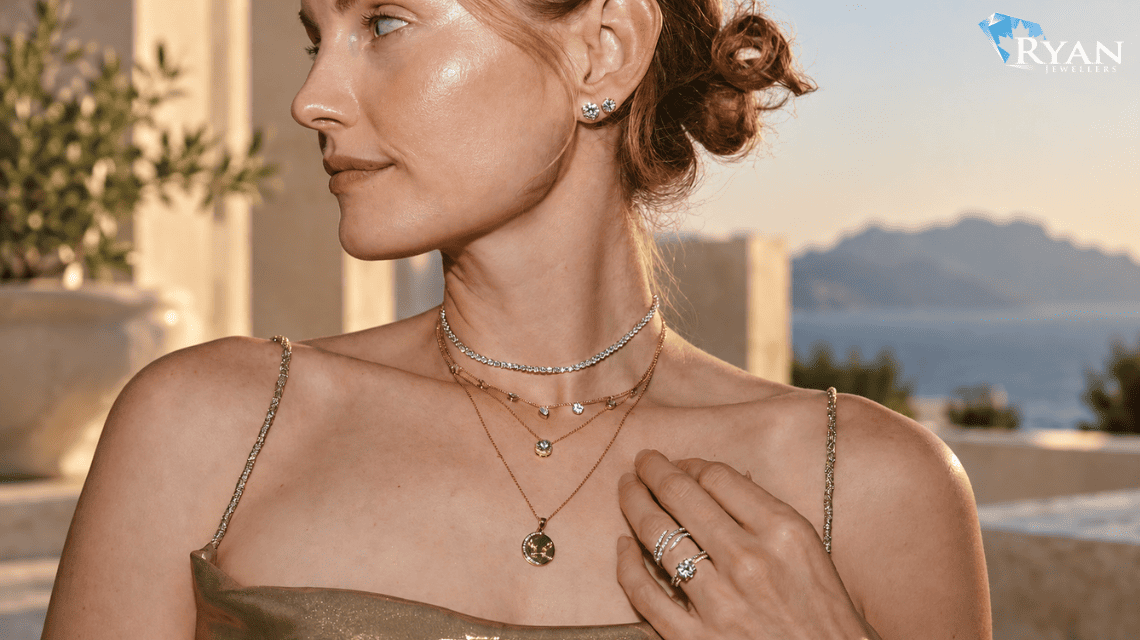
Custom Bridal Necklaces
The neckline of the wedding dress should guide the necklace design.
Common options include:
- Solitaire pendants
- Diamond pendants
- Gemstone necklaces
- Station necklaces
- Delicate chains
- Statement necklaces
A necklace should generally complement the neckline rather than compete with it.
Custom Bridal Bracelets
Bracelets can add detail to the wrist without drawing attention away from the engagement ring.
Options include:
- Diamond tennis-style bracelets
- Delicate chain bracelets
- Gemstone bracelets
- Custom bangles
- Personalized bracelets
The fit is particularly important. A bracelet that is too loose can move excessively, while one that is too tight may become uncomfortable.
Custom Pieces for the Wedding Party
Custom jewelry can also be created as gifts for:
- Bridesmaids
- Mothers
- Family members
- Maid of honour
Small personalized details, such as initials or gemstones, can make these pieces more meaningful.
How to Match Custom Jewelry with Your Wedding Dress
The wedding dress should be one of the main references when selecting bridal jewelry.
You do not necessarily need jewelry that matches the dress exactly. Instead, consider proportion, colour, shape, and overall balance.
Consider the Neckline
Different necklines create different opportunities for jewelry.
| Dress Neckline | Jewelry Considerations |
|---|---|
| Strapless | Necklace or statement earrings can add balance |
| V-neck | Pendant or necklace can follow the neckline |
| Sweetheart | Delicate necklace can complement the curved shape |
| High neckline | Earrings or bracelet may work better |
| Off-the-shoulder | Necklace or drop earrings can complement exposed areas |
| One-shoulder | Earrings and bracelet can provide balance |
These are general styling principles rather than strict rules.
Match the Metal to the Overall Look
Your jewelry metal should work with the dress details and other accessories.
Common options include:
- Yellow gold
- White gold
- Rose gold
- Platinum
If your engagement ring is white gold, you may choose white gold or platinum for the rest of your bridal jewelry. However, mixing metals can also create a deliberate contemporary look.
Consider the Dress Details
A heavily embellished dress may pair well with simpler jewelry.
Conversely, a minimalist dress can provide more space for a distinctive necklace or statement earrings.
Look at:
- Beading
- Lace
- Embroidery
- Sequins
- Metallic details
- Appliqués
The jewelry should complement these elements rather than compete with them.
Coordinate With Your Hairstyle
Your hairstyle can significantly affect how visible your jewelry will be.
For example:
Updo: creates more space around the ears and neck.
Loose hair: may partially cover earrings and necklaces.
Short hairstyle: places greater emphasis on earrings and neckline jewelry.
This is particularly important when designing custom earrings.
Keep Proportion in Mind
Jewelry should feel appropriately scaled to the dress and wearer.
Consider:
- Earring length
- Necklace thickness
- Pendant size
- Bracelet width
- Ring proportions
A single focal point can often create a more balanced appearance than several competing statement pieces.
Choosing Diamonds, Gemstones, and Precious Metals
The materials used in custom bridal jewelry affect appearance, durability, maintenance, and cost.
Choosing Diamonds
For diamonds, the traditional 4Cs provide a useful starting point:
- Cut
- Colour
- Clarity
- Carat weight
These characteristics should be considered together.
Carat weight measures diamond weight rather than directly measuring its visible size. Two diamonds with the same carat weight can have different dimensions and appearances.
Choosing Diamond Shapes
Popular diamond shapes include:
- Round
- Oval
- Emerald
- Pear
- Marquise
- Cushion
- Radiant
- Princess
Different shapes create different visual effects.
For example, an oval or marquise diamond can create a more elongated appearance, while a round diamond offers a classic look.
Natural vs. Lab-Grown Diamonds
Both natural and lab-grown diamonds can be used in custom bridal jewelry.
Natural diamonds form through geological processes, while lab-grown diamonds are produced using technological processes in controlled environments.
Lab-grown diamonds have essentially the same chemical composition and crystal structure as natural diamonds. Their key distinction is their origin.
When selecting between them, consider:
- Origin
- Diamond characteristics
- Grading documentation
- Measurements
- Appearance
- Budget
- Personal preferences
A lab-grown diamond should also be distinguished from a diamond simulant such as cubic zirconia or moissanite, which are different materials.
Choosing Gemstones
Diamonds are not the only option for custom bridal jewelry.
You can also consider:
- Sapphire
- Ruby
- Emerald
- Aquamarine
- Tourmaline
- Amethyst
However, gemstone durability varies.
If a gemstone will be worn regularly, consider its hardness, toughness, sensitivity, and care requirements.
For example, emeralds commonly contain inclusions and generally require more careful handling than diamonds or sapphires.
Choosing Gold
Common gold qualities include:
- 10K
- 14K
- 18K
- 22K
- 24K
The karat indicates the proportion of pure gold in the alloy.
| Gold Type | Approximate Gold Content |
|---|---|
| 10K | 41.7% |
| 14K | 58.5% |
| 18K | 75% |
| 22K | 91.6% |
| 24K | 99.9% |
Higher-karat gold contains more pure gold but is generally softer than lower-karat gold alloys.
For bridal jewelry intended for frequent wear, discuss the appropriate gold karat with your jeweller.
White Gold
White gold offers a cool, contemporary appearance.
Many white gold pieces receive rhodium plating, which creates a bright white surface. The plating can wear over time and may require professional maintenance.
Yellow Gold
Yellow gold has a warm appearance and works well with traditional and contemporary bridal styles.
It can also create attractive contrast against white diamonds.
Rose Gold
Rose gold has a warm pink tone created by its alloy composition.
It can add a softer or more distinctive appearance to custom bridal jewelry.
Platinum
Platinum is naturally white and has a high density.
It is often used in fine jewelry and gemstone settings. However, it is not scratch-proof and can develop a natural patina through everyday wear.
Creating a Coordinated Bridal Jewelry Collection
A coordinated bridal jewelry collection does not mean every piece needs to look identical.
Instead, choose a few design characteristics that connect the pieces.
Coordinate the Metal
Using the same metal across earrings, necklaces, bracelets, and rings can create a cohesive appearance.
However, mixed-metal jewelry can also work when the combination is intentional.
Repeat a Gemstone
If your engagement ring features a diamond, you might repeat diamonds in:
- Earrings
- Necklace
- Bracelet
The stones do not need to be exactly the same size or shape.
Repeat a Design Element
A small design feature can connect multiple pieces.
For example:
- Similar geometric shapes
- Matching engraving
- Shared milgrain detail
- Similar stone settings
- Consistent surface finish
This can create visual continuity without making the jewelry appear overly coordinated.
Coordinate With Your Engagement Ring
Your engagement ring should usually be considered when designing other bridal jewelry.
Pay attention to:
- Metal
- Diamond shape
- Setting style
- Scale
- Overall design language
If the engagement ring is highly detailed, simpler earrings and a necklace may create better balance.
Think About the Wedding Day as a Whole
Consider how your jewelry will appear alongside:
- Wedding dress
- Veil
- Hair accessories
- Shoes
- Handbag
- Engagement ring
- Wedding band
Your jewelry should contribute to the overall look rather than becoming a collection of unrelated pieces.
Design for Future Wear
One of the advantages of custom jewelry is that you can design pieces to remain useful after the wedding.
A pair of diamond studs, a simple pendant, or a classic bracelet can transition easily into everyday wear.
For more elaborate pieces, consider whether you will realistically wear them again.
Create a Bridal Jewelry Capsule
Instead of creating many highly decorative pieces, consider a smaller collection:
One statement piece + two versatile pieces
For example:
- Statement earrings
- Simple diamond pendant
- Delicate bracelet
This approach can provide flexibility while keeping the overall look balanced.
If you’re planning your wedding jewelry, explore our Custom Wedding Jewelry guide for personalized ideas, styles, and design inspiration.
The Custom Bridal Jewelry Design Process
Although each Canadian jeweller has its own workflow, custom bridal jewelry commonly follows several stages.
1. Consultation
Discuss:
- Wedding date
- Dress style
- Budget
- Jewelry preferences
- Existing rings
- Gemstones
- Metal
- Desired timeline
2. Inspiration
Bring reference images, sketches, or examples of jewelry you already own.
You can also identify styles you do not like. This can help the jeweller understand your preferences more clearly.
3. Material Selection
Choose:
- Metal
- Diamond
- Gemstone
- Setting
- Accent stones
4. Design Development
The jeweller may create sketches, technical drawings, or CAD models.
Review the proposed jewelry from multiple angles, particularly for complex pieces.
5. Final Approval
Before production begins, confirm:
- Materials
- Gemstone specifications
- Dimensions
- Ring or jewelry size
- Engraving
- Total price
- Production timeline
- Revision policy
6. Production and Finishing
The piece is manufactured, stones are set, and the jewelry is polished and finished according to the approved design.
7. Final Inspection
Before accepting the finished piece, check:
- Stone security
- Metal finish
- Symmetry
- Engraving
- Size
- Clasp or fastening
- Overall construction
For significant diamond purchases, make sure any grading documentation corresponds to the actual stone supplied.
How to Make Custom Bridal Jewelry More Personal
Customization can be subtle.
Add a Wedding Date
A date can be engraved on the inside of a ring or another suitable surface.
Incorporate Birthstones
Birthstones can add colour and personal meaning.
However, the durability of the chosen gemstone should be considered if the piece will be worn frequently.
Use Family Jewelry
An existing family gemstone or piece of jewelry may potentially be incorporated into a new design.
A professional should inspect the piece first to determine whether it is suitable for reuse.
Add a Hidden Detail
A hidden diamond, engraving, symbol, or gemstone can provide sentimental value without changing the exterior appearance.
Create Matching Details for a Couple
Couples can coordinate their jewelry through:
- Matching engraving
- Shared metal
- Similar finishes
- Repeated design motifs
The pieces do not need to be identical.
If you’re looking for more inspiration and practical guidance before starting your own design, read our Custom Jewelry Guide to explore custom design options, styles, and what to consider when creating a one-of-a-kind piece.
FAQ About Custom Bridal Jewelry
What is custom bridal jewelry?
Custom bridal jewelry is jewelry specifically designed or significantly personalized for a bride or wedding. It can include earrings, necklaces, bracelets, rings, and personalized pieces.
Is custom bridal jewelry more expensive?
Not necessarily. The cost depends on the materials, diamonds or gemstones, design complexity, craftsmanship, labour, and production requirements.
Can I use lab-grown diamonds for bridal jewelry?
Yes. Lab-grown diamonds can be incorporated into engagement rings, earrings, necklaces, bracelets, and other fine jewelry.
Can I use the same diamonds as my engagement ring?
You can coordinate the diamonds in your bridal jewelry with your engagement ring. However, the stones do not necessarily need to be identical in size, shape, or grade.
What metal is best for bridal jewelry?
There is no universal best metal. Gold and platinum have different characteristics relating to colour, purity, durability, maintenance, and price. The right choice depends on the design and intended use.
Should my bridal jewelry match my wedding dress?
It does not need to match exactly. Instead, consider the dress neckline, embellishments, metal colour, proportions, and overall style.
Should I wear a necklace with a detailed wedding dress?
It depends on the neckline and amount of embellishment. If the dress already has substantial detail around the neckline, simpler jewelry or statement earrings may provide better balance.
Can custom bridal jewelry include coloured gemstones?
Yes. Sapphires, rubies, emeralds, aquamarine, tourmaline, and other gemstones can be incorporated into custom designs.
Can I customize earrings and necklaces as a matching set?
Yes. You can coordinate pieces through shared metals, gemstones, shapes, finishes, or design motifs.
How long does custom bridal jewelry take?
The timeline varies according to the complexity of the design, gemstone availability, design revisions, manufacturing, stone setting, engraving, and finishing. If the jewelry is needed for a specific wedding date, start the process early.
Can I wear my custom bridal jewelry after the wedding?
Yes. Simple diamond earrings, pendants, bracelets, and other versatile designs can transition easily into everyday or special-occasion wear.
Can I engrave custom bridal jewelry?
Yes, provided the piece has enough suitable space. Common options include initials, dates, names, and short personal messages.
What should I ask a jeweller before ordering?
Ask about the complete price, materials, gemstone specifications, grading documentation, design revisions, production timeline, deposit, cancellation policy, warranty, resizing where applicable, and after-sales service.
Final Thoughts
Custom bridal jewelry gives you the freedom to create a wedding-day look that feels personal, balanced, and intentional. From diamond earrings and necklaces to bracelets and coordinated rings, each piece can be designed around your dress, existing jewelry, personal style, and long-term preferences.
The most successful bridal collections do not necessarily contain the largest stones or the most elaborate designs. Instead, they create a thoughtful relationship between proportion, materials, colour, comfort, and personal meaning.
For Canadian brides, it is also important to understand the materials being purchased and their care requirements. Diamonds, gold, platinum, and coloured gemstones each have different characteristics, so the intended use should be considered before finalizing a design.
Most importantly, think beyond the wedding day. A well-designed piece can become part of your jewelry collection for anniversaries, celebrations, and everyday occasions.
If you’re ready to explore ideas for your wedding look, visit Ryan Jeweller for inspiration and discover possibilities for creating custom bridal jewelry designed specifically for you.