
Summarize the article with:


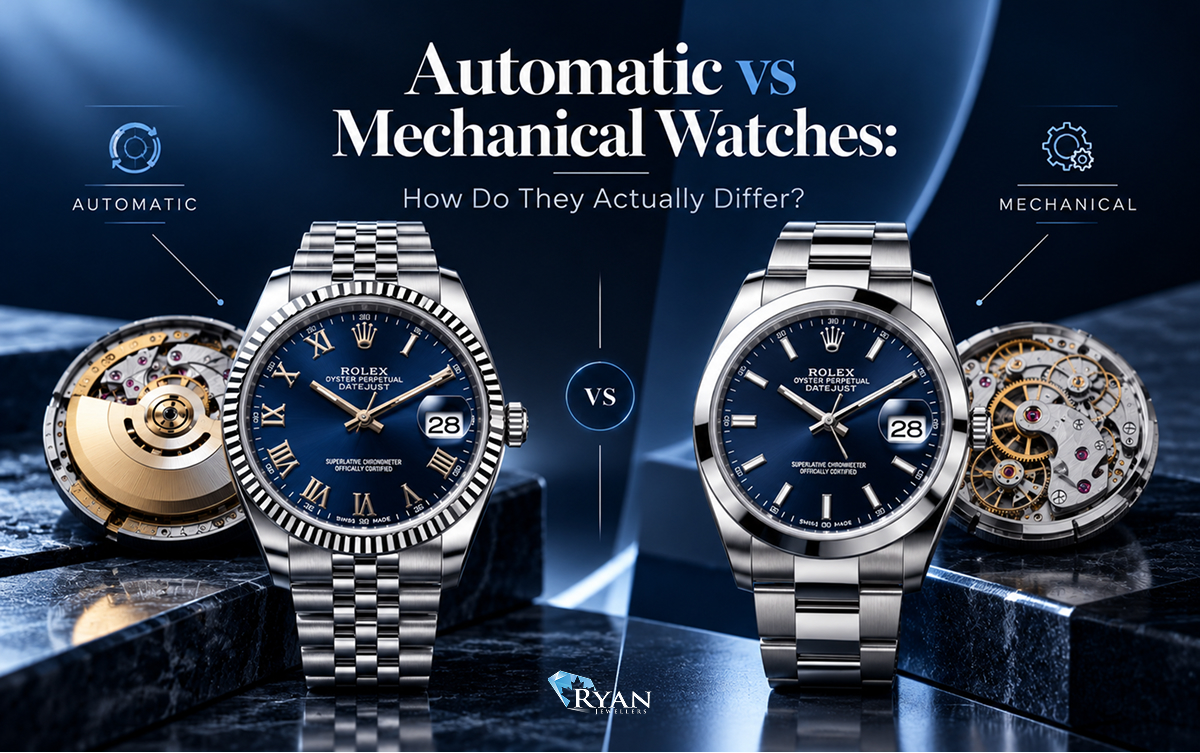
When comparing automatic vs mechanical watches, the first thing to understand is that the two terms are not actually opposites. An automatic watch is a type of mechanical watch. The real distinction is between an automatic mechanical movement and a manual-winding mechanical movement.
Both use mechanical components rather than a battery-powered quartz regulator. They rely on stored energy from a mainspring, a gear train, an escapement, and a regulating system to measure and display time. The main difference is how the mainspring receives its energy.
For Canadian watch buyers, understanding this distinction can make it easier to compare movements, ownership requirements, servicing, and long-term value. It can also help you avoid choosing a watch based on terminology alone.
If you’re exploring mechanical timepieces for yourself or as a gift, visit Ryan Jeweller to browse watches and fine jewelry available for different styles and occasions.
What Is a Mechanical Watch?
A mechanical watch is a timepiece powered by a mainspring rather than a battery or electronic quartz oscillator.
When the mainspring is wound, it stores potential energy. The movement gradually releases that energy through a series of precisely manufactured components.
How a Mechanical Movement Works
A traditional mechanical movement includes several key systems:
- Mainspring
- Gear train
- Escapement
- Balance wheel
- Hairspring
- Winding mechanism
- Hands and display components
The mainspring stores the energy. The gear train transfers that energy, while the escapement controls how quickly it is released.
The balance wheel and hairspring act as the regulating system, oscillating at a specific frequency to control the movement of the hands.
Manual-Winding Mechanical Watches
A manual-winding watch requires the wearer to wind the mainspring through the crown.
As the crown is turned, the winding mechanism transfers energy into the mainspring.
Once fully wound, the watch can run for a certain period according to its power reserve.
When the stored energy is depleted, the watch stops until it is wound again.
Mechanical Does Not Automatically Mean Automatic
This distinction is important when researching watches.
“Mechanical” describes the type of movement.
“Automatic” describes the winding system used by a mechanical movement.
Therefore:
All automatic watches are mechanical, but not all mechanical watches are automatic.
A manual-winding watch is mechanical, but it does not use a rotor to wind itself.
Why Do People Choose Mechanical Watches?
Mechanical watches are often appreciated for reasons beyond basic timekeeping.
These can include:
- Traditional craftsmanship
- Mechanical engineering
- Movement finishing
- Historical significance
- Horological interest
- Collectability
- The experience of interacting with the movement
For enthusiasts, the mechanism inside the watch can be as important as the dial and case.
What Is an Automatic Watch Movement?
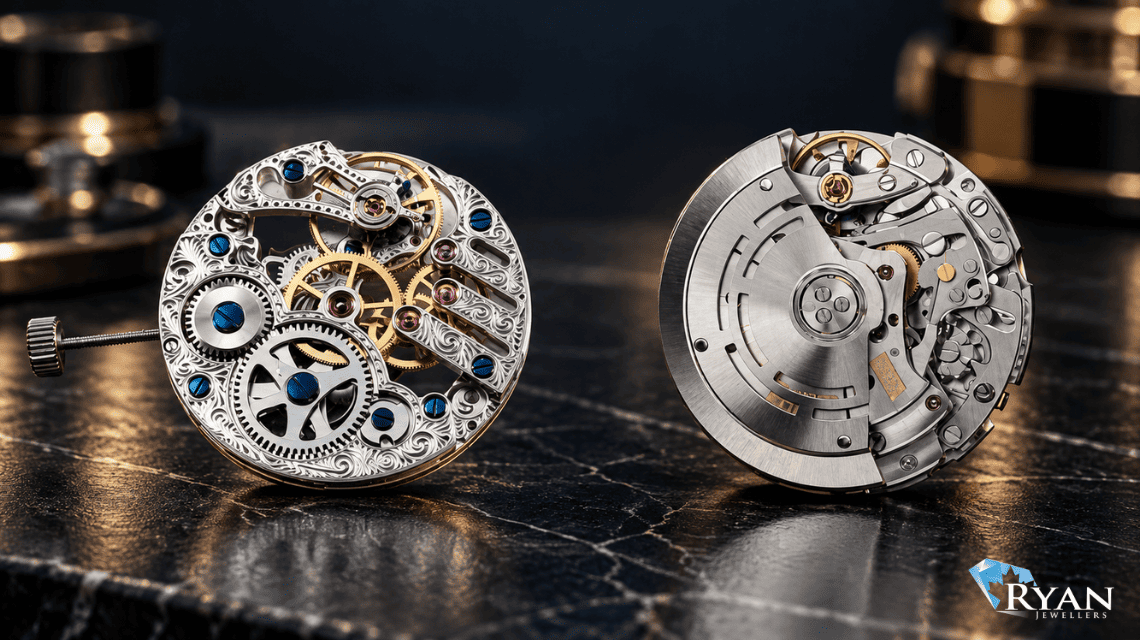
An automatic movement is a mechanical movement that can wind its mainspring through the movement of the wearer’s wrist.
The defining component is generally a rotor, which moves as the watch changes position.
How Automatic Winding Works
As the wearer moves their wrist:
- The rotor moves.
- The winding system transfers that motion into the movement.
- The mainspring receives additional energy.
- The stored energy powers the movement.
The exact winding architecture varies between movements, but the basic principle is the same.
Does an Automatic Watch Need to Be Wound?
Normally, an automatic watch does not need to be manually wound every day if it is worn regularly and the movement receives enough motion.
However, an automatic watch still has a finite power reserve.
If it is left unworn for long enough, the stored energy can eventually run out.
Many automatic watches can also be manually wound through the crown, depending on the movement.
Automatic Does Not Mean Self-Powered Forever
This is a common misunderstanding.
An automatic watch does not create energy indefinitely.
The rotor simply helps replenish the energy stored in the mainspring.
If the watch is kept completely still, it will eventually stop once the power reserve is exhausted.
Automatic Movements Can Be Highly Sophisticated
Automatic movements range from relatively simple three-hand mechanisms to highly complicated systems incorporating:
- Chronographs
- GMT displays
- Annual calendars
- Perpetual calendars
- Moon phases
- Power-reserve indicators
The presence of an automatic rotor does not tell you how sophisticated the entire movement is.
Exhibition Casebacks
Some automatic watches have transparent casebacks that allow the wearer to view the movement.
Depending on the watch, you may be able to see:
- Rotor
- Bridges
- Balance assembly
- Gears
- Jewels
- Decorative finishing
This visual aspect is one reason automatic watches are particularly popular among mechanical-watch enthusiasts.
How Do Automatic and Manual-Winding Watches Differ?
The biggest difference is how the mainspring is wound.
| Feature | Automatic Mechanical | Manual-Winding Mechanical |
|---|---|---|
| Movement | Mechanical | Mechanical |
| Energy storage | Mainspring | Mainspring |
| Winding method | Rotor + optional manual winding | Manual winding |
| Battery | No | No |
| Requires regular interaction | Usually less | Yes |
| Can stop when unworn | Yes | Yes |
| Mechanical craftsmanship | Yes | Yes |
| Typical appeal | Convenience + mechanics | Direct mechanical interaction |
Automatic Watches: Convenience
The major advantage of an automatic movement is convenience.
If you wear the watch regularly, wrist movement can help keep the mainspring wound.
This makes an automatic watch particularly convenient for everyday wear.
Manual Watches: Direct Interaction
Manual-winding watches require more involvement from the owner.
You need to wind the watch periodically to maintain its stored energy.
For some enthusiasts, this is not a disadvantage.
Instead, winding the watch becomes part of the ownership experience.
Case Thickness Can Differ
Manual-winding movements can sometimes be thinner because they do not require a rotor.
However, this is not a universal rule.
Case thickness depends on the specific movement, complications, case construction, crystal, and other components.
A thin watch is therefore not necessarily manual-winding, and an automatic watch is not necessarily thick.
Automatic vs Manual for Collectors
Collectors may appreciate both types for different reasons.
Automatic movements can demonstrate sophisticated winding systems and mechanical engineering.
Manual movements can provide a more direct view of traditional mechanical construction and may appeal to those who enjoy the ritual of winding.
Neither is inherently superior.
How Do Power Reserve and Daily Wear Affect Each Type?
Power reserve is particularly important when comparing automatic and manual-winding watches.
What Is Power Reserve?
Power reserve refers to approximately how long a mechanical watch can continue running after its mainspring has been sufficiently wound.
The exact duration depends on the movement.
A watch with a longer power reserve can remain unworn for a longer period before stopping.
Automatic Watches and Daily Wear
If you wear an automatic watch regularly, wrist movement can continually provide energy to the winding system.
However, the amount of energy generated depends on factors such as:
- Wrist movement
- Movement design
- Winding efficiency
- How long the watch is worn
Simply wearing an automatic watch does not guarantee that the mainspring will remain fully wound at all times.
What Happens When an Automatic Watch Stops?
If an automatic watch is left unworn until its power reserve is exhausted, it will stop.
To restart it, the owner may need to:
- Wind it manually, if supported
- Set the time
- Set other functions such as the date
Some watches can be placed on a watch winder, but a winder is not automatically necessary for every automatic watch.
Manual-Winding Watches and Power Reserve
Manual watches require the owner to replenish the mainspring’s energy directly.
The process is straightforward but needs to be repeated according to the watch’s power reserve and usage.
For example, a watch with a shorter power reserve may require more frequent winding than one with a longer reserve.
Longer Power Reserve Does Not Mean Better Accuracy
Power reserve and accuracy are separate characteristics.
A watch that runs for a long time between windings is not necessarily more accurate than one with a shorter power reserve.
Accuracy depends on the movement’s regulating system, adjustment, construction, and operating conditions.
What Can Affect Mechanical Accuracy?
Mechanical watches can be affected by:
- Position
- Temperature
- Shock
- Magnetism
- Wear
- Movement condition
- Regulation
Modern mechanical movements may incorporate technologies designed to improve resistance to these factors, but mechanical timekeeping remains fundamentally different from quartz regulation.
Which Mechanical Watch Movement Suits Your Lifestyle?
The best choice depends on how you intend to wear and enjoy the watch.
Choose Automatic If You Want Convenience
An automatic watch can be a good fit if you:
- Wear a watch regularly
- Prefer not to wind it manually
- Enjoy mechanical movements
- Want traditional watchmaking with added convenience
- Prefer a broad selection of modern mechanical watches
Automatic movements are particularly practical for people who wear the same mechanical watch frequently.
Choose Manual-Winding If You Enjoy the Ritual
A manual-winding watch may suit you if you:
- Enjoy interacting with your watch
- Appreciate traditional watchmaking
- Like thinner mechanical designs where applicable
- Enjoy observing mechanical movements
- Do not mind regular winding
For many enthusiasts, winding the watch is part of the pleasure rather than a chore.
For Office and Business Wear
Either movement can work well.
A dress watch with a manual movement may offer a classic, understated experience.
An automatic watch can provide similar elegance while reducing the need for daily winding.
For business wear, factors such as case thickness, dial design, bracelet or strap, and overall proportions may matter more than the winding system.
For Everyday Wear
Automatic often has the practical advantage.
If the watch is worn regularly, the rotor can help maintain its stored energy.
A manual watch can still be an excellent everyday choice, but the wearer must remember to wind it.
For Formal Occasions
Manual-winding watches can be particularly attractive in slim dress-watch designs.
Automatic watches can also work beautifully for formal wear, especially when the movement is relatively thin and the overall design is understated.
For Collectors
Collectors may want both.
An automatic movement can showcase mechanical engineering and convenience, while a manual movement can emphasize the traditional relationship between the owner and the watch.
The movement’s finishing, architecture, complications, history, and manufacturer may ultimately matter more than whether it is automatic or manual.
How Do Maintenance Requirements Compare?
Both automatic and manual-winding watches are mechanical and therefore require appropriate care.
Automatic Movement Maintenance
Automatic movements contain additional components associated with the winding system, including the rotor and its associated mechanism.
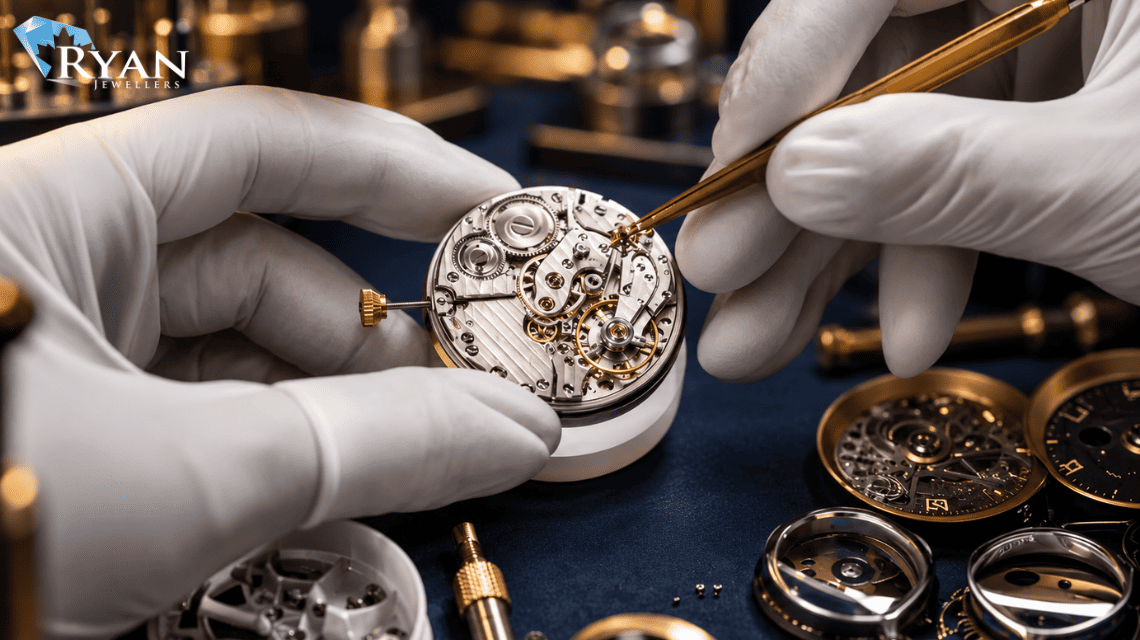
Like other mechanical movements, they may eventually require professional servicing.
Manual-Winding Movement Maintenance
Manual movements also contain numerous moving components and require lubrication and adjustment over time.
The absence of an automatic rotor does not mean that the movement requires no maintenance.
Follow the Manufacturer’s Service Guidance
There is no single universal service interval that applies to every mechanical watch.
Service requirements depend on:
- Movement design
- Manufacturer recommendations
- Usage
- Condition
- Age
- Environmental exposure
Rather than servicing purely according to an arbitrary number of years, follow the manufacturer’s guidance and pay attention to changes in performance.
Water Resistance Is Separate From Movement Type
An automatic or manual movement does not determine whether a watch is suitable for water exposure.
Water resistance depends on the construction of the entire watch.
If the watch is regularly exposed to water, seals and gaskets may require inspection or replacement according to the manufacturer’s recommendations.
Magnetic Exposure
Magnetism can affect some mechanical movements.
If you notice unusual changes in timekeeping, professional inspection may be appropriate.
Modern movements may incorporate anti-magnetic materials or construction, but resistance varies by model.
Automatic vs Mechanical Watches: What Should Canadian Buyers Know?
Because automatic vs mechanical watches is technically a comparison between a subtype and its broader category, Canadian buyers should focus on the more precise question:
Do you prefer automatic winding or manual winding?
The broader mechanical category includes both.
When shopping in Canada, also pay attention to the watch’s materials and product description.
For example, Canada’s Competition Bureau regulates claims and quality marks concerning precious-metal articles, including watches. If a precious-metal quality mark is used, it must accurately represent the quality of the metal.
This can be relevant when comparing watches made with gold or other precious metals.
Canadian buyers should also verify the retailer’s physical location, contact information, terms of sale, shipping arrangements, return policy, and exchange policy when purchasing online. These are among the checks recommended by Canada’s Office of Consumer Affairs when assessing online vendors.
The movement is important, but it should be evaluated alongside the complete watch.
Consider:
- Case material
- Case dimensions
- Crystal
- Water resistance
- Bracelet or strap
- Movement specifications
- Power reserve
- Warranty
- Service support
- Overall design
Automatic vs Mechanical Watches: A Simple Comparison
It can help to remember the relationship this way:
Mechanical watch
→ Automatic mechanical
→ Manual-winding mechanical
The word “mechanical” describes how the watch regulates and transfers energy.
The word “automatic” describes how the mainspring is wound.
This distinction is useful when reading product descriptions because a listing for an “automatic mechanical watch” is not describing two competing movement technologies. It is describing a mechanical watch with an automatic winding system.
If you want a more detailed overview before making a purchase, read our Watch Buying Guide for practical advice on movements, sizing, materials, features, and budget.
FAQ About Automatic vs Mechanical Watches
Is an automatic watch a mechanical watch?
Yes. An automatic watch is a type of mechanical watch. Its defining characteristic is that it uses a rotor-based winding system to help wind the mainspring through wrist movement.
What is the difference between automatic and manual mechanical watches?
Both use mechanical movements and mainsprings. An automatic watch winds itself through wrist movement, while a manual-winding watch requires the wearer to wind the mainspring through the crown.
Do automatic watches need to be wound?
Not usually when worn regularly, because wrist movement can replenish the mainspring. However, an automatic watch can stop when its power reserve runs out, and many automatic movements can also be manually wound.
Are manual-winding watches more accurate than automatic watches?
Not inherently. Accuracy depends on the specific movement, regulation, construction, and operating conditions rather than simply whether the movement is automatic or manual.
Which is better for everyday wear: automatic or manual?
An automatic watch is often more convenient for regular wear because wrist movement can help keep it running. A manual watch may be preferable for someone who enjoys the routine of winding and interacting with the movement.
Which type is better for a watch collector?
Neither is universally better. Collectors may value automatic and manual movements for different reasons, including movement architecture, finishing, history, complications, rarity, and personal preference.
Final Thoughts
When comparing automatic vs mechanical watches, the most important clarification is that they are not two separate movement categories. Automatic watches are mechanical watches, while the more meaningful comparison is between automatic and manual-winding mechanical movements.
Automatic movements offer the convenience of a rotor that helps wind the mainspring as you wear the watch. Manual-winding movements require regular winding but can provide a more direct connection with traditional mechanical watchmaking.
Neither system is inherently better. If you want a mechanical watch that is convenient for frequent wear, an automatic movement may be the natural choice. If you enjoy the ritual of winding your watch and appreciate the traditional mechanics behind it, a manual-winding movement can be equally rewarding.
Beyond the winding system, consider the complete watch: its movement, power reserve, case size, materials, finishing, water resistance, comfort, warranty, and servicing requirements. For Canadian buyers, accurate material descriptions and transparent retailer policies are also important considerations.
Ultimately, the best mechanical watch is the one that fits your lifestyle, wrist, preferences, and relationship with watchmaking.
Ready to explore mechanical timepieces? Visit Ryan Jeweller to discover watches and fine jewelry selected for different styles and occasions.