
Summarize the article with:


A well-fitted watch should sit securely on the wrist without feeling too tight or moving excessively throughout the day. If your bracelet slides around, feels restrictive, or leaves too much space between the watch and your wrist, watch band adjustment may be the simplest solution.
Metal bracelets are commonly resized by removing links or adjusting the clasp, while leather and rubber straps use different sizing systems. In Canada, professional watch sizing is widely available through jewellers and watch specialists, with basic bracelet adjustments often starting at around CAD $20 depending on the provider and watch.
If you’re looking for a luxury timepiece that combines style and comfortable wear, explore the watch collection at Ryan Jeweller and find a model suited to your wrist and lifestyle.
What Is Watch Band Adjustment and When Is It Needed?
Watch band adjustment is the process of changing the length or configuration of a watch bracelet or strap to achieve a more comfortable and secure fit.
A correctly fitted watch should stay reasonably stable on the wrist while still allowing natural movement.
Signs Your Watch Needs Adjustment
Your watch may need resizing if:
- The case constantly rotates around your wrist.
- The bracelet slides toward the underside of your wrist.
- The watch feels excessively tight.
- There is too much space between the bracelet and your skin.
- The clasp sits noticeably off-centre.
- The watch moves excessively when you raise or lower your arm.
A slightly loose watch is not necessarily a problem. Some people prefer more freedom of movement, while others prefer the watch to remain firmly positioned.
Why Proper Fit Matters
Correct sizing can improve:
- Everyday comfort
- Watch stability
- Clasp positioning
- Wearing security
- Overall appearance
- Long-term usability
The goal is not to make the bracelet as tight as possible. It should be secure without creating uncomfortable pressure.
Seasonal Changes in Canada
Wrist circumference can change slightly throughout the day and with temperature.
During Canada’s warmer months, heat can contribute to temporary swelling. In colder conditions, the wrist may feel slightly smaller. A bracelet with micro-adjustment positions can make these small changes easier to accommodate.
How Do You Determine the Correct Watch Band Size?
Before performing a watch band adjustment, it is important to determine how the watch should sit on your wrist.
Measure Your Wrist
A flexible measuring tape is the easiest way to measure wrist circumference.
Wrap it around the area where you normally wear your watch and record the measurement.
If you do not have a measuring tape, you can use a strip of paper or string and measure it against a ruler.
However, wrist circumference alone does not determine the final bracelet length.
You should also consider:
- Watch case diameter
- Case thickness
- Bracelet construction
- Link size
- Clasp design
- Desired amount of movement
- Personal wearing preference
Check How the Watch Sits
After sizing, the watch should remain relatively centred on the top of your wrist.
The bracelet should not be so loose that the case repeatedly rotates underneath your wrist.
At the same time, it should not be so tight that it leaves deep pressure marks or becomes uncomfortable when your wrist naturally expands.
Consider the Clasp Position
The clasp should sit comfortably underneath the wrist.
When removing links, a professional may distribute the adjustment between both sides of the clasp rather than removing all the links from one side.
This can help maintain a more balanced appearance and positioning.
Use Micro-Adjustment When Available
Many modern bracelets provide smaller adjustment positions inside the clasp.
These allow the wearer to make fine changes without removing an entire bracelet link.
Some Rolex bracelet systems, for example, incorporate fine-adjustment mechanisms designed to provide smaller sizing increments.
For watches with this feature, micro-adjustment can be particularly useful when your wrist size changes slightly throughout the year.
How Are Metal Watch Bracelets Resized?
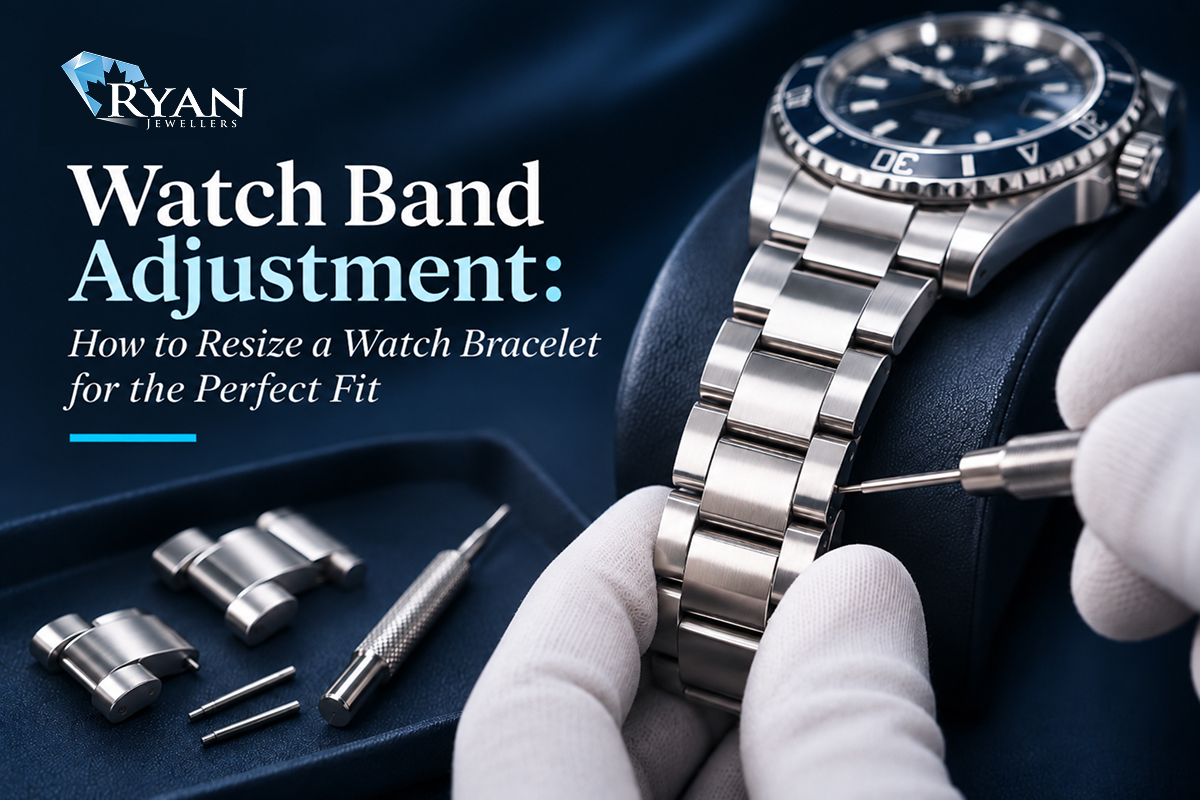
Metal bracelets are typically resized by removing links, adding links, or adjusting the clasp.
The exact method depends on the bracelet design.
Link Removal
Many stainless steel bracelets contain removable links.
A jeweller or watchmaker identifies the appropriate links and removes them using the bracelet’s specific fastening system.
Once the desired number of links has been removed, the remaining bracelet sections are reconnected securely.
Pin-Based Bracelets
Some bracelets use small pins to hold individual links together.
The technician removes the appropriate pin, removes the required link, and reinstalls the pin.
The direction of removal can vary depending on the bracelet design, so it is important to follow the manufacturer’s construction.
Screw-Based Bracelets
Other bracelets use small screws instead of pins.
These require appropriately sized precision tools.
Using an incorrect screwdriver can damage the screw head or leave visible marks on the bracelet.
Clasp Adjustment
Some bracelets allow the clasp itself to be repositioned.
This is useful when only a small amount of adjustment is required.
Instead of removing a full link, the technician can move the bracelet to another clasp position.
Micro-Adjustment Systems
Micro-adjustment mechanisms provide smaller increments than traditional link removal.
These systems are particularly useful for people who find that one full link is too much or too little adjustment.
Integrated Bracelets
Integrated bracelets are designed specifically around the watch case.
Because the bracelet and case form a more unified design, adjustment can be more specialized.
For an expensive or complicated integrated-bracelet watch, professional sizing is generally preferable.
Why Professional Adjustment Is Recommended
A professional can reduce the risk of:
- Scratching the bracelet
- Damaging screws
- Losing small pins
- Installing links incorrectly
- Leaving the clasp insecure
- Creating an uneven bracelet configuration
Canadian jewellers and watch specialists commonly offer bracelet sizing as part of their watch services.
Can Leather and Rubber Watch Straps Be Adjusted?
Leather and rubber straps generally use different adjustment methods from metal bracelets.
Leather Watch Straps
Most traditional leather straps use several pre-punched holes.
The buckle can be placed into different holes to change the fit.
If the existing holes do not provide a comfortable size, an additional hole may sometimes be added by a professional.
Some Canadian jewellers specifically offer additional hole punching for leather watch bands.
Avoid DIY Hole Punching
Using a knife, drill, or other household tool can produce an uneven hole or damage the leather.
The position of the hole also matters. A poorly placed hole can weaken the strap or affect how the buckle sits.
For a luxury leather strap, professional adjustment is generally the safer option.
Rubber Watch Straps
Rubber straps can use several different adjustment systems, including:
- Traditional buckle holes
- Folding clasps
- Sliding clasps
- Micro-adjustment systems
- Cut-to-size designs
The correct method depends entirely on the manufacturer’s design.
Some rubber straps can be cut to length, but this should only be done according to the manufacturer’s instructions because cutting too much material cannot be reversed.
Fabric and Nylon Straps
Fabric and nylon straps, including NATO-style designs, typically offer flexible adjustment through their buckle and keeper system.
They can accommodate a wider range of wrist sizes without permanently modifying the strap.
When Replacement Is Better
Adjustment is not always the best solution.
If a leather or rubber strap is:
- Cracked
- Stretched
- Torn
- Structurally weak
- Severely discoloured
- Damaged around the attachment points
replacement may be safer than attempting to resize it.
For more practical advice on maintaining leather straps, read our guide: How to Clean a Leather Watch Strap.
How Much Does Professional Watch Band Adjustment Cost?
The watch band adjustment cost depends on the bracelet design, watch brand, location, and whether additional parts are needed.
Canadian service providers give useful examples of current pricing.
Some Canadian jewellers advertise basic watch bracelet sizing from approximately CAD $20.
For example, It’s About Time & Jewelry in British Columbia currently lists bracelet sizing starting at CAD $20. The Clock Factory in Ontario also lists watch sizing from CAD $20.
These prices should be considered examples rather than a fixed national rate.
What Can Increase the Cost?
Additional charges may apply when:
- Extra links are required.
- Replacement pins are needed.
- Bracelet screws are damaged.
- The bracelet requires specialized tools.
- The watch uses an integrated bracelet.
- The watch is particularly valuable or complicated.
- A new strap must be fitted.
Luxury Watch Sizing
Luxury watches can require more specialized handling.
The technician needs to protect polished surfaces, preserve the bracelet finish, and ensure that all screws, pins, or clasp components are properly secured.
For some brands, bracelet sizing may be included when the watch is purchased from an authorized retailer.
Keep Removed Links
Always keep any links, pins, or screws removed during the adjustment.
They can be useful later if:
- Your wrist size changes.
- You sell the watch.
- You give the watch to another owner.
- You want to return the bracelet to its original configuration.
For valuable watches, keeping spare links with the original box and documentation can also help preserve the completeness of the set.
How Can You Avoid Problems During Watch Band Adjustment?
Although bracelet sizing may seem simple, incorrect tools or techniques can cause unnecessary damage.
Do Not Force Pins or Screws
If a bracelet component does not move easily, stop.
Different bracelet systems use different fastening mechanisms, and forcing a component can damage the bracelet.
Protect the Watch Case
When adjusting a bracelet, the watch head should be protected from tools and hard surfaces.
A screwdriver slipping against a polished case can create a permanent scratch.
Use the Correct Tools
Bracelet screws and pins are often very small.
Using an incorrectly sized screwdriver or improvised tool can damage the component.
Professional watchmakers use tools designed specifically for this type of work.
Check the Clasp
After adjustment, make sure the clasp:
- Closes completely
- Locks securely
- Does not open unexpectedly
- Feels stable during wrist movement
If the clasp feels loose after adjustment, do not continue wearing the watch until it has been inspected.
Check the Bracelet Balance
The watch should sit comfortably and remain reasonably centred.
If the clasp constantly pulls toward one side, the bracelet may benefit from a different link configuration.
Store Spare Components
Keep removed links, screws, pins, and other original components together.
For a luxury watch, these small parts can become important if the bracelet needs to be returned to its original length.
Learn more about proper watch maintenance with our Watch Care Guide and discover practical tips to keep your timepiece in excellent condition.
FAQ About Watch Band Adjustment
How much does watch band adjustment cost in Canada?
Basic bracelet sizing in Canada can start at approximately CAD $20, although prices vary according to the watch, bracelet construction, location, and service provider.
Can I resize a metal watch bracelet myself?
Some bracelets can technically be resized at home, but professional adjustment is safer for luxury watches. Incorrect tools can scratch the bracelet, damage screws or pins, or leave the clasp improperly secured.
How many links should be removed from a watch?
There is no universal number. The correct adjustment depends on wrist circumference, link size, bracelet design, clasp position, and personal preference.
Can a leather watch strap be resized?
Yes. Most leather straps use existing buckle holes. If those do not provide a suitable fit, a professional may be able to add another hole depending on the strap’s construction.
Should a watch bracelet be tight or loose?
A bracelet should be secure without being uncomfortably tight. Some natural movement is normal, but the watch should not slide excessively around the wrist.
Do jewellers adjust watch bands for free?
Some retailers include sizing when a watch is purchased from them, while independent providers may charge a fee. Canadian examples currently start at around CAD $20, so it is best to confirm the price before the adjustment.
Final Thoughts
A proper watch band adjustment can significantly improve the comfort, stability, and security of a timepiece. Metal bracelets can usually be resized through link removal, clasp adjustment, or micro-adjustment systems, while leather and rubber straps require different approaches.
The ideal fit should keep the watch secure without putting excessive pressure on your wrist. Because wrist size can change with temperature and throughout the day, fine-adjustment systems can be especially useful for Canadian watch owners.
For luxury watches, professional sizing is often worth the relatively small cost. A qualified jeweller or watchmaker can reduce the risk of scratches, damaged screws, lost pins, and improperly secured bracelets.
If you are considering a new timepiece, explore the watch collection at Ryan Jeweller and find a watch that fits your style, wrist, and lifestyle.