
Summarize the article with:


Leather watch straps add warmth, texture, and character to a timepiece, but they require more careful maintenance than stainless steel or rubber bracelets. Learning how to clean a leather watch strap properly can help reduce moisture damage, discoloration, cracking, and premature wear.
Unlike metal bracelets, leather is a natural material that can absorb moisture, sweat, oils, and chemicals. Canadian owners may notice this particularly during warmer months or after wearing a watch for extended periods. At the same time, winter conditions and dry indoor heating can contribute to changes in the leather’s condition.
Luxury watch manufacturers generally recommend protecting leather straps from water and excessive moisture rather than treating them like waterproof metal bracelets. TUDOR, for example, specifically recommends protecting leather straps from water and moisture, while Tiffany & Co. Canada advises avoiding water, constant moisture, direct sunlight, fragrances, detergents, and cosmetics.
If you’re looking for a luxury watch with a leather strap or another style suited to your collection, explore the selection at Ryan Jeweller.
Why Does Leather Watch Straps Require Special Care?
Leather requires different care because it is more sensitive to moisture, chemicals, sunlight, and repeated friction than many common watch-bracelet materials.
Leather Absorbs Moisture
Sweat and water can gradually affect leather’s structure and appearance.
TUDOR recommends protecting leather straps from water and moisture, while Lorus Canada notes that leather bands can be affected by moisture, sweat, and direct sunlight.
Repeated exposure can contribute to:
- Discoloration
- Dryness
- Stiffness
- Deformation
- Cracking
- Odour
- Premature deterioration
This does not mean a leather strap will be damaged by a single drop of water. The greater concern is repeated or prolonged exposure.
Sweat Can Affect Leather
Because a watch strap sits directly against the skin, sweat is one of the most common sources of moisture exposure.
Over time, perspiration can contribute to discoloration and material deterioration.
After wearing a leather strap for an extended period, allowing it to air out naturally can be more beneficial than immediately placing it inside a closed watch box.
Sunlight Can Cause Fading
Direct sunlight can gradually affect leather colour.
Lorus Canada specifically advises avoiding prolonged direct sunlight for leather watch bands, while Tiffany & Co. Canada also recommends keeping leather straps away from extended sunlight exposure.
This is particularly relevant for lighter-coloured leather, where discoloration may become more visible.
Chemicals Can Damage Leather
Perfume, cosmetics, detergents, solvents, and other chemicals can affect leather.
Tiffany & Co. Canada advises avoiding direct contact between leather straps and detergents, solvents, fragrances, and cosmetics because they can contribute to premature aging and discoloration.
A simple precaution is to apply fragrance or cosmetics before putting the watch on and allow them to dry first.
How Should You Clean a Leather Watch Strap Step by Step?
Knowing how to clean a leather watch strap starts with using the least aggressive method possible.
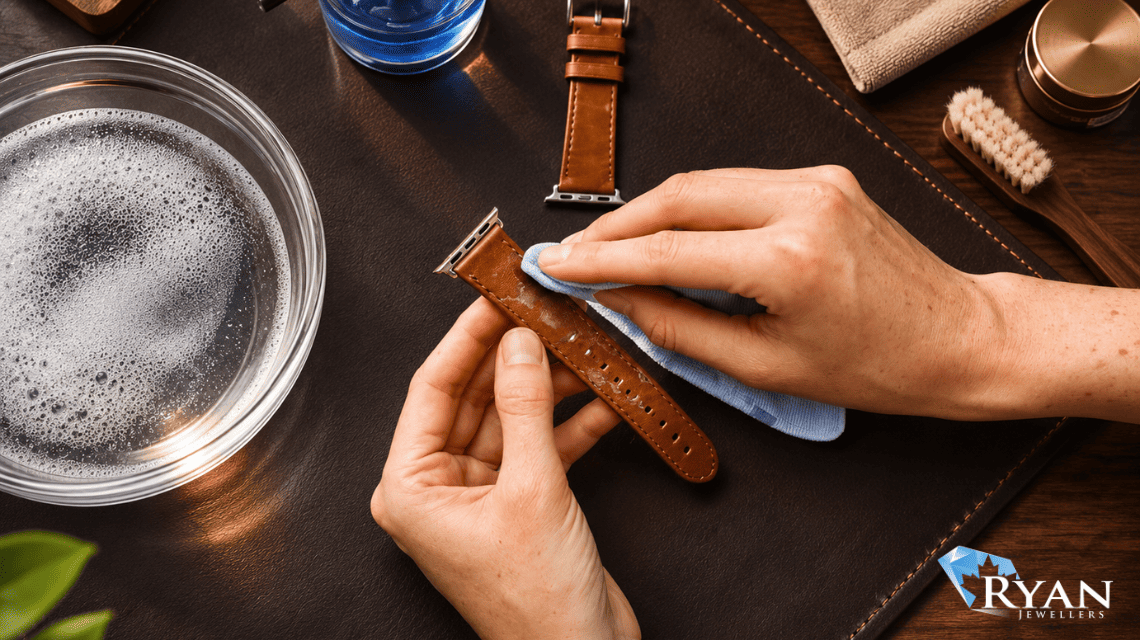
Unlike a metal bracelet, leather should generally not be submerged or scrubbed with soap and water.
Step 1: Remove the Watch From Your Wrist
Take the watch off before cleaning the strap.
This gives you better control and reduces the chance of accidentally exposing the watch case to unnecessary moisture.
If the strap is designed to be removed safely, you can also separate it from the watch before cleaning. However, only do this if you are comfortable with the correct procedure and have the appropriate tools.
Step 2: Remove Surface Dust
Use a clean, soft, dry microfiber cloth.
Gently wipe both sides of the strap to remove:
- Dust
- Skin oils
- Loose dirt
- Surface residue
Do not scrub aggressively.
The goal at this stage is to remove surface contamination without disturbing the leather.
Step 3: Address Small Marks Carefully
If the strap has a small amount of surface dirt, use a cloth that is only slightly damp, not wet.
Gently dab or wipe the affected area.
Avoid soaking the leather.
This distinction is important because leather can absorb water, while excessive moisture can contribute to deformation or discoloration.
Step 4: Dry the Strap Naturally
After cleaning, allow the strap to air dry naturally.
Keep it away from:
- Hair dryers
- Radiators
- Heating vents
- Direct sunlight
- Other artificial heat sources
Rapid drying can cause leather to become excessively dry or change shape.
Canadian homes can become particularly dry during winter because of indoor heating, making gradual natural drying preferable.
Step 5: Condition Only When Appropriate
Leather conditioners can sometimes help maintain flexibility, but not every leather watch strap should be conditioned with a generic leather product.
Some luxury straps have special finishes, coatings, dyes, or treatments.
Using an unsuitable conditioner can darken the leather, alter its texture, or affect its finish.
Always check the strap manufacturer’s recommendations before applying any conditioning product.
Step 6: Let the Strap Rest
After cleaning, allow the strap to dry completely before wearing or storing it.
If it still feels damp, do not put it immediately into a closed watch box.
Give the material enough time to return to a normal dry condition.
Which Cleaning Products Should You Avoid on Leather Straps?
Choosing what not to use is just as important as knowing how to clean a leather watch strap.
Avoid Soaking the Strap
Leather should not normally be submerged in water.
Unlike a suitable stainless steel bracelet, a leather strap should not be placed under running water simply because the watch itself is water resistant.
The watch and the strap have different material requirements.
Avoid Household Soap
Household soaps and detergents can contain ingredients that are not suitable for finished leather.
Unless the manufacturer specifically recommends a particular cleaner, a soft dry cloth or minimally damp cloth is the safer approach for routine maintenance.
Avoid Alcohol-Based Cleaners
Alcohol-based products may affect the finish, colour, or surface of certain leathers.
They should not be used simply because they are convenient disinfectants.
Avoid Disinfectants
Disinfectant wipes and sprays can contain chemicals that are unsuitable for leather.
Tiffany & Co. Canada specifically advises keeping leather straps away from detergents, solvents, fragrances, and cosmetics.
Avoid Perfume and Cosmetics
Perfume, creams, sunscreen, and cosmetics should be allowed to dry before the strap comes into contact with them.
Repeated exposure can contribute to discoloration and premature material deterioration.
Avoid Heat
Do not use a hair dryer or place the strap directly beside a radiator to speed up drying.
Natural air drying is preferable.
Avoid Abrasive Brushes
A leather strap does not require aggressive brushing.
Hard bristles can create surface wear, particularly on softer or finely finished leather.
Avoid Generic Leather Polish
A product designed for shoes, furniture, or automotive leather is not automatically suitable for a luxury watch strap.
Watch straps can use different types of leather and finishing processes.
When in doubt, follow the watch or strap manufacturer’s instructions.
How Can You Prevent Leather Straps From Cracking and Discoloration?
Cleaning is only one part of leather strap care. Preventive habits can be even more important.
Keep Water Exposure to a Minimum
The easiest way to protect leather is to limit unnecessary water exposure.
TUDOR specifically recommends protecting leather straps from water and moisture.
If you know you will be:
- Swimming
- Showering
- Boating
- Working with water
- Exercising heavily
consider using a watch with a suitable bracelet or strap instead.
Wipe Away Sweat
After prolonged wear, gently wipe the inside of the strap with a dry soft cloth.
This can help remove accumulated moisture and oils before the watch is stored.
Allow the Strap to Breathe
Avoid immediately placing a sweaty watch inside a sealed case.
Give the strap time to air naturally before long-term storage.
Rotate Between Watches
If you own several watches, rotating them can reduce continuous exposure of one leather strap to sweat and moisture.
This can be particularly useful if you wear your watches frequently.
Protect the Strap From Direct Sunlight
Avoid leaving a leather-strapped watch on a windowsill, dashboard, or other location exposed to prolonged direct sunlight.
Long-term exposure can contribute to fading and deterioration.
Keep Leather Away From Chemicals
Store the watch away from:
- Perfume bottles
- Cleaning products
- Cosmetics
- Solvents
- Aerosols
The goal is to minimize unnecessary chemical exposure.
Be Careful With Canadian Winter Conditions
Canadian winters can create a combination of cold outdoor temperatures and dry indoor heating.
Leather can respond to environmental changes, so avoid leaving a leather-strapped watch in a vehicle, garage, or other extreme environment for extended periods.
A stable indoor environment is generally preferable.
Watch for Early Signs of Deterioration
Inspect the strap periodically for:
- Cracks
- Stiffness
- Peeling
- Discoloration
- Splitting around holes
- Loose stitching
- Damaged edges
If the strap becomes structurally compromised, replacement is safer than continuing to wear it.
How Often Should You Clean and Condition a Leather Watch Strap?
There is no universal cleaning schedule for every leather strap.
The appropriate frequency depends on:
- How often you wear the watch
- How much you sweat
- Climate
- Strap colour
- Leather type
- Manufacturer’s recommendations
- Exposure to moisture and chemicals
For Regular Wear
A light wipe with a dry microfiber cloth after extended wear can be a practical routine.
This removes surface sweat and oils without exposing the leather to unnecessary moisture.
After Heavy Sweating
If the strap becomes noticeably damp from exercise or hot weather, wipe it gently and allow it to air dry completely.
Do not seal it inside a watch box while it is still damp.
After Accidental Water Exposure
If the leather becomes wet:
- Remove the watch.
- Gently blot away excess moisture.
- Allow the strap to dry naturally.
- Keep it away from direct heat.
- Inspect it once dry.
- Follow the manufacturer’s recommendations if the strap shows changes.
Avoid attempting to rapidly dry the leather with a hair dryer.
Should You Condition a Leather Watch Strap?
Conditioning is not automatically necessary.
Some straps are finished in ways that mean additional products are unnecessary or potentially unsuitable.
If conditioning is recommended by the manufacturer, use a product specifically appropriate for that leather and apply it sparingly.
A generic leather conditioner should not be used simply because the strap is made from leather.
When Should You Replace the Strap?
A leather strap is a wear component.
Replacement should be considered when you see:
- Deep cracks
- Structural splitting
- Broken stitching
- Severely weakened holes
- Loose attachment points
- Significant deformation
- Persistent deterioration
A damaged strap can increase the risk of dropping an expensive watch.
Leather Watch Strap Care for Canadian Conditions
Canada’s climate makes seasonal care particularly relevant.
Summer
Warm temperatures can increase perspiration.
During periods of heavy sweating, wipe the inside of the strap regularly and allow it to dry naturally.
If you spend time around pools, lakes, or the ocean, consider switching to a water-resistant bracelet or rubber strap.
Winter
Cold outdoor conditions combined with dry indoor heating can create a very different environment for leather.
Avoid storing the watch near heaters or leaving it in a vehicle for prolonged periods.
Rain and Snow
Leather straps are not ideal for repeated exposure to rain or melting snow.
If the strap becomes wet, remove excess moisture with a soft cloth and allow it to dry naturally.
Travel
When travelling, store the watch in a padded compartment rather than loose inside luggage.
Keep leather away from wet clothing, toiletries, perfume, and other liquids.
When Should You Choose Professional Strap Care?
Not every leather strap problem can be solved with home cleaning.
Professional assistance may be appropriate when the strap has significant:
- Discoloration
- Cracking
- Surface damage
- Stitching problems
- Structural weakness
- Deformation
- Attachment damage
A professional can determine whether the strap can be maintained or should simply be replaced.
What About Valuable or Vintage Watches?
Extra care is appropriate with vintage and collectible watches.
Original straps can sometimes contribute to a watch’s character and provenance, but their condition should also be assessed from a safety perspective.
If an original leather strap has become structurally weak, preserving the strap should not take priority over safely securing the watch.
When Should the Watch Case Be Inspected?
If moisture has repeatedly affected the leather strap, it is also worth considering whether the watch itself has been exposed to water or condensation.
If moisture appears beneath the crystal, professional inspection should be arranged promptly.
Learn more about proper watch maintenance with our Watch Care Guide and discover practical tips to keep your timepiece in excellent condition.
FAQ About Leather Watch Strap Cleaning
Can I wash a leather watch strap with soap and water?
It is generally better to avoid soaking or washing a leather watch strap with soap and water. Manufacturers such as TUDOR and Tiffany & Co. Canada recommend protecting leather straps from water and moisture.
How do I clean a leather watch strap without damaging it?
Start with a soft, dry microfiber cloth to remove surface dust and oils. If necessary, use a minimally damp cloth for localized marks, then allow the strap to dry naturally. Always follow the manufacturer’s instructions for the specific leather.
Can I use leather conditioner on my watch strap?
Only when the manufacturer recommends it or confirms that the product is suitable for that particular leather. Generic leather conditioners can alter colour, texture, or finish.
How often should I clean a leather watch strap?
There is no fixed schedule. A gentle wipe after extended wear can help remove sweat and oils, while deeper cleaning should depend on the strap’s condition, how frequently it is worn, and the manufacturer’s care instructions.
Can I wear a leather watch strap in the rain?
It is better to minimize water exposure. TUDOR specifically recommends protecting leather straps from water and moisture, while Lorus Canada advises against wearing leather-band watches during bathing, swimming, and water-related activities.
When should I replace a leather watch strap?
Replace the strap when it develops deep cracks, broken stitching, structural weakness, damaged attachment points, or significant deterioration. A weakened strap can increase the risk of the watch falling from your wrist.
Final Thoughts
Learning how to clean a leather watch strap is mainly about using a gentle approach and avoiding unnecessary moisture. Unlike stainless steel or suitable rubber straps, leather should generally be protected from water, excessive sweat, direct sunlight, and harsh chemicals.
Routine care can be as simple as wiping the strap with a soft, dry cloth after extended wear and allowing it to air naturally before storage. Avoid household cleaners, aggressive brushing, excessive heat, and generic leather products unless they are specifically approved for the strap.
Canadian owners should also consider seasonal conditions. Summer heat and perspiration can increase moisture exposure, while winter heating can create a dry indoor environment. Keeping the watch in a stable indoor environment and avoiding prolonged exposure to extreme conditions can help protect the leather.
Finally, remember that a leather strap is a wearable component with a finite lifespan. Regular inspection is just as important as cleaning. If the leather becomes structurally weak, replacing the strap is safer than trying to restore it indefinitely.
A well-maintained leather strap can complement a luxury watch beautifully while developing its own character over time. With the right care, you can help preserve both its appearance and its comfort for as long as the material allows.
Ready to find a luxury timepiece that suits your collection? Explore the watches at Ryan Jeweller and discover a watch that matches your style.