
Summarize the article with:


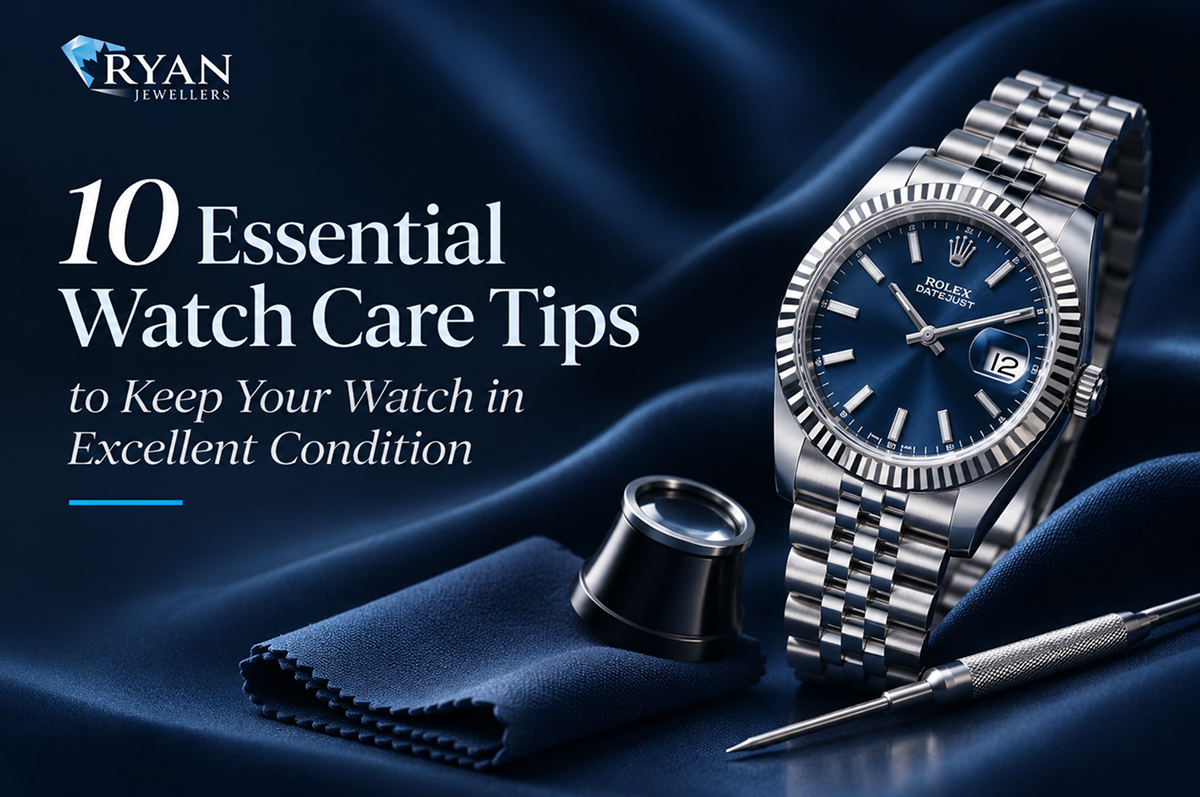
A quality watch is designed to be worn and enjoyed, but regular care can make a meaningful difference to its appearance, reliability, and long-term condition. The right watch care tips are generally simple: keep the watch clean, protect it from unnecessary moisture and impacts, store it properly, and follow the manufacturer’s servicing recommendations.
For Canadian watch owners, everyday conditions can vary significantly throughout the year. Winter temperatures, indoor heating, rain, snow, humidity, and seasonal changes can all influence how a watch is worn and stored. Manufacturers such as Rolex and OMEGA recommend protecting watches from extreme temperatures, chemicals, strong magnetic fields, and unnecessary shocks.
If you’re looking for a luxury timepiece to add to your collection, explore the watches at Ryan Jeweller and find a model suited to your style and lifestyle.
Why Is Proper Watch Care Important?
Proper watch care helps preserve three important aspects of a timepiece: appearance, performance, and protection.
A watch is exposed to sweat, skin oils, dust, cosmetics, temperature changes, and occasional impacts during everyday use. Over time, these factors can affect the case, bracelet, strap, seals, and movement.
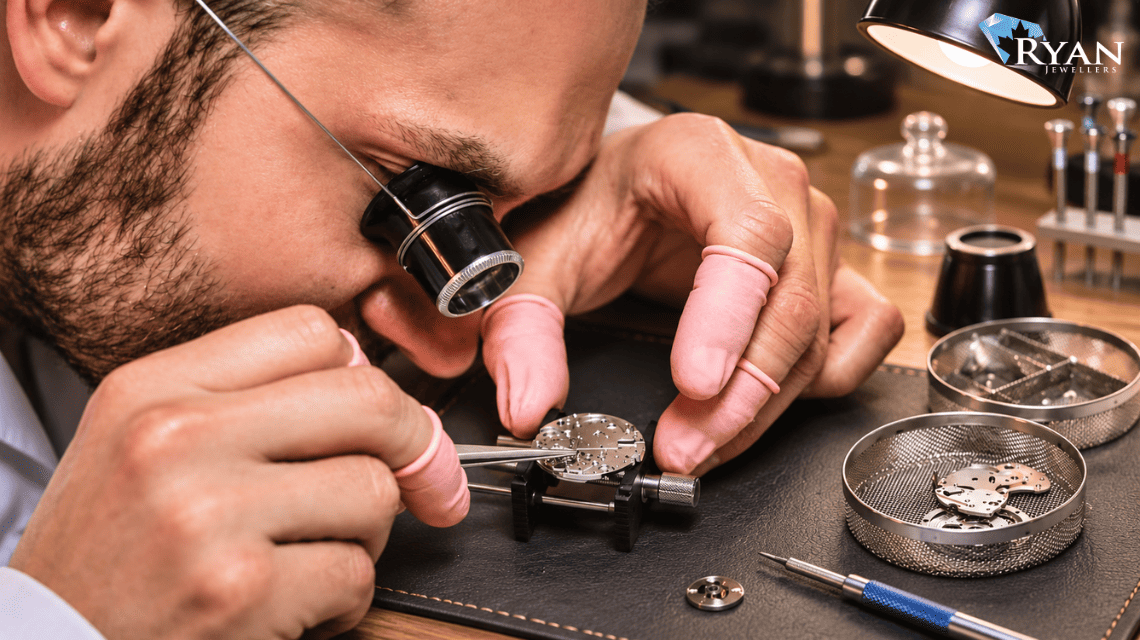
Mechanical watches require particular attention because their movements contain numerous small components that work together continuously. Lubricants can age, components can wear, and impacts or magnetization can influence timekeeping.
Water resistance also deserves attention. It is not a permanent characteristic. Seals and gaskets can deteriorate with age, while an impact can potentially affect the watch’s sealing system.
Following a few consistent watch care tips can therefore help reduce avoidable wear.
10 Essential Watch Care Tips
- Wipe your watch regularly with a clean microfiber cloth.
- Keep chemicals away from the case, bracelet, and strap.
- Check the crown before exposing a water-resistant watch to water.
- Understand the watch’s water-resistance rating before swimming or showering.
- Avoid unnecessary impacts during sports or manual work.
- Keep mechanical watches away from strong magnetic fields.
- Store watches separately to prevent scratches and contact damage.
- Protect leather straps from excessive moisture.
- Monitor changes in accuracy and power reserve.
- Follow the manufacturer’s recommended service schedule.
These habits are simple, but together they can make a significant difference to long-term ownership.
How Should You Clean Your Watch Without Damaging It?
Cleaning is one of the easiest ways to maintain a watch, but the correct method depends on its materials and water resistance.
Use a Microfiber Cloth
For everyday cleaning, a soft microfiber cloth is usually sufficient to remove:
- Fingerprints
- Sweat
- Skin oils
- Dust
- Light surface residue
Gently wipe the case, crystal, bracelet, and clasp without applying excessive pressure.
Rolex recommends cleaning suitable watches with a microfiber cloth and, where appropriate, washing the case and bracelet with soapy water and a soft brush.
Clean Metal Bracelets Carefully
For watches that are suitable for water-based cleaning, mild soapy water and a soft brush can help remove dirt from bracelet links and the clasp.
TUDOR provides similar guidance for appropriate metal bracelets and cases.
Always secure the crown before cleaning a water-resistant watch.
Treat Leather Differently
Leather straps should not be cleaned in the same way as stainless steel bracelets.
TUDOR recommends protecting leather straps from water and moisture.
Instead, wipe leather gently and allow it to dry naturally if it becomes damp.
Avoid Harsh Cleaning Products
Do not use household solvents, abrasive cleaners, or aggressive metal polish unless the manufacturer specifically recommends them.
OMEGA warns that solvents, detergents, perfumes, cosmetics, and similar substances can damage certain cases, bracelets, and gaskets.
How Can You Protect Your Watch From Scratches, Moisture, and Dust?
Protection begins with understanding what your watch is designed to handle.
Protect Against Scratches
Avoid placing a watch directly next to keys, coins, jewelry, or other watches.
When transporting a watch, use a padded watch roll or dedicated travel case.
Even sapphire crystal, which is highly scratch resistant, is not completely immune to damage. Other components, including polished case surfaces and bracelet finishes, can also develop marks through normal wear.
Be Careful With Water
Water resistance varies significantly between models.
A rating of 30 metres does not mean that a watch can safely be taken 30 metres underwater. Water-resistance ratings are based on controlled testing and should not be interpreted as a direct measurement of practical diving depth.
Always follow the manufacturer’s recommendations for your particular model.
Check the Crown
The crown is an important part of a watch’s sealing system.
Rolex states that its crown must be properly screwed down to maintain waterproofness.
Never force a crown that feels unusually stiff or difficult to operate.
Protect Against Chemicals
Perfume, cosmetics, detergents, solvents, and other chemicals can affect certain watch materials and gaskets.
A simple habit is to apply perfume and skincare products first and allow them to dry before putting on your watch.
Watch for Condensation
Condensation beneath the crystal can indicate moisture inside the case.
If this happens, stop wearing the watch and seek professional inspection rather than attempting to open or dry it yourself.
What Is the Best Way to Store Your Watch When Not Wearing It?
Proper storage is one of the most overlooked watch care tips.
A suitable storage environment should be clean, dry, stable, and protected from unnecessary impacts.
Use a Watch Box or Watch Roll
A padded watch box is useful for a collection, while a watch roll is convenient for travel.
Individual compartments help prevent:
- Case-to-case contact
- Bracelet scratches
- Dust accumulation
- Accidental impacts
Avoid Extreme Temperatures
OMEGA recommends avoiding temperatures above 60°C or below 0°C and extreme temperature variations.
Canadian owners should therefore avoid storing watches for extended periods in vehicles, unheated garages, or directly beside heating equipment.
Keep Watches Away From Strong Magnetic Sources
Strong magnetic fields can affect some mechanical watches.
OMEGA recommends keeping watches away from strong magnetic sources such as speakers, refrigerators, laptops, and certain electronic accessories.
Some modern movements have increased magnetic resistance, but the level of protection depends on the model.
Do Automatic Watches Need a Winder?
Not necessarily.
An automatic watch can generally be allowed to stop when it is not being worn. A watch winder is primarily a convenience for owners who prefer to keep the movement running or avoid resetting complicated functions.
For a simple three-hand watch, manually winding and resetting it when needed may be perfectly practical.
How Can You Maintain Your Watch’s Movement and Performance?
Good external care is important, but movement maintenance is equally significant.
Pay Attention to Accuracy
Mechanical watches naturally have some variation in timekeeping.
However, a sudden change from the watch’s normal performance can be a warning sign.
Potential causes include:
- Magnetization
- Impact
- Movement wear
- Lubrication issues
- Internal contamination
If a watch suddenly begins gaining or losing significantly more time than usual, professional inspection is advisable.
Monitor Power Reserve
A mechanical watch should generally provide a power reserve consistent with its movement specification.
A noticeable reduction in power reserve can indicate that the movement requires attention.
Avoid Strong Impacts
A luxury watch may be robust, but unnecessary impacts can still affect its movement.
Consider removing the watch before:
- Heavy manual work
- Using machinery
- Activities involving significant impact
- Contact sports
OMEGA recommends avoiding mechanical, thermal, and other forms of shock.
Understand Magnetic Exposure
If a mechanical watch suddenly changes its timekeeping after exposure to a strong magnetic source, magnetization may be one possible explanation.
A qualified watchmaker can test the watch and determine whether demagnetization or further servicing is required.
Follow the Correct Service Schedule
There is no single service interval for every watch.
Rolex currently recommends servicing approximately every 10 years depending on the model and real-life usage, while OMEGA gives a general guideline of approximately 5–8 years depending on the model, climate, and care.
These are brand-specific recommendations rather than a universal rule.
When Should You Seek Professional Watch Maintenance?
Professional maintenance becomes important when normal care is no longer enough.
Your Watch Suddenly Changes Performance
Seek professional assessment if you notice:
- Significant changes in accuracy
- Reduced power reserve
- Unusual sounds
- Difficulty winding
- Crown problems
- Chronograph irregularities
A professional diagnosis can determine whether the issue is related to magnetization, wear, impact, or another movement problem.
The Watch Has Been Dropped
Even when the case looks fine, an impact can affect the movement or sealing system.
A professional inspection is sensible after a significant impact, especially if the watch subsequently behaves differently.
Water Resistance Is Uncertain
Water resistance can deteriorate as gaskets age.
OMEGA recommends regular water-resistance testing through an authorized service centre because gaskets can age and accidental shocks can affect the crown and sealing system.
This is especially relevant for watches regularly exposed to swimming, diving, or seawater.
You See Condensation
Moisture inside the case should be addressed promptly.
Do not open the case yourself or continue wearing the watch while waiting for the issue to disappear.
The Watch Needs a Complete Service
A complete mechanical service may involve:
- Movement disassembly
- Cleaning
- Inspection
- Replacement of worn components
- Lubrication
- Reassembly
- Accuracy testing
- Water-resistance testing
- Final quality control
Rolex states that its complete service includes dismantling and cleaning the movement, examining components, replacing parts that no longer meet specifications, lubrication, accuracy testing, and waterproofness testing. (rolex.com)
Watch Care Tips for Canadian Owners
Canadian conditions can vary considerably between seasons, so a few additional habits are useful.
During Winter
Avoid prolonged storage in extremely cold environments.
When moving between cold outdoor conditions and warm indoor environments, allow the watch to adjust naturally rather than exposing it to sudden artificial heat.
During Summer
Sweat, humidity, sunscreen, and other products can accumulate on the case and bracelet.
Wipe the watch regularly and clean appropriate metal bracelets according to the manufacturer’s instructions.
After Rain or Snow
Dry the watch with a soft cloth.
If moisture appears beneath the crystal, seek professional inspection.
After Seawater Exposure
Suitable water-resistant watches should be rinsed with fresh water after seawater exposure to remove salt and sand deposits. Rolex and TUDOR both recommend this practice.
Learn more about proper watch maintenance with our Watch Care Guide and discover practical tips to keep your timepiece in excellent condition.
FAQ About Watch Care Tips
How often should I clean my watch?
There is no universal cleaning schedule. A microfiber cloth can be used regularly to remove fingerprints, sweat, and surface oils. Deeper cleaning should follow the manufacturer’s instructions and the materials used on the watch.
Can I wash my watch with soap and water?
Some water-resistant watches can be cleaned with mild soapy water and a soft brush. Rolex and TUDOR recommend this approach for suitable watches, provided the crown is properly secured.
How should I protect my watch from water?
First, understand the specific model’s water-resistance rating and manufacturer recommendations. Keep the crown properly secured and have water resistance tested periodically when appropriate.
Do automatic watches need a watch winder?
No. A watch winder is optional and mainly provides convenience by keeping an automatic watch running while it is not being worn. Allowing an automatic watch to stop and resetting it later is generally acceptable.
How often should a luxury watch be serviced?
The recommended interval depends on the brand and model. Rolex currently recommends approximately 10 years depending on model and usage, while OMEGA provides a general 5–8-year guideline.
When should I take my watch to a professional?
Professional attention is advisable after a significant impact, if condensation appears, if accuracy changes suddenly, if winding becomes difficult, or when the watch reaches its manufacturer’s recommended service interval.
Final Thoughts
Following the right watch care tips does not require complicated equipment or constant professional servicing. Simple habits such as regular cleaning, careful storage, protecting the watch from chemicals and impacts, and monitoring its performance can help preserve a timepiece over the long term.
Canadian owners should also consider seasonal conditions. Extreme temperatures, moisture, snow, rain, and indoor heating can all influence how a watch is stored and worn.
Most importantly, manufacturer recommendations should take priority over generic advice. Water resistance, service intervals, cleaning methods, and movement specifications vary between brands and models.
A luxury watch is designed to be enjoyed, not kept untouched. With sensible care and professional maintenance when necessary, you can help keep your timepiece looking its best and performing reliably for years to come.
Ready to add another timepiece to your collection? Explore the luxury watches at Ryan Jeweller and discover a watch worth caring for and enjoying for years to come.