
Summarize the article with:


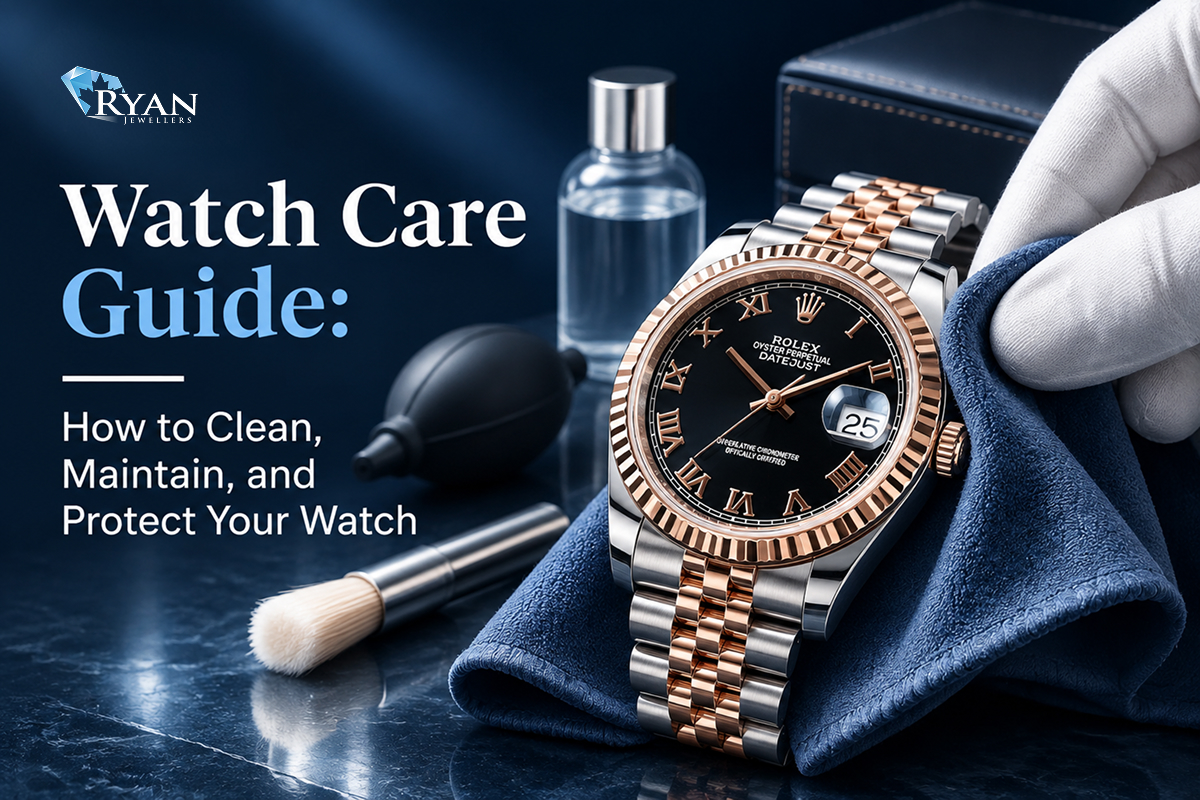
A luxury watch is designed to last for many years, but proper care plays an important role in maintaining its appearance, accuracy, and mechanical performance. This watch care guide explains how to clean, store, protect, and maintain different types of watches while highlighting when professional servicing may be necessary.
Daily care does not have to be complicated. In many cases, a soft microfiber cloth, appropriate cleaning methods, careful storage, and attention to water resistance can prevent unnecessary wear. However, luxury mechanical watches are precision instruments, so some maintenance tasks should always be handled by a qualified watchmaker.
For Canadian watch owners, seasonal conditions can also matter. Cold temperatures, snow, moisture, and significant temperature changes can affect how a watch is worn and stored. Manufacturers such as OMEGA specifically advise owners to avoid extreme temperatures and sudden temperature variations.
If you’re looking for a luxury timepiece that you can enjoy for years with proper care, explore the collection at Ryan Jeweller and find a watch suited to your style and lifestyle.
Why Is Regular Watch Care Important?
Regular watch care helps protect several important parts of a timepiece.
A luxury watch is not simply a decorative accessory. A mechanical watch contains numerous small components that work together to measure time. Dirt, moisture, impacts, chemicals, and poor storage can eventually affect the watch’s appearance or performance.
Protecting the Case and Bracelet
The case and bracelet are exposed to everyday contact with:
- Skin oils
- Sweat
- Dust
- Moisture
- Clothing
- Desk surfaces
- Environmental contaminants
Over time, these substances can accumulate around the bracelet, clasp, crown, and case.
Regular gentle cleaning helps preserve the appearance of the watch without unnecessarily exposing it to aggressive chemicals or abrasive materials.
Rolex recommends occasional cleaning with a microfiber cloth and, for suitable metal cases and bracelets, washing with soapy water and a soft brush.
Maintaining Water Resistance
Water resistance is not necessarily permanent.
Seals and gaskets can age, while accidental impacts can affect components around the crown or case.
OMEGA, for example, recommends having a watch’s water resistance tested regularly by an authorized service centre because gasket aging or accidental shocks can affect water resistance.
Therefore, a watch that was water resistant when new should not automatically be assumed to have exactly the same protection years later.
Preserving Mechanical Performance
Mechanical watches rely on lubricants and precisely manufactured components.
Over time, lubricants can degrade and affect movement performance. Rolex explains that servicing helps maintain precision, reliability, and waterproofness, while also allowing the condition of the movement and other components to be evaluated.
Protecting Long-Term Value
Proper maintenance can also help preserve a luxury watch’s condition.
This is particularly relevant for collectible, vintage, and high-value watches.
However, maintenance does not mean polishing a watch as frequently as possible. Excessive polishing can alter case geometry and remove material. Rolex recommends that professional polishing be performed through an Official Rolex Service Centre.
How Should You Clean Different Types of Watches?
The correct cleaning method depends on the watch’s materials, construction, water resistance, and strap.
The most important rule is simple: always follow the manufacturer’s instructions for the specific model.
Metal Bracelet Watches
Metal bracelets are generally among the easiest luxury watches to clean.
For suitable water-resistant watches:
- Make sure the crown is correctly secured.
- Use a soft microfiber cloth to remove surface dust.
- Use mild soapy water and a soft brush when the manufacturer permits it.
- Gently clean around the bracelet and clasp.
- Rinse with fresh water if appropriate.
- Dry thoroughly with a soft cloth.
TUDOR recommends ensuring the winding crown is properly screwed down before gently cleaning the watch with a microfiber cloth or soft brush and soapy water. The brand also recommends rinsing the watch with fresh water after exposure to seawater.
Stainless Steel Watches
Stainless steel can usually tolerate routine cleaning well, but that does not mean it should be scrubbed aggressively.
Avoid:
- Abrasive pads
- Rough brushes
- Household polishing compounds
- Strong chemical cleaners
- Excessive pressure
A soft brush is generally sufficient for removing dirt from bracelet links and clasp areas.
Titanium Watches
Titanium watches should also be cleaned gently.
Because titanium can have specialized surface treatments or finishes, aggressive polishing may alter the appearance.
Use the manufacturer’s recommended cleaning method rather than assuming that every titanium watch should be treated like stainless steel.
Gold Watches
Gold is relatively soft compared with many watchmaking materials.
A gold case or bracelet can therefore develop scratches more easily than some stainless-steel surfaces.
Use a soft microfiber cloth and follow the manufacturer’s cleaning instructions.
Avoid abrasive products designed to remove scratches at home.
Watches With Leather Straps
Leather requires a different approach.
Do not routinely soak a leather strap in water.
Instead:
- Wipe the strap gently with a dry or slightly damp cloth when appropriate.
- Keep it away from excessive moisture.
- Allow it to dry naturally.
- Avoid prolonged exposure to sweat and water.
- Follow the strap manufacturer’s care recommendations.
Rolex specifically distinguishes leather straps from metal bracelets when recommending soapy-water cleaning.
Rubber Straps
Rubber straps are generally easier to clean than leather.
OMEGA recommends soapy water and a toothbrush for cleaning suitable rubber straps and waterproof cases, followed by drying with a soft cloth.
Even so, avoid exposing the strap unnecessarily to harsh chemicals, perfumes, solvents, or cosmetics.
Sapphire Crystal
Sapphire crystal is highly scratch resistant, but it is not indestructible.
For routine cleaning, use:
- A clean microfiber cloth
- Mild soapy water where appropriate
- Gentle pressure
Avoid abrasive cleaners and rough materials.
How Should You Store and Handle a Watch Properly?
Good storage is an important but often overlooked part of a watch care guide.
Even when you are not wearing your watch, the environment around it can affect its condition.
Store the Watch in a Dry Environment
Avoid leaving a luxury watch in areas exposed to:
- High humidity
- Direct sunlight
- Extreme heat
- Extreme cold
- Rapid temperature changes
Canadian homes can experience significant seasonal temperature differences, so avoid storing a watch directly beside a radiator, heating vent, window, or other extreme environment.
OMEGA recommends avoiding temperatures above 60°C or below 0°C, as well as extreme variations in temperature.
Use the Original Box When Appropriate
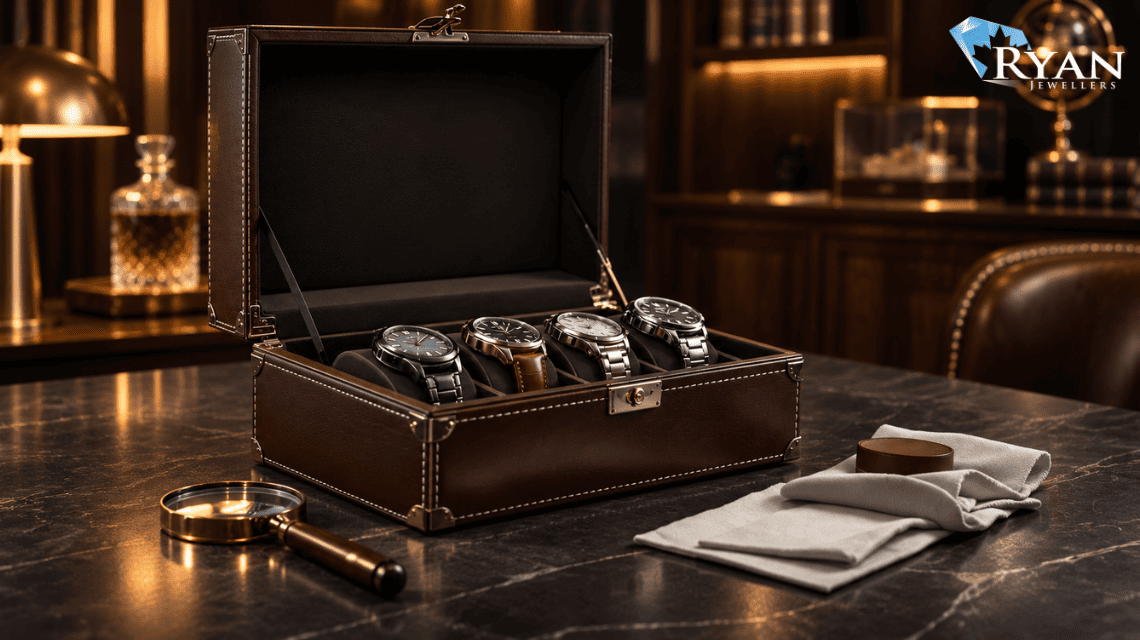
The original watch box can provide useful protection against:
- Dust
- Scratches
- Accidental impacts
- Unwanted movement
For long-term storage, make sure the watch is completely dry before placing it inside.
Consider a Watch Roll or Travel Case
When travelling, a padded watch roll or dedicated watch case can reduce the chance of:
- Scratches
- Bracelet damage
- Impact
- Contact with other watches
- Accidental drops
Do not place multiple watches together without protection between them.
Keep Watches Away From Magnets
Magnetic fields can affect certain mechanical movements.
OMEGA specifically advises owners to avoid placing watches near strong magnetic sources such as speakers, refrigerators, laptops, and certain electronic accessories.
Modern watches may have varying levels of magnetic resistance, so check the exact specifications of your model.
Handle the Crown Carefully
The crown is a small but important component.
Never force it.
If the watch has a screw-down crown, make sure it is correctly secured according to the manufacturer’s instructions before exposing the watch to water.
Rolex emphasizes that the crown must be screwed down properly to maintain the water resistance of its watches.
How Do You Protect a Watch From Moisture, Scratches, and Damage?
Protecting a luxury watch involves understanding the most common sources of damage.
Moisture
Moisture can be particularly harmful if it enters the case.
Possible warning signs include:
- Condensation under the crystal
- Fogging
- Unusual movement behaviour
- Corrosion
- Water inside the case
If condensation appears inside the watch, do not continue wearing it and do not attempt to dry the movement yourself.
Professional inspection is recommended.
Salt Water
Salt can leave deposits on a watch and bracelet.
After suitable water-resistant watches are exposed to seawater, manufacturers such as Rolex and TUDOR recommend rinsing with fresh water.
However, rinsing does not make every watch suitable for swimming or diving.
Always check the exact water-resistance rating and manufacturer’s instructions first.
Chemicals and Cosmetics
Perfume, sunscreen, cleaning products, solvents, and cosmetics can affect watch materials.
OMEGA specifically advises avoiding direct contact with solvents, detergents, perfumes, cosmetics, and mosquito repellents because these substances can damage the case, bracelet, or gaskets.
A practical approach is to apply perfume or cosmetics first and allow them to dry before putting on your watch.
Scratches
Some scratches are simply part of normal ownership.
However, you can reduce unnecessary damage by:
- Removing the watch during rough work
- Avoiding contact with hard surfaces
- Storing it separately
- Using a protective watch case while travelling
- Avoiding contact with jewelry or metal objects
Do not attempt to remove scratches from a luxury watch using household polishing products.
For valuable watches, professional refinishing is safer.
Shock and Impact
Mechanical watches are designed to withstand normal wear, but significant impacts can still affect their movement.
OMEGA advises owners to avoid mechanical, thermal, and other forms of shock.
If a watch experiences a significant impact and subsequently begins gaining or losing time unusually, professional inspection may be appropriate.
When Does a Watch Need Professional Servicing?
Knowing when to seek professional help is one of the most important parts of proper watch ownership.
The Watch Is Losing or Gaining Time
Mechanical watches naturally have some variation in timekeeping.
However, a sudden or significant change can indicate that the watch needs inspection.
Possible causes include:
- Magnetization
- Impact
- Lubrication issues
- Movement wear
- Internal contamination
Do not immediately assume that the movement needs a complete overhaul. A qualified watchmaker can diagnose the issue.
Water Resistance Is Uncertain
If the watch has been dropped, exposed to water after a long period without testing, or shows signs of moisture, professional water-resistance testing may be appropriate.
OMEGA recommends regular water-resistance testing because seals can age and accidental shocks can affect the crown or case.
The Crown Feels Different
Pay attention if the crown becomes:
- Difficult to turn
- Loose
- Unusually stiff
- Difficult to screw down
- Unable to remain secured
Do not force it.
The crown interacts directly with the case sealing system on many water-resistant watches.
The Watch Has Been Exposed to Water Unexpectedly
If a watch that should not have been exposed to water becomes wet internally, seek professional assistance quickly.
Opening the case yourself can introduce additional dust and moisture and may compromise the watch further.
The Watch Has Not Been Serviced for Many Years
Service intervals differ by brand, movement, model, usage, and environment.
There is no universal servicing schedule for every luxury watch.
For example, Rolex currently recommends periodic servicing approximately every 10 years, depending on the model and real-life usage.
OMEGA states that, as a general guideline, watches should be serviced every 5–8 years depending on conditions, while emphasizing that the appropriate frequency depends on the model, climate, and care provided by the owner.
This difference illustrates why owners should follow the manufacturer’s guidance rather than applying one schedule to every watch.
What Happens During Professional Servicing?
A complete service can involve much more than simply cleaning the exterior.
Depending on the brand and service level, a professional service may include:
- Movement inspection
- Disassembly
- Cleaning
- Lubrication
- Replacement of worn components
- Gasket replacement
- Water-resistance testing
- Accuracy testing
- Power-reserve testing
- Case and bracelet cleaning or refinishing
TUDOR, for example, states that its servicing process includes a complete movement overhaul, replacement of seals, waterproofness testing, accuracy checks, and final quality control.
Use an Authorized Service Centre for Valuable Watches
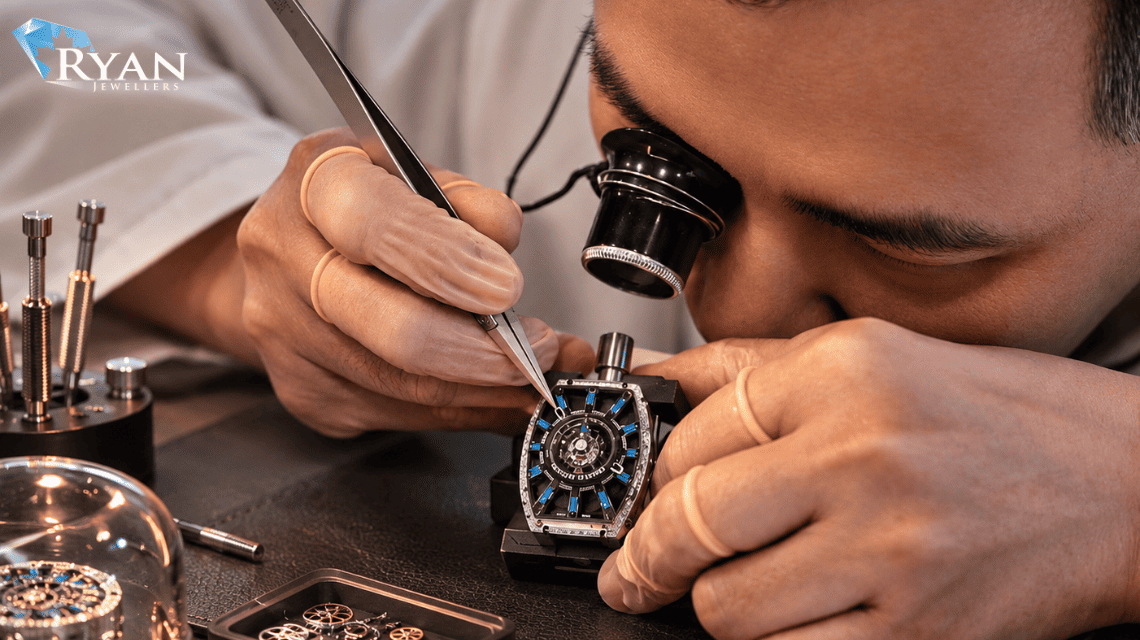
For a high-value luxury watch, professional servicing is usually best handled by the manufacturer’s authorized network or a highly qualified specialist.
Rolex maintains official service locations in Canada, including authorized service centres and retailers in cities such as Montreal, Edmonton, Vancouver, and Ottawa.
Using the appropriate service network can help protect the watch’s technical integrity and documentation.
Canadian Service Costs Can Vary
Professional servicing is not a fixed cost across all luxury watches.
Rolex’s current Canadian pricing, for example, lists complete service starting at CAD $840 for many modern six-digit references, CAD $980 for selected professional models, and CAD $1,190 for categories including the Cosmograph Daytona and Sky-Dweller. Additional work may cost more.
Other brands have their own pricing structures.
Therefore, owners should request an assessment and estimate before authorizing significant work.
Watch Care Checklist
A simple routine can make long-term ownership much easier.
Daily or Regular Care
- Wipe the watch with a microfiber cloth.
- Check the bracelet and clasp for accumulated dirt.
- Keep leather straps away from unnecessary moisture.
- Avoid perfumes, solvents, and harsh chemicals.
- Store the watch safely when not wearing it.
- Keep it away from strong magnetic sources.
- Follow the manufacturer’s instructions for winding and crown operation.
After Water Exposure
- Confirm the watch is designed for the activity.
- Rinse suitable watches with fresh water after seawater exposure.
- Dry the watch thoroughly.
- Never operate the crown while the watch is underwater.
- Check for condensation afterward.
OMEGA specifically advises that the crown should not be manipulated in water and recommends rinsing the watch with fresh water after swimming in the sea.
Before Professional Service
Record:
- Reference number
- Serial information where appropriate
- Service history
- Warranty information
- Any recent problems
- Accuracy changes
- Water exposure
- Accidental impacts
This information can help a watchmaker understand the watch’s recent history.
If you want a more detailed overview before making a purchase, read our Watch Buying Guide for practical advice on movements, sizing, materials, features, and budget.
FAQ About Watch Care and Maintenance
How often should I clean my luxury watch?
For everyday wear, gently wiping the watch with a microfiber cloth regularly can help remove surface oils and dust. Deeper cleaning should follow the manufacturer’s recommendations and depend on the case and strap materials.
Can I clean my watch with soap and water?
Some water-resistant watches with metal bracelets or suitable rubber straps can be cleaned with mild soapy water and a soft brush. However, leather straps should generally not be treated the same way, and the crown must be properly secured before cleaning a water-resistant watch.
How should I store a luxury watch?
Keep it in a dry, stable environment away from extreme temperatures, strong magnetic fields, direct sunlight, and unnecessary moisture. A dedicated watch box or padded watch roll can help prevent scratches and accidental impacts.
How often does a luxury watch need servicing?
There is no universal interval. It depends on the brand, model, movement, usage, climate, and condition. Rolex currently recommends approximately every 10 years depending on model and usage, while OMEGA gives a general guideline of 5–8 years depending on conditions.
Can I polish scratches out of my watch at home?
It is generally better not to. Polishing removes material and can alter the original case or bracelet geometry. For valuable luxury watches, professional refinishing is the safer approach. Rolex specifically recommends professional polishing through its Official Service Centre.
What should I do if water gets inside my watch?
Stop wearing the watch and seek professional assistance as soon as possible. Moisture inside the case can damage the movement and other components. Do not attempt to open or dry the movement yourself.
Final Thoughts
A good watch care guide does not need to involve complicated routines. Consistent, gentle care is usually more effective than aggressive cleaning or unnecessary polishing.
Keep your watch clean, protect it from avoidable impacts and chemicals, store it properly, and pay close attention to water resistance. Most importantly, follow the manufacturer’s instructions because servicing and cleaning requirements can vary significantly between models.
For Canadian owners, seasonal temperature changes and regular exposure to snow, rain, humidity, seawater, and indoor heating make proper storage and moisture protection particularly important. At the same time, professional servicing should be based on the specific watch rather than a universal schedule.
A luxury watch is designed to be enjoyed for years. With proper care and timely professional servicing, a quality timepiece can remain both functional and visually impressive throughout its life.
Ready to find a luxury watch worth caring for? Explore the collection at Ryan Jeweller and discover a timepiece suited to your style and long-term collection.