
Summarize the article with:


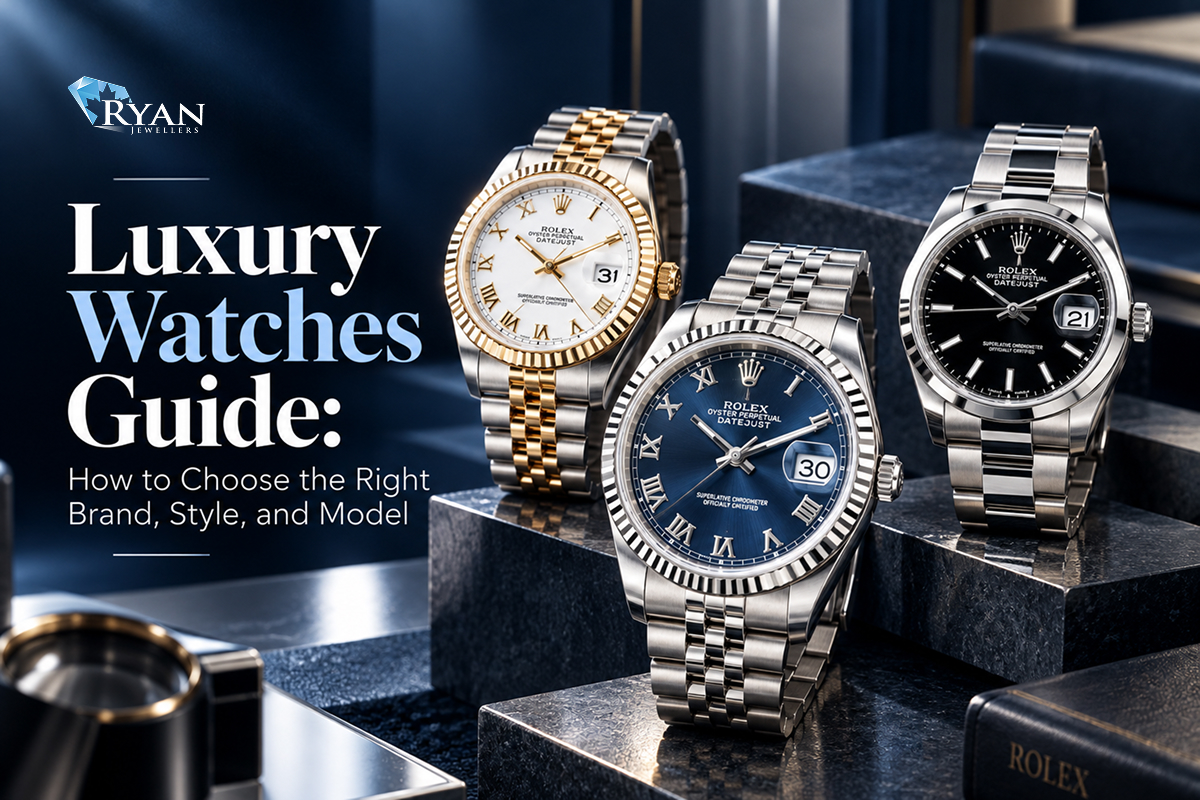
Buying a luxury watch is about more than choosing a recognizable name. A well-made timepiece can combine movement engineering, materials, finishing, design, heritage, and long-term service into one object that is both functional and highly personal.
For Canadian buyers, the luxury watch market offers a wide range of choices, from refined dress watches and classic steel models to high-complication mechanical timepieces. Prices can also vary dramatically depending on the brand, movement, materials, complications, and availability. For example, current Canadian collections from major maisons show substantial differences between steel, precious-metal, diamond-set, quartz, and mechanical models.
If you’re beginning your search, explore Ryan Jeweller to compare watches and find a timepiece that matches your style, occasion, and budget.
What Defines a Luxury Watch?
There is no single technical specification that automatically makes a watch “luxury.” The category generally reflects a combination of craftsmanship, materials, movement technology, design, finishing, brand heritage, quality control, and service.
Movement and Watchmaking
The movement is one of the most important components to consider.
Luxury watches may use:
- Mechanical movements
- Automatic movements
- Manual-winding movements
- Quartz movements
- Solar or other specialized technologies
Mechanical watches can require considerable engineering and assembly because they rely on precisely manufactured components to store, transmit, and regulate energy.
High-end manufactures may also develop movements in-house. Patek Philippe, for example, states that it produces its own internal and external components and offers mechanical watches with both automatic and manual winding, as well as selected quartz watches.
Materials
Luxury watches can be made from a wide variety of materials, including:
- Stainless steel
- Titanium
- Ceramic
- Yellow gold
- White gold
- Rose gold
- Platinum
- Sapphire crystal
The material affects not only appearance but also weight, durability, finishing possibilities, and price.
Precious-metal watches deserve particular attention when buying in Canada. The Competition Bureau states that representations concerning precious-metal quality must be truthful, and quality marks must accurately indicate the metal quality.
Finishing
Finishing refers to how the surfaces and components of a watch are treated and decorated.
Examples include:
- Polishing
- Brushing
- Satin finishing
- Beveling
- Engraving
- Guilloché
- Gem-setting
On a high-end mechanical watch, finishing can extend beyond the visible case and dial to the movement itself.
Patek Philippe, for example, highlights hand finishing of its watch components and techniques including engraving, guilloché, and gem-setting.
Design and Proportion
A luxury watch does not need to be covered in diamonds or made from solid gold to be sophisticated.
Design quality can come from:
- Case proportions
- Dial balance
- Hand design
- Indexes
- Bracelet integration
- Crown design
- Finishing
- Legibility
This is why relatively simple watches can command significant prices when their construction and design are exceptionally refined.
Heritage and Brand Identity
Brand history can also influence the luxury-watch experience.
Some maisons emphasize traditional watchmaking and complicated movements, while others are particularly recognized for design, sports watches, precision, or technical innovation.
The important point is to distinguish brand recognition from actual specifications. A famous name does not automatically mean that every model is the right choice for every buyer.
Which Luxury Watch Brands Should Buyers Know?
There are many respected luxury watch manufacturers, and each has a different design language and area of expertise.
Rather than treating one brand as universally superior, it is more useful to understand what each is known for.
Rolex
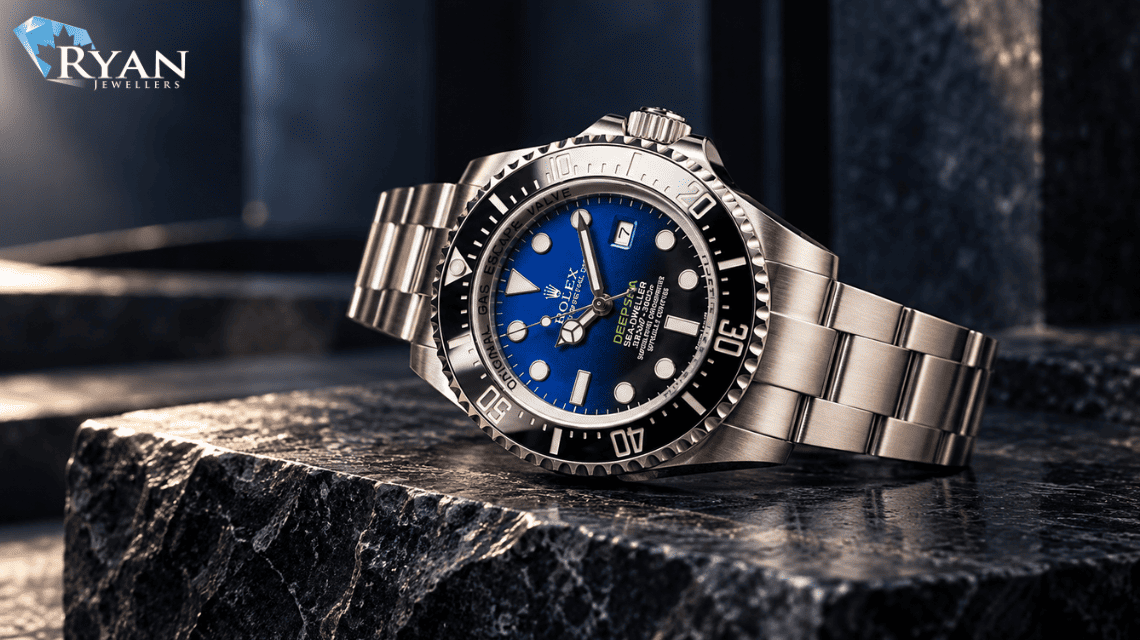
Rolex is one of the most recognizable names in luxury watches, with collections covering professional sports watches, classic models, travel watches, diving watches, and dress-oriented designs.
Its current Canadian collection includes models such as the Datejust, Submariner, GMT-Master II, Cosmograph Daytona, Explorer, Day-Date, and Oyster Perpetual.
Rolex can be particularly appealing to buyers looking for:
- Strong brand recognition
- Sport-luxury styling
- Robust everyday designs
- Established model families
- Broad international service infrastructure
Cartier
Cartier takes a particularly design-focused approach to watchmaking.
Its signature collections include:
- Tank
- Santos
- Panthère
- Ballon Bleu
- Baignoire
The Canadian Cartier collection demonstrates how widely the brand’s watches can vary, from quartz Tank models to automatic mechanical watches and precious-metal diamond-set pieces.
Cartier can be especially attractive if design and jewelry heritage are central to your purchase.
Patek Philippe
Patek Philippe occupies the highly specialized end of traditional Swiss watchmaking.
Its current collections include:
- Calatrava
- Nautilus
- Aquanaut
- Complications
- Grand Complications
- Golden Ellipse
- Twenty~4
The manufacture states that it produces mechanical watches with automatic and manual winding, alongside selected quartz watches, and maintains extensive in-house expertise across movements, dials, cases, and bracelets.
Patek Philippe also maintains authorized points of sale in Canada, including locations in Toronto, Montreal, and Vancouver.
Other Luxury Brands
The luxury watch landscape extends well beyond these examples.
Depending on your priorities, you may also encounter brands known for:
- High complications
- Independent watchmaking
- Sports watches
- Chronographs
- Ultra-thin movements
- Haute horlogerie
- Jewelry watches
- Technical innovation
The best approach is to research the specific model rather than choosing a brand based solely on reputation.
How Do Luxury Watch Movements, Materials, and Features Compare?
Once you have identified brands you like, compare the actual specifications.
Automatic vs Manual-Winding
An automatic watch uses a rotor to help wind its mainspring as the watch moves on the wrist.
A manual-winding watch requires the wearer to wind the mainspring through the crown.
Neither is inherently better.
Automatic movements are convenient for regular wear, while manual movements can appeal to collectors who enjoy the traditional ritual of winding and interacting with the mechanism.
Quartz Movements
Quartz watches use electronic regulation and are generally known for high accuracy and convenience.
Luxury does not automatically mean mechanical.
Cartier’s Canadian collection, for example, includes both quartz and automatic models across different collections and price points.
Therefore, consider what you actually want from the movement rather than assuming that mechanical is always the better choice.
Complications
A complication is an additional function beyond basic time display.
Common examples include:
- Date
- Chronograph
- GMT or second time zone
- Moon phase
- Annual calendar
- Perpetual calendar
- Power reserve
- Minute repeater
The more complicated the movement becomes, the more important movement architecture, reliability, servicing, and usability become.
Patek Philippe’s collections demonstrate the range, from relatively simple round watches such as the Calatrava to highly complicated and grand-complication models.
Case Materials
When comparing cases, consider the purpose of the watch.
Stainless steel can offer versatility and a familiar luxury-sport appearance.
Titanium provides lower weight and can be particularly useful for larger sports watches.
Gold adds a distinctive appearance, weight, and precious-metal value.
Platinum is dense, rare, and generally positioned toward the higher end of luxury watchmaking.
Ceramic can offer a modern technical appearance and strong scratch resistance, depending on the specific formulation and construction.
Crystal
Sapphire crystal is widely used in modern luxury watches because of its excellent scratch resistance.
However, the crystal is only one part of overall durability.
Also consider:
- Case construction
- Water resistance
- Crown design
- Bezel protection
- Bracelet
- Movement protection
Bracelet and Strap
A bracelet can dramatically change how a luxury watch feels.
Common materials include:
- Stainless steel
- Gold
- Titanium
- Leather
- Rubber
- Composite materials
Patek Philippe, for example, produces bracelets and straps in materials including leather, polymer, composite material, metal, and synthetic fabric.
The choice should reflect how and where you plan to wear the watch.
How Do You Choose a Luxury Watch for Your Style and Budget?
The easiest way to narrow the market is to start with your lifestyle rather than a brand name.
Start With the Intended Use
Ask yourself:
Will this be an everyday watch?
Prioritize comfort, durability, water resistance, legibility, and versatility.
Will it be a dress watch?
Focus on proportion, thinness, dial design, precious metals, and a refined strap or bracelet.
Will you travel frequently?
A GMT or dual-time complication may be useful.
Do you participate in sports or outdoor activities?
Look for appropriate water resistance, durable materials, and a case designed for active use.
Is this primarily a collector’s piece?
Movement architecture, complications, finishing, rarity, provenance, and brand history may become more important.
Choose Your Preferred Case Size
Case diameter should not be considered in isolation.
Also look at:
- Lug-to-lug length
- Case thickness
- Bracelet width
- Case shape
- Wrist size
A 40 mm round watch and a 40 mm square or tonneau-shaped watch can wear very differently.
Consider Your Wardrobe
A versatile luxury watch should complement the clothes you actually wear.
A stainless-steel sports watch can transition between casual and business settings.
A precious-metal dress watch may be better suited to formal occasions.
A diamond-set watch can create a distinctly jewelry-oriented appearance.
Set a Total Budget
Don’t spend the entire budget on the watch itself without considering ownership.
Additional costs may include:
- Insurance
- Servicing
- Bracelet or strap replacement
- Maintenance
- Repairs
- Taxes
- Potential authentication or appraisal
A less expensive watch that fits your lifestyle can provide more practical value than an expensive model that rarely gets worn.
Don’t Buy Based Solely on Resale Expectations
Some luxury watches can retain substantial market demand, but future resale value is not guaranteed.
Prices can change due to:
- Brand strategy
- Production levels
- Consumer preferences
- Market conditions
- Model discontinuation
- Condition
- Provenance
Buy a watch because you appreciate it first.
If it retains strong value later, that can be a benefit rather than the primary reason for purchasing it.
What Should You Check Before Buying a Luxury Watch in Canada?
Buying a luxury watch requires more due diligence than simply checking the dial and price.
Verify the Seller
When possible, purchase from an established retailer or an authorized point of sale for the relevant brand.
For example, Rolex states that genuine new Rolex watches are exclusively sold through Official Rolex Retailers, who warrant authenticity and provide the brand’s international five-year guarantee.
Patek Philippe similarly directs buyers to its authorized distribution network, while Cartier identifies official boutiques and authorized watch specialists.
Check the Reference Number
A luxury watch should have a specific model or reference number.
Compare that reference against the manufacturer’s documentation and official specifications.
Check:
- Case size
- Movement
- Dial
- Materials
- Bracelet
- Complications
- Production details
If the physical watch does not match the expected specification, investigate before purchasing.
Examine Documentation
Depending on the brand and purchase type, documentation may include:
- Warranty card
- Original invoice
- Service records
- Certificates
- Manuals
- Box and accessories
Documentation can help establish provenance and make future servicing or resale easier.
Check Precious-Metal Claims
For watches made from gold, platinum, or other precious metals, pay attention to the stated material and quality.
In Canada, the Competition Bureau requires representations concerning precious-metal quality to be truthful. Quality marks must also accurately represent the quality of the precious metal.
Understand the Warranty
Before purchasing, determine:
- Warranty duration
- What is covered
- Where service can be performed
- Whether international warranty coverage applies
- What can void the warranty
A reputable retailer should be able to explain these terms clearly.
Understand Service Availability
Luxury watches are long-term products.
Before buying, consider whether appropriate service is available in Canada or through the manufacturer’s international network.
For example, Patek Philippe maintains an authorized network in Canada and offers maintenance services through authorized points of sale.
New vs Pre-Owned
A new watch generally offers the clearest provenance and manufacturer warranty conditions.
A pre-owned watch can provide access to discontinued models, older references, or different price points, but it requires additional due diligence.
For a pre-owned luxury watch, check:
- Authenticity
- Condition
- Service history
- Parts replacement
- Polishing
- Originality
- Documentation
- Seller reputation
The condition of the movement can be more important than superficial appearance.
A Practical Luxury Watch Buying Checklist
Before committing to a purchase, ask these questions:
Brand
- Do I genuinely like the brand?
- Does the brand’s design language suit me?
- Is the model appropriate for my intended use?
Movement
- Automatic, manual, quartz, or another system?
- What is the power reserve?
- What complications does it have?
- What are the servicing requirements?
Materials
- Stainless steel, titanium, gold, platinum, ceramic, or another material?
- What type of crystal does it use?
- Is the bracelet or strap appropriate for my lifestyle?
Fit
- Does the case size suit my wrist?
- Is the watch comfortable?
- Is the thickness appropriate?
- Does the bracelet fit securely?
Condition
For a pre-owned watch:
- Has it been polished?
- Has the movement been serviced?
- Are the original parts present?
- Is the dial original?
- Are the box and papers included?
Seller
- Is the seller reputable?
- Can they provide documentation?
- Is there a clear return policy?
- What warranty is included?
Long-Term Ownership
- Can the watch be serviced?
- Are replacement parts available?
- Is insurance appropriate?
- Will I still enjoy wearing it several years from now?
If you want a more detailed overview before making a purchase, read our Watch Buying Guide for practical advice on movements, sizing, materials, features, and budget.
FAQ About Luxury Watches
What makes a watch a luxury watch?
Luxury watches typically combine factors such as high-quality materials, refined finishing, sophisticated movements, craftsmanship, design, brand heritage, quality control, and after-sales service. There is no single technical feature that defines every luxury watch.
Which luxury watch brand is best?
There is no universally best brand. Rolex may appeal to buyers looking for established sport-luxury models, Cartier is strongly associated with distinctive design, while Patek Philippe is particularly known for traditional high-end watchmaking and complications. The right choice depends on your priorities.
Are luxury watches always mechanical?
No. Luxury brands also produce quartz and other types of movements. Cartier’s Canadian collection, for example, includes both quartz and automatic models.
How much should I spend on a luxury watch?
There is no universal budget. Start with what you can comfortably afford after accounting for taxes, insurance, servicing, and other ownership costs. The best purchase is one that fits both your financial situation and your lifestyle.
Should I buy a new or pre-owned luxury watch?
A new watch generally provides straightforward provenance and current warranty coverage. A pre-owned watch can offer access to discontinued models and different price points but requires greater attention to authenticity, condition, service history, and documentation.
How can I verify a luxury watch’s authenticity?
The safest approach is to purchase through the brand’s official or authorized retail network. For pre-owned watches, verify the reference, movement, materials, documentation, provenance, and condition with a qualified professional when necessary. Brands such as Rolex specifically recommend purchasing through Official Rolex Retailers to ensure authenticity.
Final Thoughts
Choosing a luxury watch should be about finding the right combination of design, craftsmanship, movement, materials, functionality, and personal preference.
A recognizable brand can be an important part of the experience, but it should not replace careful evaluation of the actual watch. Compare the movement, case material, crystal, complications, dimensions, water resistance, bracelet, warranty, and service options before making a decision.
For Canadian buyers, provenance and documentation deserve particular attention, especially when purchasing high-value or pre-owned watches. Precious-metal descriptions should be accurate and properly represented, while authorized retailers can provide additional confidence regarding authenticity and manufacturer support.
Most importantly, choose a watch you genuinely want to wear. A luxury timepiece is a long-term purchase, and the best model is not necessarily the rarest or most expensive—it is the one that feels right on your wrist and continues to suit your lifestyle.
If you’re ready to explore luxury watches and find a timepiece that matches your style, visit Ryan Jeweller to discover the available collection and speak with a jewellery professional about your options.