
Summarize the article with:


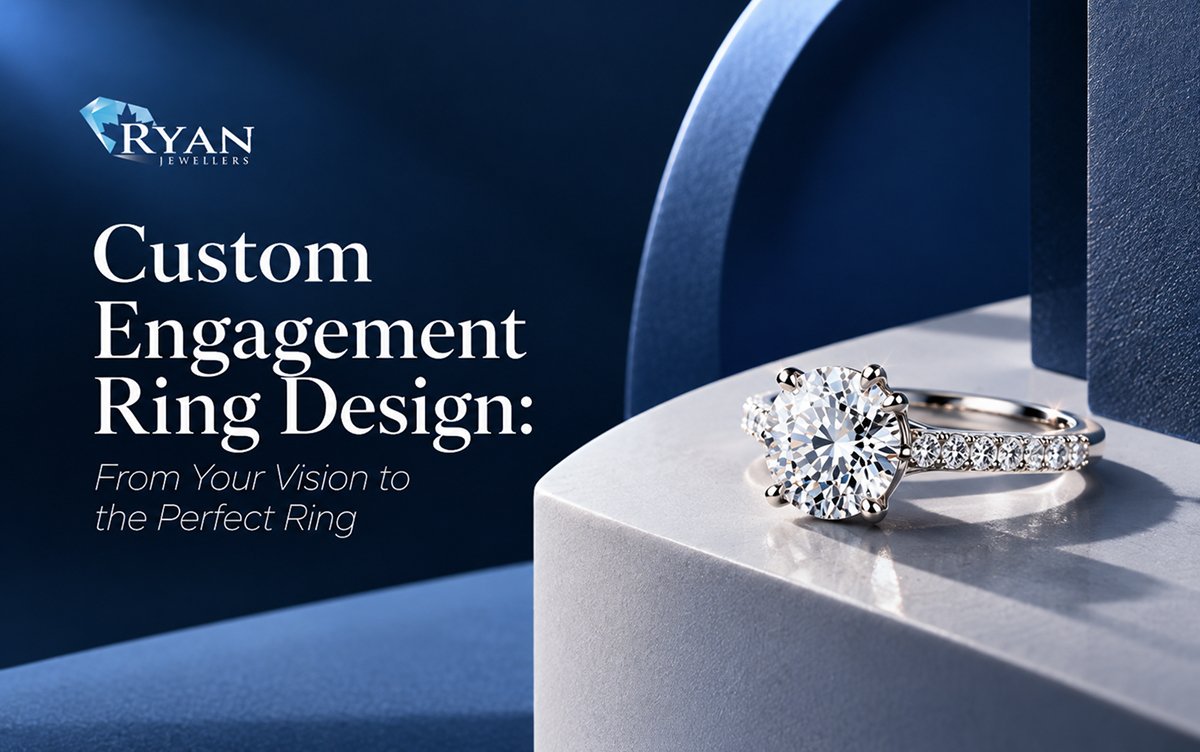
A custom engagement ring design gives you the freedom to create a ring around your personal style, relationship, lifestyle, and budget. Instead of choosing a finished ring from an existing collection, you can help determine the diamond, setting, metal, proportions, and meaningful details that become part of the final piece.
For Canadian buyers, the process also involves practical decisions. These include choosing between natural and laboratory-grown diamonds, understanding gold karat, reviewing diamond documentation, considering everyday wear, and confirming the cost and production timeline.
Custom does not necessarily mean complicated. A simple solitaire with a carefully selected diamond can be just as personal as an elaborate design. The goal is to create a ring that looks beautiful while remaining comfortable, secure, and appropriate for how it will be worn.
If you are beginning to explore ideas, visit Ryan Jeweller to discover engagement ring styles and inspiration before starting your custom project.
How Does Custom Engagement Ring Design Work?
The custom engagement ring design process typically begins with a consultation and ends with a finished ring that has been manufactured and inspected according to the approved specifications.
Although the exact process differs between Canadian jewellers, it commonly includes:
- Initial consultation
- Design inspiration and concept development
- Diamond or gemstone selection
- Metal and setting selection
- CAD or design development
- Design revisions
- Final approval
- Manufacturing
- Stone setting and finishing
- Final quality inspection
Step 1: Start With Your Priorities
Before discussing specific diamonds or settings, establish what matters most to you.
For example, you may prioritize:
- A particular diamond shape
- A larger centre stone
- A specific metal
- A minimalist appearance
- Maximum sparkle
- Everyday durability
- A specific budget
Having clear priorities makes later decisions easier.
Step 2: Develop the Concept
Your jeweller can turn your ideas into a more defined design.
You may provide:
- Reference photos
- Sketches
- Existing jewelry
- Favourite design details
- Preferred diamond shapes
You do not need to know exactly how the ring should be constructed. A good consultation should help transform your preferences into a workable design.
Step 3: Review the Design
Depending on the jeweller, you may receive sketches, technical drawings, or a CAD model.
For a complex ring, CAD can help you evaluate the design before manufacturing begins.
Pay attention to both the top view and side profile. The side profile can affect the ring’s height, comfort, and interaction with other jewelry.
Step 4: Approve the Final Specifications
Before production begins, confirm:
- Diamond or gemstone
- Metal type
- Gold karat
- Ring size
- Setting style
- Band dimensions
- Accent stones
- Engraving
- Total price
- Estimated completion date
Once production starts, significant changes may become more difficult or expensive.
If you’re ready to explore personalized ring designs, read our Custom Rings Guide for inspiration, styles, and ideas for creating a one-of-a-kind engagement ring.
Finding Your Engagement Ring Design Inspiration
You do not need a complete design before meeting with a jeweller. Inspiration can come from almost anywhere.
Start With Your Existing Style
Look at the jewelry you already wear.
Do you prefer:
- Yellow gold?
- White gold?
- Rose gold?
- Platinum?
- Minimalist designs?
- Vintage details?
- Larger statement pieces?
- Delicate jewelry?
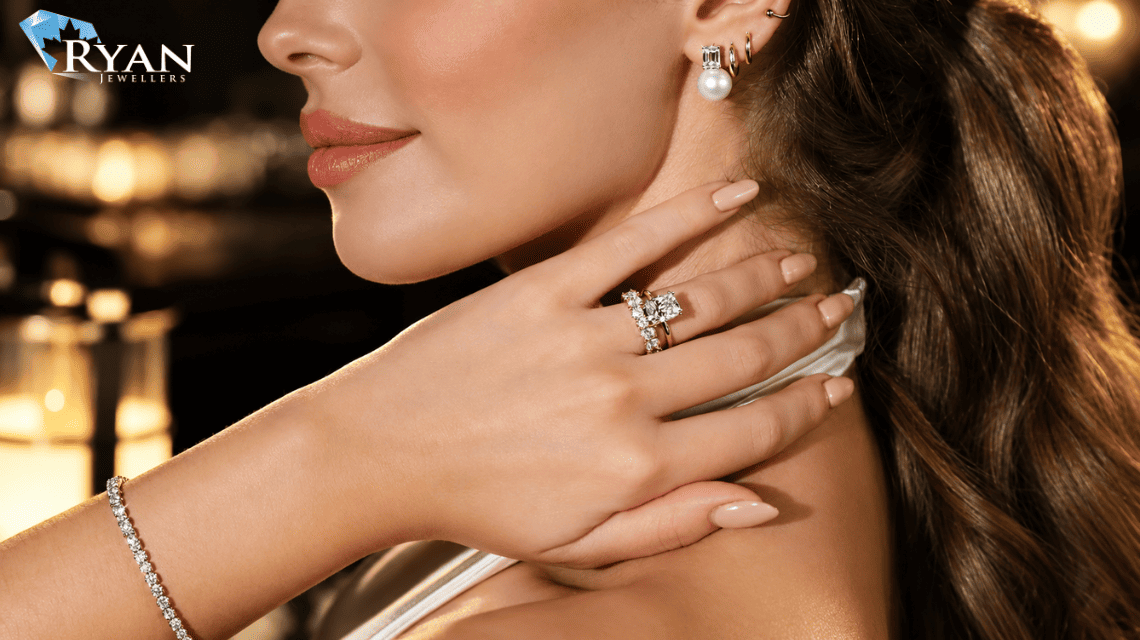
Your existing preferences can help establish a direction for the engagement ring.
Save Multiple Reference Images
Rather than finding one ring and trying to copy it exactly, collect several examples.
Look for recurring elements such as:
- Oval diamonds
- Thin bands
- Bezel settings
- Hidden halos
- Pavé diamonds
- Yellow gold
- Vintage-inspired details
If several references share the same characteristics, those elements may represent your actual design preferences.
Identify What You Don’t Like
Negative preferences can be equally helpful.
For example:
“I don’t want a high setting.”
“I prefer a wider band.”
“I don’t want a halo.”
“I want something simple enough for everyday wear.”
Sharing these preferences early can prevent unnecessary design revisions.
Think About Your Lifestyle
An engagement ring is often worn every day, so appearance should not be the only consideration.
If you work with your hands, participate in physical activities, or rarely remove your jewelry, discuss:
- Setting height
- Band thickness
- Stone security
- Gemstone durability
- Comfort
- Maintenance
A design that looks attractive but does not suit your lifestyle may become inconvenient over time.
Establish a Budget Before Choosing the Stone
Your budget should guide the entire design rather than being considered after selecting the centre diamond.
For example, you could prioritize:
Diamond: larger centre stone, simpler setting
or
Design: more intricate setting, smaller centre stone
Neither approach is universally better. It depends on what matters most to you.
Choosing the Diamond, Setting, and Metal
Material selection is one of the most important parts of custom engagement ring design because each choice affects appearance, durability, maintenance, and cost.
Choosing the Diamond
The traditional 4Cs provide a useful framework for evaluating diamonds:
- Cut
- Colour
- Clarity
- Carat weight
These characteristics should be considered together.
Carat weight measures the diamond’s weight. It does not directly describe how large the diamond looks from above.
Similarly, a higher clarity grade does not automatically mean a diamond will appear more attractive to the naked eye.
Diamond Shape
Popular engagement ring shapes include:
- Round
- Oval
- Emerald
- Pear
- Marquise
- Cushion
- Radiant
- Princess
The shape should work with the setting and overall ring proportions.
For example, elongated shapes such as oval, pear, and marquise create a different visual effect from round diamonds.
Natural vs. Laboratory-Grown Diamonds
Both natural and laboratory-grown diamonds can be incorporated into custom engagement rings.
Natural diamonds form through geological processes. Laboratory-grown diamonds are produced using technological processes in controlled environments.
Laboratory-grown diamonds have essentially the same chemical composition and crystal structure as natural diamonds. Their key distinction is their origin.
For Canadian buyers, it is important that the diamond’s origin is clearly represented when purchasing. The Competition Bureau’s consumer guidance emphasizes clear terminology distinguishing natural and laboratory-grown diamonds.
When comparing diamonds, review the individual stone’s:
- Shape
- Carat weight
- Cut
- Colour
- Clarity
- Measurements
- Grading documentation
Diamond Grading Documentation
A grading report provides independent information about a diamond’s characteristics.
When purchasing a significant diamond, check that the documentation corresponds to the actual stone being supplied.
Laboratory-grown diamonds can also receive laboratory-grown diamond reports. GIA, for example, distinguishes laboratory-grown diamond reports from its reports for natural diamonds. GIA 4Cs
Choosing Gold
Common gold choices include:
- 10K
- 14K
- 18K
- 22K
- 24K
The karat indicates the proportion of pure gold in the alloy.
In Canada, the Competition Bureau states that gold quality marks can range from 9K to 24K when the applicable requirements are met. It also recognizes decimal designations such as .417 for 10K, .583 for 14K, and .750 for 18K.
Higher-karat gold contains more pure gold but is generally softer than lower-karat gold alloys.
White Gold
White gold offers a bright, cool appearance and is widely used in contemporary engagement rings.
Many white gold rings have rhodium plating. The plating provides a bright white surface but can wear over time and may require professional replating.
Yellow Gold
Yellow gold provides a warm, traditional appearance.
It can work with classic solitaire designs, vintage-inspired rings, and contemporary settings.
Rose Gold
Rose gold has a warm pink tone created by the alloy composition.
It can add a softer or more distinctive appearance to a custom design.
Platinum
Platinum is naturally white and has a high density.
It is often selected for fine jewelry and gemstone settings. However, platinum is not scratch-proof and can develop a natural patina through everyday wear.
Custom Design Details That Make a Ring Unique
The most memorable custom rings do not necessarily require complicated designs. Often, small details create the strongest sense of individuality.
Custom Band Proportions
The band can be customized according to:
- Width
- Thickness
- Profile
- Shape
- Finish
These details can affect both appearance and comfort.
Hidden Details
A custom engagement ring can include elements that are visible only to the wearer.
Examples include:
- Hidden diamonds
- Birthstones
- Initials
- Important dates
- Personal symbols
- Short inscriptions
A hidden detail can add sentimental value without changing the overall appearance of the ring.
Accent Diamonds
Small diamonds can be added to:
- The band
- Shoulders
- Halo
- Gallery
- Hidden areas
The placement should support the centre stone rather than overwhelm it.
Engraving
Engraving can include:
- Names
- Initials
- Dates
- Short messages
- Personal symbols
Before choosing an engraving, confirm that the available space is sufficient and that the design can accommodate it.
Mixed Metals
Combining different metals can create contrast.
For example:
- Yellow gold + white gold
- Rose gold + white gold
- Yellow gold + platinum
The combination should look intentional and work with the rest of the design.
Custom Setting Height
Setting height is an important practical consideration.
A higher setting can create a more prominent appearance, while a lower profile may feel more practical for some lifestyles.
The right choice depends on the diamond shape, setting structure, band design, and how the ring will be worn.
Reviewing and Approving Your Final Design
The approval stage is one of the most important points in the custom engagement ring process.
Once production begins, changes can become more difficult.
Review the Ring From Multiple Angles
Do not evaluate the design only from the top.
Review:
- Top view
- Side profile
- Front view
- Back of the setting
- Band thickness
- Setting height
A ring can look completely different from its side profile.
Check the Diamond Proportions
Make sure the centre diamond works with the band and setting.
Ask:
- Does the stone look proportionate?
- Is the setting too high?
- Does the band feel too thin?
- Are the accent diamonds balanced?
- Does the overall design feel cohesive?
Confirm the Ring Size
Ring size should be confirmed before manufacturing.
If possible, discuss whether the design allows for future resizing.
Some intricate designs, eternity-style bands, and certain stone-heavy constructions can have limited resizing options.
Confirm the Metal
Make sure the final specifications clearly state:
- Metal type
- Gold karat, where applicable
- Colour
- Plating, where applicable
Canadian precious-metal quality marks and claims must be truthful and comply with applicable requirements. The Competition Bureau specifically states that quality marks must accurately represent the precious-metal quality.
Confirm the Diamond or Gemstone
For the centre stone, verify:
- Shape
- Carat weight
- Colour
- Clarity
- Cut, where applicable
- Measurements
- Origin
- Grading documentation
If the stone has a report number or inscription, confirm that the documentation matches the stone.
Confirm the Commercial Terms
Before giving final approval, make sure you understand:
- Total price
- Deposit
- Payment schedule
- Taxes
- Production timeline
- Revision policy
- Cancellation policy
- Warranty
- Resizing policy
- After-sales service
A clear agreement can prevent misunderstandings later.
Inspect the Finished Ring
When the ring is completed, check:
- Stone security
- Prongs
- Ring size
- Metal finish
- Symmetry
- Engraving
- Setting
- Overall appearance
If something does not match the approved design, discuss it with the jeweller before final acceptance.
If you’re looking for more inspiration and practical guidance before starting your own design, read our Custom Jewelry Guide to explore custom design options, styles, and what to consider when creating a one-of-a-kind piece.
FAQ About Custom Engagement Ring Design
What is custom engagement ring design?
Custom engagement ring design is the process of creating or significantly modifying an engagement ring according to a customer’s preferences. The customization can involve the diamond, gemstone, metal, setting, proportions, engraving, and other details.
Is a custom engagement ring better than a ready-made ring?
Not necessarily. Custom design provides greater flexibility, but a well-made ready-made ring can also offer excellent quality. The best option depends on your priorities, timeline, budget, and desired level of personalization.
Can I use a lab-grown diamond for a custom engagement ring?
Yes. Laboratory-grown diamonds can be used in engagement rings and other fine jewelry. They have essentially the same chemical composition and crystal structure as natural diamonds, while differing in origin. gia
Can I use my existing diamond?
Potentially. A jeweller should inspect the diamond before removing and resetting it. The stone’s condition, setting requirements, and suitability for the new design should be assessed first.
What diamond shape is best for a custom engagement ring?
There is no universal best shape. Round, oval, emerald, pear, marquise, cushion, radiant, and princess shapes all have different visual characteristics. Your choice should reflect your personal style, setting, finger proportions, and budget.
What metal should I choose?
There is no universal best metal. Gold and platinum have different characteristics relating to colour, purity, durability, maintenance, and price. The right choice depends on the design and intended use.
What gold karat is best for everyday wear?
10K, 14K, and 18K are common choices for jewelry. Higher-karat gold contains more pure gold but is generally softer. The appropriate choice depends on the design and how the ring will be worn.
How long does custom engagement ring design take?
The timeline varies according to the design complexity, diamond availability, CAD development, revisions, manufacturing, stone setting, engraving, and finishing. Always confirm the expected completion date with your jeweller.
Can I see the ring before it is made?
Many jewellers offer sketches or CAD renderings before production. Ask whether design previews and revisions are included.
Can I change the design after approving it?
Changes may be possible depending on the production stage, but they can involve additional costs or delays. Confirm the revision policy before giving final approval.
Can custom engagement rings be resized?
Many rings can be resized, but the feasibility depends on the design, metal, stone placement, and construction. Some intricate or fully stone-set rings have limitations.
Can I add engraving to a custom engagement ring?
Yes, provided the design has sufficient space. Names, initials, dates, and short personal messages are common options.
How should I choose a custom jeweller in Canada?
Review previous custom work, understand the design process, ask for detailed specifications, confirm gemstone documentation, and review pricing, warranty, resizing, and after-sales policies before placing an order.
How can I make a custom ring timeless?
Start with a design you genuinely like rather than following every short-term trend. A classic foundation combined with a few personalized details can provide a balance between individuality and long-term versatility.
Final Thoughts
A successful custom engagement ring design brings together personal meaning, thoughtful proportions, suitable materials, and quality craftsmanship. The process gives you greater control over the diamond, gemstone, metal, setting, and details that make the finished ring unique.
The most important decisions should happen before production begins. Establish your budget, identify your priorities, compare diamond options, choose an appropriate setting, and review the proposed design from multiple angles.
For Canadian buyers, it is also important to understand the materials and documentation involved. Precious-metal quality claims must be accurate, while diamond origin and characteristics should be clearly represented.
Most importantly, remember that a beautiful engagement ring does not need to be complicated. A carefully selected diamond, well-proportioned setting, and one meaningful personal detail can create a piece that feels completely your own.
If you’re ready to turn your idea into a one-of-a-kind engagement ring, explore Ryan Jeweller for inspiration and discover possibilities for creating a design made specifically for your story.
I love the idea of designing an engagement ring that reflects a couple’s personal story rather than simply following current trends. The little details can make such a meaningful difference and turn a beautiful ring into something truly special. What would you recommend prioritizing first when designing a custom engagement ring: the diamond, the setting, or the overall style?
Custom ring design seems like a great option for anyone who wants something unique while still matching their partner’s everyday style. I especially appreciate how the design process can help balance personal preferences with comfort and practicality. Are there any design choices you would suggest for someone who wants a timeless ring that will still look beautiful decades from now?
This is a helpful topic for couples who may have a clear vision of their dream ring but are unsure how to bring it to life. I think being able to choose the metal, stone shape, and setting makes the experience much more personal. For someone planning a custom engagement ring for the first time, how early would you recommend starting the design process before the proposal?