
Summarize the article with:


A custom ring design gives you the freedom to create a ring around your personal style, budget, and the way you plan to wear it. Instead of selecting a finished piece, you can choose the metal, diamond or gemstone, setting, proportions, and personalized details.
For Canadian buyers, custom ring design can be particularly useful when you have a specific vision that is difficult to find in a ready-made collection. It can also provide greater control over important decisions, from selecting a lab-grown diamond to choosing between yellow gold, white gold, rose gold, and platinum.
However, a successful custom ring is about more than appearance. The design should also be comfortable, structurally appropriate, practical for everyday use, and made with materials that meet your expectations.
If you are considering creating a one-of-a-kind ring, explore Ryan Jeweller for inspiration and use this guide to understand the process before starting your project.
What Is Custom Ring Design?
Custom ring design is the process of creating or modifying a ring according to a customer’s specific preferences. The level of customization depends on the jeweller and the project.
A custom ring may allow you to choose:
- Diamond or gemstone
- Stone shape and size
- Metal type and colour
- Gold karat
- Setting style
- Band width
- Ring profile
- Accent stones
- Engraving
- Surface finish
Fully Custom Ring Designs
A fully custom ring is developed around a particular concept rather than selected from a finished collection.
For example, you might begin with an oval lab-grown diamond and have the setting designed specifically around its proportions.
Alternatively, you could start with a sketch or inspiration image and work with a jeweller to develop the complete ring.
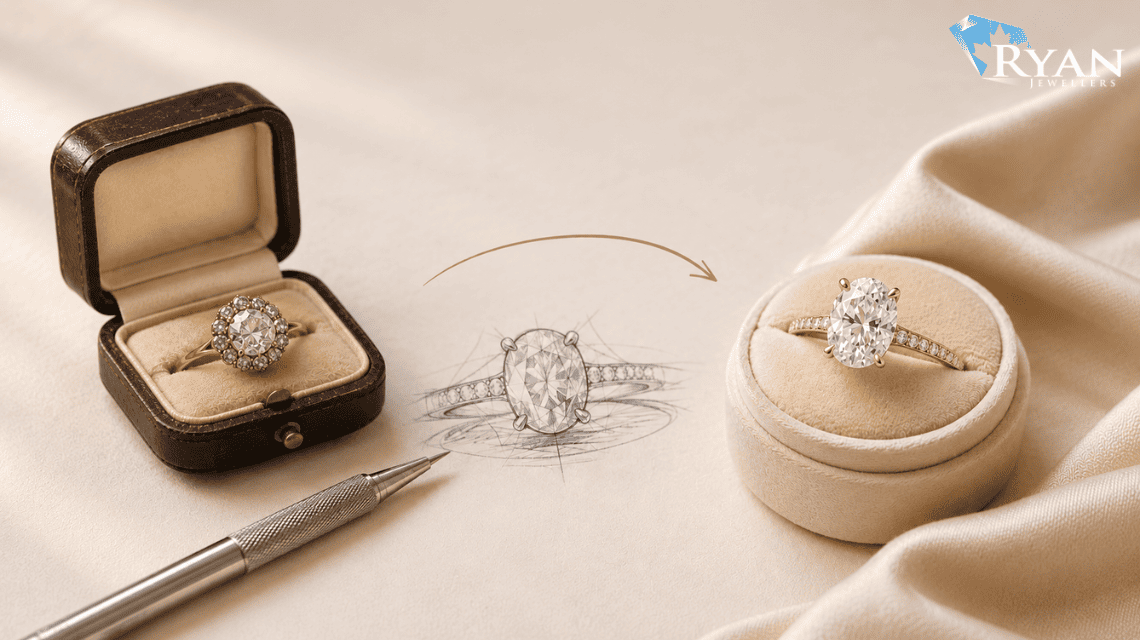
Modified Ring Designs
Customization does not always require starting from scratch.
A jeweller may allow you to modify an existing design by changing:
- Centre gemstone
- Metal
- Band width
- Ring size
- Accent stones
- Engraving
This can be a practical choice when you already like the basic structure of a design but want to make it more personal.
Why Custom Design Is Different
The main advantage is control.
Instead of adapting your preferences to an existing ring, you can determine which characteristics matter most to you.
For example, you might prioritize a particular diamond shape while keeping the band simple, or choose a more elaborate setting with a smaller centre stone.
Finding Inspiration for Your Custom Ring
You do not need a complete design before meeting with a jeweller. Inspiration can come from jewelry you already own, fashion, architecture, nature, family history, or even a particular gemstone.
Look at Rings You Already Wear
Your existing jewelry can reveal your preferences.
Consider:
- Do you prefer yellow or white metals?
- Do you like delicate or substantial bands?
- Do you prefer clean lines or intricate details?
- Do you wear rings every day?
- Do you prefer traditional or contemporary styles?
These observations can help establish a direction for the custom design.
Collect Reference Images
Save several examples of rings you like.
You might collect images showing:
- Diamond shapes
- Setting styles
- Band profiles
- Metal colours
- Engraving
- Accent stones
- Vintage details
- Modern designs
Rather than copying one ring, look for common characteristics across your references.
For example, you may discover that you consistently prefer oval diamonds, thin bands, and white metal. That gives your jeweller useful information even if you do not have a finished design in mind.
Identify What You Do Not Like
Negative preferences are just as useful.
You might say:
- “I don’t want a high setting.”
- “I prefer a wider band.”
- “I don’t want too many accent stones.”
- “I prefer yellow gold.”
- “I don’t want an overly traditional design.”
This can help narrow the options more efficiently.
Consider Your Lifestyle
The ring should work with your everyday routine.
If you work with your hands or participate in activities where jewelry may be exposed to impact, discuss practical design considerations with your jeweller.
Important factors include:
- Setting height
- Band thickness
- Stone security
- Gemstone durability
- Comfort
- Maintenance
Establish a Budget
Set your overall budget before choosing individual materials.
A custom ring may involve costs for:
- Diamond or gemstone
- Metal
- Design work
- CAD modeling
- Labour
- Stone setting
- Engraving
- Finishing
- Applicable taxes
Having a budget early helps your jeweller recommend realistic combinations of materials.
If you’re ready to explore personalized ring designs, read our Custom Rings Guide to discover different styles, design options, and ideas for creating a one-of-a-kind ring.
Choosing the Right Metal, Diamond, or Gemstone
Material selection has a major influence on the appearance, durability, maintenance, and price of a custom ring.
Choosing Gold
Common gold choices include:
- 10K
- 14K
- 18K
- 22K
- 24K
The karat indicates the proportion of pure gold in the alloy.
| Gold Type | Approximate Gold Content |
|---|---|
| 10K | 41.7% |
| 14K | 58.5% |
| 18K | 75% |
| 22K | 91.6% |
| 24K | 99.9% |
Higher-karat gold contains more pure gold but is generally softer than lower-karat gold alloys.
For a ring intended for frequent wear, discuss the appropriate gold karat with your jeweller based on the design and intended use.
White Gold
White gold offers a cool, contemporary appearance.
Many white gold rings receive rhodium plating, which creates a bright white surface. This plating can wear with use and may eventually require professional replating.
Yellow Gold
Yellow gold provides a warm, traditional appearance and works with both classic and contemporary designs.
It can also create attractive contrast with white diamonds and certain coloured gemstones.
Rose Gold
Rose gold has a warm pinkish tone created by its alloy composition.
It can add a distinctive appearance to romantic, modern, or vintage-inspired ring designs.
Platinum
Platinum is naturally white and has a high density.
It is often selected for fine jewelry and gemstone settings. Although durable, platinum can still develop surface scratches and a natural patina through everyday wear.
Choosing a Diamond
For a custom diamond ring, the 4Cs provide a useful starting point:
- Cut — influences how effectively the diamond interacts with light
- Colour — describes the degree of body colour
- Clarity — evaluates internal and surface characteristics
- Carat — measures diamond weight
Carat weight should not be confused with visual size. Two diamonds with the same carat weight can have different dimensions and appearances.
Natural vs. Lab-Grown Diamonds
Both natural and lab-grown diamonds can be used in custom rings.
Natural diamonds form through geological processes, while lab-grown diamonds are produced using technological processes in controlled environments.
Lab-grown diamonds have essentially the same chemical composition and crystal structure as natural diamonds. Their key distinction is their origin.
When selecting a diamond, consider the individual stone’s characteristics, measurements, grading documentation, and overall appearance rather than focusing only on carat weight.
Other Gemstones
A custom ring can also feature gemstones such as:
- Sapphire
- Ruby
- Emerald
- Aquamarine
- Tourmaline
- Amethyst
However, gemstones differ in hardness, toughness, and sensitivity to heat or chemicals.
If you plan to wear the ring every day, discuss the gemstone’s durability and care requirements with your jeweller before making a final decision.
Popular Custom Ring Design Styles
Custom design allows you to adapt established jewelry styles to your own preferences.
Solitaire Rings
A solitaire features one primary centre gemstone.
You can customize:
- Diamond shape
- Carat weight
- Metal
- Band width
- Setting
- Prong style
The simple structure makes a solitaire particularly adaptable.
Halo Rings
A halo surrounds the centre gemstone with smaller diamonds or gemstones.
You can customize the halo’s:
- Shape
- Size
- Stone arrangement
- Metal
- Band
A halo can add additional visual detail while keeping the centre stone as the main focal point.
Three-Stone Rings
Three-stone designs feature a centre gemstone with two additional stones.
The stones can be customized by:
- Shape
- Size
- Colour
- Gemstone type
- Setting
Some people associate the three stones with past, present, and future, although the meaning is personal rather than a fixed requirement.
Bezel-Set Rings
A bezel setting surrounds the gemstone’s edge with metal.
It offers a sleek appearance and provides a different approach to stone security compared with traditional prongs.
Bezel settings can work particularly well for minimalist and contemporary custom rings.
Pavé Rings
Pavé settings use small diamonds set closely together along part of the ring.
They can add substantial visual sparkle while maintaining a relatively delicate appearance.
Because many small stones are involved, the construction and future maintenance of the setting should be considered carefully.
Vintage-Inspired Rings
Vintage-inspired custom rings may include:
- Milgrain
- Filigree
- Engraving
- Decorative metalwork
- Halo details
These elements can be combined with modern gemstones and metals to create a design that feels distinctive without reproducing a historical piece exactly.
Minimalist Custom Rings
Minimalist designs emphasize clean lines and fewer decorative elements.
Examples include:
- Slim bands
- Solitaire settings
- Bezel settings
- Simple geometric shapes
- Low-profile designs
This style can be particularly versatile for everyday wear.
Mixed-Metal Rings
Combining metal colours can create contrast.
Examples include:
- Yellow gold and white gold
- Rose gold and white gold
- Yellow gold and platinum
The design should be carefully balanced so the different metals appear intentional rather than disconnected.
From Concept to Finished Ring
Although every jeweller has its own process, custom ring design generally moves through several stages.
1. Initial Consultation
The jeweller discusses your:
- Design preferences
- Budget
- Gemstone requirements
- Metal preferences
- Lifestyle
- Occasion
- Timeline
Reference images can be helpful at this stage.
2. Design Development
Your ideas are translated into a more defined concept.
Depending on the project, this may involve sketches, technical drawings, or CAD.
3. Gemstone Selection
You can select the centre diamond or gemstone based on your priorities and budget.
For diamonds, compare characteristics such as cut, colour, clarity, carat weight, measurements, and available grading documentation.
4. CAD or Design Review
For more complex rings, CAD can provide a three-dimensional representation before production.
Review:
- Top view
- Side profile
- Band width
- Setting height
- Stone proportions
- Prong placement
- Overall scale
Do not focus only on how the ring looks from above. The side profile can have a major effect on comfort and practicality.
5. Final Approval
Before production begins, confirm:
- Metal
- Gold karat
- Gemstone
- Stone specifications
- Ring size
- Setting
- Dimensions
- Engraving
- Total price
- Estimated completion date
Ask about revision policies before giving final approval.
6. Manufacturing
Once approved, the ring moves into production.
Depending on the design, this may involve:
- Casting
- Metal fabrication
- Soldering
- Stone setting
- Engraving
- Polishing
- Finishing
7. Stone Setting and Finishing
The gemstone is carefully placed into the completed ring structure.
The piece may then receive its final polishing or surface treatment.
White gold may also receive rhodium plating where appropriate.
8. Final Inspection
Before accepting the finished ring, check:
- Stone security
- Prongs
- Symmetry
- Metal finish
- Engraving
- Ring size
- Overall proportions
If the ring includes a significant diamond, make sure any grading documentation corresponds to the actual stone.
9. Final Fitting
Try the ring on and check that it feels comfortable and secure.
If adjustments are necessary, discuss them with the jeweller before completing the purchase.
What Should You Ask Before Ordering a Custom Ring?
Before placing a deposit, clarify the commercial and design details.
Ask:
- What is included in the total price?
- Which metal and karat will be used?
- What are the diamond or gemstone specifications?
- Does the diamond have independent grading documentation?
- How many design revisions are included?
- Is CAD included?
- What is the estimated production timeline?
- What deposit is required?
- What is the cancellation policy?
- Can the ring be resized?
- What warranty is provided?
- What after-sales services are available?
Getting these details clear before production can help prevent misunderstandings later.
If you’re looking for more inspiration and practical guidance before starting your own design, read our Custom Jewelry Guide to explore custom design options, styles, and what to consider when creating a one-of-a-kind piece.
FAQ About Custom Ring Design
What is custom ring design?
Custom ring design is the process of creating or modifying a ring around a customer’s specific preferences, including the metal, gemstone, setting, dimensions, and personalized details.
Is custom ring design more expensive?
Not necessarily. The cost depends on the materials, gemstone, design complexity, craftsmanship, labour, and production requirements.
Can I use a lab-grown diamond in a custom ring?
Yes. Lab-grown diamonds can be used in custom engagement rings, wedding bands, and other fine jewelry designs.
Can I use my existing diamond?
Potentially. A jeweller should inspect the diamond before removing and resetting it to determine whether it is suitable for reuse.
What diamond shape is best for a custom ring?
There is no universally best shape. Round, oval, emerald, pear, marquise, cushion, radiant, and princess diamonds can all work well. The best option depends on your style, setting, finger proportions, and budget.
What metal should I choose for a custom ring?
The choice depends on your priorities. Gold and platinum differ in colour, purity, durability, maintenance, and price. Your intended use should be considered when choosing the metal.
How long does custom ring design take?
The timeline varies according to the complexity of the design, gemstone availability, design revisions, manufacturing, stone setting, and finishing. Confirm the expected completion date before placing an order.
Can I see the ring before it is made?
Many jewellers can provide sketches or CAD models before production. Ask whether previews and revisions are included in the custom design service.
Can custom rings be resized?
Many rings can be resized, but the feasibility depends on the design, metal, gemstone placement, and construction. Some intricate or fully stone-set rings have limitations.
Can I add engraving?
Yes, provided the ring has enough space. Common options include initials, dates, names, and short personal messages.
Should a custom ring be designed for everyday wear?
If you plan to wear the ring daily, the design should take durability, gemstone suitability, setting security, comfort, and maintenance into consideration.
Final Thoughts
A successful custom ring design brings together personal style, carefully selected materials, thoughtful proportions, and quality craftsmanship. Whether you want a classic solitaire, a modern minimalist ring, a vintage-inspired design, or a completely original concept, customization gives you greater control over the finished piece.
The process is most successful when you establish your budget and priorities early, select your diamond or gemstone carefully, review the design from multiple angles, and confirm every important specification before production begins.
For Canadian buyers, it is also worth considering long-term maintenance and after-sales service. A ring designed for everyday wear should remain comfortable, secure, and practical as it ages.
If you’re ready to turn your idea into a one-of-a-kind ring, explore Ryan Jeweller for inspiration and discover possibilities for creating a custom piece designed around you.
This guide is really helpful, especially for someone who has a general idea of their dream ring but doesn’t know where to start. I like the advice about collecting inspiration photos and setting a budget before choosing the materials. Would you recommend deciding on the ring style first or selecting the diamond based on personal preferences and budget?
I appreciate that this article looks beyond appearance and explains why comfort and durability matter when designing a custom ring. The section about reviewing the CAD model from different angles was particularly interesting, since the side profile can make a big difference in everyday wear. For an engagement ring, would you generally recommend a lower setting for better practicality?
This is a great resource for anyone considering a custom ring, especially the checklist of details to confirm before production begins. I think understanding the revision policy, resizing options, and warranty upfront can help buyers feel much more confident about their investment. If you’re working with a jeweller for the first time, which question would you consider the most important to ask before paying a deposit?