
Summarize the article with:


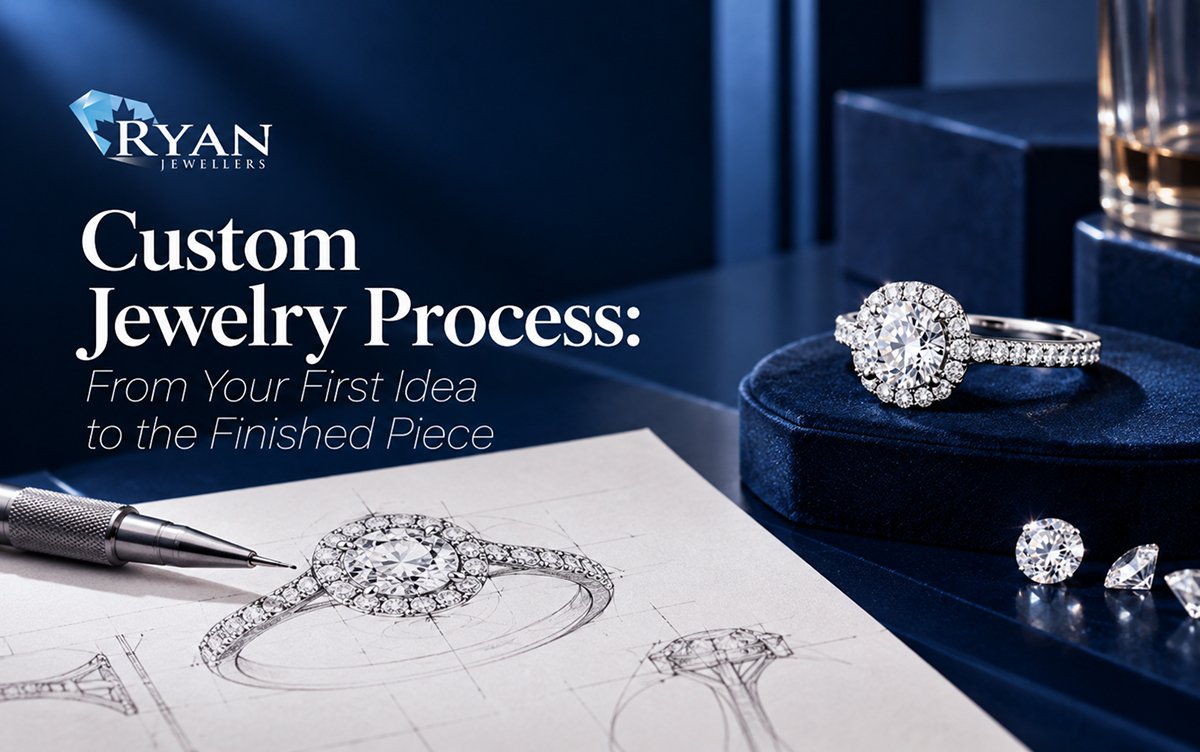
Creating custom jewelry is more than choosing a beautiful gemstone and putting it into a setting. It is a collaborative process that turns an idea, reference image, personal story, or specific requirement into a finished piece designed for one customer.
For buyers in Canada, the process can involve several important decisions, including the choice of metal, diamond or gemstone, design proportions, production method, timeline, and final quality checks. Understanding each stage before you begin can make the experience easier and help you avoid unexpected costs or design changes later.
Whether you are planning a custom engagement ring, wedding band, diamond necklace, or personalized gift, Ryan Jeweller offers a starting point for exploring jewelry styles and design inspiration. Here is what you should know about the custom jewelry process from the first consultation to the finished piece.
How Does the Custom Jewelry Process Work?
The exact process varies between Canadian jewellers and according to the complexity of the project. A simple customized piece may require only a few decisions, while a fully custom engagement ring can involve design development, gemstone selection, CAD modeling, production, setting, and final inspection.
A typical process follows four main stages:
- Consultation and design inspiration
- Selection of diamonds, gemstones, and metals
- Design development and approval
- Crafting, stone setting, and final quality checks
The most important principle is that the specifications should be clearly established before production begins.
Step 1: Consultation and Design Inspiration
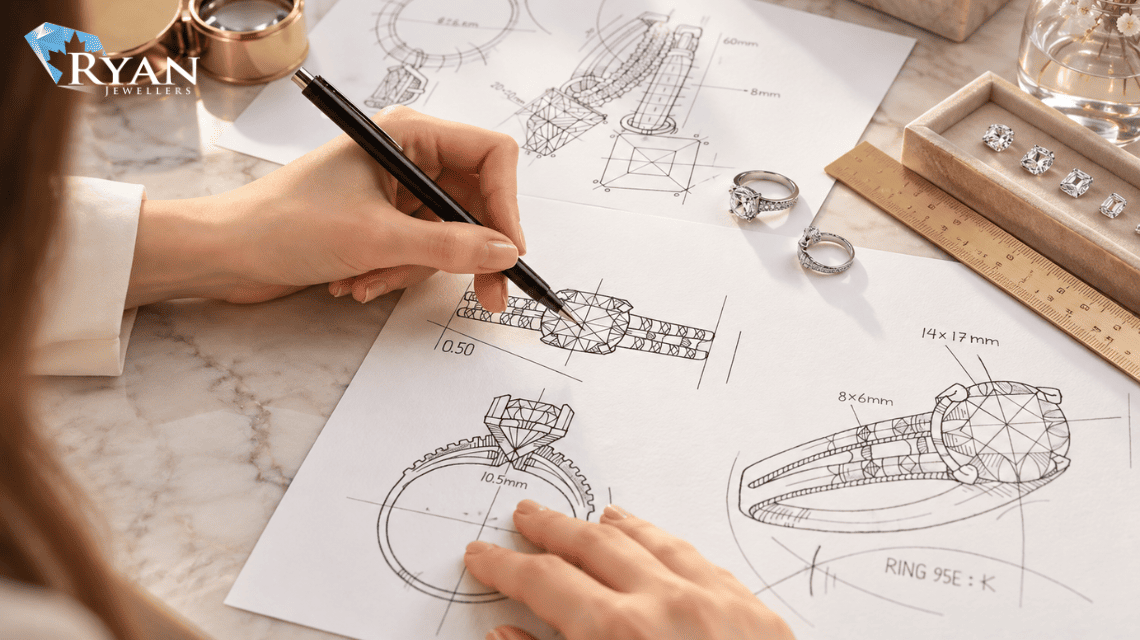
The first stage is about turning an idea into a workable jewelry concept.
You do not need to arrive with a complete technical drawing. A jeweller can work from inspiration images, existing jewelry, sketches, or simply a description of what you like.
What Should You Bring to a Consultation?
Useful information can include:
- Inspiration photos
- Examples of jewelry you already wear
- Preferred metal colour
- Diamond or gemstone preferences
- Approximate budget
- Ring size, if known
- Intended occasion
- Preferred style
- Desired production timeline
You can also explain what you do not like. For example, you may prefer a low-profile setting but dislike thick bands. These details help narrow the design direction.
Define the Purpose of the Piece
The intended use can influence the design significantly.
An engagement ring worn every day may need to prioritize secure stone placement and comfortable proportions. A statement necklace designed for special occasions can allow for a different approach.
Before designing, consider whether the piece is intended for:
- Everyday wear
- Engagement
- Wedding
- Anniversary
- A milestone
- Gifting
- Formal occasions
Establish a Budget Early
Discussing your budget at the beginning can make the design process more efficient.
A custom jewelry budget may include:
- Metal
- Centre gemstone
- Accent stones
- Design work
- CAD modeling
- Labour
- Stone setting
- Engraving
- Finishing
- Applicable taxes
A clear budget also helps the jeweller suggest realistic alternatives if a particular combination of materials exceeds your target.
Turn Inspiration Into a Concept
The next step is narrowing down the visual direction.
For example:
Classic: solitaire diamond + yellow gold + simple band
Modern: oval diamond + white gold + geometric setting
Romantic: pear-shaped diamond + rose gold + delicate details
Vintage-inspired: intricate metalwork + halo setting + engraving
These are starting points rather than fixed categories. A custom design can combine elements from different styles.
Step 2: Choosing Diamonds, Gemstones, and Metals
Once the basic concept is established, the next stage is selecting the materials.
These decisions influence the appearance, durability, maintenance, and final price of the jewelry.
Choosing the Metal
Common options include:
- Yellow gold
- White gold
- Rose gold
- Platinum
Gold is available in different karats. In Canada, precious-metal quality marks are regulated, and when a quality mark is used, it must accurately represent the metal’s quality. Gold quality can be expressed using karat designations or certain numerical marks.
| Gold Type | Approximate Gold Content |
|---|---|
| 10K | 41.7% |
| 14K | 58.5% |
| 18K | 75% |
| 22K | 91.6% |
| 24K | 99.9% |
Higher-karat gold contains a greater proportion of pure gold, while lower-karat alloys contain more other metals.
Yellow Gold
Yellow gold has a naturally warm appearance and works well with both traditional and contemporary jewelry designs.
It can be a versatile choice for engagement rings, wedding bands, necklaces, and bracelets.
White Gold
White gold offers a cooler appearance and is widely used in contemporary jewelry.
Many white gold pieces have a rhodium-plated surface. This finish can wear over time and may eventually require professional maintenance.
Rose Gold
Rose gold has a warm pink tone created by its alloy composition.
It can add a distinctive appearance to engagement rings, wedding bands, and personalized jewelry.
Platinum
Platinum is naturally white and has a high density. It is often selected for fine jewelry and gemstone settings.
Although durable, platinum is not scratch-proof and can develop a patina through everyday wear.
Choosing a Diamond
If your custom design includes a diamond, the traditional 4Cs provide a useful framework:
- Cut — relates to how the diamond’s proportions and facets affect its interaction with light
- Colour — describes the degree of colour present
- Clarity — evaluates internal and surface characteristics
- Carat — refers to diamond weight
Carat weight does not directly equal visual size. Two diamonds with the same weight can have different dimensions and appearances.
Natural vs. Lab-Grown Diamonds
Both natural and lab-grown diamonds can be incorporated into custom jewelry.
Natural diamonds form through geological processes, while lab-grown diamonds are produced using technological processes in controlled environments.
Lab-grown diamonds have essentially the same chemical composition and crystal structure as natural diamonds. Their primary distinction is their origin.
If choosing a lab-grown diamond, consider its individual characteristics, measurements, grading documentation, and overall appearance rather than selecting solely by carat weight.
Choosing Other Gemstones
Custom jewelry can also incorporate gemstones such as:
- Sapphire
- Ruby
- Emerald
- Aquamarine
- Amethyst
- Tourmaline
The gemstone should be selected according to both appearance and intended use. Some gemstones are more suitable for frequent wear than others, so durability and care requirements should be discussed before finalizing the design.
Step 3: Design Development and Approval
Once the materials and general concept are established, the jeweller can begin developing the actual design.
From Sketch to CAD
Depending on the jeweller, the design may begin as a hand sketch or move directly into computer-aided design.
CAD allows a three-dimensional representation of the piece to be created before manufacturing.
This can help you visualize:
- Overall proportions
- Stone placement
- Band thickness
- Setting height
- Side profile
- Decorative details
- Engraving placement
For complex custom jewelry, this stage can be particularly useful because changes are generally easier to make before production begins.
Review the Proportions
Do not focus only on the front view.
For rings, examine:
Top view: overall shape and stone placement
Side view: setting height and profile
Angled view: relationship between the centre stone and band
A design can look excellent from above but feel too high or bulky from the side.
Confirm the Specifications
Before approving production, confirm every important detail.
A written specification should ideally identify:
- Jewelry type
- Metal
- Gold karat, where applicable
- Diamond or gemstone type
- Stone shape
- Carat weight
- Colour
- Clarity
- Certification or grading documentation, where applicable
- Ring size
- Dimensions
- Setting style
- Engraving
- Finish
- Total price
- Estimated completion date
This step is important because custom pieces are created according to the approved specifications.
Ask About Design Revisions
Different jewellers have different revision policies.
Before approving a CAD model or design, ask:
- How many revisions are included?
- Is there a revision fee?
- What happens if the design changes substantially?
- When is the design considered final?
- Can specifications be changed after approval?
Clarifying these points early can prevent misunderstandings later.
Approve Before Production
Once the design is approved, production can begin.
Take your time at this stage. It is much easier to change a design before manufacturing than after the jewelry has been produced.
Step 4: Crafting, Setting, and Final Quality Checks
After approval, the concept becomes a physical piece.
The exact manufacturing method depends on the design and jeweller.
Jewelry Manufacturing
Depending on the project, production may involve:
- Casting
- Fabrication
- Machining
- Soldering
- Metal finishing
- Polishing
- Engraving
A simple ring and an intricate multi-stone piece can require very different levels of craftsmanship.
Stone Setting
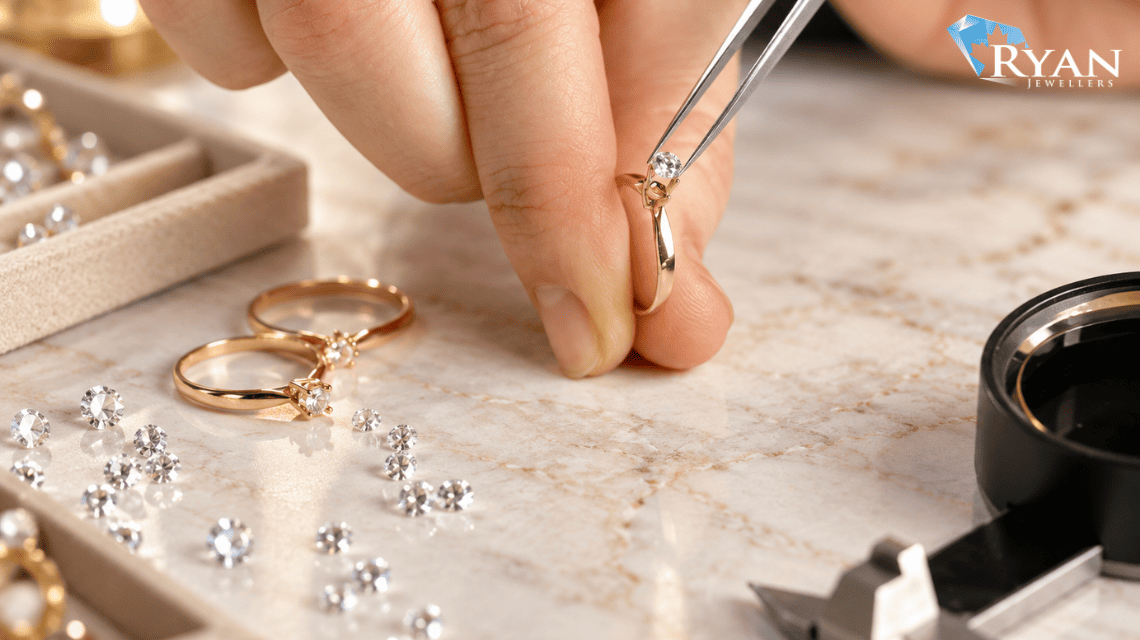
After the jewelry structure has been prepared, diamonds or gemstones are set into their designated positions.
Common setting styles include:
- Prong
- Bezel
- Pavé
- Channel
- Halo
- Tension-style designs
The appropriate setting depends on the stone, design, intended wear, and desired appearance.
Polishing and Finishing
Once the stones are securely set, the jewelry can undergo final finishing.
This may include:
- Polishing
- Surface finishing
- Engraving
- Rhodium plating for applicable white gold pieces
The goal is to achieve the intended appearance while maintaining the structural integrity of the jewelry.
Final Quality Inspection
Before accepting the finished piece, inspect it carefully.
Check:
- Overall shape
- Symmetry
- Metal finish
- Stone placement
- Stone security
- Prongs
- Engraving
- Clasp function
- Ring size
- Surface condition
For a diamond piece, confirm that the final stone corresponds with the agreed specifications and any accompanying grading documentation.
Final Fitting
For rings, try the piece on and check whether it feels secure and comfortable.
A ring should not be so loose that it can easily slide off, but it should also not create excessive pressure around the finger.
If an adjustment is needed, discuss it with the jeweller before completing the project.
What Can Affect the Custom Jewelry Timeline?
Custom jewelry generally takes longer than purchasing a finished piece because the design must be developed and manufactured.
The timeline can depend on:
- Design complexity
- CAD development
- Number of revisions
- Gemstone availability
- Material availability
- Manufacturing method
- Stone setting
- Engraving
- Finishing
- Jeweller workload
If you need the jewelry for a proposal or wedding, communicate the deadline at the beginning rather than assuming the piece can be completed within a specific period.
A custom project should allow enough time for potential design revisions and production adjustments.
What Should You Confirm Before Paying a Custom Jewelry Deposit?
Before making a deposit, make sure you understand the commercial terms.
Ask about:
- Total project price
- Deposit amount
- Remaining balance
- Applicable taxes
- Production timeline
- Design revisions
- Cancellation terms
- Return policy
- Resizing
- Warranty
- Repairs
- Cleaning
- Future maintenance
Custom jewelry may have different return or cancellation conditions from ready-made jewelry because the piece is being produced specifically according to your specifications.
If you’re looking for more inspiration and practical guidance before starting your own design, read our Custom Jewelry Guide to explore custom design options, styles, and what to consider when creating a one-of-a-kind piece.
FAQ About the Custom Jewelry Process
How does the custom jewelry process start?
It usually begins with a consultation where you discuss your idea, preferred style, materials, budget, and intended use. The jeweller then develops these requirements into a workable concept.
How long does custom jewelry take to make?
There is no universal timeline. Production depends on the complexity of the design, gemstone availability, CAD development, revisions, manufacturing, stone setting, and finishing.
Do I need to know exactly what I want?
No. Inspiration photos, existing jewelry, preferred materials, and a general description of your style can be enough to begin a consultation.
Can I use my own diamond?
Potentially. A jeweller should inspect an existing diamond before removing and resetting it to determine whether it is suitable for reuse.
Can I use a lab-grown diamond in custom jewelry?
Yes. Lab-grown diamonds can be incorporated into custom engagement rings, wedding bands, necklaces, earrings, and other jewelry designs.
Should I choose the diamond or design first?
Either approach can work. Some buyers start with a specific diamond and build the design around it, while others develop the setting first and select a suitable gemstone afterward.
What is CAD in custom jewelry?
CAD stands for computer-aided design. It is a digital modeling process that can create a three-dimensional representation of the proposed jewelry before production.
Can I change the design after approving it?
It depends on the stage of production and the jeweller’s policies. Changes are generally easier before manufacturing begins. Always confirm revision terms before approving the final design.
Can custom jewelry be resized?
Many rings can be resized, but the feasibility depends on the design, metal, stone placement, and construction. Some intricate or fully stone-set designs have limited resizing options.
Is custom jewelry more expensive than ready-made jewelry?
Not necessarily. Cost depends on the materials, gemstones, craftsmanship, labour, design complexity, and production requirements.
Can I add engraving?
Yes, provided there is sufficient space and the design allows it. Names, dates, initials, and short messages are common options.
What should I check when receiving custom jewelry?
Check the overall finish, dimensions, gemstone placement, stone security, metal, engraving, ring size, and any documentation that was part of the agreed specifications.
Final Thoughts
The custom jewelry process turns an idea into a finished piece through a series of decisions: consultation, material selection, design development, production, stone setting, and quality inspection.
The most important part is not simply creating an attractive design. The finished piece should also be appropriate for its intended use, fit comfortably, use materials that match your expectations, and stay within the agreed budget.
For Canadian buyers, paying attention to metal quality information is also important. Canadian regulations require precious-metal quality claims and marks to be truthful and meet prescribed requirements.
Before production begins, confirm the design, gemstone specifications, metal, price, timeline, revision terms, and after-sales policies. Doing so gives you a much clearer understanding of what you are purchasing and helps minimize surprises later.
If you are ready to turn an idea into a personalized piece, visit Ryan Jeweller to explore jewelry styles and begin developing inspiration for your own custom design.
This guide does a great job of making the custom jewelry process feel approachable, even for someone who has never ordered a personalized piece before. I like knowing that the design can be refined along the way instead of having to get every detail perfect from the start. How many design revisions are typically possible before the final piece goes into production?
I found this article really helpful because it explains why planning and communication are so important when creating custom jewelry. Having a clear idea of the budget, materials, and preferred style beforehand seems like a great way to avoid surprises. For a first-time buyer in Canada, what is the most important thing to prepare before the initial consultation?
I love how a custom jewelry piece can become more meaningful when customers are involved throughout the design process. The step-by-step explanation also makes it easier to understand why craftsmanship and careful material selection take time. If someone is planning a custom engagement ring for a special date, how far in advance should they ideally begin the process?