
Summarize the article with:


Designing custom jewelry gives you the opportunity to create a piece around your personal style, budget, lifestyle, and the meaning behind the occasion. Instead of selecting a finished design, you can make decisions about the metal, gemstones, proportions, setting, engraving, and other details.
For Canadian buyers, the process also involves practical considerations such as gold purity, gemstone certification, production timelines, deposits, taxes, resizing, and after-sales service. Understanding these factors before starting can make the experience much easier.
Whether you are considering a custom engagement ring, wedding band, necklace, bracelet, or personalized gift, this custom jewelry guide explains what to consider before turning an idea into a finished piece. For inspiration and fine jewelry options in Canada, explore Ryan Jeweller before beginning your design journey.
What Is Custom Jewelry?
Custom jewelry is a piece that is designed or modified according to a customer’s specific requirements. Rather than purchasing a finished item exactly as displayed, you work with a jeweller to determine important elements of the final design.
Depending on the jeweller and project, customization may include:
- Metal type and colour
- Gold karat
- Diamond or gemstone selection
- Setting style
- Ring or bracelet dimensions
- Band width
- Engraving
- Surface finish
- Decorative details
Fully Custom vs. Modified Designs
Not every custom project starts from a blank page.
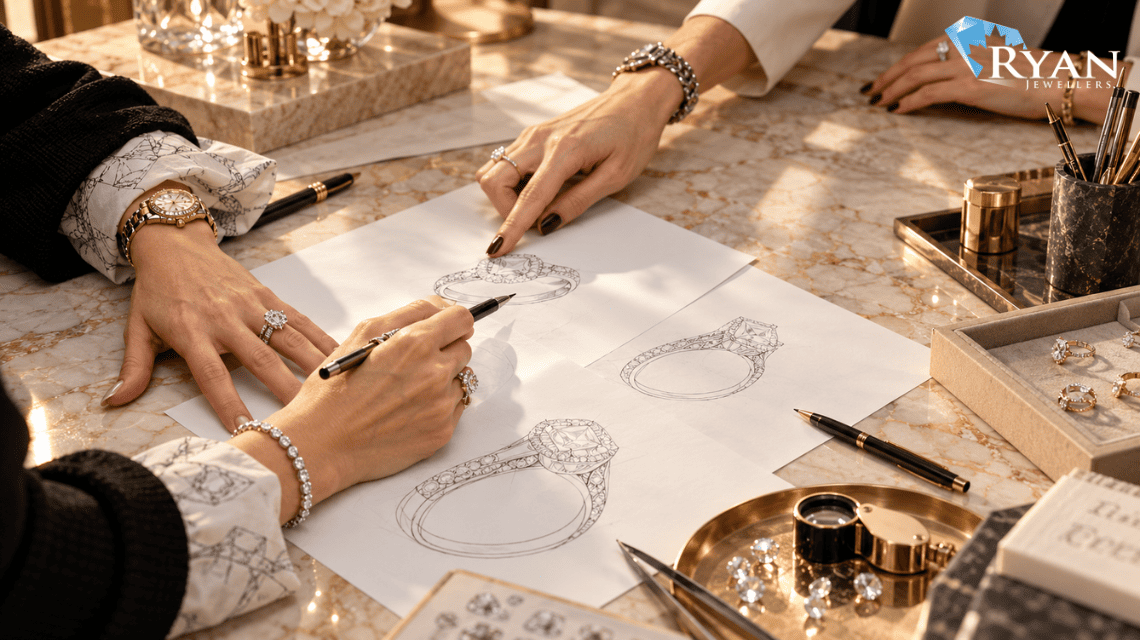
A fully custom design is developed specifically around your requirements. A jeweller may create sketches or a CAD model before production begins.
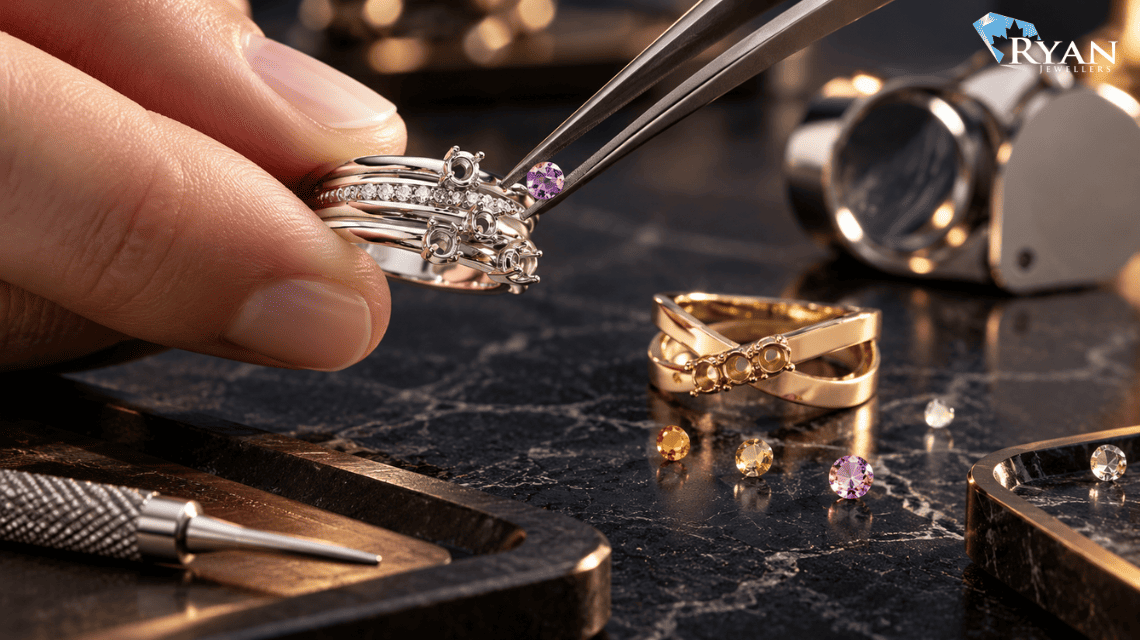
A modified design starts with an existing style and changes selected elements, such as the metal, gemstone, size, or engraving.
Both approaches can produce personalized jewelry. The better option depends on how specific your design idea is and how much customization you actually need.
Custom Jewelry and Lab-Grown Diamonds
Lab-grown diamonds can be used in many custom jewelry designs.
They have essentially the same chemical composition and crystal structure as natural diamonds, but they are produced in controlled laboratory environments rather than formed naturally underground.
If you are considering a lab-grown diamond for a custom piece, you can evaluate it using characteristics such as cut, colour, clarity, carat weight, measurements, and certification.
If you’re ready to create a personalized piece, explore our Custom Jewelry Collection to discover options for designing a unique piece that reflects your style and story.
Why Choose Custom Jewelry Over Ready-Made Pieces?
Custom jewelry is not automatically better than ready-made jewelry. However, it can offer advantages when personalization is a priority.
Greater Design Control
With a ready-made piece, you select from designs that have already been produced.
With custom jewelry, you can make decisions about individual components.
For example, you may prefer:
- A specific diamond shape
- A particular gold colour
- A wider or thinner band
- A lower-profile setting
- Additional accent stones
- A specific engraving
This can help create a piece that feels more personal.
Choose Your Gemstone
Custom jewelry allows you to select the gemstone rather than accepting the stone already included in a finished design.
For diamonds, this can mean choosing your preferred balance between:
- Cut
- Colour
- Clarity
- Carat weight
- Shape
- Natural or lab-grown origin
This is particularly useful when you have a specific budget and want to prioritize certain characteristics.
Match Your Lifestyle
A custom design can be developed around how you intend to wear the piece.
For an engagement ring, for example, you can discuss practical considerations such as:
- Setting height
- Prong design
- Band thickness
- Stone size
- Comfort
- Everyday durability
A design that looks beautiful but does not suit your lifestyle may become inconvenient to wear.
Create Sentimental Value
Custom jewelry can incorporate meaningful details that are difficult to find in ready-made pieces.
Examples include:
- Initials
- Dates
- Birthstones
- Personal symbols
- Family gemstones
- Engravings
This can make custom jewelry particularly meaningful for engagements, anniversaries, weddings, and milestone gifts.
Work Within Your Budget
Customization does not automatically mean a higher price.
You can decide where your budget goes.
For example, you might prioritize a higher-quality diamond cut while choosing a simpler setting, or select a more elaborate setting while using a smaller centre stone.
The goal is to create a combination of materials and design elements that fits both your preferences and budget.
Popular Types of Custom Jewelry
Custom jewelry can be created for virtually any category, but some designs are particularly common.
Custom Engagement Rings
Engagement rings are one of the most popular custom jewelry projects.
You can customize:
- Diamond shape
- Centre-stone size
- Setting
- Metal
- Band profile
- Accent diamonds
- Hidden details
- Engraving
This makes it possible to create a ring that reflects both personal style and practical needs.
Custom Wedding Bands
A custom wedding band can be designed to complement an engagement ring or function as a standalone piece.
Options include:
- Plain gold bands
- Diamond bands
- Curved bands
- Engraved bands
- Mixed-metal designs
- Eternity-style designs
Custom Necklaces
Custom necklaces range from simple pendants to more elaborate gemstone designs.
Personalized pendants can incorporate initials, names, dates, symbols, or birthstones.
Custom Bracelets
Bracelets can be customized through the choice of:
- Chain style
- Metal
- Width
- Gemstones
- Links
- Engraving
A custom bracelet can be designed for everyday wear or a particular occasion.
Custom Earrings
Custom earrings can include studs, hoops, drop earrings, huggies, and gemstone designs.
They can also be designed to coordinate with an engagement ring, wedding jewelry, or an existing collection.
Custom Family Jewelry
Family jewelry may combine multiple birthstones, initials, dates, or other meaningful details.
This type of customization can create a piece that represents several people or important milestones.
What to Consider Before Starting a Custom Design
Before contacting a jeweller, it helps to establish a clear idea of what you want.
1. Determine Your Budget
Start with an overall budget rather than selecting individual materials first.
Your budget should account for the complete project, which may include:
- Metal
- Gemstones
- Design work
- Labour
- Setting
- Engraving
- Finishing
- Applicable taxes
Ask whether the quoted price includes all major components.
2. Decide What Matters Most
You may not be able to maximize every feature within a fixed budget.
Identify your priorities.
For a custom engagement ring, for example, you might prioritize:
A: Larger lab-grown diamond + simpler setting
B: Smaller diamond + more intricate setting
C: Higher diamond colour or clarity + moderate carat weight
There is no universally correct combination. It depends on what matters most to you.
3. Choose the Metal
Common choices include:
- Yellow gold
- White gold
- Rose gold
- Platinum
If selecting gold, understand the difference between karats.
| Gold Type | Approximate Gold Content |
|---|---|
| 10K | 41.7% |
| 14K | 58.5% |
| 18K | 75% |
| 24K | 99.9% |
Higher-karat gold contains more pure gold but is generally softer than lower-karat gold alloys.
For jewelry intended for frequent wear, discuss the practical differences with your jeweller.
4. Choose the Gemstone
For diamond jewelry, consider the 4Cs:
- Cut: influences how effectively a diamond interacts with light
- Colour: describes the diamond’s body colour
- Clarity: evaluates internal and surface characteristics
- Carat: measures weight, not visual size
Also consider diamond shape, measurements, certification, and whether you prefer a natural or lab-grown diamond.
5. Think About Daily Wear
Consider how the piece will actually be used.
If you are designing an everyday ring, ask:
- Is the setting practical?
- Is the band thick enough for the intended use?
- Is the gemstone securely set?
- Will the design catch easily on clothing?
- Will it be comfortable alongside other rings?
A beautiful design should also work in real life.
6. Consider Future Maintenance
Different designs require different levels of maintenance.
For example:
- White gold may eventually require rhodium replating.
- Pavé settings may require periodic inspection.
- Delicate chains can require careful handling.
- High-polish surfaces naturally develop scratches over time.
Understanding maintenance before ordering helps you choose a design that fits your lifestyle.
7. Ask About the Production Timeline
Custom jewelry usually takes longer than purchasing a finished piece because the design must be developed and produced.
Ask about:
- Design approval
- CAD revisions
- Gemstone sourcing
- Production
- Setting
- Finishing
- Final inspection
If the jewelry is needed for a wedding, anniversary, or proposal, allow sufficient time for production and possible revisions.
8. Understand the Payment and Return Terms
Before placing a deposit, clarify:
- Deposit amount
- Payment schedule
- Cancellation policy
- Revision policy
- Return policy
- Resizing policy
- Warranty
- Repair coverage
Custom pieces may have different policies from ready-made jewelry because they are produced specifically for one customer.
How to Choose a Custom Jewelry Designer
Choosing the right jeweller is one of the most important parts of the process.
Review Their Portfolio
Look at previous custom designs.
A portfolio can help you determine whether the jeweller has experience with the style you want.
Look for examples involving:
- Similar settings
- Similar gemstones
- Similar metal
- Comparable complexity
Ask About Their Design Process
A professional consultation should give you a clear understanding of what happens from the initial idea to the finished piece.
Ask whether the jeweller provides:
- Sketches
- CAD designs
- Design revisions
- Stone options
- Material specifications
- Final approval before production
Ask for Detailed Pricing
Do not compare custom jewelry based only on the final price.
Ask what is included in the quote.
For a diamond ring, for example, confirm:
- Diamond carat weight
- Shape
- Colour
- Clarity
- Cut information
- Certification
- Metal type
- Gold karat
- Setting
- Labour
- Engraving
- Taxes
This makes comparisons between different jewellers much more meaningful.
Understand Diamond Certification
If your custom piece includes a significant diamond, ask whether the stone comes with an independent grading report.
A grading report can provide information about the diamond’s characteristics and help you understand exactly what you are purchasing.
Make sure the report corresponds to the actual stone being supplied.
Ask About After-Sales Service
A custom jewelry purchase does not necessarily end when you receive the piece.
Ask whether the jeweller provides:
- Cleaning
- Inspection
- Resizing
- Repairs
- Polishing
- Rhodium replating
- Warranty support
A clear after-sales policy can be especially valuable for frequently worn pieces.
Check Communication and Transparency
The design process can involve multiple decisions.
Choose a jeweller who clearly explains:
- What is being designed
- What materials are being used
- How much the project costs
- What happens if you change your mind
- How long production should take
- What happens after completion
Clear communication can prevent misunderstandings before production begins.
Questions to Ask Before Ordering Custom Jewelry
Before approving a design, consider asking:
- What exactly is included in the quoted price?
- Is the gemstone natural or lab-grown?
- Does the diamond come with an independent grading report?
- What metal and karat will be used?
- Can I review the design before production?
- How many design revisions are included?
- What is the expected production timeline?
- What deposit is required?
- What happens if the final piece does not fit?
- Is resizing included?
- What warranty is provided?
- What maintenance services are available?
- What is the policy for cancellations or returns?
- Are taxes included in the quoted price?
Having these answers in writing can make the custom jewelry process considerably clearer.
FAQ About Custom Jewelry
What is a custom jewelry guide useful for?
A custom jewelry guide helps buyers understand the design process, material choices, costs, timelines, and questions to ask before ordering a personalized piece.
Is custom jewelry worth it?
Custom jewelry can be worthwhile when personalization, specific materials, unique design, or sentimental value are important. Ready-made jewelry may be preferable if you want immediate availability or a simpler purchasing process.
Is custom jewelry more expensive?
Not necessarily. Price depends on the materials, gemstones, design complexity, labour, and craftsmanship involved.
Can I use a lab-grown diamond in custom jewelry?
Yes. Lab-grown diamonds can be used in engagement rings, earrings, necklaces, and other custom jewelry designs.
Can I use my existing diamond?
Potentially. A jeweller should inspect an existing diamond before removing and resetting it to determine whether it is suitable for reuse.
How long does custom jewelry take?
Production times vary according to design complexity, gemstone availability, CAD development, revisions, and the jeweller’s workflow. Always confirm the expected timeline before paying a deposit.
Can custom rings be resized?
Many rings can be resized, but the amount and feasibility of resizing depend on the design and construction. Some intricate settings have limited resizing options.
Can I customize the metal colour?
In many cases, yes. Common choices include yellow gold, white gold, rose gold, and platinum.
Can I add an engraving?
Yes, if the design provides sufficient space. Engraving may include initials, dates, names, or short messages.
Can I return custom jewelry?
Return policies vary. Because custom jewelry is often made specifically for one customer, some customized pieces may have different return or cancellation terms from ready-made products. Confirm the policy before ordering.
What should I bring to a custom jewelry consultation?
Reference images, inspiration designs, approximate budget, preferred gemstones, preferred metal, and information about how and when you plan to wear the piece can all help make the consultation more productive.
Final Thoughts
A successful custom jewelry project starts with more than a beautiful idea. You also need to understand the materials, gemstone specifications, budget, production process, timeline, maintenance requirements, and after-sales policies.
The biggest advantage of customization is control. You can create a piece around your own preferences rather than adapting yourself to an existing design.
For Canadian buyers, take time to compare complete specifications rather than focusing only on price. Ask questions, review the design carefully, confirm gemstone details, and make sure you understand the terms before production begins.
Whether you’re designing an engagement ring, wedding band, personalized necklace, or meaningful gift, the right jeweller can help turn your concept into a piece that is both beautiful and practical.
Ready to explore your options? Visit Ryan Jeweller for inspiration and discover fine jewelry styles that can help you start planning your own unique design.
This guide makes the idea of designing custom jewelry feel much less overwhelming. I love how a personalized piece can reflect someone’s style and hold sentimental value for years to come. For someone who has never ordered custom jewelry before, would you recommend having a clear design in mind or exploring ideas with a jeweler first?
I found this article really useful because custom jewelry involves more decisions than I initially expected. Choosing the right metal, gemstone, and setting seems just as important as finding a design that looks good. When working within a budget, which part of the process would you suggest prioritizing first?
I really like the idea of creating jewelry that feels unique rather than buying something mass-produced. This guide is a great reminder to think about both personal style and long-term wearability before making a decision. For a custom engagement ring, would you recommend choosing the diamond first or settling on the overall design before selecting the stone?