
Summarize the article with:


White gold jewelry combines the durability of a gold alloy with a bright, modern appearance. From engagement rings and wedding bands to earrings and necklaces, it is a popular choice for jewelry lovers who want a cooler-toned alternative to traditional yellow gold.
However, knowing how to care for white gold jewelry is important because many white gold pieces are finished with rhodium plating. This thin surface layer gives white gold its bright, reflective appearance but can gradually wear with normal use.
With gentle cleaning, proper storage, and regular professional maintenance when necessary, you can help protect both the gold alloy and its finish. If you’re looking for elegant white gold jewelry for everyday wear or a special occasion, explore Ryan Jeweller and use the following care tips to keep your pieces looking their best.
Why White Gold Requires Special Care
White gold is not naturally bright white. It is created by combining gold with other metals to produce a lighter-coloured alloy. Many white gold jewelry pieces are then coated with rhodium.
This means there are two aspects to consider when caring for white gold:
- The underlying gold alloy
- The rhodium surface finish
What Makes White Gold Different?
Pure gold has a naturally yellow colour. White gold contains gold combined with other metals that create a paler appearance.
The exact composition varies depending on the alloy and karat.
Because the underlying material is still a gold alloy, white gold should be treated as precious metal jewelry rather than as a completely scratch-resistant material.
Why Does White Gold Lose Its Bright Appearance?
With regular wear, the rhodium plating can gradually become thinner.
As the coating wears, the warmer colour of the underlying white-gold alloy may become more visible, particularly on areas that experience frequent contact.
This is usually a sign of plating wear rather than the gold itself becoming damaged.
Everyday Wear Can Affect White Gold
White gold can be exposed to:
- Hand creams
- Perfume
- Soap
- Sweat
- Household chemicals
- Friction
- Scratches
- Physical impact
These factors can contribute to residue buildup, surface scratches, or faster wear of the rhodium finish.
If you’re deciding between these two classic gold tones, explore our White Gold vs Yellow Gold Guide to compare their appearance, characteristics, maintenance, and style.
How to Clean White Gold Jewelry Safely
Gentle cleaning is usually the best approach for routine white gold care.
What You Need
For many white gold pieces, you can use:
- Lukewarm water
- A small amount of mild dish soap
- A soft-bristled brush
- A soft, lint-free cloth
Step-by-Step Cleaning
- Mix a small amount of mild soap with lukewarm water.
- Place the jewelry in the solution briefly.
- Gently clean the surface using a soft-bristled brush.
- Pay attention to areas around settings and underneath stones.
- Rinse thoroughly with clean water.
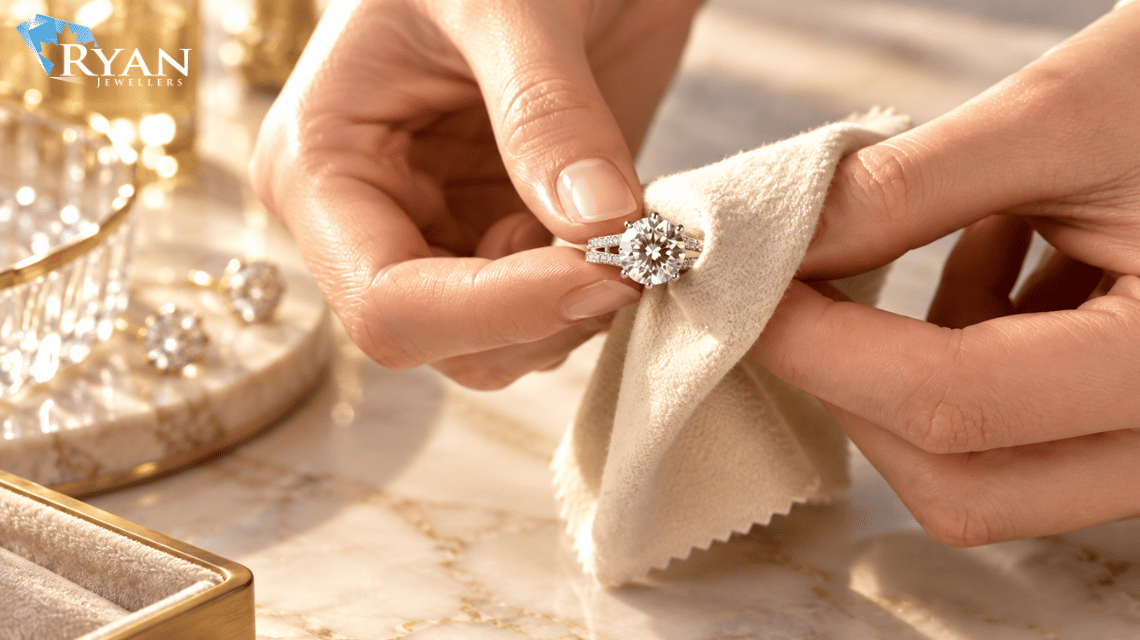
- Dry gently with a soft, lint-free cloth.
Avoid aggressive scrubbing, especially around delicate settings.
Avoid Abrasive Cleaners
White gold should not be cleaned with abrasive powders, rough brushes, or harsh household cleaning products.
These can scratch the surface and potentially accelerate wear of the rhodium plating.
Toothpaste is also not recommended because its abrasive ingredients may damage polished jewelry surfaces.
Be Careful With Gemstones
If your white gold jewelry contains diamonds or coloured gemstones, the appropriate cleaning method depends on the specific stones and any treatments they may have received.
Do not assume that every gemstone can safely be cleaned using the same method.
For delicate or valuable pieces, professional cleaning is the safer option.
Should You Use an Ultrasonic Cleaner?
Not every white gold jewelry piece is suitable for ultrasonic cleaning.
The safety of ultrasonic cleaning depends on the gemstones, treatments, settings, and overall construction of the piece.
If you are unsure, consult a qualified jeweller before using an ultrasonic cleaner.
Understanding Rhodium Plating and Maintenance
Rhodium plating is one of the most important things to understand when caring for white gold.
What Is Rhodium Plating?
Rhodium is a member of the platinum group of metals. It is highly reflective and is commonly applied as a thin surface coating to white gold jewelry.
The coating helps create the bright, white appearance associated with many modern white gold pieces.
Does Rhodium Plating Last Forever?
No.
Rhodium plating naturally wears down through friction and regular use.
How long it lasts varies depending on:
- How frequently the jewelry is worn
- Where the piece makes contact with other surfaces
- The thickness of the plating
- Individual wear patterns
- The type of jewelry
Rings often show plating wear faster than necklaces or earrings because they experience more frequent contact with surfaces.
How Do You Know When Rhodium Needs Replating?
You may notice:
- A warmer or slightly yellow appearance
- Uneven colour
- Dull areas
- Visible differences between frequently worn and protected areas
These signs do not necessarily mean that the jewelry is damaged. They can simply indicate that the rhodium surface has become thinner.
What Happens During Replating?
A jeweller typically cleans and prepares the jewelry before applying a new rhodium layer.
Professional replating can restore the bright white appearance of the surface.
The exact process depends on the jewelry’s condition, construction, and any gemstones it contains.
How Often Does White Gold Need Replating?
There is no universal schedule.
A white gold engagement ring worn every day may require replating more frequently than a necklace that is worn occasionally.
Instead of following a fixed timetable, have the piece assessed when the underlying colour becomes noticeably visible or the finish no longer meets your preference.
If you want to keep white gold looking bright and polished, explore our How to Clean White Gold Jewelry Guide for safe cleaning methods and practical tips for protecting its finish.
How to Prevent Scratches and Surface Damage
Protecting the surface is just as important as cleaning it.
Remove White Gold Before Heavy Activities
Take off white gold jewelry before activities involving significant friction, pressure, or impact.
Examples include:
- Weightlifting
- Gardening
- Home repairs
- Contact sports
- Heavy manual work
This is particularly important for rings because they are constantly exposed to contact with surrounding surfaces.
Avoid Household Chemicals
Remove white gold jewelry before using strong cleaning products.
Chemicals can affect jewelry metals, finishes, and gemstones.
Put Jewelry on After Applying Cosmetics
Perfume, lotion, hairspray, sunscreen, and other products can leave residue on jewelry.
A simple habit is to apply these products first and put your white gold jewelry on afterward.
Remove Jewelry Before Swimming
It is best to remove white gold jewelry before swimming, especially in chlorinated pools.
Chlorine and other chemicals can affect certain jewelry alloys and finishes.
There is also a practical risk of losing a ring in the water.
Take Jewelry Off Before Showering
Soap and shampoo can accumulate on white gold and gemstones.
Removing jewelry before showering helps reduce residue buildup and makes regular maintenance easier.
Store White Gold Separately
White gold jewelry can become scratched when it rubs against other jewelry.
Store pieces in:
- Individual pouches
- Soft-lined compartments
- Separate sections of a jewelry box
This is particularly important for rings and pieces with polished surfaces.
When White Gold Jewelry Needs Professional Maintenance
Some maintenance tasks are better left to a professional jeweller.
When the Rhodium Has Worn Down
If your white gold has developed a noticeably warmer tone, professional replating can restore the bright surface finish.
When the Jewelry Is Scratched
Minor scratches are normal with everyday wear.
However, deeper scratches or significant surface damage may require professional polishing or refinishing.
When a Stone Is Loose
If your white gold ring contains a diamond or gemstone that moves within its setting, stop wearing the piece and have it inspected.
Continuing to wear it could increase the risk of losing the stone.
When a Prong Is Damaged
Prongs can wear down or become bent through repeated use.
A damaged prong should be assessed before the jewelry is worn again.
When a Clasp or Chain Is Damaged
A weak clasp or damaged chain can cause the jewelry to fall off.
Professional Cleaning and Inspection
Professional maintenance is especially useful for frequently worn white gold jewelry.
A jeweller can assess:
- Rhodium plating
- Surface condition
- Stone security
- Prongs
- Clasps
- Overall structural condition
This allows cleaning and repairs to be addressed together when appropriate.
White Gold Care: Do’s and Don’ts
| Do | Don’t |
|---|---|
| Clean with mild soap and lukewarm water when appropriate | Use abrasive cleaners |
| Store pieces separately | Throw jewelry together in a drawer |
| Remove jewelry during heavy activities | Use jewelry as a tool |
| Keep jewelry away from strong chemicals | Wear it while using household cleaners |
| Apply cosmetics before putting jewelry on | Coat jewelry with perfume or lotion |
| Have worn plating professionally assessed | Attempt DIY replating |
| Inspect settings regularly | Ignore loose stones or damaged prongs |
| Dry jewelry completely before storage | Store pieces while wet |
FAQ About White Gold Jewelry Care
How often should I clean white gold jewelry?
The ideal frequency depends on how often the piece is worn and how much exposure it receives. Frequently worn jewelry can be gently cleaned whenever visible residue or buildup appears.
Can I clean white gold with soap and water?
For many white gold pieces, mild soap and lukewarm water are suitable for routine cleaning. However, jewelry containing delicate gemstones or specialized treatments may require different care.
Can I use toothpaste to clean white gold?
No. Toothpaste can contain abrasive ingredients that may scratch the surface or contribute to wear of the rhodium finish.
Why is my white gold turning yellow?
White gold is often coated with rhodium. As this plating wears through normal use, the warmer colour of the underlying gold alloy can become more visible.
Does yellowing mean my white gold is damaged?
Not necessarily. A warmer appearance often indicates that the rhodium plating has worn down rather than that the underlying gold has been damaged.
How often should white gold be replated?
There is no fixed schedule. Replating frequency depends on how often the jewelry is worn and how quickly the rhodium finish wears. A jeweller can assess the piece and recommend maintenance when necessary.
Can I wear white gold in the shower?
It is generally better to remove it before showering. Soap, shampoo, and other products can accumulate on the jewelry and contribute to buildup.
Can I swim with white gold jewelry?
Removing white gold jewelry before swimming is recommended, particularly in chlorinated pools. It reduces exposure to chemicals and lowers the risk of losing the piece.
Can I wear white gold every day?
Yes. White gold can be suitable for everyday jewelry, including engagement rings and wedding bands. However, regular wear means the piece may require more frequent cleaning, inspection, and eventual rhodium maintenance.
How should I store white gold jewelry?
Store white gold pieces separately in a soft-lined jewelry box or individual pouch. Keep them dry and away from other jewelry that could scratch the surface.
Can white gold scratch?
Yes. White gold can develop scratches through normal wear, particularly on rings and other frequently handled pieces.
Can I polish white gold at home?
It is better to avoid aggressive DIY polishing. Excessive abrasion can affect the surface and rhodium plating. For noticeable scratches or worn finishes, professional assessment is preferable.
What should I do if my white gold ring has a loose diamond?
Stop wearing the ring and have it inspected by a qualified jeweller. The setting may need to be repaired or tightened before the ring can be safely worn again.
Final Thoughts
Learning how to care for white gold jewelry starts with understanding that the bright white appearance often comes from rhodium plating. While the underlying gold alloy is durable, the surface finish naturally experiences wear through everyday use.
Gentle cleaning, proper storage, avoiding harsh chemicals, and removing jewelry during high-impact activities can help extend the life of the finish. At the same time, regular professional inspection can identify loose stones, worn prongs, scratches, or plating that needs attention.
If your white gold begins to look warmer or less reflective, this does not necessarily mean the jewelry has lost its quality. It may simply be time for professional cleaning or rhodium replating.
With appropriate care, your white gold jewelry can continue to look elegant and polished for years.
Looking for white gold engagement rings, wedding bands, or fine jewelry? Visit Ryan Jeweller to explore elegant designs for every occasion.
This guide was really helpful, especially the explanation of why white gold can develop a yellowish tone over time. I always thought it meant the jewelry was losing its quality, but now I understand that the rhodium plating can wear off with regular use. How often would you recommend having white gold jewelry professionally replated?
I appreciate how this article breaks down the everyday habits that can help preserve white gold jewelry. I never paid much attention to how perfume, lotions, and household cleaners could affect its finish. Would you say removing white gold rings before showering and exercising makes a noticeable difference in keeping them shiny?
I found the cleaning and storage tips especially practical because white gold is such a popular choice for engagement rings and everyday jewelry. The advice about using gentle cleaning methods rather than harsh products is something I’ll definitely keep in mind. For a white gold engagement ring worn daily, is regular at-home cleaning enough, or should it also be checked by a jeweler periodically?