

Summarize the article with:


Gold jewelry is valued for its beauty, versatility, and durability, but even gold pieces need proper care to maintain their appearance. Everyday exposure to sweat, cosmetics, moisture, household chemicals, and friction can gradually affect the surface of a piece.
Understanding how to care for gold jewelry is particularly important in Canada, where seasonal changes can mean very different indoor and outdoor conditions throughout the year. The good news is that most everyday care is simple: clean gold gently, store it properly, avoid unnecessary chemical exposure, and have valuable or frequently worn pieces professionally inspected when needed.
Whether you own a gold ring, necklace, bracelet, earrings, or a piece of gold jewelry set with diamonds, the right routine can help preserve its shine and condition. Explore fine jewelry at Ryan Jeweller and use the following guide to build a practical care routine for your collection.
Understanding Gold Jewelry and Its Care Requirements
Before choosing a cleaning method, it is important to understand that not all gold jewelry is made from the same material.
What Does 10K, 14K, 18K, and 24K Gold Mean?
The karat system describes the proportion of pure gold in an alloy.
- 24K: approximately 99.9% gold
- 18K: 75% gold
- 14K: approximately 58.5% gold
- 10K: approximately 41.7% gold
The remaining material consists of other metals that are added to create different colours and improve the physical properties of the alloy.
Pure gold is relatively soft, so higher-karat gold can be more susceptible to scratches and deformation than lower-karat alloys designed for everyday wear.
Yellow Gold
Yellow gold is typically alloyed with metals such as silver, copper, and zinc.
Its warm colour is naturally associated with the gold alloy itself, although the exact appearance varies with karat and alloy composition.
For routine care, gentle cleaning and protection from harsh chemicals are generally sufficient.
White Gold
White gold is created by alloying gold with other metals that reduce its yellow colour. Many white-gold pieces are also finished with rhodium plating to create a bright white surface.
With normal wear, the rhodium layer can gradually become thinner. This is different from the gold itself tarnishing and may eventually require professional refinishing or replating.
Rose Gold
Rose gold gets its warmer pinkish colour from its alloy composition, particularly the presence of copper.
It can be cared for similarly to other gold alloys, but abrasive cleaning should still be avoided.
Gold-Plated Jewelry
Gold-plated jewelry has a layer of gold applied over another metal.
Because the gold layer is relatively thin, repeated friction and abrasive cleaning can eventually wear through the plating.
This means gold-plated jewelry should generally be handled more gently than solid gold jewelry.
If you’re exploring gold jewelry for everyday wear or special occasions, explore our Gold Jewelry Complete Guide to learn more about gold styles, quality, and how to choose the right piece.
How to Clean Gold Jewelry Safely
For many solid-gold jewelry pieces without sensitive gemstones, gentle cleaning at home is sufficient to remove everyday oils and residue.
What You Need
A simple cleaning routine can use:
- Lukewarm water
- A small amount of mild dish soap
- A soft-bristled brush
- A clean, soft, lint-free cloth
Step-by-Step Cleaning Method
- Mix a small amount of mild soap with lukewarm water.
- Place the jewelry in the solution briefly.
- Gently brush the surface and hard-to-reach areas with a soft brush.
- Rinse thoroughly with clean water.
- Pat the jewelry dry with a soft cloth.
- Allow the piece to dry completely before storing it.
This approach is suitable for many straightforward gold pieces, but jewelry containing gemstones, treatments, delicate settings, or antique construction may require specialized care.
Clean Around Settings Carefully
If your gold jewelry contains diamonds or gemstones, pay attention to the area around the setting.
Dirt and oils can collect underneath stones and around prongs.
However, avoid aggressive brushing. If a stone is loose, cleaning should not be used as a substitute for professional inspection.
Avoid Abrasive Products
Gold is relatively soft compared with many other materials, so abrasive cleaners can leave scratches or alter polished surfaces.
Avoid using:
- Abrasive powders
- Rough cleaning pads
- Strong household cleaners
- Unverified DIY chemical solutions
The Canadian Conservation Institute notes that polishing is an abrasive process and that excessive rubbing can produce noticeable scratches on metal surfaces.
Be Careful With Ultrasonic Cleaners
Ultrasonic cleaning can be appropriate for some jewelry, but it is not universally safe.
Jewelry containing certain gemstones, treatments, fractures, or delicate structures may require a different cleaning method.
If you are unsure about a particular piece, consult a qualified jeweller before using an ultrasonic cleaner.
If you want to learn how to identify genuine gold and understand gold purity, explore our What Is Real Gold Jewelry? guide for practical tips on checking whether your gold jewelry is genuine.
How to Store Gold Jewelry Properly
Good storage helps protect gold jewelry from scratches, friction, moisture, and unnecessary exposure to environmental contaminants.
Store Pieces Separately
Avoid throwing several jewelry pieces into one drawer.
Chains can become tangled, while harder materials can scratch softer surfaces.
Use separate compartments, pouches, or a soft-lined jewelry box whenever possible.
Keep Jewelry Dry
Before storing gold jewelry, make sure it is completely dry.
Avoid storing valuable pieces in areas with excessive moisture, such as bathrooms.
Use a Soft-Lined Jewelry Box
A jewelry box with individual compartments is a practical option for everyday storage.
It helps prevent pieces from rubbing against each other and provides additional protection from accidental impact.
Store Delicate Pieces Separately
Fine chains, thin bracelets, and pieces with intricate settings deserve additional protection.
Individual pouches can reduce tangling and friction.
Be Careful When Travelling
When travelling, keep jewelry in a dedicated case rather than placing loose pieces in luggage.
Padding and individual compartments can help prevent scratches and impact damage. GIA also recommends protecting jewelry pieces separately when travelling. gia
Common Things That Can Damage Gold Jewelry
Gold is durable, but everyday habits can still cause unnecessary wear.
Chlorine and Harsh Chemicals
Chlorine can damage gold alloys, and household chemicals may discolor or affect precious metals and gemstones.
For this reason, remove gold jewelry before entering a chlorinated pool or using strong household cleaners. gia
Perfume and Cosmetics
Perfume, lotion, hairspray, sunscreen, and other cosmetic products can leave residue on jewelry.
A simple habit is to apply these products first and put your jewelry on afterward.
Sweat and Everyday Wear
Sweat can leave salts, oils, and residue on jewelry.
If you wear a gold piece every day, gently wiping it after use can help reduce buildup.
Heavy Physical Activities
Remove jewelry before activities involving significant friction, pressure, or impact.
Examples include:
- Weightlifting
- Gardening
- Home repairs
- Contact sports
- Heavy manual work
This protects not only the gold but also any stones and settings attached to the piece.
Sleeping With Jewelry
Sleeping in delicate necklaces, bracelets, or rings can create unnecessary friction and pressure.
Removing jewelry before bed can help reduce mechanical wear and prevent chains from becoming tangled.
Improper Polishing
Gold jewelry does not need aggressive polishing every time it looks dull.
Excessive polishing removes a small amount of surface material and may alter the original finish over time.
If you’re looking for versatile pieces to wear every day, explore our Everyday Gold Jewelry Guide for ideas on choosing durable, comfortable, and timeless gold jewelry for your daily style.
How to Maintain Gold Jewelry Over Time
Regular maintenance is more effective than waiting until a piece has significant damage.
Wipe Jewelry After Wearing
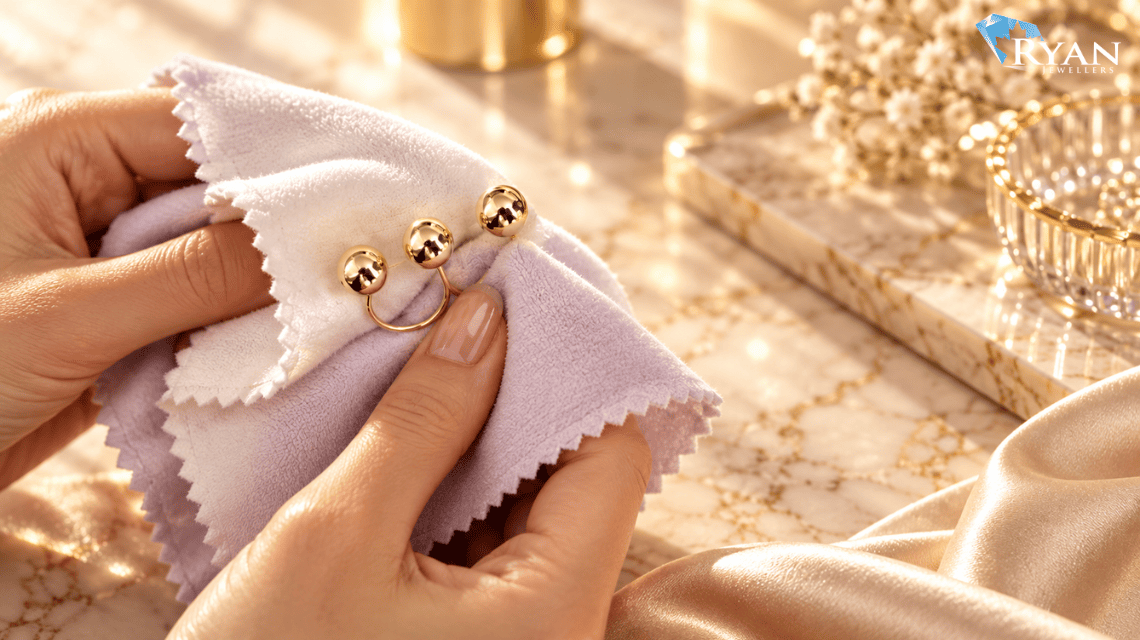
After wearing your gold jewelry, gently wipe it with a soft cloth.
This can remove surface oils, fingerprints, and cosmetic residue.
Clean According to the Material
A cleaning method suitable for plain gold may not be appropriate for a piece containing pearls, opals, emeralds, treated gemstones, or delicate antique settings.
Always consider the entire piece rather than just the gold.
Inspect Settings Regularly
If your gold jewelry contains diamonds or gemstones, periodically check for:
- Loose stones
- Bent prongs
- Damaged clasps
- Broken links
- Deformation
- Unusual movement
If a gemstone feels loose, stop wearing the piece until it has been professionally inspected.
Consider Professional Cleaning
Professional cleaning can be useful for valuable or frequently worn jewelry.
A jeweller can clean the piece while also checking its overall condition.
GIA notes that professional jewelry checkups and cleaning can be useful at scheduled intervals, particularly for frequently worn jewelry.
White Gold May Need Replating
If white gold begins to show a warmer tone after extended wear, the rhodium plating may have worn down.
Professional refinishing can restore the bright white surface.
Professional Polishing
Gold can develop fine scratches through everyday use.
Professional polishing may restore the appearance of a piece, but it should not be performed unnecessarily or excessively.
The appropriate approach depends on the jewelry’s condition and original finish.
Gold Jewelry Care by Type
| Jewelry Type | Recommended Care | Main Concern |
|---|---|---|
| 10K Gold | Gentle cleaning and separate storage | Surface wear and scratches |
| 14K Gold | Mild soap, water, and soft cloth | Everyday buildup |
| 18K Gold | Gentle cleaning and careful handling | Softer surface than lower-karat alloys |
| Yellow Gold | Gentle cleaning | Scratches and chemical exposure |
| White Gold | Gentle cleaning | Rhodium plating wear |
| Rose Gold | Gentle cleaning | Scratches and alloy exposure |
| Gold-Plated | Very gentle cleaning | Wearing through the gold layer |
| Gold with Diamonds | Gentle cleaning and setting checks | Loose stones and buildup |
| Gold with Delicate Gemstones | Material-specific care | Heat, chemicals, and inappropriate cleaning |
This table is a general guide. The presence of gemstones, treatments, plating, or specialized finishes can change the appropriate care method.
If you’re choosing gold jewelry for your wedding day, explore our Gold Wedding Jewelry Guide for ideas on elegant gold pieces that complement your bridal style and complete your wedding-day look.
FAQ About Gold Jewelry Care
How often should I clean gold jewelry?
Frequently worn gold jewelry can be cleaned gently whenever visible residue or buildup appears. The ideal frequency depends on how often the piece is worn and what it is exposed to.
Can I clean gold jewelry with soap and water?
For many solid-gold pieces, mild soap and lukewarm water are suitable for routine cleaning. However, jewelry containing certain gemstones or treatments may require a different approach.
Can I use toothpaste to clean gold jewelry?
It is best to avoid toothpaste. Its abrasive ingredients can scratch gold and alter polished surfaces.
Can gold jewelry tarnish?
Pure gold is highly resistant to corrosion, but gold alloys contain other metals that can react with sulfur-containing compounds and darken under certain conditions.
Why is my white gold turning yellow?
White gold is often rhodium-plated. As the rhodium surface wears through normal use, the underlying warmer-toned gold alloy can become more visible.
Can I wear gold jewelry in the shower?
It is generally better to remove it. Soap, shampoo, moisture, and residue can accumulate on the jewelry and make regular maintenance more difficult.
Can I wear gold jewelry in a swimming pool?
It is advisable to remove gold jewelry before swimming, particularly in chlorinated pools. Chlorine can damage some gold alloys and may also affect gemstones or settings. gia
Can I wear gold jewelry while exercising?
Removing jewelry before exercising is generally preferable. Sweat, friction, and physical impact can contribute to buildup and wear.
How should I store gold jewelry?
Store gold pieces in a dry environment, preferably in separate compartments or soft pouches. This helps prevent scratches, tangling, and unnecessary friction.
Does higher-karat gold require different care?
Higher-karat gold contains a greater proportion of pure gold and is generally softer. As a result, it can be more susceptible to scratches and dents than lower-karat gold alloys.
How do I clean gold jewelry with diamonds?
For suitable pieces, mild soap, lukewarm water, and a soft brush can help remove everyday residue. Pay attention to the setting, but avoid aggressive brushing. If the diamond or setting is loose, seek professional inspection instead.
How often should gold jewelry be professionally checked?
There is no universal schedule for every piece. Frequently worn jewelry, especially pieces containing diamonds or other gemstones, can benefit from periodic professional inspection to identify loose stones, worn settings, or other problems.
What should I do if my gold jewelry is badly scratched?
Minor scratches are normal with wear. If the surface has significant scratches or damage, a professional jeweller can assess whether polishing or refinishing is appropriate.
Final Thoughts
Knowing how to care for gold jewelry does not require complicated equipment or an extensive routine. The most important habits are simple: clean gently, avoid harsh chemicals, remove jewelry during high-impact activities, store pieces separately, and inspect frequently worn jewelry regularly.
Remember that gold jewelry is not all the same. 10K, 14K, 18K, 24K, white gold, rose gold, and gold-plated jewelry can have different care requirements. The presence of diamonds or other gemstones also affects which cleaning methods are appropriate.
With consistent care, proper storage, and professional maintenance when necessary, your gold jewelry can retain its beauty and remain part of your collection for years to come.
If you’re looking for new gold jewelry for everyday wear, gifting, engagement, or a special occasion, explore the collection at Ryan Jeweller and find a piece that fits your style.
This was a really useful guide, especially the advice about keeping gold jewelry away from harsh chemicals and everyday products. I used to think gold was quite resistant to everything, so I definitely need to be more careful with the pieces I wear regularly. Is there a particular type of gold that tends to require more maintenance than others?
I really liked how this guide focuses on simple habits rather than complicated cleaning methods. The reminder to remove gold jewelry before swimming and exercising is something I’ll definitely try to follow more consistently. For pieces that are worn every day, how often would you recommend giving them a more thorough cleaning?
This guide cleared up something I’ve always wondered about: why my gold jewelry sometimes looks less shiny even when there’s no visible dirt on it. I found the storage and regular cleaning tips particularly helpful because they seem easy to incorporate into a normal routine. Would professional cleaning be worth considering for older gold pieces that have lost some of their original shine?