
Summarize the article with:


A diamond ring is often worn every day, making it one of the most frequently handled pieces of fine jewelry. Although diamonds are extremely hard, the diamond itself is only one part of the ring. The metal, setting, prongs, and surrounding stones also need regular attention to keep the ring secure and looking its best.
Learning how to care for diamond rings is therefore about more than keeping the centre stone clean. Proper care includes safe cleaning, careful storage, protection from everyday impacts, and regular inspection of the setting.
Whether you own an engagement ring, wedding band, or diamond fashion ring, a consistent care routine can help preserve its appearance and condition. If you’re exploring diamond rings for an upcoming engagement or special occasion, visit Ryan Jeweller to discover a range of fine jewelry, then use the following guide to care for your ring properly.
Why Diamond Rings Need Regular Care
Diamond rings are exposed to many everyday substances and activities. Hand washing, cosmetics, household products, temperature changes, and physical contact can all affect the appearance and condition of a ring.
Dirt and Oils Can Reduce Diamond Brilliance
Diamonds attract oils from the skin. Over time, fingerprints, lotions, soap residue, and everyday dirt can build up on the stone.
Even though the diamond itself has not changed, this buildup can interfere with the way light enters and exits the stone.
As a result, a clean diamond can appear noticeably brighter than one covered in residue.
The Setting Needs Attention Too
The diamond is held in place by a setting, which may include:
- Prongs
- Bezel edges
- Channels
- Pavé settings
- Metal shoulders
- Supporting structures
These components experience normal wear over time.
A damaged or weakened setting can create a greater risk of losing a stone, even when the diamond itself remains in excellent condition.
Everyday Wear Causes Gradual Changes
Wearing a ring every day exposes it to repeated friction and occasional impact.
Over time, you may notice:
- Small scratches
- Surface dullness
- Worn prongs
- Loose stones
- Bent components
- Damaged bands
Regular inspection helps identify these issues before they become more serious.
If you’re considering whether a diamond ring is the right purchase for you, explore our Are Diamond Rings Worth It? guide to compare value, quality, style, and the factors to consider before buying.
How to Clean a Diamond Ring Safely
For many diamond rings, gentle at-home cleaning can remove everyday oils and residue. However, the safest method depends on the ring’s metal, setting, and any additional gemstones.
A Simple At-Home Cleaning Method
For a suitable diamond ring, you can use:
- Lukewarm water
- A small amount of mild dish soap
- A soft-bristled brush
- A clean, lint-free cloth
Follow these steps:
- Mix a small amount of mild soap with lukewarm water.
- Place the ring in the solution for a short period.
- Gently brush around the diamond and setting.
- Pay attention to the underside of the stone, where residue can accumulate.
- Rinse thoroughly with clean water.
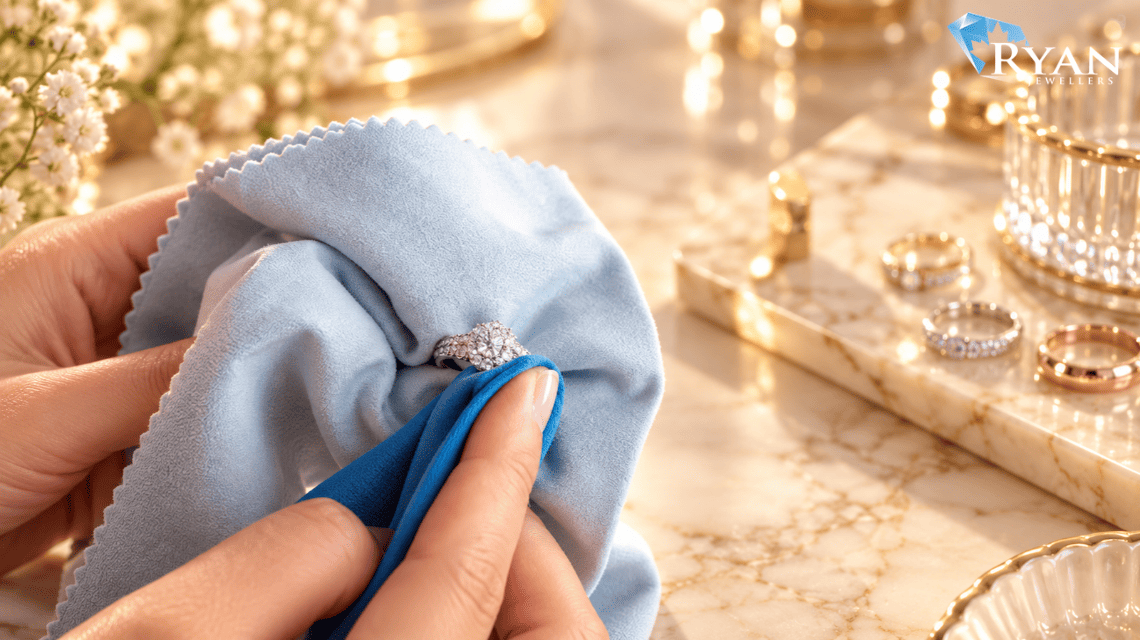
- Dry gently with a soft, lint-free cloth.
Be Careful Around the Prongs
Avoid aggressive brushing around delicate prongs.
If a prong is already loose or damaged, cleaning the ring at home could potentially make the problem worse.
In that situation, professional inspection should come first.
Avoid Abrasive Cleaners
Do not assume household cleaning products are suitable for diamond jewelry.
Avoid using abrasive powders, harsh chemicals, or unverified DIY cleaning solutions.
These products may damage the metal, finish, or other gemstones in the ring.
What About Ultrasonic Cleaners?
Ultrasonic cleaning can be effective for some jewelry, but it is not automatically appropriate for every diamond ring.
Certain gemstones, treatments, settings, or delicate structures may be unsuitable for ultrasonic cleaning.
If you’re unsure, ask a qualified jeweller before using an ultrasonic cleaner.
How to Protect Your Ring Setting and Diamond
Keeping a diamond ring clean is only part of proper maintenance. Protecting it from unnecessary impact and chemical exposure is equally important.
Remove Your Ring During Heavy Activities
Consider removing your ring before:
- Gardening
- Heavy lifting
- Sports
- Household repairs
- Manual work
- Activities involving repeated impact
A strong impact can damage the setting or, in some circumstances, chip a diamond.
Remove Your Ring Before Swimming
Swimming pools can expose jewelry to chlorine and other chemicals.
There is also a practical risk of losing a ring in the water because fingers can become colder and smaller.
For these reasons, removing your ring before swimming is a sensible precaution.
Keep Your Ring Away From Household Chemicals
Cleaning products can affect certain metals and finishes.
Remove your ring before using:
- Bleach
- Strong cleaning products
- Chemical solvents
- Certain industrial products
Store the Ring Separately
When you are not wearing your ring, store it in a clean, soft-lined jewelry box or individual pouch.
Diamonds are extremely hard and can scratch other jewelry. Keeping pieces separated therefore protects both your ring and the jewelry stored beside it.
Avoid Using the Ring as a Tool
A diamond ring should never be used to:
- Open packages
- Scrape surfaces
- Pry objects apart
- Pull tight materials
- Handle heavy objects
These actions can place unnecessary stress on the setting.
If you’re comparing lab-grown diamond rings, explore our Lab-Grown Diamond Rings Guide to learn more about diamond size, sparkle, styles, and value when choosing your ring.
Everyday Habits That Can Damage Diamond Rings
Some of the biggest risks come from ordinary routines rather than dramatic accidents.
Showering With Your Ring
Soap and shampoo can build up around the stone and setting.
Although occasional exposure does not necessarily cause immediate damage, removing the ring before showering makes routine cleaning easier.
Applying Lotion With Your Ring On
Hand creams and lotions can leave an oily film on diamonds.
A better approach is to apply lotion first, allow it to absorb, and then put your ring back on.
Wearing Your Ring During Exercise
Sweat, friction, and repeated movement can affect the ring’s cleanliness and increase the possibility of impact.
Removing the ring before exercising is generally preferable.
Sleeping With Your Ring
Sleeping with a ring can expose it to unnecessary friction against bedding and other surfaces.
Depending on the ring design, it may also place pressure on prongs or other components.
Wearing a Ring That Feels Loose
If your diamond ring suddenly feels different, do not ignore it.
Temperature, swelling, and other factors can affect how a ring fits. However, a ring that consistently moves excessively may need professional sizing or inspection.
Ignoring a Loose Diamond
If you notice that the diamond moves inside its setting, stop wearing the ring until it has been inspected.
A loose stone can become significantly easier to lose through continued wear.
When to Get Your Diamond Ring Professionally Checked
Home cleaning is useful for routine maintenance, but professional care is important when structural problems appear.
When a Stone Feels Loose
A moving diamond should be inspected as soon as possible.
A jeweller can examine the setting and determine whether the stone needs to be secured.
When a Prong Looks Damaged
Prongs can gradually wear down or become bent.
If one appears thinner, shorter, bent, or broken, professional repair may be necessary.
After a Strong Impact
If your ring receives a significant impact, inspect it carefully.
Even if the diamond looks normal, the setting may have been affected.
Professional inspection can help identify problems that are difficult to see at home.
When the Ring Becomes Scratched
Minor scratches are normal with everyday wear.
However, if the ring has significant scratches, dents, or surface damage, professional polishing or repair may restore its appearance.
The appropriate treatment depends on the metal and finish.
For Regular Maintenance
Frequently worn engagement rings and wedding bands benefit from periodic professional inspection.
A jeweller can check:
- Prong security
- Stone movement
- Setting condition
- Band condition
- Surface wear
- Overall structural integrity
The exact inspection frequency depends on the ring and how frequently it is worn.
If you’re looking for beautiful lab-grown diamond rings at different price points, explore our Affordable Lab-Grown Diamond Rings Guide to discover elegant designs and practical tips for choosing a ring that fits your budget.
Diamond Ring Care by Setting Type
Different settings can require slightly different attention.
| Setting | Main Care Consideration |
|---|---|
| Solitaire | Check the centre stone and prongs regularly |
| Halo | Clean around the centre and surrounding stones carefully |
| Pavé | Inspect small stones and their settings for looseness |
| Bezel | Keep the area around the metal rim clean and inspect for damage |
| Three-stone | Check each stone and its individual setting |
| Channel | Keep debris from accumulating between stones |
| Hidden halo | Clean carefully around both visible and concealed stones |
The setting should influence how you clean and inspect your ring. A ring with multiple small diamonds, for example, may require more attention than a simple solitaire.
How to Store a Diamond Ring Properly
Proper storage is especially important when you are not wearing your ring for an extended period.
Use a Soft-Lined Jewelry Box
A dedicated jewelry box helps protect the ring from unnecessary scratches and impacts.
Keep It Separate From Other Jewelry
Do not place a diamond ring loosely alongside other pieces.
Diamonds can scratch other gemstones and jewelry materials.
Keep It Dry
Store the ring in a clean, dry environment away from excessive humidity.
Avoid Direct Contact With Hard Surfaces
Place the ring in a soft compartment rather than directly on countertops, drawers, or other hard surfaces.
If you’re shopping within a $2,000 budget, explore our Diamond Rings Under $2,000 Guide for practical tips and options to help you find a beautiful diamond ring at an accessible price point.
FAQ About Diamond Ring Care
How often should I clean my diamond ring?
The ideal frequency depends on how often you wear the ring and how much exposure it has to oils, lotions, dirt, and other substances. Frequently worn rings can benefit from regular gentle cleaning at home.
Can I clean my diamond ring with soap and water?
For many diamond rings, mild soap and lukewarm water are suitable for routine cleaning. However, the ring’s other gemstones, treatments, and setting should also be considered.
Can I use toothpaste to clean a diamond ring?
It is better to avoid toothpaste. Its abrasive ingredients can scratch or wear certain jewelry surfaces and finishes.
Can I wear my diamond ring in the shower?
It is generally better to remove it. Soap and shampoo can accumulate around the diamond and setting, making the ring more difficult to keep clean.
Can I wear a diamond ring while swimming?
Removing your ring before swimming is recommended. Chlorinated water can affect certain jewelry materials, and there is also a risk of losing the ring in the water.
Can diamonds scratch other jewelry?
Yes. Diamond is extremely hard and can scratch softer gemstones and some jewelry materials. Store diamond pieces separately whenever possible.
What should I do if my diamond feels loose?
Stop wearing the ring and have it professionally inspected. Continuing to wear a ring with a loose stone increases the risk of losing the diamond.
How often should an engagement ring be inspected?
There is no single schedule that applies to every ring. However, regular professional inspections are useful for frequently worn engagement rings because they allow a jeweller to check prongs, settings, and stone security.
Can I use an ultrasonic cleaner on my diamond ring?
Not necessarily. While ultrasonic cleaning can be appropriate for some jewelry, certain gemstones, treatments, and settings may not be suitable for it. Check with a qualified jeweller first.
Why does my diamond look dull?
Oil, lotion, soap, and dirt can accumulate on the diamond and reduce its apparent brilliance. Gentle cleaning may restore its appearance.
Can a diamond chip?
Yes. Although diamond is extremely hard and resistant to scratching, it is not completely immune to chipping. A sufficiently strong impact, particularly in vulnerable areas, can cause damage.
Should I remove my ring before exercising?
It is generally advisable. Sweat, friction, and impact can contribute to buildup or physical wear, depending on the activity.
Final Thoughts
Knowing how to care for diamond rings is about protecting both the diamond and the structure holding it in place. Regular gentle cleaning helps maintain brilliance, while careful daily habits can reduce unnecessary exposure to chemicals, impact, and friction.
At the same time, do not overlook the setting. Prongs, bezels, pavé details, and other components can experience gradual wear even when the diamond itself remains in excellent condition.
If you notice a loose stone, damaged prong, significant impact, or unusual change in the ring, professional inspection is the safest next step.
With consistent care and appropriate maintenance, your diamond ring can remain a beautiful part of your jewelry collection for many years.
If you’re looking for a diamond engagement ring, wedding band, or other fine jewelry, visit Ryan Jeweller to explore available styles and find a piece suited to your occasion and personal style.
This is a really practical guide, especially the reminder that caring for a diamond ring also means looking after the setting and prongs. I used to focus only on keeping the diamond clean and didn’t realize how much everyday wear can affect the structure. How often would you recommend having an engagement ring professionally inspected?
I found the section about removing your ring during exercise, swimming, and household work especially useful. These are all things I normally do without thinking about my ring, so it definitely made me reconsider my daily habits. Is there one habit you would say is the most important for protecting a diamond ring long term?
I really liked the cleaning advice because it feels simple enough to follow at home without using harsh products. The point about avoiding toothpaste was also interesting, since it’s still commonly recommended as a DIY jewelry cleaning trick. For a ring worn every day, would gentle cleaning once a week be a reasonable routine?