
Summarize the article with:


Lab-grown diamonds have become an increasingly visible option for Canadian jewelry buyers. They are now available in a wide range of shapes, sizes, colours, and quality grades, giving shoppers another way to approach diamond engagement rings, wedding jewelry, and other fine jewelry.
But a common question remains: Are lab diamonds worth it?
The answer depends on what you value in a diamond. Lab-grown diamonds offer essentially the same chemical composition, crystal structure, and optical and physical properties as natural diamonds. However, they have a different origin, and their market pricing and long-term resale considerations can differ substantially from natural diamonds. (gia)
For Canadian shoppers, understanding these differences is more useful than simply asking whether one type is “better.” This guide explains how lab-grown diamonds are made, why they have become popular, how they compare with natural diamonds, and what to consider before buying.
If you are exploring diamond jewelry for an engagement, wedding, or special occasion, browse the collections at Ryan Jewellers to see how different diamond styles and settings can fit your preferences.
What Are Lab-Grown Diamonds?
Lab-grown diamonds are diamonds created through technological processes rather than geological processes inside the Earth.
They are real diamonds, not diamond imitations such as cubic zirconia or moissanite. Lab-grown diamonds have essentially the same chemical composition and crystal structure as natural diamonds. They also possess essentially the same optical and physical properties.
The important distinction is origin.
A natural diamond forms through geological processes over extremely long periods. A lab-grown diamond is produced by humans using controlled laboratory or industrial processes.
How Are Lab Diamonds Made?
Two primary technologies are used to produce gem-quality lab-grown diamonds:
- HPHT — High Pressure, High Temperature
- CVD — Chemical Vapor Deposition
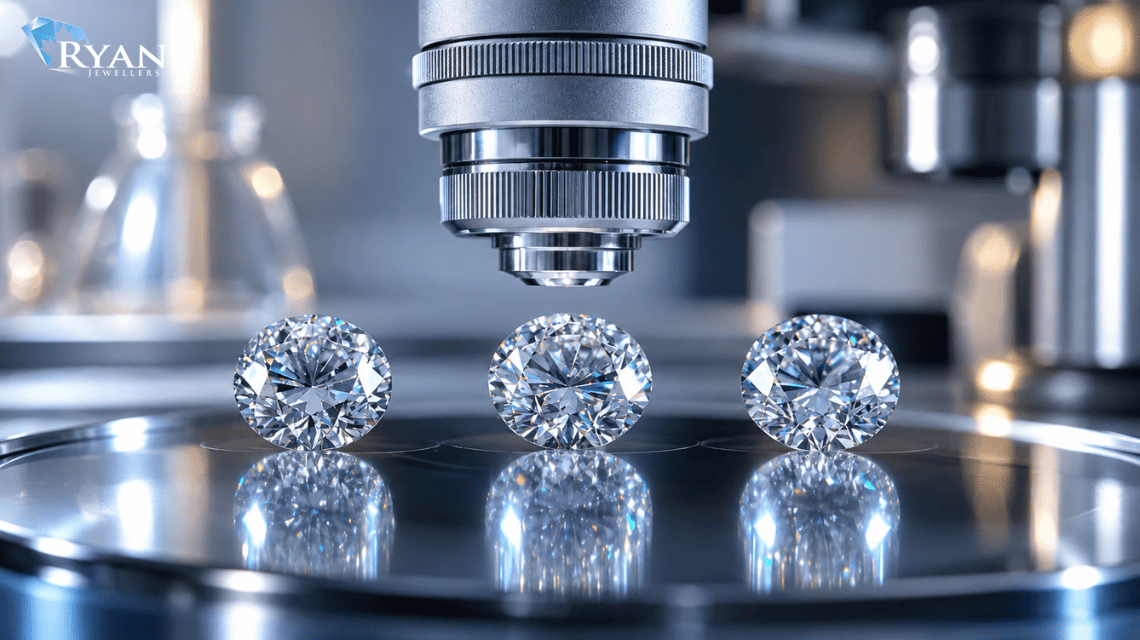
HPHT recreates high-pressure and high-temperature conditions that promote diamond crystal growth. CVD uses a carbon-containing gas in a controlled reactor to deposit carbon onto a diamond substrate.
The growth method does not mean that one stone is “fake” and the other is “real.” Both produce diamond material. However, the different growth environments can leave characteristics that specialized gemological laboratories can detect.
Are Lab-Grown Diamonds Real Diamonds?
Yes. GIA describes laboratory-grown diamonds as real diamonds with essentially the same chemical composition, crystal structure, and physical properties as natural diamonds. They are distinct from diamond simulants, which only imitate the appearance of diamond.
At the same time, a lab-grown diamond should not be represented as a natural diamond. The two have different origins, and professional laboratories can identify that distinction using advanced testing.
If you’re still wondering about their authenticity, read our guide on Are Lab Diamonds Real? What You Need to Know Before You Buy a Diamond Ring to understand their composition, quality, and how they differ from natural diamonds.
Why Are Lab Diamonds Becoming More Popular?
Several factors have contributed to growing consumer interest in lab-grown diamonds.
More Choice in Diamond Size and Specifications
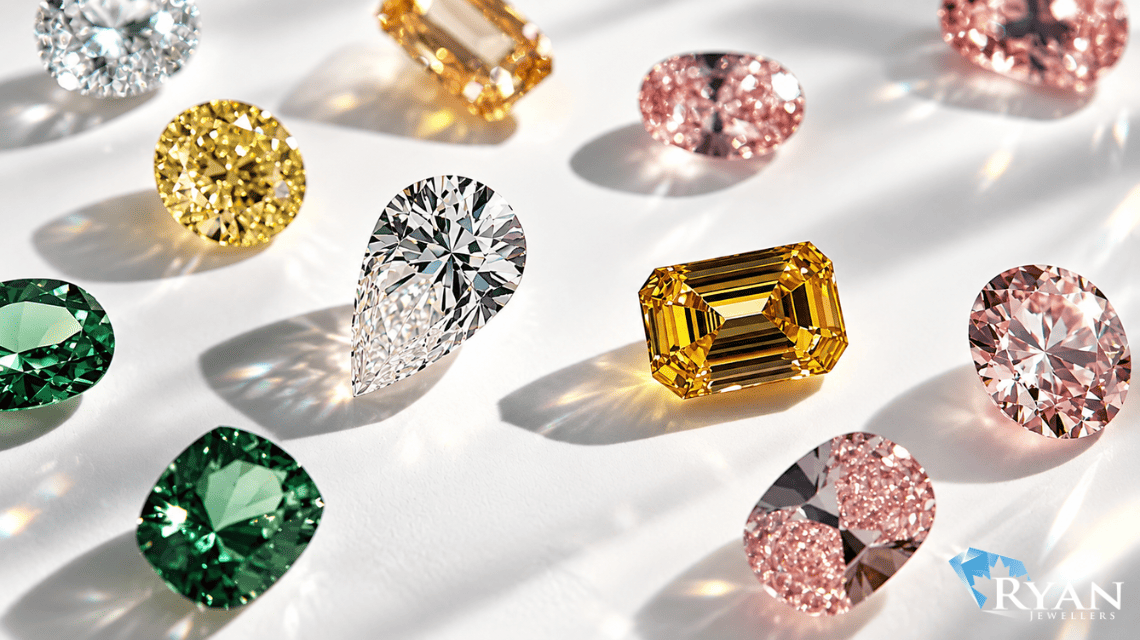
Lab-grown diamonds are available across a broad range of:
- Carat weights
- Shapes
- Colours
- Clarity grades
- Cut qualities
This gives buyers more combinations to consider when designing a ring.
For example, someone prioritizing a larger centre stone may compare lab-grown options alongside natural diamonds at different price points.
Greater Pricing Flexibility
Lab-grown diamonds are generally sold at substantially lower prices than comparable natural diamonds.
The Canadian market has also experienced significant price movement. A 2026 Canadian Jeweller wholesale report found that Canadian wholesale prices for lab-grown diamonds declined year over year in Q2 2026, while noting that prices vary by size, shape, growth method, and specifications.
That means shoppers should be cautious about treating any single price as a permanent benchmark. Diamond pricing can change as production, supply, demand, and market conditions change.
Growing Familiarity
As lab-grown diamonds have become more widely available, consumers have had more opportunities to compare them with natural diamonds.
For many buyers, the decision is therefore less about whether lab-grown diamonds are “real” and more about whether their origin, appearance, specifications, and price fit the buyer’s priorities.
Comparing Lab Diamonds and Natural Diamonds
The most useful comparison starts by separating physical characteristics from origin and market considerations.
| Factor | Lab-Grown Diamond | Natural Diamond |
|---|---|---|
| Origin | Created through technological processes | Formed through natural geological processes |
| Main composition | Essentially carbon in a diamond crystal structure | Essentially carbon in a diamond crystal structure |
| Crystal structure | Diamond | Diamond |
| Optical properties | Essentially the same | Natural diamond characteristics |
| Hardness | Essentially the same diamond material | Diamond |
| Identification | Requires specialized testing | Identified through gemological testing |
| Growth methods | Mainly HPHT or CVD | Natural geological formation |
| Market pricing | Generally lower than comparable natural diamonds | Generally higher for comparable specifications |
GIA notes that lab-grown and natural diamonds can be extremely difficult to distinguish visually because they have essentially the same chemical, physical, and optical properties. Advanced laboratory equipment can identify differences associated with their growth history.
Lab-Grown Diamonds Are Not Diamond Simulants
This distinction is important when shopping.
Lab-grown diamond:
- Is diamond
- Has a diamond crystal structure
- Has essentially the same physical and optical properties as natural diamond
Diamond simulant:
- Only resembles diamond
- Has a different chemical composition
- Has different physical and optical properties
Common simulants include cubic zirconia and moissanite.
How Are Lab Diamonds Identified?
A lab-grown diamond cannot reliably be identified simply by looking at it.
GIA explains that specialized laboratory equipment is used to distinguish laboratory-grown diamonds from natural diamonds. GIA reports for laboratory-grown diamonds also identify their laboratory-grown origin.
For buyers, this is one reason documentation and transparent disclosure matter when purchasing a diamond.
For more guidance on choosing a larger, stylish lab-grown diamond ring, explore our Lab-Grown Diamond Rings: Bigger Sparkle, Better Value guide.
Are Lab Diamonds a Good Value for Buyers?
For many shoppers, the main attraction of lab-grown diamonds is the relationship between diamond specifications and purchase price.
However, “value” can mean several different things.
Value as Jewelry
As a finished jewelry stone, a lab-grown diamond can provide:
- Diamond material rather than a simulant
- A wide selection of shapes
- A wide range of quality grades
- High visual brilliance when well cut
- Flexibility when building a jewelry budget
A well-cut lab-grown diamond can display brightness, fire, and scintillation just as a well-cut natural diamond can. GIA notes that lab-grown diamonds can have essentially the same optical and physical properties as natural diamonds.
Value for a Specific Budget
Suppose your budget is fixed.
You might use that budget to compare:
Option A: A smaller natural diamond with particular specifications
Option B: A larger lab-grown diamond with different specifications
The choice then becomes a question of what matters most to you:
- Size
- Cut
- Colour
- Clarity
- Origin
- Design
- Budget
This is one reason lab-grown diamonds appeal to buyers who want greater flexibility in selecting the specifications of their center stone.
Resale and Future Pricing
This is an area where buyers should be realistic.
A lab-grown diamond should not automatically be viewed as an appreciating asset. Its retail price and potential resale value can be affected by changes in production technology, supply, consumer demand, and market pricing.
Recent Canadian market reporting illustrates this volatility, with wholesale lab-grown diamond prices declining year over year in Q2 2026.
Therefore, if you are purchasing an engagement ring, it is usually more useful to evaluate the purchase based on the jewelry you want to own and wear, rather than assuming it will appreciate financially.
What Are the Pros and Cons of Lab-Grown Diamonds?
Looking at both sides can make the decision clearer.
Potential Advantages
Lower purchase price
Lab-grown diamonds are generally less expensive than comparable natural diamonds, creating more room within a jewelry budget.
More size flexibility
A lower price can allow some buyers to consider larger carat weights without increasing the total budget by the same amount.
Real diamond material
Lab-grown diamonds are diamonds, not simulants.
Broad selection
They are available in many shapes, colours, carat weights, and clarity grades.
Modern production technology
HPHT and CVD technologies allow diamonds to be produced under controlled conditions.
Potential Considerations
Different origin
Some buyers specifically want a diamond formed naturally over geological time. Lab-grown diamonds do not provide that origin story.
Different market economics
Lab-grown diamond pricing has experienced substantial changes, so buyers should not assume today’s price represents future resale value.
Disclosure matters
A lab-grown diamond should be clearly identified as laboratory-grown rather than natural. Professional grading documentation can help establish the stone’s characteristics and origin.
Not all lab diamonds are identical
Just as with natural diamonds, cut, colour, clarity, carat weight, and other characteristics vary from stone to stone.
For more inspiration for your special day, explore our guide to Diamond Wedding Jewelry and discover elegant diamond pieces for a timeless bridal look.
Who Should Choose Lab-Grown Diamonds?
There is no single type of buyer for whom lab-grown diamonds are automatically the right choice.
However, lab-grown diamonds may be worth considering if you:
Want More Diamond for a Defined Budget
If your priority is maximizing carat size or specifications within a fixed budget, lab-grown diamonds provide another option to compare.
Prefer Modern Jewelry Choices
Lab-grown diamonds can suit buyers who appreciate technological innovation and are comfortable with a laboratory-created origin.
Care About Diamond Material Rather Than Geological Origin
If you primarily want a genuine diamond with the optical and physical characteristics associated with diamond jewelry, a lab-grown stone may fit those priorities.
Want to Compare More Options
A lab-grown diamond can be evaluated alongside natural diamonds rather than treated as an entirely separate category of jewelry.
How to Choose a Lab-Grown Diamond
Once you decide to consider lab-grown diamonds, the buying process is still about evaluating the individual stone.
Start With Cut
Cut has a major influence on how a diamond interacts with light.
A well-cut diamond can display:
- Brightness
- Brilliance
- Fire
- Scintillation
This is why a larger diamond is not automatically the better-looking diamond.
Consider Colour
Colour grades help describe how much body colour is present in a diamond.
For traditional colourless-to-near-colourless jewelry, buyers commonly compare stones across the higher colour grades.
However, the ideal grade depends on:
- Diamond shape
- Setting colour
- Personal preference
- Budget
Evaluate Clarity
Clarity describes internal characteristics and surface features.
Not every inclusion is visible to the naked eye. Therefore, buyers should consider both the clarity grade and the actual appearance of the stone.
GIA evaluates clarity characteristics in laboratory-grown diamonds using the same universally recognized clarity scale and terms used for natural diamonds.
Compare Carat Weight
Carat measures weight, not physical dimensions or visual beauty.
Two diamonds with the same carat weight can appear different because of:
- Shape
- Proportions
- Cut
- Setting
Therefore, compare the complete diamond rather than focusing on carat weight alone.
Check the Documentation
When buying a lab-grown diamond, review the available grading documentation.
For example, GIA laboratory-grown diamond documentation identifies the stone as laboratory-grown and records relevant quality information.
A clear report helps you understand what you are purchasing and makes comparisons between stones easier.
FAQ About Lab Diamonds
Are lab diamonds real diamonds?
Yes. Lab-grown diamonds are real diamonds with essentially the same chemical composition, crystal structure, and physical and optical properties as natural diamonds.
Are lab diamonds fake?
No. Lab-grown diamonds are not diamond imitations. Cubic zirconia and moissanite are examples of diamond simulants, while laboratory-grown diamonds are actual diamond material.
Can you tell a lab-grown diamond from a natural diamond by looking at it?
Generally, not reliably. Lab-grown diamonds can appear indistinguishable from natural diamonds to the unaided eye. Specialized laboratory equipment is used for definitive identification.
Are lab diamonds cheaper than natural diamonds?
Generally, yes. Lab-grown diamonds are typically priced substantially lower than comparable natural diamonds, although the exact difference varies by size, shape, quality, market conditions, and retailer.
Do lab diamonds have the same 4Cs?
Lab-grown diamonds can be evaluated using the familiar diamond quality characteristics of cut, colour, clarity, and carat weight. GIA uses recognized grading terminology for laboratory-grown diamond clarity and colour. (gia)
Are lab diamonds good for engagement rings?
Yes. Lab-grown diamonds can be used in engagement rings and offer the physical properties associated with diamond jewelry. The choice ultimately depends on your preferred origin, specifications, design, and budget.
Do lab diamonds lose value?
Their market value can change over time, and recent Canadian wholesale data demonstrates that lab-grown diamond prices have experienced significant declines. Buyers should therefore avoid assuming that a lab-grown diamond will appreciate as a financial investment.
Are lab-grown diamonds ethical?
The answer depends on what aspect of sourcing or production you are evaluating. Lab-grown diamonds avoid the geological mining process used for natural diamonds, but their production still requires energy and industrial resources. Buyers interested in environmental or ethical considerations should ask retailers for specific information about sourcing, production, and certifications rather than relying on broad claims.
How are lab diamonds made?
The two primary methods are HPHT and CVD. HPHT uses high pressure and high temperature, while CVD grows diamond material from carbon-containing gases in a controlled environment.
Final Thoughts
So, are lab diamonds worth it?
For buyers who prioritize diamond appearance, specifications, and budget flexibility, lab-grown diamonds provide an established alternative to natural diamonds. They are real diamonds, not simulants, and they possess essentially the same chemical, physical, and optical properties as natural diamonds.
However, their laboratory origin and changing market economics are important considerations. A lab-grown diamond should not be purchased with the assumption that it will appreciate in value. Instead, consider what matters most to you: diamond size, cut quality, clarity, colour, origin, design, and the overall budget.
At Ryan Jewellers, you can explore lab-grown diamond jewelry alongside different ring styles and designs to find a piece that fits your preferences and the occasion.
This is a useful guide for anyone comparing lab-grown diamonds with traditional diamond options. I especially liked the focus on factors such as the 4Cs, pricing, and certification when considering the overall value of a lab diamond.
I found the discussion of lab diamond value particularly helpful. Looking beyond the initial price and considering quality, appearance, certification, and personal preferences gives buyers a more complete way to evaluate their options.
The practical comparison makes it easier to understand why some buyers may consider lab-grown diamonds for their jewellery. I appreciate the emphasis on evaluating each stone based on its characteristics rather than assuming every lab diamond offers the same value.