
Summarize the article with:


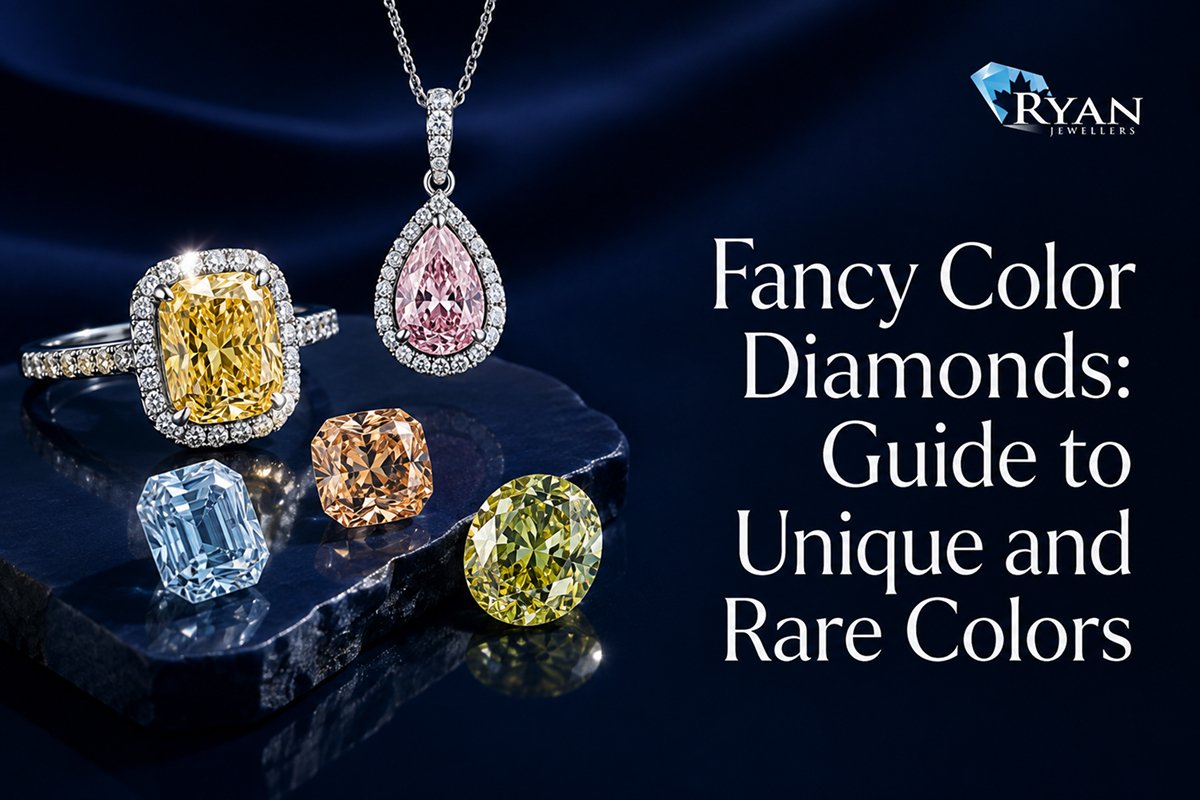
Diamonds are traditionally known for their classic white appearance, but some of the most unique and valuable diamonds in the world are fancy color diamonds. These rare diamonds display natural colors such as pink, blue, yellow, green, and red, creating distinctive beauty that sets them apart from traditional colorless diamonds.
Unlike standard stones graded on the D-to-Z scale, fancy varieties are evaluated based on hue, intensity, and rarity. For Canadian buyers, understanding these grading factors can help you make a more informed decision when selecting a unique jewelry piece.
At Ryan Jewellers, we help customers explore exceptional diamond jewelry and find pieces that match their personal style and preferences.
What Are Fancy Color Diamonds?
Fancy varieties are natural stones that display noticeable hues beyond the traditional colorless range. Their appearance develops from specific conditions during formation, including trace elements and structural changes within the stone.
Popular fancy color diamond categories include:
- Yellow diamonds: Often caused by the presence of nitrogen within the diamond structure
- Pink diamonds: Known for their rarity and strong collector demand
- Blue diamonds: Associated with trace elements such as boron
- Green diamonds: Created through natural exposure to radiation over time
- Red diamonds: Among the rarest and most valuable diamond colors
Unlike colorless stones, which are generally more valuable with less tint, fancy varieties are often prized for their intensity and uniqueness.
👉 Discover our curated selection of lab-created diamond rings here: Lab-Created Diamond Rings
Popular Colors and Their Value
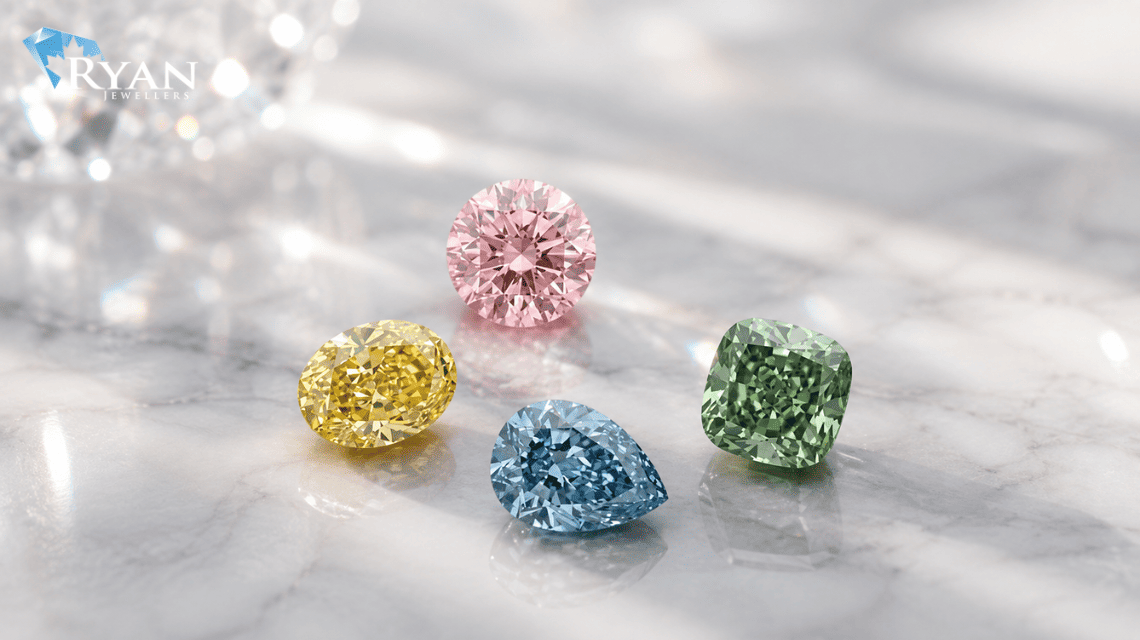
The value of a fancy color diamond depends heavily on its rarity, demand, and color quality.
| Color | Characteristics |
|---|---|
| Pink | Extremely rare and highly sought after by collectors |
| Blue | Rare and valued for its unique appearance and scarcity |
| Yellow | One of the more available fancy colors with strong popularity |
| Green | Rare due to the specific conditions required for formation |
| Red | Considered one of the rarest diamond colors in the world |
Among fancy color diamonds, rarity plays a major role in determining value. A smaller diamond with an exceptional and rare color may be more valuable than a larger diamond with a less desirable color.
How Color Intensity Impacts Price
For fancy varieties, intensity is one of the most important factors affecting value. Unlike colorless stones, stronger and more vivid hues can increase desirability. They are commonly graded as:
- Fancy Light
- Fancy
- Fancy Intense
- Fancy Vivid
- Fancy Deep
- Fancy Dark
A diamond with a stronger, more saturated color is generally considered more rare and valuable.
Other factors also influence pricing, including:
- Carat weight
- Clarity
- Cut quality
- Color distribution
- Certification
A well-balanced combination of these characteristics determines the overall appeal of the diamond.
👉 Discover our curated selection of lab-created diamond rings here: Lab-Created Diamond Rings
Choosing Fancy Color Diamonds for Jewelry
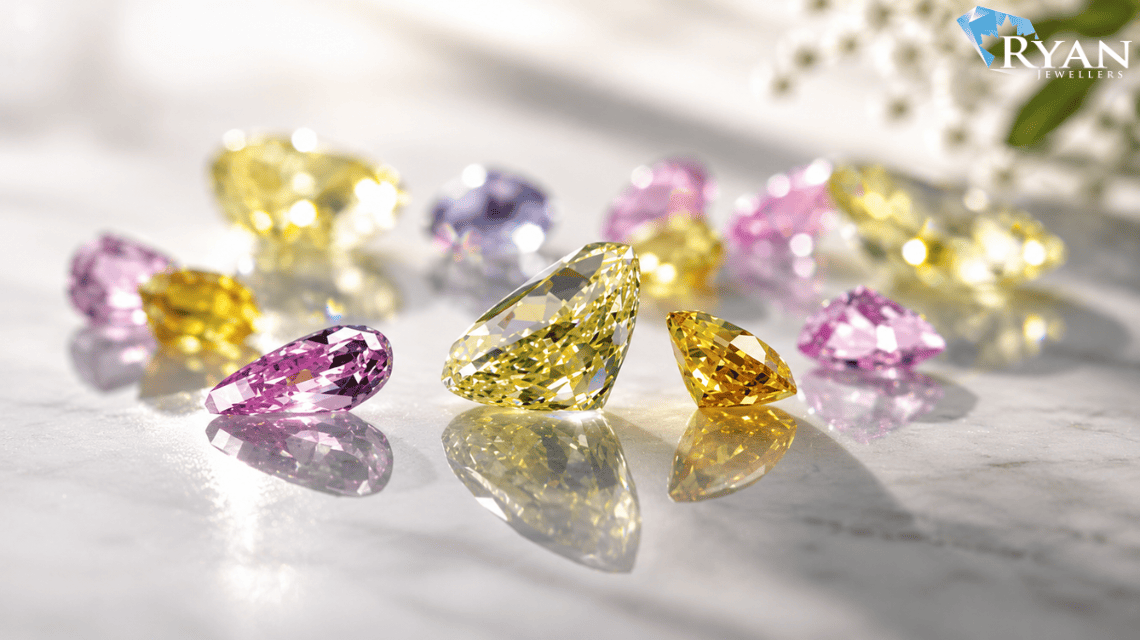
Fancy color diamonds offer an opportunity to create jewelry with a more personal and distinctive appearance.
Popular uses include:
| Jewelry Type | Recommended Styles |
|---|---|
| Engagement Rings | Pink, yellow, or blue center stones for unique designs |
| Earrings | Matching color diamonds for elegant statement pieces |
| Necklaces | Fancy color pendants for a distinctive look |
| Custom Jewelry | Personalized designs featuring rare diamond colors |
When choosing a fancy color diamond, consider:
- Your preferred color and style
- How the diamond complements the metal setting
- Whether the color creates the desired visual impact
- Certification from a reputable grading laboratory
Investment and Collectible Considerations
Some fancy color diamonds are considered collectible due to their rarity and historical demand. Exceptional stones, especially rare pink, blue, and red diamonds, have attracted interest from collectors worldwide.
However, buyers should understand that:
- Not every fancy color diamond increases in value
- Market demand can change over time
- Certification and provenance are important for rare stones
- Diamonds should primarily be viewed as luxury purchases
For buyers interested in long-term value, rarity, quality, and authenticity are key considerations.
👉 Explore our stunning collection of diamond earrings here: Diamond Earrings
👉 Learn more about diamond quality, grading, and buying tips in our complete guide: Diamond Education: The Ultimate Guide to Understanding Diamonds
FAQ – Fancy Color Diamonds
Are fancy color diamonds natural?
Many fancy varieties occur naturally, although some stones may receive treatments to enhance or create their hue. Certification helps determine whether a stone is natural or treated.
Are fancy color diamonds more valuable than clear diamonds?
Some fancy color diamonds can be significantly more valuable than colorless diamonds due to their rarity, especially rare colors like red, blue, and pink.
What is the rarest diamond color?
Red diamonds are considered among the rarest natural diamond colors, followed by certain pink and blue diamonds.
Do fancy color diamonds follow the same grading system?
No. Colorless diamonds are graded on the D-to-Z scale, while fancy color diamonds are evaluated based on hue, tone, and saturation.
Are yellow diamonds considered fancy color diamonds?
Yes. Stronger yellow color saturation beyond the traditional color range is classified as fancy yellow.
Final Thoughts
Fancy color diamonds offer a unique alternative to traditional colorless diamonds, combining rarity, individuality, and exceptional beauty. From vibrant yellow diamonds to rare pink and blue stones, each color creates a distinctive expression of luxury.
For Canadian buyers, understanding color intensity, rarity, certification, and quality factors can help you choose a diamond that matches both your style and expectations.
At Ryan Jewellers, we help customers discover unique diamond jewelry and make informed decisions when selecting meaningful pieces.
Really enjoyed this introduction to fancy color diamonds. I found it interesting how colour can completely change the character and appeal of a diamond compared with traditional white stones. It would be great to see more examples of how different colour grades influence rarity and pricing.
This was a fascinating read, especially for someone who usually thinks of diamonds as being colourless. The discussion of fancy colours gives a different perspective on what makes a diamond distinctiv
Really enjoyed this article on fancy color diamonds. I found it fascinating how subtle differences in colour can have such a big impact on a diamond’s character and overall appeal. I’d be interested in seeing more about how collectors typically evaluate colour intensity and rarity.