
Summarize the article with:


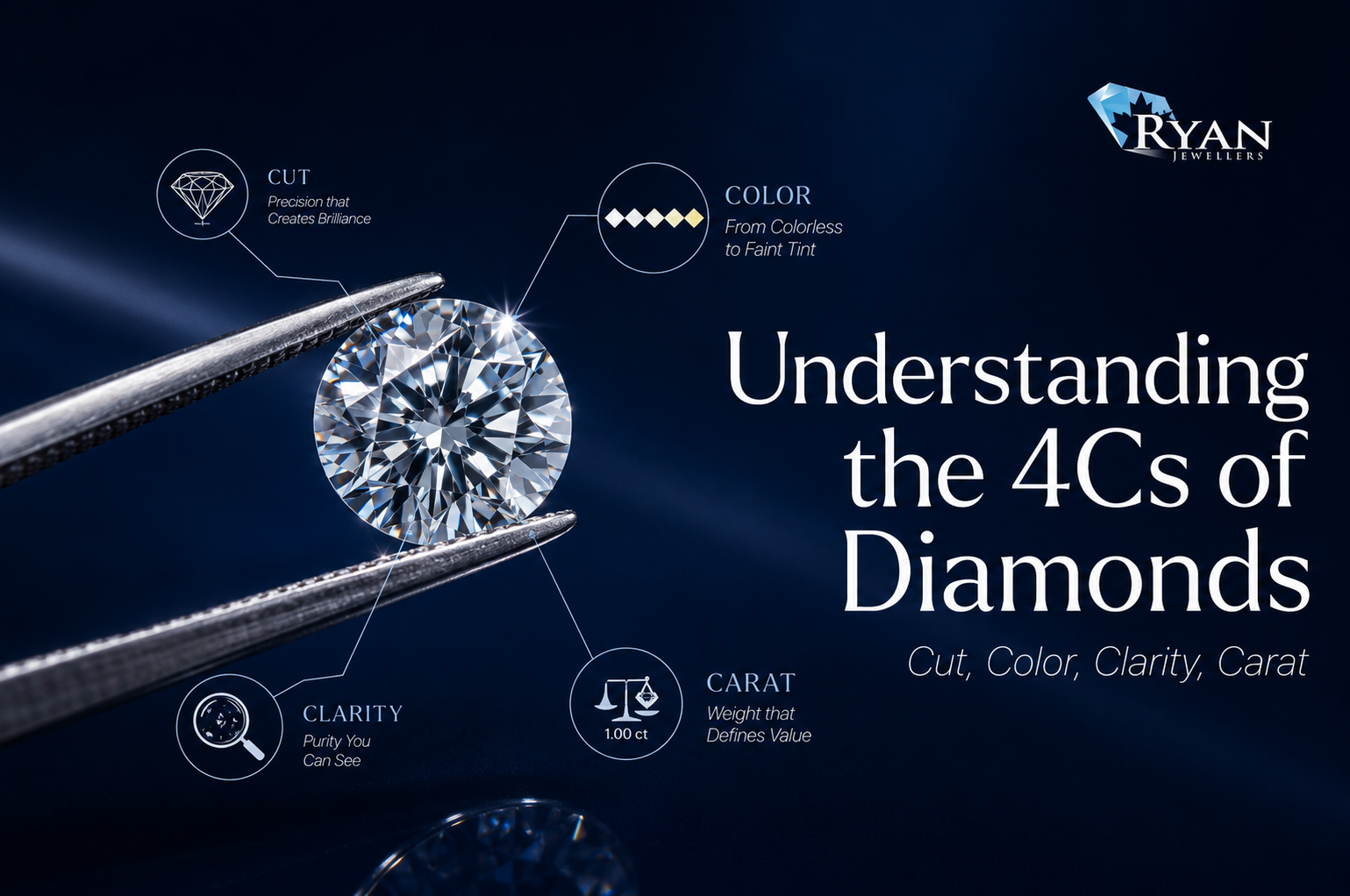
Buying a diamond is an exciting decision, but understanding what determines a diamond’s quality and value is essential before making a purchase. The **4Cs of diamonds—Cut, Color, Clarity, and Carat—**are the internationally recognized standards used to evaluate diamond characteristics and help buyers compare different stones.
For Canadian buyers, learning the 4Cs provides the knowledge needed to choose a diamond that balances beauty, quality, and budget. Whether you are selecting an engagement ring, diamond earrings, or a timeless piece of fine jewelry, understanding these factors helps you make a confident decision.
At Ryan Jewellers, we offer carefully selected diamond jewelry with guidance to help you understand quality, craftsmanship, and value.
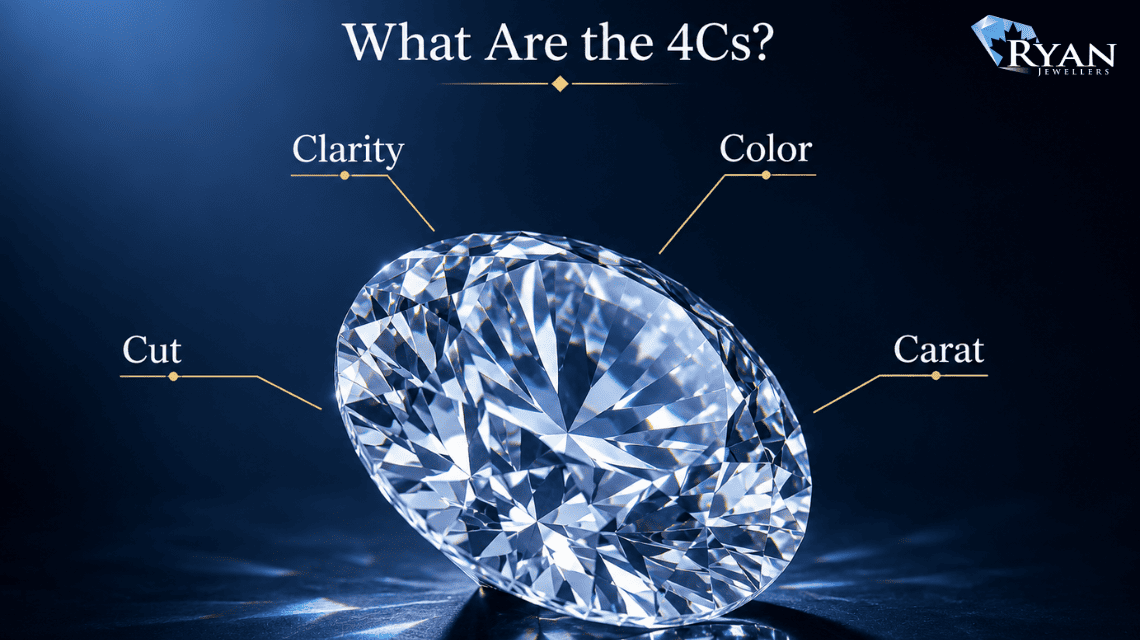
What Are the 4Cs?
The 4Cs represent the four main characteristics used to evaluate diamond quality:
- Cut: Measures how well a diamond is shaped and polished to reflect light.
- Color: Evaluates the absence of color in a diamond, with more colorless diamonds generally considered more valuable.
- Clarity: Measures the presence of internal inclusions and external imperfections.
- Carat: Refers to the diamond’s weight and is one factor that influences size and price.
While each C affects a diamond’s value, they work together to determine the overall beauty and appearance of the stone. A diamond with excellent balance across all four factors can appear more impressive than one that focuses on only a single characteristic.
👉 Discover our curated selection of lab-created diamond rings here: Lab-Created Diamond Rings
How Cut Affects Diamond Sparkle
Among the 4Cs, cut is often considered one of the most important factors influencing a diamond’s brilliance. Cut does not refer to the diamond’s shape, such as round or oval, but rather how precisely the diamond has been crafted.
A well-cut diamond allows light to enter, reflect internally, and return through the top of the stone, creating brightness and sparkle.
Diamond cut quality affects:
- Brilliance: The amount of white light reflected by the diamond
- Fire: The colorful flashes created as light passes through the facets
- Scintillation: The sparkle seen when the diamond moves
Even a diamond with excellent color and clarity may appear less impressive if it has poor proportions or an ineffective cut. This is why many buyers prioritize cut quality when searching for a diamond with maximum visual impact.
How Color Impacts Appearance
Diamond color refers to how much color is visible within a diamond. The most valuable diamonds are typically those with the least amount of visible color.
The standard diamond color scale ranges from:
- D–F: Colorless diamonds with exceptional transparency
- G–J: Near-colorless diamonds that often provide excellent value
- K and below: Diamonds with more noticeable warm tones
For many buyers, near-colorless diamonds offer a strong balance between appearance and affordability. When set in jewelry, especially white gold or platinum, diamonds with minimal color often create a bright and elegant appearance.
However, personal preference also matters. Some buyers appreciate warmer diamond tones, particularly when paired with yellow or rose gold settings.
Understanding Clarity Grades
Diamond clarity measures the presence of internal features called inclusions and external characteristics called blemishes. These natural features develop during the diamond formation process.
Common clarity grades include:
- Flawless (FL): No visible inclusions or blemishes under professional magnification
- Internally Flawless (IF): No internal inclusions visible under magnification
- Very Slightly Included (VVS): Extremely difficult to see inclusions
- Slightly Included (VS): Minor inclusions that are usually difficult to notice
- Included (I): More visible inclusions that may affect appearance
Higher clarity grades are generally rarer, but a diamond does not always need the highest grade to look beautiful. Many buyers choose diamonds with excellent visual appearance while balancing clarity with other factors such as cut and carat.
Carat Weight and Its Value
Carat refers to a diamond’s weight, not simply its size. One carat equals 0.2 grams, and larger diamonds typically become rarer and more valuable.
However, carat weight alone does not determine a diamond’s beauty. Two diamonds with the same carat weight can appear very different depending on:
- Cut quality
- Shape
- Color grade
- Clarity grade
- Proportions
A well-cut diamond with a slightly smaller carat weight may appear brighter and more attractive than a larger diamond with weaker characteristics.
For Canadian buyers, choosing the right carat often means finding the best balance between desired size, appearance, and budget.
👉 Explore our stunning collection of diamond earrings here: Diamond Earrings
👉 Learn more about diamond quality, grading, and buying tips in our complete guide: Diamond Education: The Ultimate Guide to Understanding Diamonds
FAQ – Understanding the 4Cs of Diamonds
What are the 4Cs of diamonds?
The 4Cs are Cut, Color, Clarity, and Carat—the four main factors used to evaluate diamond quality.
Which diamond C is the most important?
Cut is often considered the most important because it directly affects sparkle and brilliance.
Does a higher carat diamond mean better quality?
Not necessarily. Carat measures weight, while quality depends on the combination of all 4Cs.
Are lab-grown diamonds graded using the 4Cs?
Yes. Lab-grown diamonds are evaluated using the same grading standards as natural diamonds, including cut, color, clarity, and carat.
Should I prioritize clarity or cut when buying a diamond?
Many buyers prioritize cut because it has the greatest impact on how a diamond looks, while clarity can often be balanced based on personal preference and budget.
Final Thoughts
Understanding the 4Cs of diamonds is one of the most important steps toward making a confident jewelry purchase. By learning how cut, color, clarity, and carat influence a diamond’s appearance and value, Canadian buyers can choose pieces that match their style, expectations, and budget.
At Ryan Jewellers, we help customers explore high-quality diamond jewelry with confidence through expert guidance and carefully selected collections.
Really enjoyed this guide because it explains the 4Cs in a way that’s easy to understand without feeling overwhelming. I especially liked how it emphasizes that cut, color, clarity, and carat should be considered together rather than focusing on just one factor. It’s a great resource for anyone buying a diamond for the first time.
Fantastic article with practical advice for diamond shoppers. The explanation that a well-cut diamond can often appear more beautiful than a larger stone with a poorer cut really stood out to me because it’s something many buyers overlook. Do you think more Canadian shoppers are starting to prioritize cut quality over carat weight when choosing an engagement ring?
This was a very informative read. I completely agree that understanding the 4Cs helps buyers compare diamonds more confidently and choose the best option for their budget instead of relying on price alone. I’d love to see a future article showing real-life examples of diamonds with different 4C combinations so readers can better understand how each factor affects appearance and overall value.