
Summarize the article with:


Diamonds are among the most recognized and admired gemstones in the world, known for their exceptional brilliance, durability, and timeless symbolism. Whether you are choosing an engagement ring, diamond earrings, or a meaningful piece of fine jewelry, understanding what a diamond is can help you make a more informed decision.
For Canadian buyers, diamond education is an important step before purchasing, as factors such as origin, quality, certification, and value all influence the right choice.
At Ryan Jewellers, we offer a selection of high-quality diamond jewelry, including natural and lab-created diamond pieces designed for different styles and budgets.
Definition and Origins of Diamonds
A diamond is a naturally occurring gemstone made entirely of carbon atoms arranged in a unique crystal structure. This structure gives diamonds their exceptional hardness, brilliance, and ability to reflect light.
Diamonds have held value for thousands of years and have become symbols of love, commitment, and luxury. Historically, natural diamonds formed deep within the Earth, and geological processes brought them to the surface over billions of years.
Today, diamonds are available in two primary categories:
- Natural Diamonds: Formed naturally beneath the Earth’s surface over billions of years.
- Lab-Grown Diamonds: Created in controlled laboratory environments using advanced technology that replicates the natural diamond formation process.
Both types have the same chemical composition, crystal structure, and physical properties, making lab-grown diamonds a popular alternative for many modern buyers.
👉 Discover our curated selection of lab-created diamond rings here: Lab-Created Diamond Rings
How Diamonds Are Formed
Natural diamonds form approximately 150 to 200 kilometres below the Earth’s surface, where extreme heat and pressure transform carbon into crystalline diamond structures.
This process takes billions of years and requires specific geological conditions. Volcanic activity then transports diamonds closer to the Earth’s surface, where they can be discovered through mining.
Lab-grown diamonds are produced using two main technologies:
- High Pressure High Temperature (HPHT): Replicates the high-pressure and high-temperature conditions found deep inside the Earth.
- Chemical Vapor Deposition (CVD): Uses carbon-rich gases to grow diamonds layer by layer in a controlled environment.
These methods create diamonds that are chemically and physically identical to natural diamonds.
Common Diamond Types and Characteristics
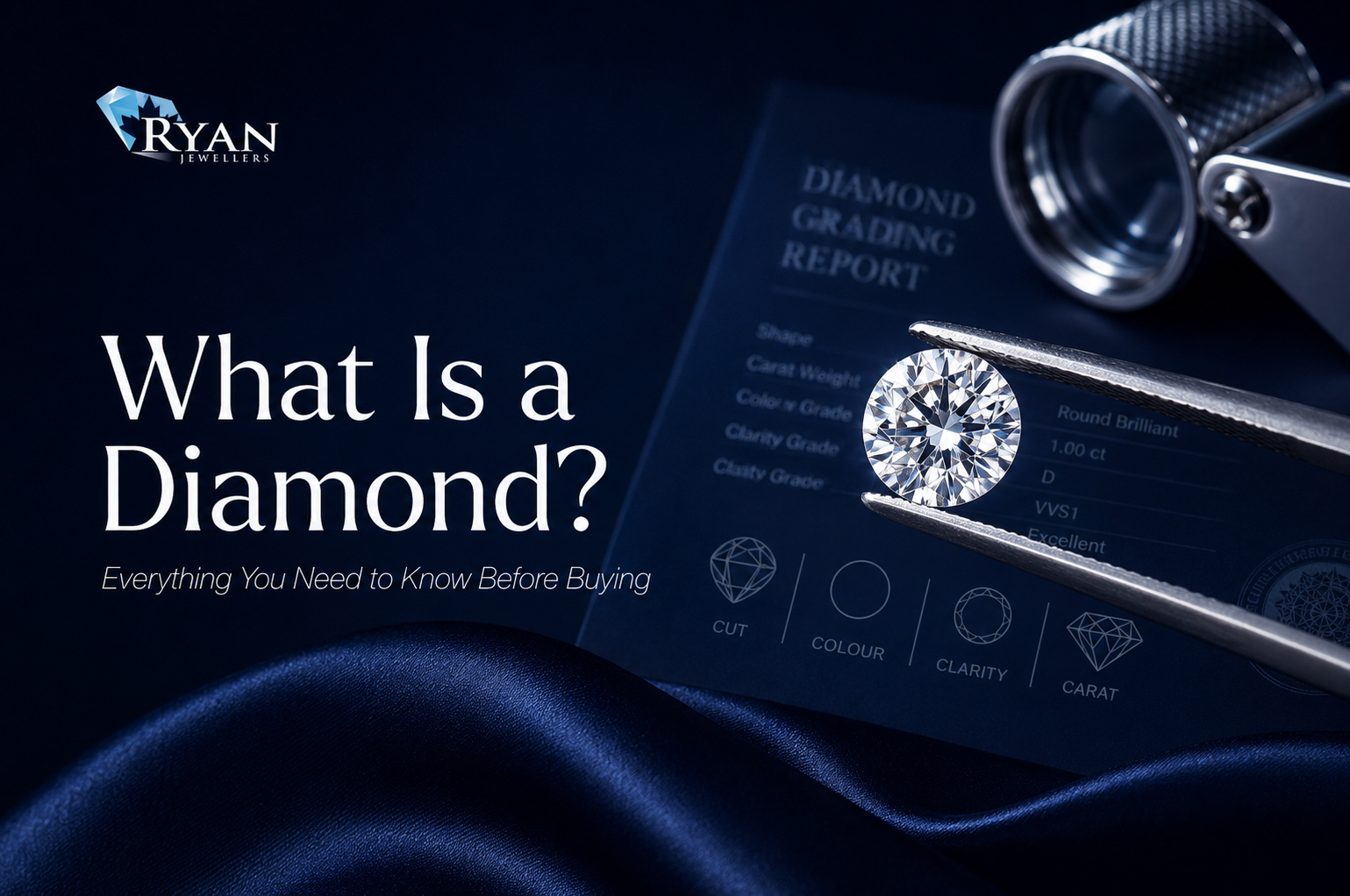
Diamonds vary in appearance and quality based on several important characteristics. The most recognized evaluation system is the 4Cs of diamonds:
Cut
Cut refers to how well a diamond is shaped and polished to interact with light. A well-cut diamond reflects more light, creating greater sparkle and brilliance.
Color
Diamond color ranges from completely colorless to light yellow or brown. Colorless diamonds are generally considered rarer, while near-colorless options often provide excellent value.
Clarity
Clarity measures the presence of internal inclusions and external imperfections. Higher clarity diamonds typically have fewer visible characteristics.
Carat Weight
Carat refers to a diamond’s weight, not its size alone. Larger diamonds generally have higher prices, but overall quality depends on the combination of all 4Cs.
Other characteristics that influence diamond selection include:
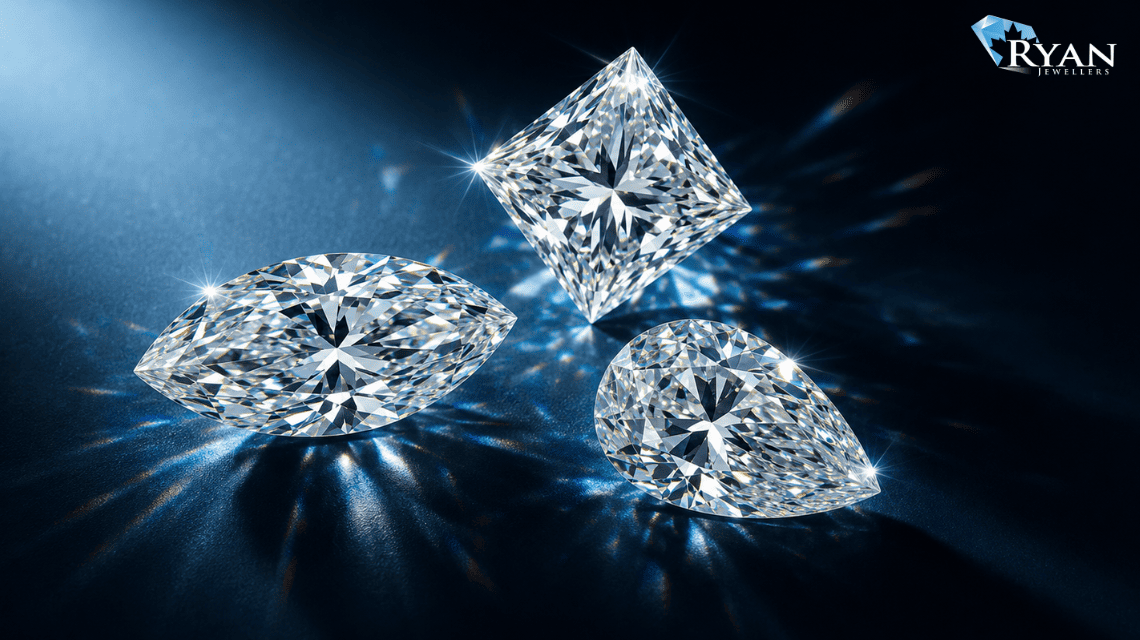
- Diamond shape (round, oval, emerald, cushion, princess, and more)
- Certification from reputable grading organizations
- Fluorescence and polish quality
How Diamonds Are Used in Jewelry
Diamonds are one of the most versatile gemstones used in fine jewelry. Their durability and brilliance make them suitable for everyday wear and special occasions.
Popular diamond jewelry includes:
- Engagement Rings: Diamonds remain one of the most traditional choices for engagement jewelry due to their symbolism of lasting commitment.
- Diamond Earrings: Studs, hoops, and drop earrings offer timeless elegance for everyday or formal styling.
- Diamond Necklaces: Pendants and solitaire designs provide subtle sparkle and sophistication.
- Diamond Bracelets: Diamond accents add luxury while maintaining a refined appearance.
Many Canadian buyers choose diamond jewelry because it combines emotional significance with long-lasting beauty.
Why Diamonds Are Valuable
Diamonds are valuable because of their combination of rarity, beauty, durability, and craftsmanship. Several factors influence their price and desirability:
- Quality: Higher grades in cut, color, clarity, and carat generally increase value.
- Rarity: Certain diamond characteristics, such as exceptional color or size, are less common.
- Craftsmanship: Expert cutting and jewelry design enhance a diamond’s appearance.
- Certification: Certified diamonds provide verified information about quality and authenticity.
While diamonds have traditionally represented luxury and investment value, many buyers today prioritize personal meaning, craftsmanship, and long-term enjoyment when choosing a diamond.
Lab-grown diamonds have also expanded access to diamond jewelry by offering a more affordable option with the same physical and chemical properties as natural diamonds.
👉 Explore our stunning collection of diamond earrings here: Diamond Earrings
👉 Learn more about diamond quality, grading, and buying tips in our complete guide: Diamond Education: The Ultimate Guide to Understanding Diamonds
FAQ – What Is a Diamond?
What is a diamond made of?
A diamond consists of carbon atoms arranged in a crystal structure that gives researchers and gemologists its exceptional hardness and brilliance.
Are lab-grown diamonds real diamonds?
Yes. Lab-grown diamonds are real diamonds with the same chemical composition and physical properties as natural diamonds.
What makes diamonds sparkle?
A diamond’s sparkle comes from its cut quality, which determines how effectively it reflects and returns light.
What are the most popular diamond shapes?
Round diamonds are the most popular, but oval, cushion, emerald, princess, and pear shapes are also widely chosen.
How do I choose the right diamond?
Consider the 4Cs, your budget, personal style, and whether you prefer a natural or lab-grown diamond.
Final Thoughts
Understanding what a diamond is helps buyers make confident decisions when choosing fine jewelry. From formation and characteristics to the differences between natural and lab-grown diamonds, education allows you to select a piece that matches your style, values, and budget.
At Ryan Jewellers, we provide carefully selected diamond jewelry designed to combine quality, elegance, and lasting beauty for Canadian customers.
Really enjoyed this article because it explains what a diamond is in a way that’s easy for beginners to understand. I especially liked how it connects a diamond’s natural formation with the qualities that make it so valuable in fine jewelry. It’s a great starting point for anyone looking to make a confident purchase.
Fantastic guide with clear and practical information. The explanation of why diamonds are prized for their brilliance, durability, and rarity really stood out to me because many people only focus on carat weight. Do you think more Canadian buyers are taking the time to learn about the 4Cs before choosing a diamond today?
This was a very informative read. I completely agree that understanding what a diamond is before shopping makes it much easier to appreciate the differences in quality and value. I’d love to see a future article explaining how natural diamonds, lab-grown diamonds, and diamond simulants compare in terms of appearance, durability, certification, and long-term value.